



Mahogany Wall Bookcase
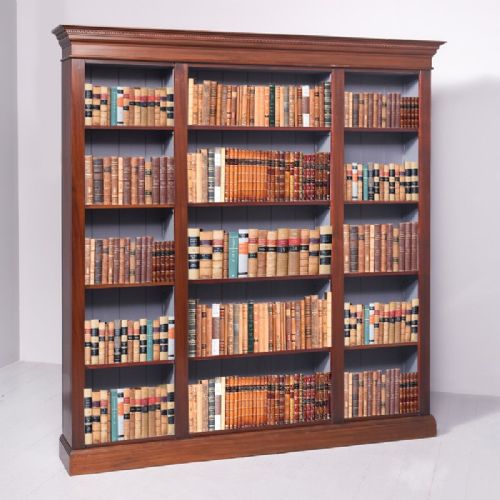
A mahogany wall bookcase combines practical book storage with timber grain warmth, saving floor space while displaying volumes at eye level.
Mahogany Wall Bookcase
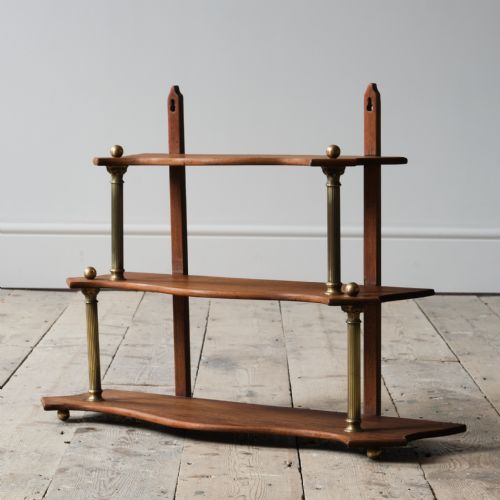
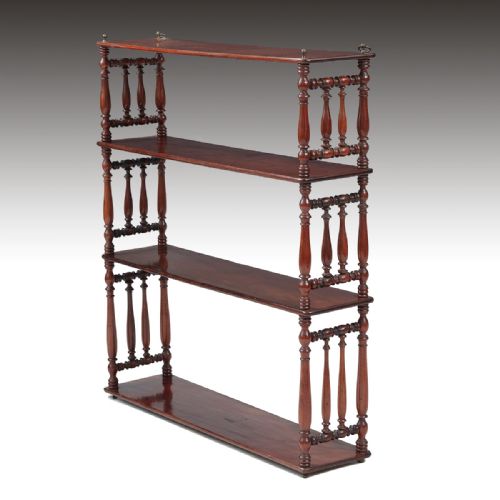
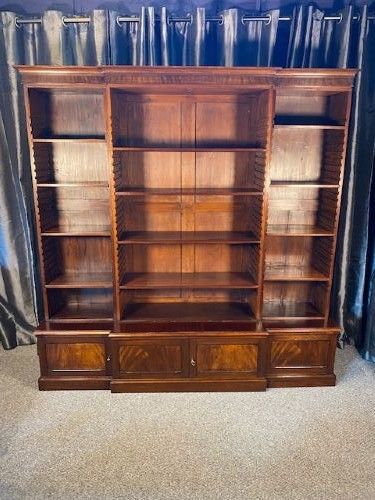
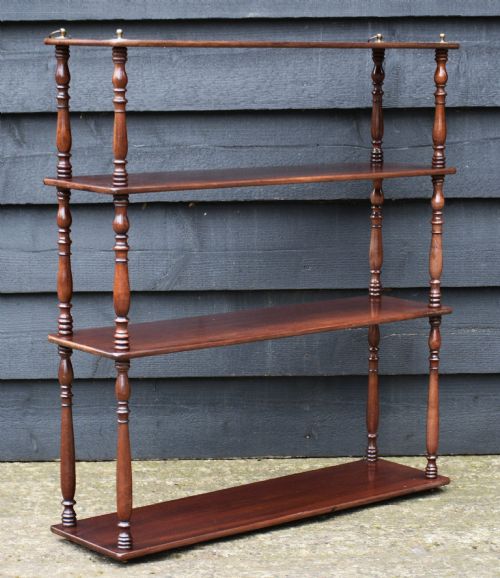
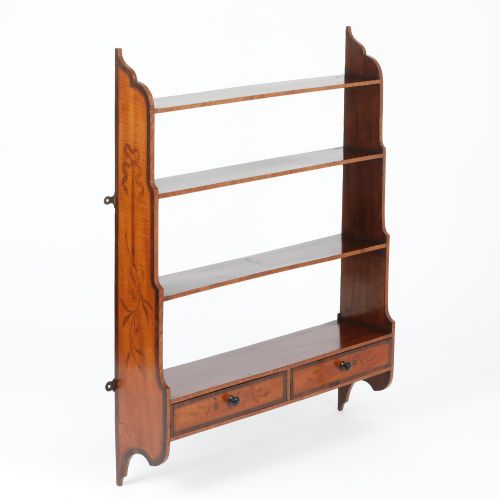
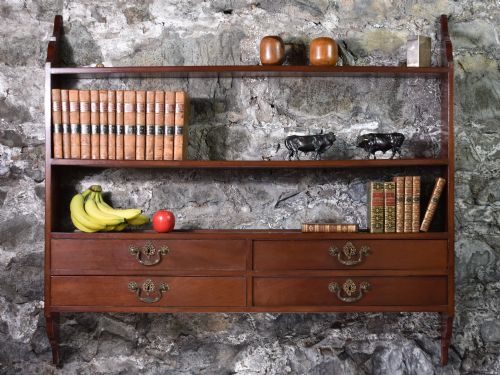
A mahogany wall bookcase spans multiple periods from Georgian origins through Regency and Victorian eras into Edwardian and later interpretations. Pieces take the form of open hanging shelves, waterfall tiers, glazed wall cabinets and desk organisers designed to mount securely upon a wall.
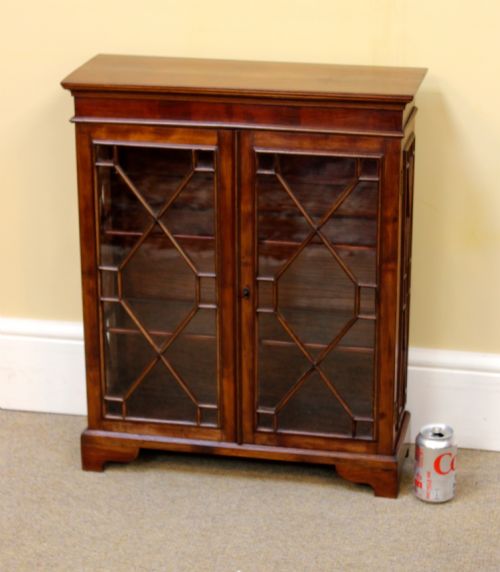
The most common formats met on this page are open hanging shelves and glazed display cabinets, often featuring tiered ledges or brass accents. Proportions range from small miniature cabinets and portable bookshelves to large wall-mounted units suitable for heavier volumes.
Timbers and construction methods
Makers utilised solid mahogany alongside flame mahogany veneer, pairing the rich reddish-brown timber with secondary woods such as oak and softwood for structural stability. Satinwood inlay frequently provides contrasting border details on Edwardian and later pieces.
Glazing and hardware play a structural role, with brass brackets, hinges and astral glazing bars supporting glass panels. Open shelf units rely on sturdy side supports, sometimes incorporating fretwork, carved details or bobbin turning.
Some nineteenth-century pieces include portable bookshelves designed to travel with their owners.
Assessing quality in wall-mounted shelving
Quality rests upon the selection of timber figures, particularly where flame mahogany veneer or satinwood banding matches evenly across the front elevation. Superior examples show careful dovetail joinery and crisp carving rather than mechanical execution.
Structural integrity dictates longevity in pieces designed to bear the weight of books upon walls. Finely fitted glazed doors, unwarped shelf boards and original brass fittings separate standard utility pieces from exceptional fine-quality examples.
The Mahogany Wall Bookcase Glossary
- Astral glaze
- Glass held within thin wooden bars arranged in geometric patterns across a cabinet door. This technique allows clear visibility of books or displayed objects while maintaining structural support.
- Waterfall shelves
- Graduated open shelves that step back progressively from bottom to top. The profile resembles descending water steps, typically seen in lighter hanging configurations.
- Flame mahogany
- Timber cut from the fork of the mahogany tree where branches meet the trunk. This produces a dramatic, flickering flame-like pattern highly prized for cabinet fronts.
- Pigeon holes
- Small open compartments grouped inside a desk organiser or cabinet. They provide sorting slots for letters, papers and small volumes.
Mahogany Wall Bookcase: Frequently Asked Questions
How do I hang a wall bookcase safely?
Wall-mounted bookcases require secure fixing into solid masonry or direct wall studs using appropriate brackets and screws. Because books add substantial weight, checking the internal structure of the piece before loading is essential.
Ensure the mounting hardware matches the weight capacity of the wall type in your room. Professional installation is recommended for larger glazed cabinets.
Are these bookcases suitable for heavy books?
Many examples on this page are designed for general display or lighter reading material rather than heavy encyclopaedias. Open shelves and waterfall units suit smaller volumes and decorative items best.
Enclosed wall cupboards and sturdier Victorian or Georgian units offer more robust construction. Check the depth of the shelves to ensure your volumes fit comfortably without tipping.
How do I date a mahogany wall piece?
Dating relies on combining stylistic clues with construction methods, timber choice and hardware. Georgian and Regency pieces often feature simpler structural joins and hand-cut elements.
Edwardian and later iterations frequently incorporate satinwood inlay or lighter fretwork. Comparing the grain, patination and secondary woods helps narrow down the manufacturing decade.
What is the difference between an open shelf and a glazed cabinet?
Open shelves provide direct access and visibility, making them ideal for everyday reading and decorative displays. Glazed cabinets protect contents from dust and light exposure behind glass doors.
Glazed pieces often feature lockable doors and internal lining, adding formal presence to a room. Both types maximise floor space by utilising vertical wall surfaces.