


Mahogany Vanity Cabinet
A mahogany vanity cabinet brings functional elegance to a bedroom, offering concealed storage and surfaces designed for grooming.
Mahogany Vanity Cabinet
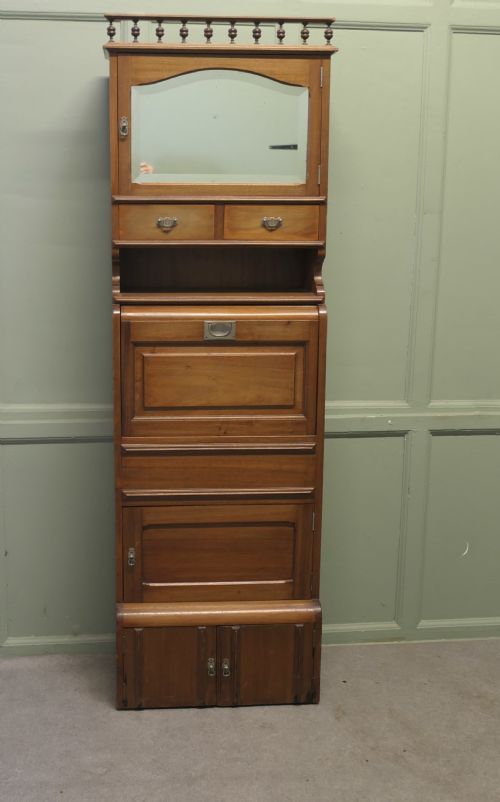
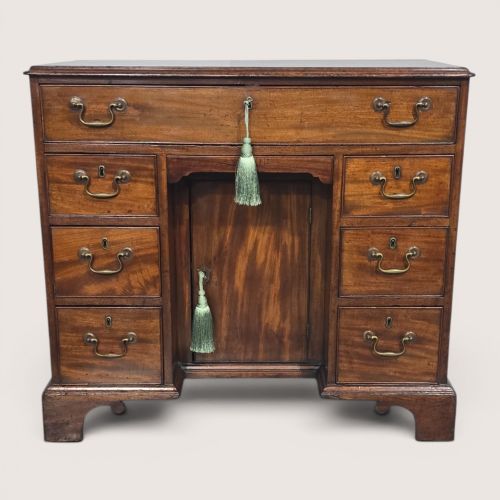
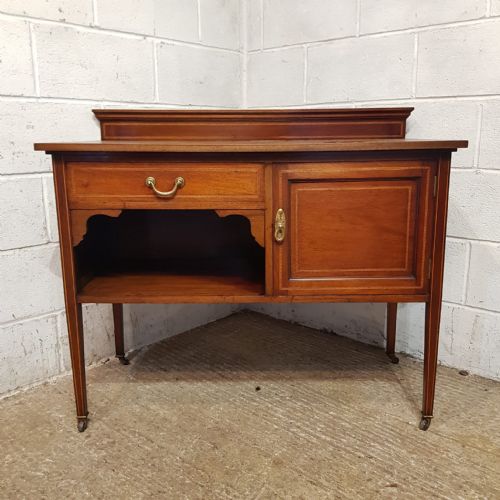
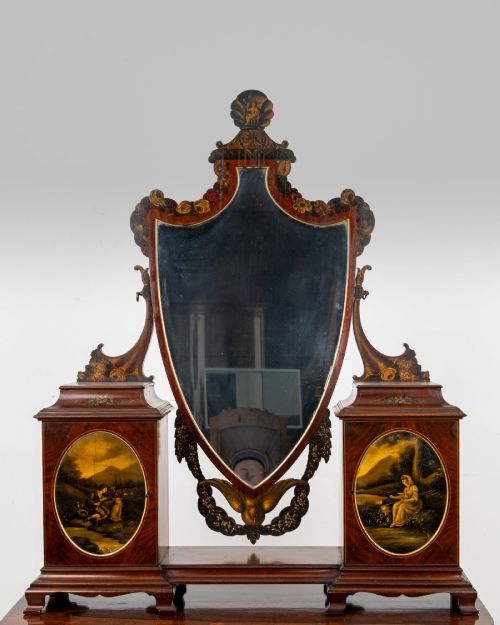
A mahogany vanity cabinet encompasses pieces designed for personal grooming and washing, spanning washstands, dressing tables, and compact cabinets. These items appear across Georgian, Victorian, and Edwardian periods, reflecting changing domestic habits over two centuries.
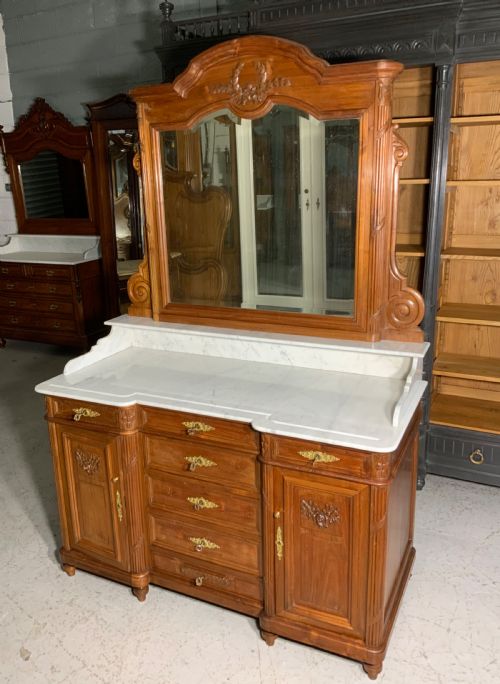
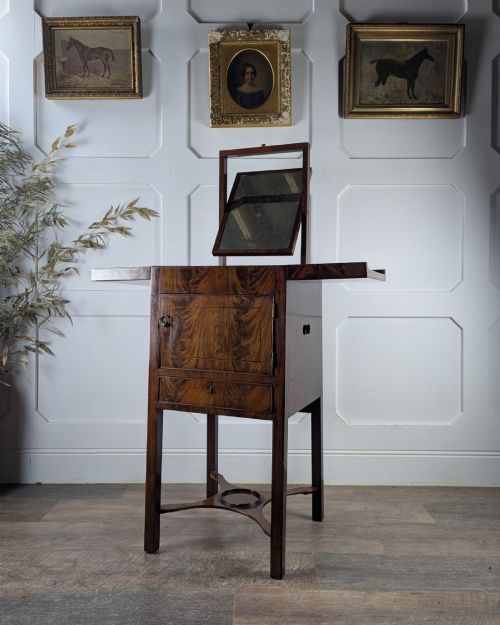
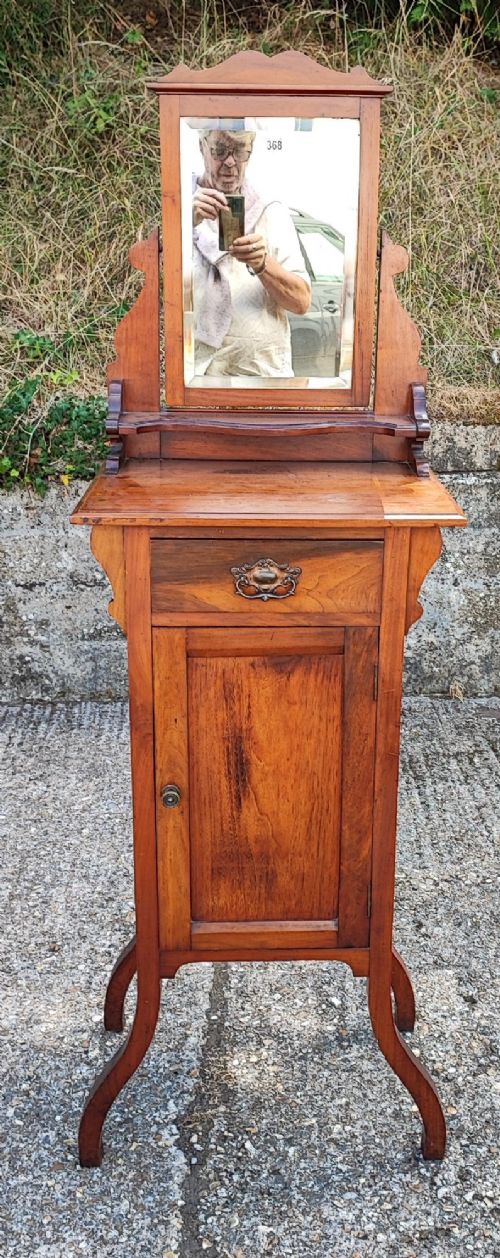
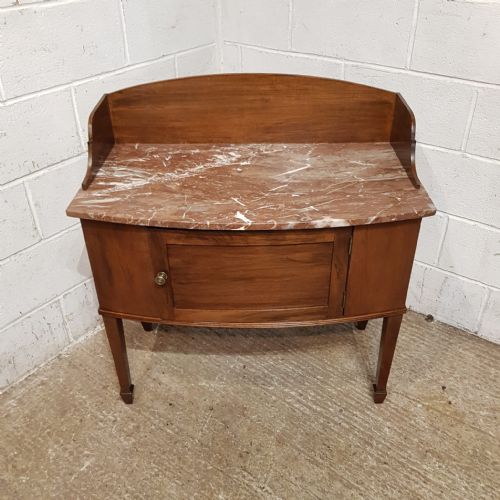
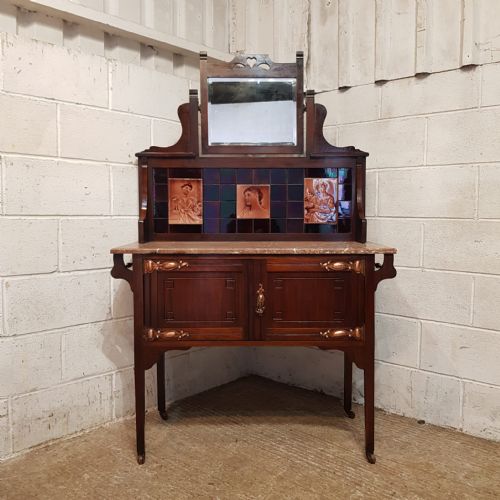
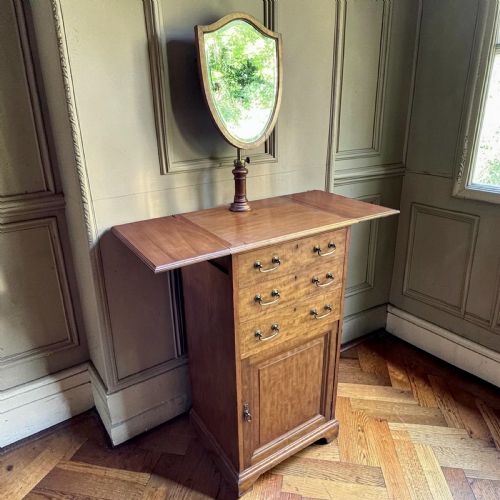
The pieces on this page are most commonly Edwardian and Victorian washstands or dressing chests, alongside Georgian campaign and fold-away designs. Many incorporate marble tops, ceramic basins, or adjustable mirrors tailored for daily use in period bedrooms.
Materials and construction methods
Cabinetmakers utilised solid mahogany and Cuban mahogany as the primary timber, occasionally accented with satinwood, boxwood, and marquetry inlay. Brass hardware, including handles and campaign fittings, provided durable functional details.
Surfaces frequently integrated heavy rouge or white marble slabs to withstand water contact during washing. Glass featured in adjustable table-top and shield mirrors, whilst ceramic components formed integrated basins within the cabinetry.
Cabinetmakers built clever marine vanity cabinets specifically fitted with sinks for use on nineteenth-century yachts and boats.
Distinctions in craftsmanship
Quality rests in the selection of timber figures, particularly the grain depth in Cuban mahogany, and the precision of inlaid boxwood or satinwood stringing. Superior examples maintain crisp carving and tight joinery across drawers and folding mechanisms.
The integration of materials dictates distinction, such as the thickness and polish of rouge marble tops and the integrity of original brass fittings. Pieces bearing maker stamps or specific retail attribution demonstrate higher workshop provenance.
Edwards and Roberts·J. Shoolbred
The Mahogany Vanity Cabinet Glossary
- Mahogany
- A durable tropical hardwood known for its rich reddish-brown colour and fine grain. It served as the principal timber for high-grade cabinet making.
- Marquetry
- The art of applying decorative veneer pieces to a structure to form intricate patterns. This technique frequently embellished drawer fronts and tabletops.
- Campaign washstand
- A collapsible or folding piece designed for travel or military use. These items utilised compact frames with clever folding mechanisms.
- Cheval mirror
- A full-length mirror hung in a frame that allows it to be tilted. They often sat atop dressing tables or vanity cabinets.
- Lowboy
- A small mahogany dressing table with one or more drawers supported on slender legs. It dates predominantly from the Georgian period.
Mahogany Vanity Cabinet: Frequently Asked Questions
What is a mahogany vanity cabinet?
A mahogany vanity cabinet is a piece of antique bedroom furniture designed for washing and grooming. These items range from compact Edwardian washstands to Georgian fold-away units.
They combine timber cabinetry with functional surfaces, frequently housing basins, mirrors, and storage compartments within a unified wooden frame.
How do I date a mahogany vanity piece?
Dating relies on observing structural styles, hardware, and secondary woods. Georgian pieces tend to show clean architectural lines or campaign folding designs, whereas Victorian and Edwardian examples often incorporate marble tops and elaborate marquetry.
Maker stamps and mirror shapes also provide clear indicators of the manufacturing era.
Did these cabinets always include marble tops?
Not all pieces feature stone surfaces. Earlier Georgian washstands typically utilised plain mahogany tops designed for basins to sit upon.
Marble inserts became prominent during the Victorian and Edwardian periods to protect the wood from water splashes during washing.
How do I care for antique mahogany furniture?
Maintain the wood by keeping it away from direct sunlight and extreme temperature fluctuations that cause timber to split. Apply natural beeswax periodically to nourish the grain.
Protect marble and glass surfaces from harsh chemicals and clean them gently with damp cloths.