
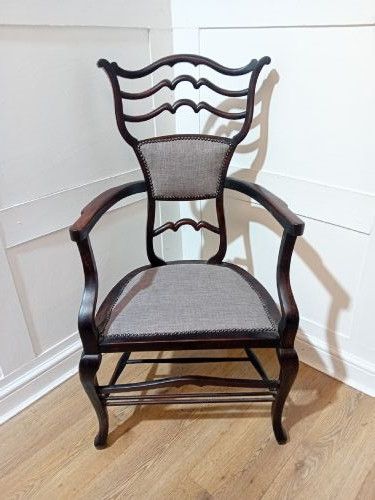
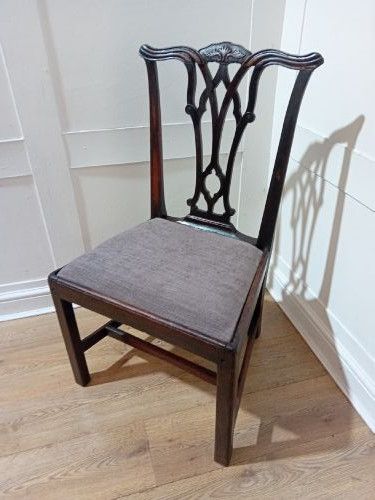
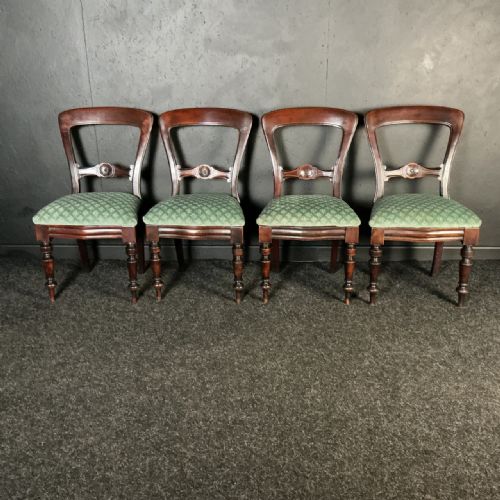
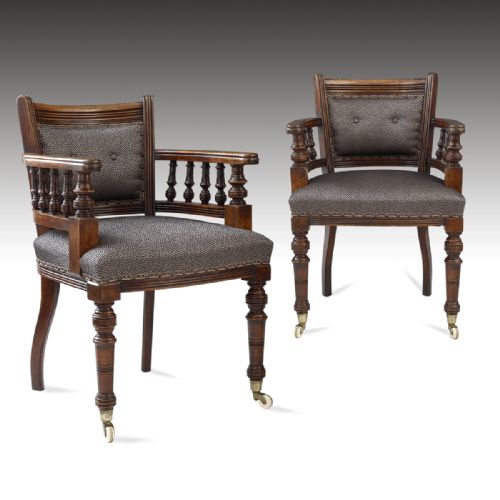
Mahogany Upholstered Desk Chair
A mahogany upholstered desk chair brings architectural timber and deep padding together to anchor a study with enduring proportion and utility.
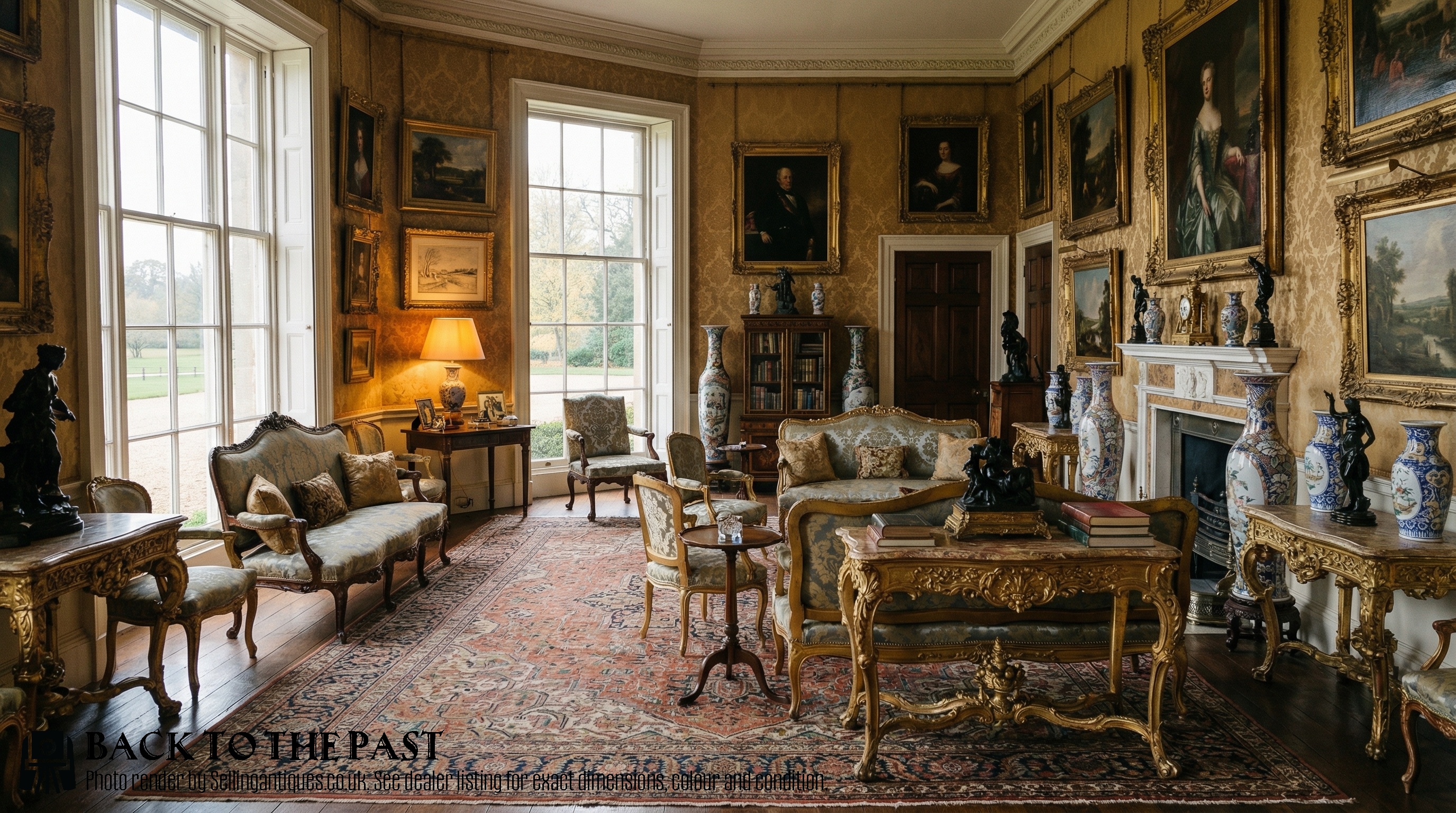
Mahogany Upholstered Desk Chair
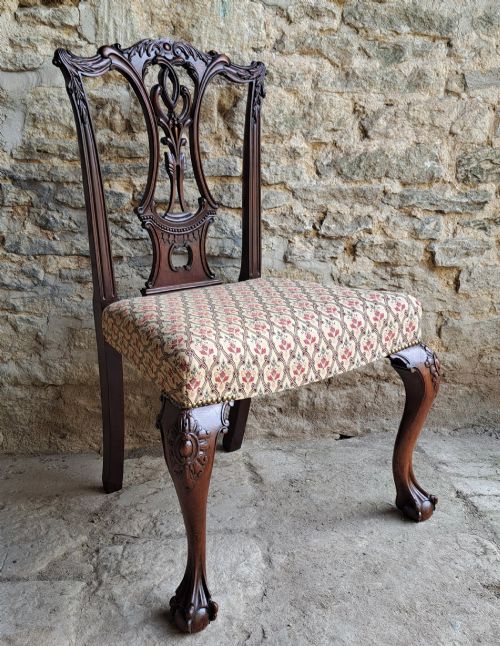
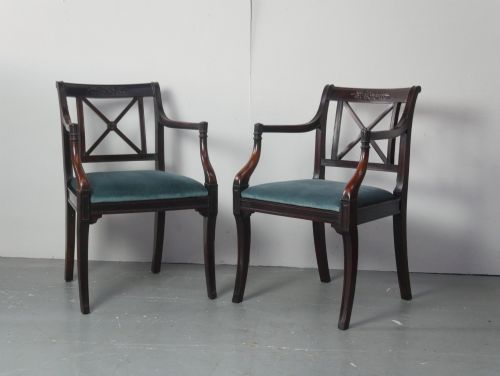
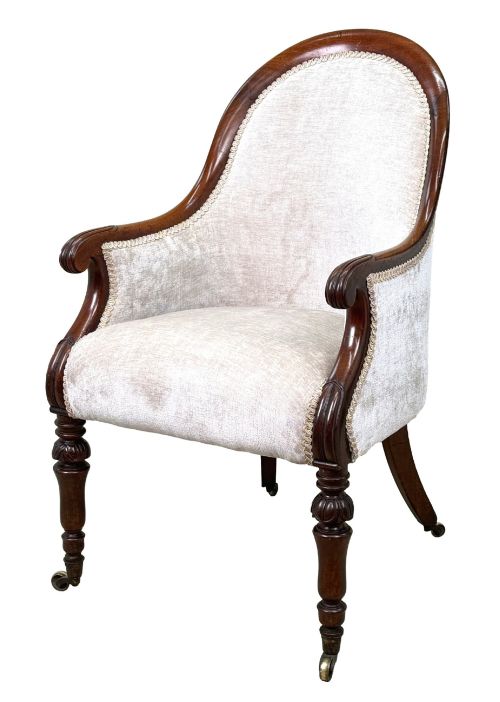
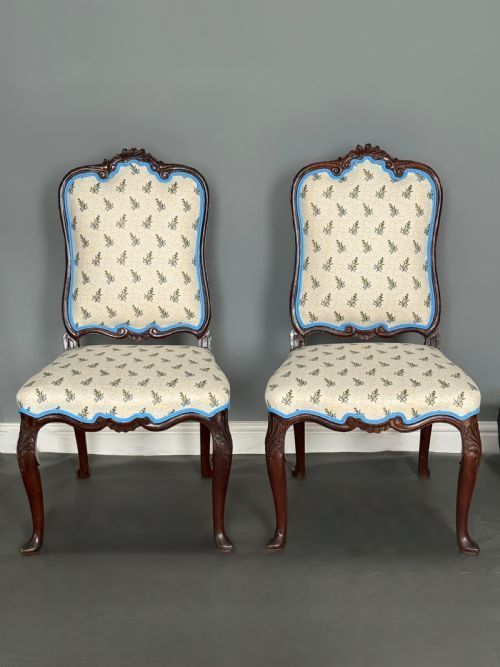
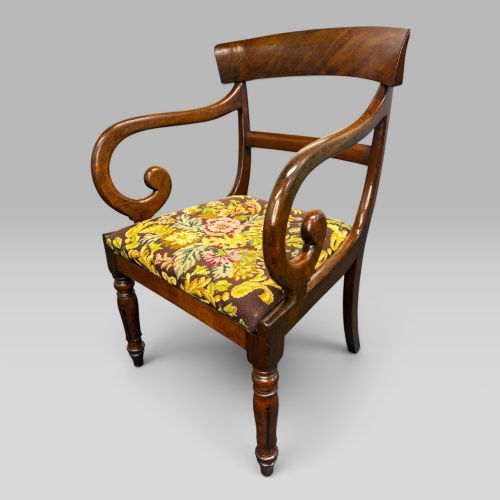
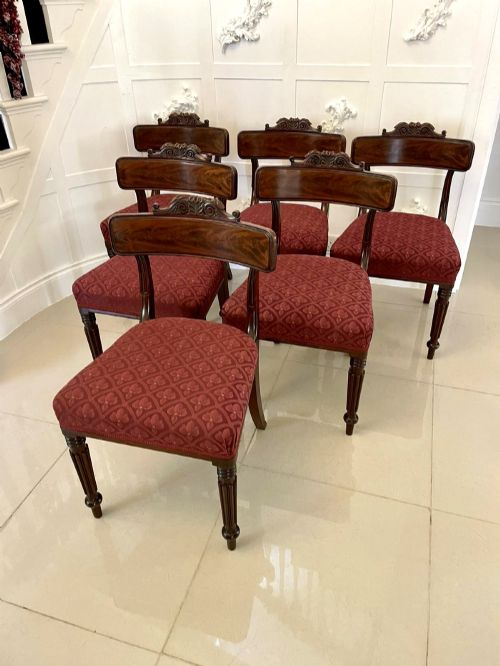
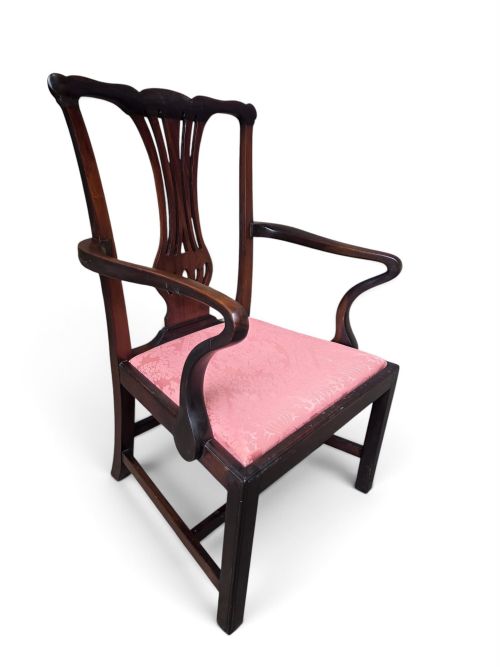
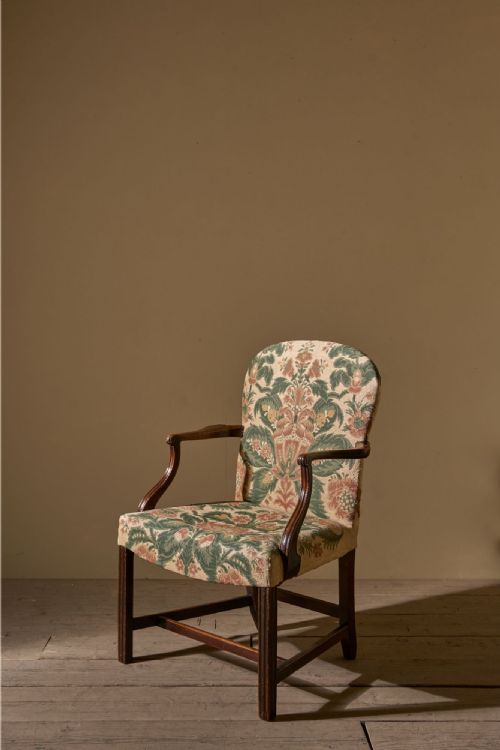
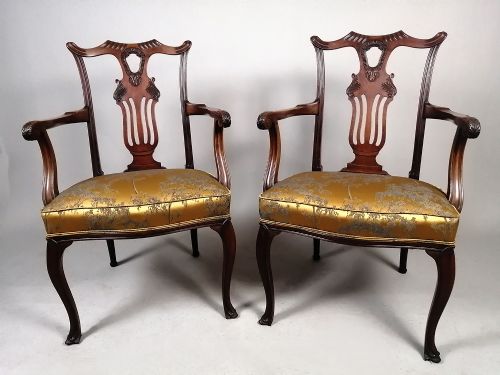
A mahogany upholstered desk chair is a seating form designed for study or writing, combining a sturdy timber frame with padded surfaces. These pieces appear frequently in Georgian, Regency, and Victorian iterations, spanning library armchairs, swivel designs, and Gainsborough forms.
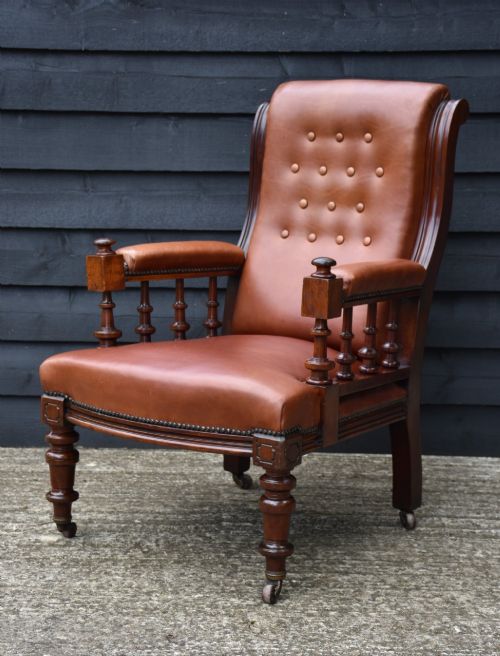
The search for a mahogany upholstered desk chair reveals robust seating developed for domestic and professional workspaces. Buyers encounter library armchairs with leather pads, swivel office chairs from the Edwardian period, and open armchairs suited to writing tables.
Examples on this page draw from 18th-century roots through to 20th-century revivals, presenting the timber in varied finishes and grain patterns. Forms range from fixed-leg tub chairs to adjustable revolving models equipped with leather upholstery.
How They Were Made
Frames rely on dense tropical timber shaped by hand or turned on lathes, joined with mortise and tenon construction to ensure rigidity under daily use. Cabinetmakers selected figured grain for prominent splats and arms, integrating brass castors and metal swivel mechanisms in later variants.
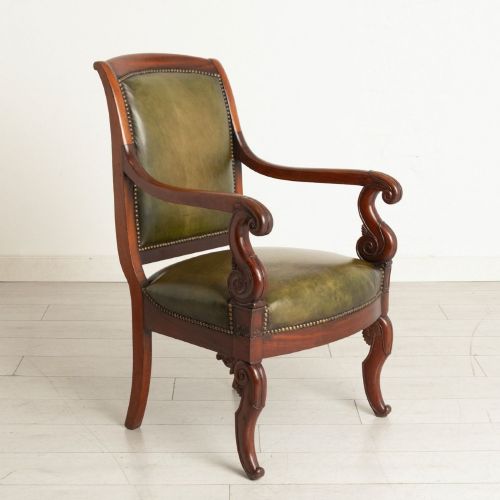
Upholstery involves traditional stuffing secured over webbing or canvas, finished with leather, velvet, or woven textile covers held by brass tacks. Leather seats and arm pads are frequently hand-tooled with gilt borders, contrasting against the dark polished surface of the wood.
Several desk chairs include built-in reading stands, anticipating modern multi-tasking by over a century.
What Varies in Quality
Quality rests upon the crispness of timber carving, the depth of the mahogany grain, and the structural integrity of the frame joints. Superior specimens display refined proportions, hand-stitched leather work, and original swivel mechanisms that operate smoothly without wobble.
Lesser examples show mechanical wear, replaced upholstery webbing, or timber that has suffered dryness and extensive surface refinishing over generations of use.
Gillows·Alfred Allen
The Mahogany Upholstered Desk Chair Glossary
- Gainsborough chair
- A wide, open-armed armchair with a padded seat and back, created during the Georgian period for library use.
- Library chair
- A substantial upholstered armchair designed for long periods of reading, often featuring leather upholstery and generous armrests.
- Tub chair
- An armchair featuring a rounded, enclosed back that curves continuously into the arms.
- Swivel chair
- A desk chair mounted on a central pivot mechanism allowing rotation, common in late Victorian and Edwardian office variants.
- Carver chair
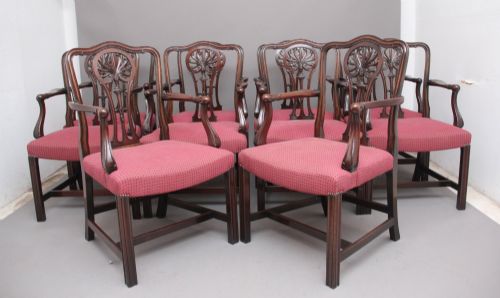
- An armchair designed in a style matching a set of dining or side chairs, frequently placed at the head of a table.
Mahogany Upholstered Desk Chair: Frequently Asked Questions
Are swivel desk chairs authentic antiques?
Yes, revolving mechanisms with central iron spindles and wooden scroll seats appear frequently in late Victorian and Edwardian pieces.
These functional designs were built for offices and libraries, combining timber frames with adjustable height screws and heavy castors.
What is the difference between a library chair and a Gainsborough chair?
A library chair generally refers to any comfortable upholstered seating designed for reading rooms, while a Gainsborough specifically denotes a mid-18th-century open-armed chair with a low back and wide seat.
Both utilise mahogany frames and leather or fabric upholstery suited to writing desks.
How do I care for leather upholstery on an antique chair?
Leather surfaces benefit from gentle cleaning and occasional applications of neutral wax or specialised leather conditioner to prevent cracking.
Avoiding direct sunlight and excessive heat preserves both the supple texture of the hide and the polished mahogany timber surrounding it.
How can I tell a Georgian chair from a Victorian revival?
Georgian pieces exhibit hand-cut joinery, dense Cuban mahogany, and patination developed over centuries of use.
Victorian revival examples often show machine-turned elements, standardised screw fittings, and slightly heavier proportions influenced by earlier eras.