



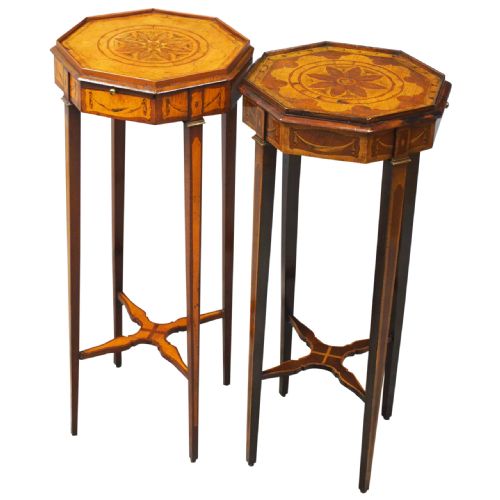

Mahogany Torchere Pair
A mahogany torchere pair brings symmetry and height to a room, holding candles, lamps or plants with slender elegance.
Mahogany Torchere Pair
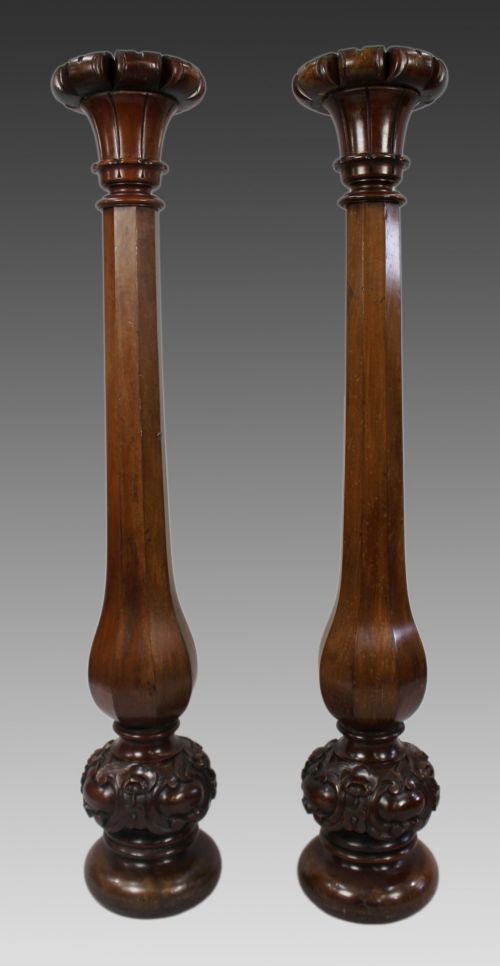
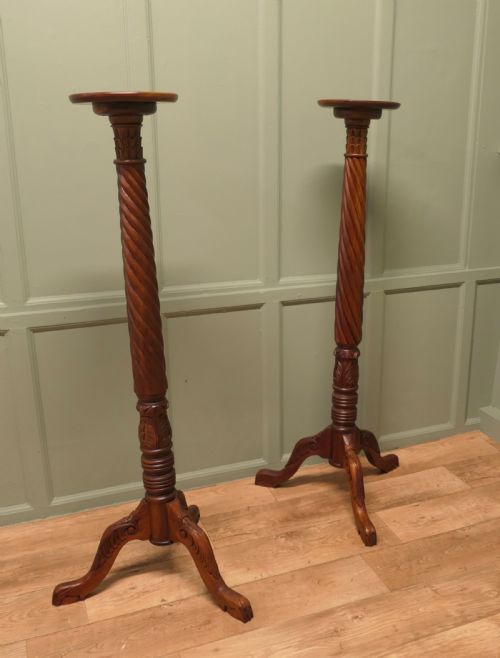
When you search for a mahogany torchere pair, you encounter tall stands designed to elevate light or ornaments in a room. These pieces appear in forms such as candle stands, plant stands and standard lamps.
The versions met most frequently on this page span the Georgian, Victorian and Edwardian periods. Makers built them as matched pairs to frame corners, fireplaces or doorways with balanced vertical presence.
How they were made
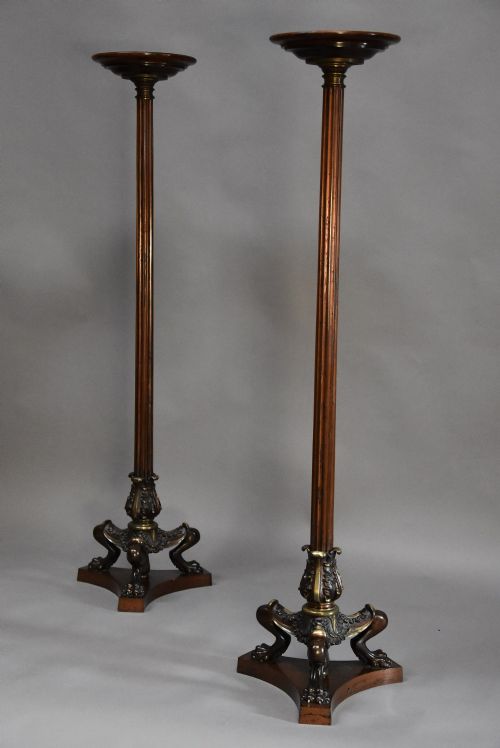
Cabinet makers utilised solid mahogany and applied rich timber veneers to construct the slender shafts and supporting platforms. They incorporated brass, ormolu and bronze mounts for structural strength and decorative contrast.
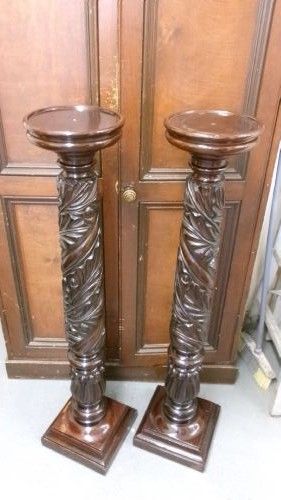
Carving and inlay defined the surface ornamentation, with artisans employing satinwood details or intricate chisel work. Turning on a lathe shaped the central pillars, rising from tripod or weighted bases.
Mahogany Torchere Pair Retail Price Guide 2026
Typical asking prices for mahogany torchere pair among the pieces listed under this phrase on Sellingantiques today, from the lower quarter to the upper quarter. They describe what is for sale here now, not the wider market.
Materials appearing across the inventory include solid mahogany alongside bronze, brass, ormolu and satinwood highlights.
What varies in quality
The distinction between standard examples and the finest works rests on the depth of the carving and the choice of timber grain. Superior pieces display crisp moulded details and well-balanced proportions that maintain stability at height.
The integration of secondary materials, such as fire-gilded bronze or precise satinwood inlay, separates utilitarian stands from exhibition pieces. Original surfaces and patination heavily influence the standing of any pair.
The Mahogany Torchere Pair Glossary
- Torchere
- A tall decorative stand originally intended to carry a torch or candle. These pieces now commonly support lamps, vases or floral displays.
- Ormolu
- Gilded bronze mounting applied to furniture for decorative enrichment. This technique gained prominence in high-status pieces from the Regency and Victorian eras.
- Inlay
- Contrasting timber or shell fitted into the surface of a primary wood to create geometric or floral patterns. Satinwood is frequently utilised for this purpose on Edwardian examples.
- Patina
- The surface sheen and colour developed by wood over decades of handling and ageing. Unpolished or stripped timber lacks this depth of character.
- Tripod base
- A three-legged support system providing stability for tall, slender columns. This configuration appears regularly on eighteenth and nineteenth-century candle stands.
Mahogany Torchere Pair: Frequently Asked Questions
What rooms suit a mahogany torchere pair?
These tall stands suit formal reception rooms, entrance halls and libraries where vertical emphasis is needed. They fill empty corners and frame larger furniture items effectively.
Pairs allow for balanced placement on either side of a fireplace, window or doorway. Their narrow footprint ensures they occupy minimal floor space while adding significant height.
How were these stands used originally?
Early examples held candles or oil lamps to illuminate dark corners before electric lighting became common. They functioned as portable sources of light that could be moved around a stately home.
Over time, their purpose shifted towards displaying decorative objects, busts and imported plants. Today, many are adapted to hold modern standard lamps.
Can I use them as lamp stands?
Many examples on this market serve readily as standard lamps or table lamp platforms. The sturdy bases provide secure footing for electrical wiring and weighted fittings.
Buyers often select them to lift lighting to eye level behind seating areas. This creates ambient illumination without crowding tabletop surfaces.
How do I distinguish Victorian from Georgian stands?
Georgian pieces generally display restrained classical proportions with crisp hand-carving and dense, dark mahogany timber. They often feature simpler column turns and solid feet.
Victorian and Edwardian iterations frequently incorporate revival styles, machine assistance and contrasting inlay work. They can be more ornate, drawing influence from French or Adam designs.