



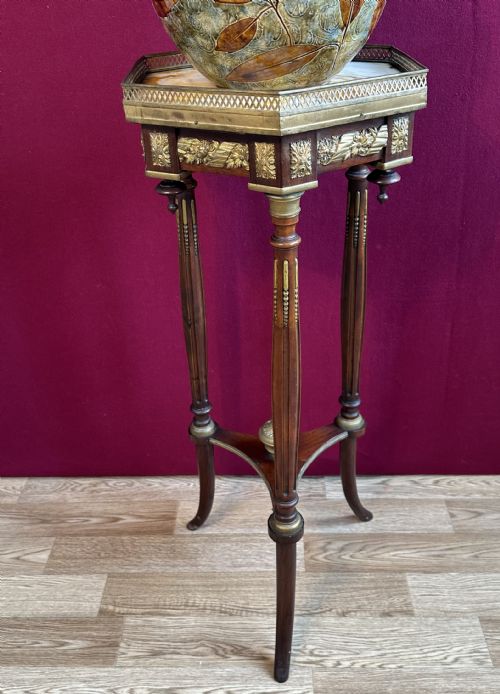
Mahogany Top Plant Stand
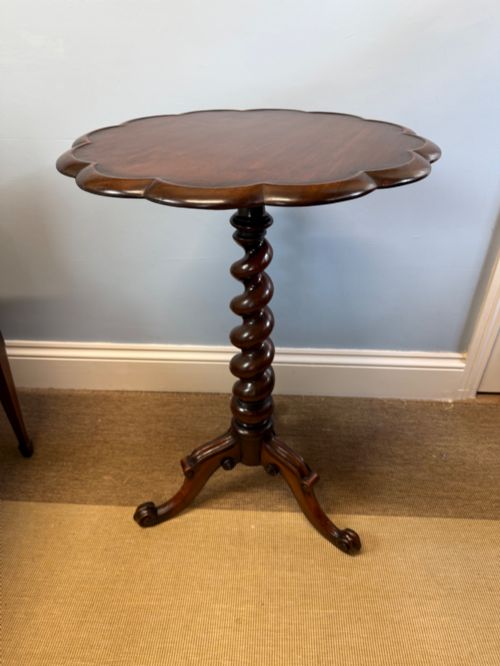
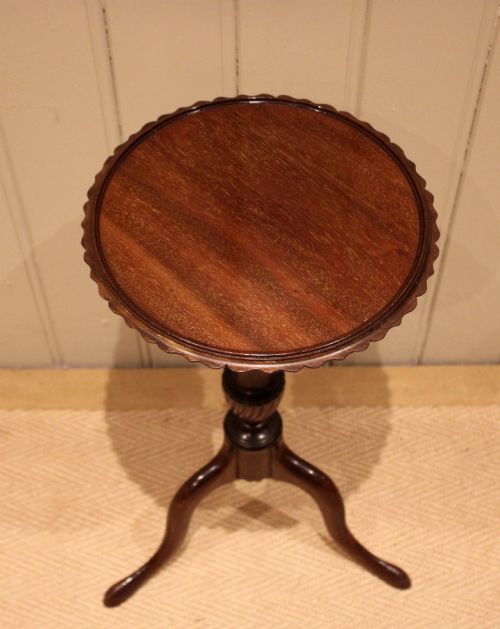
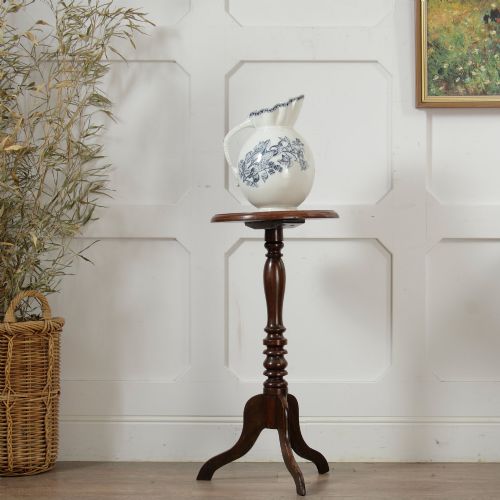
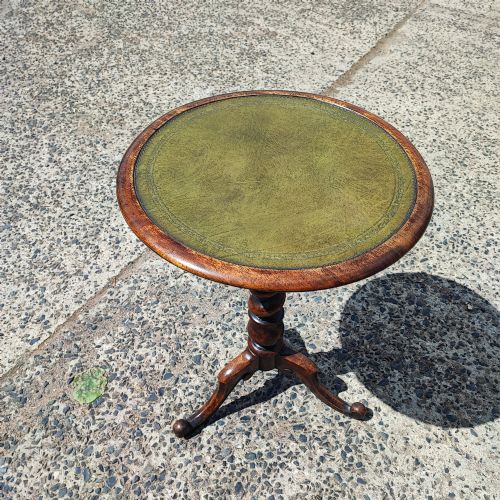
A mahogany top plant stand brings structured height and rich timber grain to a corner that needs grounding.
Mahogany Top Plant Stand
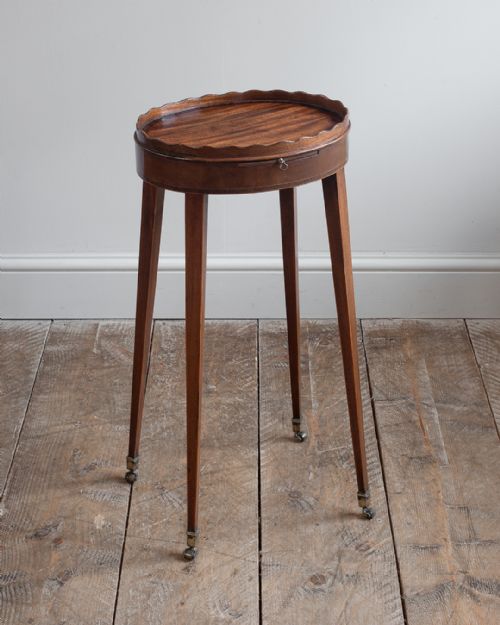
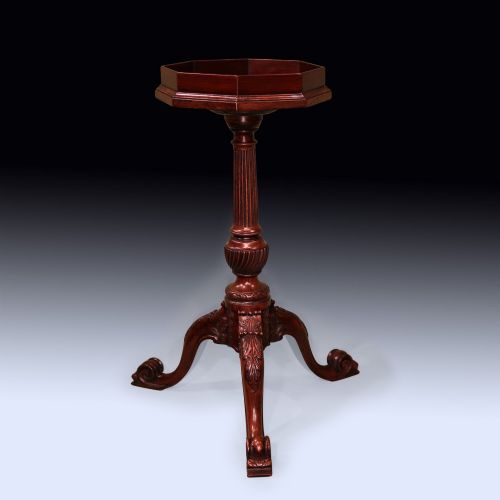
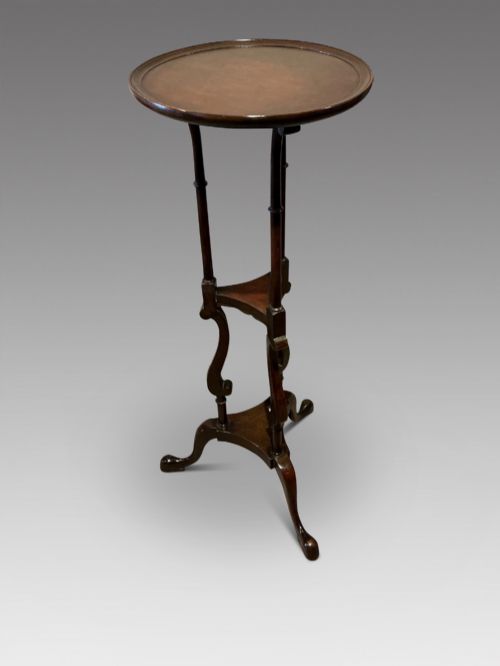
When you search for a mahogany top plant stand, you look at elevated surfaces designed to hold porcelain, urns or lamps rather than floor-bound pots. The pieces collected under this phrase span compact occasional tables, tall torcheres and tripod wine tables from the eighteenth century through the Edwardian period.
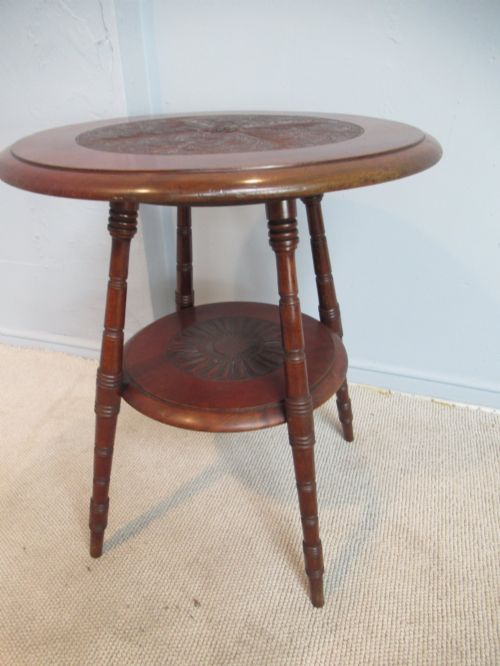
The version you meet most often on this page is a nineteenth-century Victorian or Edwardian example standing on slender legs with a circular or shaped top. These domestic furnishings served multiple roles in period interiors, shifting easily between holding a floral arrangement and supporting a bedside candle or tea service.
How they were made
Cabinetmakers constructed these stands predominantly from dense mahogany, occasionally pairing the timber with contrasting wood inlay or supporting it on sturdy hardwood frames. Turned columns and tripod bases provided stable geometry for narrow tops carrying heavy loads.
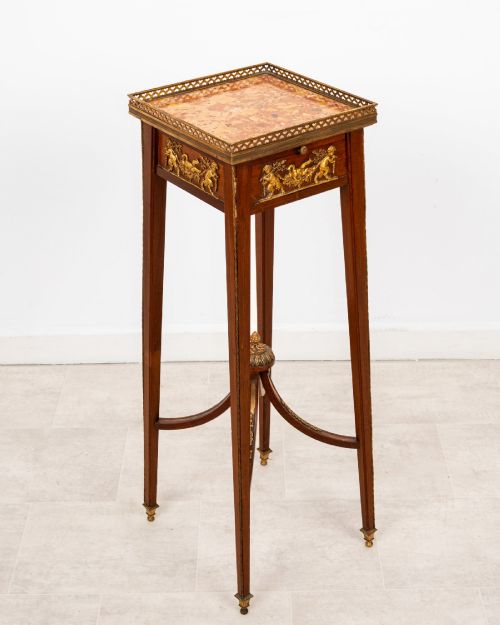
Many examples incorporate decorative metals such as brass and ormolu mounts, or inset marble slabs designed to resist moisture from potted plants. French polish or traditional wax finishes sealed the wood while accentuating the deep grain patterns.
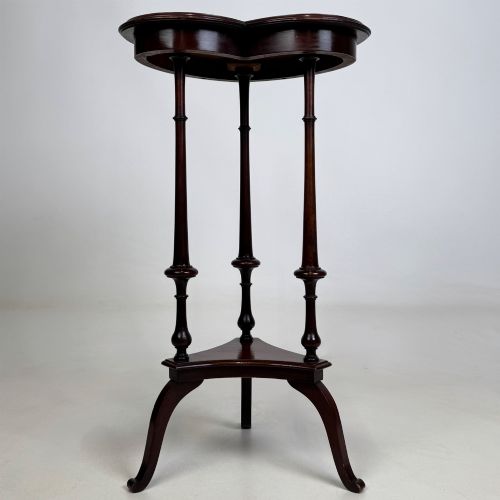
Several stands feature heart-shaped tops, proving that historical cabinetmakers possessed a romantic streak alongside their practical joinery skills.
What varies in quality
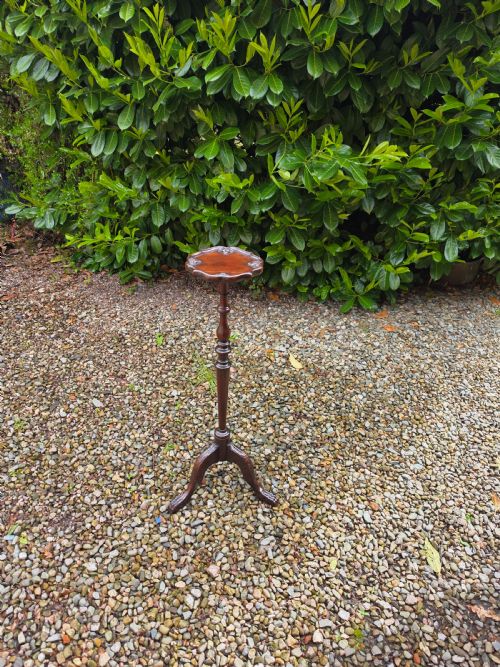
The distinction between ordinary utility items and finer examples rests on the crispness of carved details, the selection of figured mahogany timber, and the structural integrity of the joints. Tripod bases fitted with well-turned central pillars and subtle hand-carving show greater workshop ambition than plain production pieces.
Material combinations also elevate a piece, such as integrating matched rouge marble inserts or pierced brass galleries around the edge of the mahogany top. Proportion remains paramount, ensuring that tall torcheres or slender wine tables retain stability without appearing clumsy.
The Mahogany Top Plant Stand Glossary
- Torchere
- A tall, slender stand designed specifically to elevate a light source or decorative object. These vertical pieces often feature carved columns and narrow circular tops.
- Tripod table
- A small occasional table supported by three legs radiating from a central pillar. This construction prevents wobbling on uneven period floorboards.
- Urn stand
- A diminutive eighteenth-century table designed to hold a hot water urn or kettle. They frequently incorporate pull-out slides or raised edges.
- Jardiniere stand
- A decorative pedestal intended to display a planter or jardiniere. They appear in various timber and marble configurations from the Victorian era onward.
- Ormolu
- Gilded bronze mounts applied to furniture for decorative contrast. French-influenced pieces utilise these metal accents extensively around the tops and bases.
Mahogany Top Plant Stand: Frequently Asked Questions
What is the difference between a plant stand and a wine table?
A plant stand typically prioritises height, narrow proportions, and moisture-resistant surfaces like marble or glazed ceramic inserts to protect against watering. Wine tables are proportioned for bedside or fireside use, featuring small circular or shaped timber tops.
Despite their original distinct purposes, nineteenth-century cabinetmakers built both forms with similar turned pillars and tripod bases. Many surviving pieces served multiple domestic functions over their lifetimes, moving between plant display and holding small lamps.
How do I care for a mahogany top on a plant stand?
Protect the timber surface by using saucers or waterproof mats beneath any plants or vessels placed upon it. Regular dusting with a soft, dry cloth preserves the wax or polish without building up residue.
Avoid placing these stands in direct sunlight or near active heat sources to prevent the mahogany from drying out and splitting. Apply a quality natural beeswax periodically to nourish the grain and maintain the satin lustre.
How do I distinguish an eighteenth-century stand from a later revival piece?
Examine the underside of the top and the peg construction within the central column joints for signs of hand-working and period tool marks. Eighteenth-century pieces often display native timber shrinkage and honest wear consistent with age.
Revival pieces from the Edwardian period or later frequently employ more standardised machine-cut joinery and cleaner, uniform timber selections. Comparing the patination and wear patterns across the base and top offers further clues to the true age.