

Mahogany Tilt Top Breakfast Table
A mahogany tilt top breakfast table combines domestic utility with ingenious design, serving as an adaptable dining centrepiece that folds flat for storage.
Mahogany Tilt Top Breakfast Table
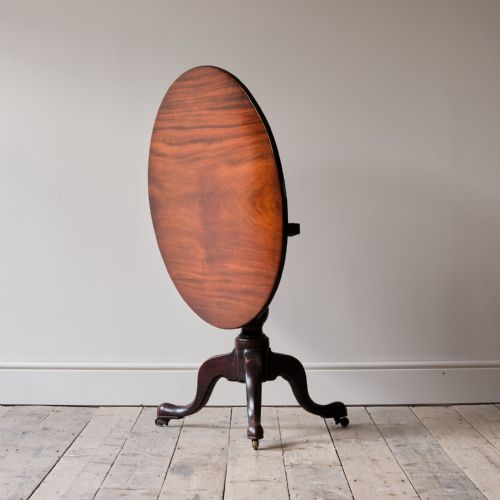
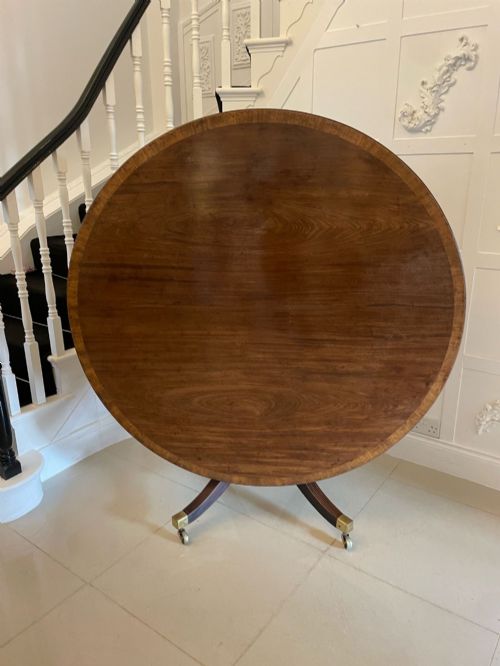
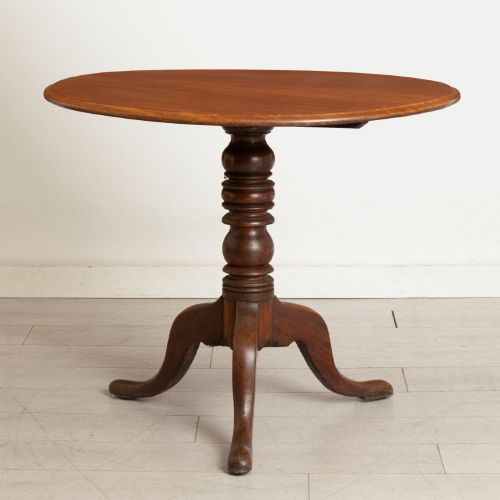
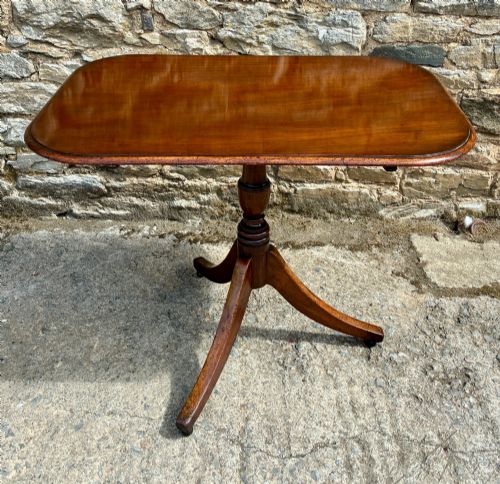
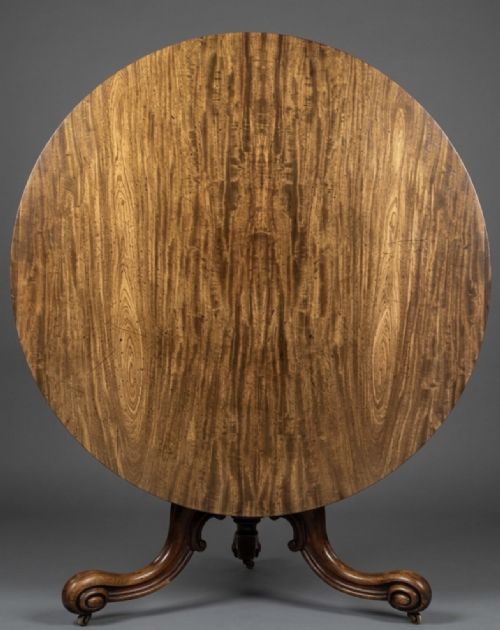
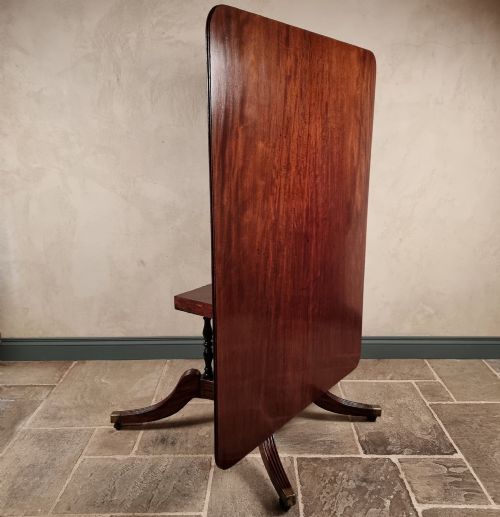
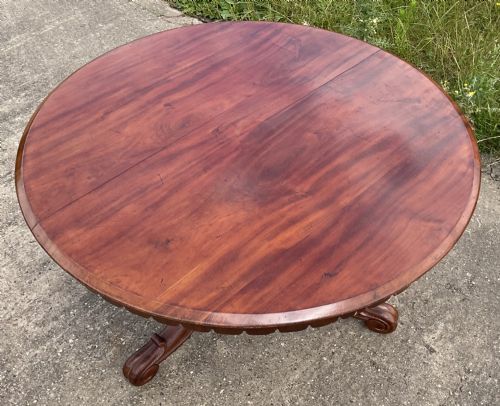
A mahogany tilt top breakfast table is a versatile dining and centre piece designed to fold upright when not in use to save space in domestic interiors. The pieces on this page span the Georgian, Regency, William IV, and Victorian periods, showcasing a progression from restrained eighteenth-century lines to heavier nineteenth-century carving.
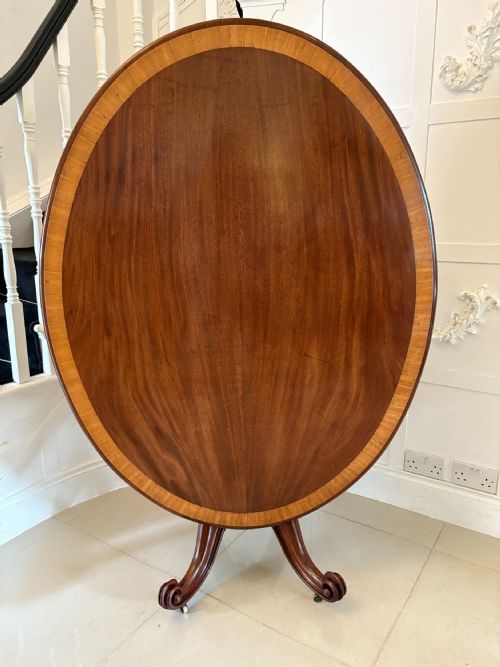
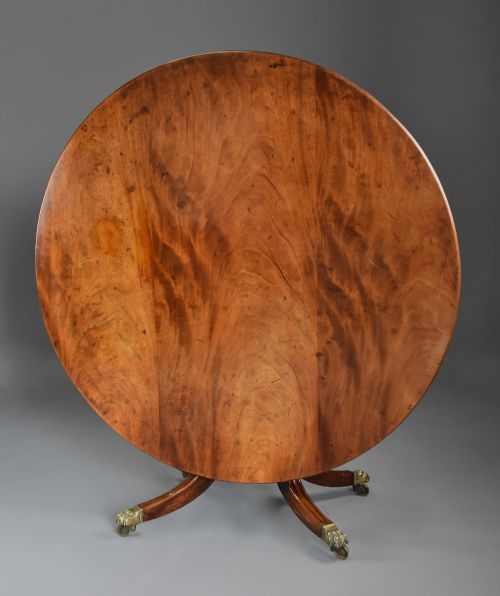
Most examples appear as circular or oval formats supported by a central pillar and tripod or pedestal base, often fitted with brass casters for mobility. Buyers seeking a traditional dining surface find these tables readily in both round and rectangular configurations originating from the late eighteenth to the late nineteenth centuries.
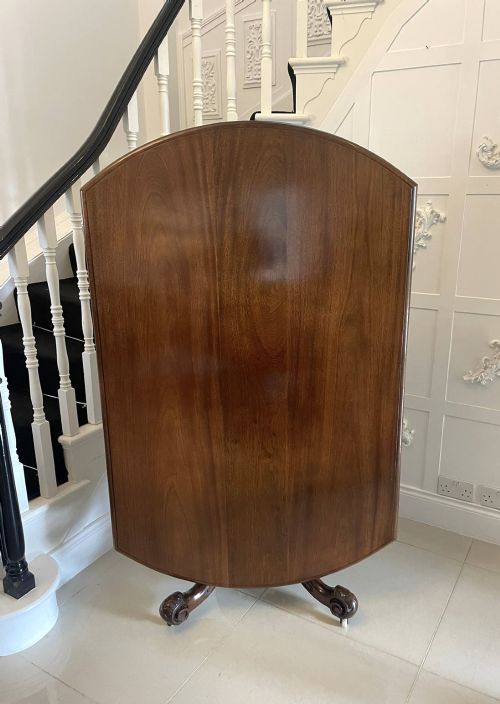
Makers utilised the tilting mechanism not merely for storage but to allow the top to catch the light, displaying the grain when pushed against a wall. The selections span compact occasional versions up to large six-seater dining formats.
Materials and Construction
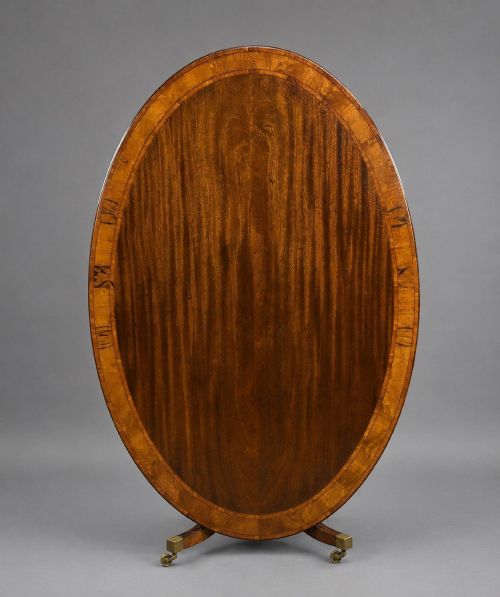
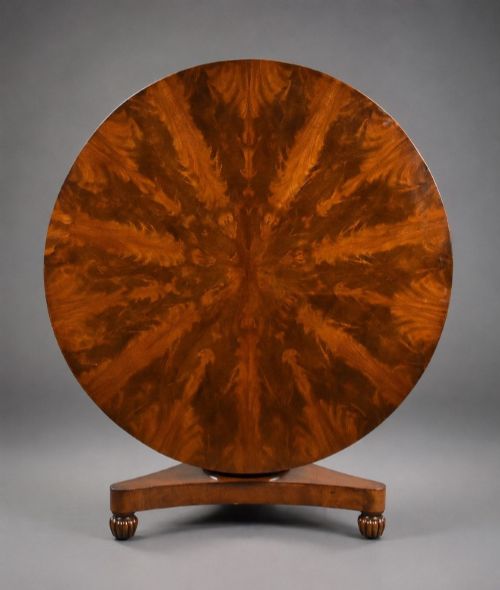
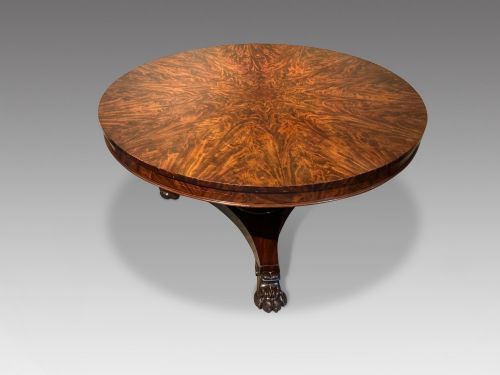
Cabinet makers relied primarily on solid mahogany and flame mahogany veneer, supplemented by secondary timbers such as satinwood for crossbanding and brass for casters and inlay. The tops were frequently constructed from single boards or well-matched figured panels fixed to a tilting catch mechanism atop a turned or carved central pillar.
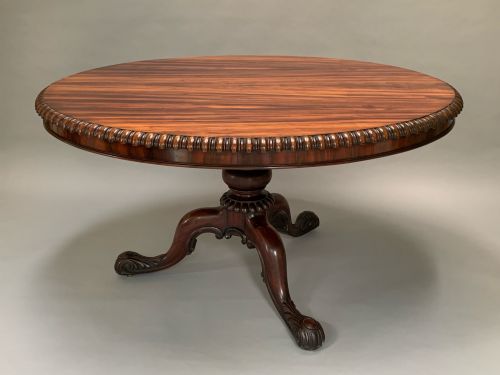
Structural integrity relied upon sturdy tripod legs or platform bases, frequently ornamented with carved paw feet or foliage details. Polishing techniques using shellac built up a deep patina over the timber grain, highlighting the natural figure of the wood.
Assessing Quality
Quality reveals itself in the selection of the timber, particularly the choice of figured mahogany or flame veneer on the top surface and the precision of any crossbanding. Superior examples display seamless movement in the brass tilt mechanism and robust joinery at the pillar junction.
Proportion and carving define the upper tier of these pieces, where hand-carved pedestals and balanced tripod bases demonstrate the maker's skill. Inferior items often show clumsy proportions or poorly matched veneer sections that lack the depth of tone found in finer pieces.
Gillows·Walker-Lancaster·James Mein
The Mahogany Tilt Top Breakfast Table Glossary
- Tilt top
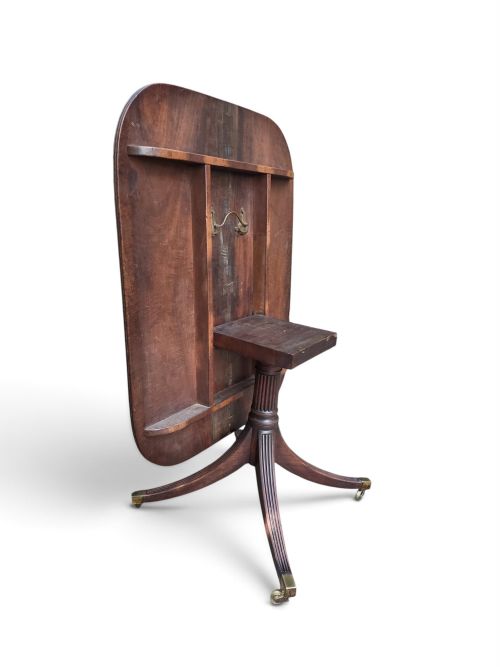
- A table top hinged to pivot from horizontal to vertical, allowing the piece to be stored against a wall when not in use. This mechanism typically employs a brass or wooden catch to secure the surface.
- Crossbanding
- A border of veneer laid around the perimeter of a table top with the grain running perpendicular to the main panel. This decorative technique frames the central wood figure.
- Patina
- The deep, lustrous surface sheen developed over decades through handling, waxing, and ageing. Collectors prize pieces retaining a warm, undisturbed finish.
- Triform base
- A pedestal support resting on three feet or legs, common in Regency and Victorian designs. It provides stability for heavy central tables while allowing legroom.
Mahogany Tilt Top Breakfast Table: Frequently Asked Questions
How do I use a tilt top table daily?
Release the brass or wooden catch beneath the top and pivot the surface into its vertical position when you need to clear floor space in a room.
Return the top to the horizontal position and secure the catch firmly before placing items on the surface for dining or display.
Are these tables sturdy enough for regular dining?
Solid mahogany construction and heavy central pedestals provide a stable foundation that easily supports everyday meals and gatherings.
Care should be taken not to lean excessive weight on the outer edges when the top is locked horizontally to protect the pivot mechanism.
How do I distinguish Regency from Victorian examples?
Regency pieces generally exhibit cleaner architectural lines, subtle brass inlay, and restrained reeded or saber leg supports dating from the early nineteenth century.
Victorian versions tend to feature heavier proportions, more elaborate carved decoration, and robust platform bases reflecting mid to late nineteenth-century tastes.
What is flame mahogany?
Flame mahogany is a highly figured veneer cut from the branch junctions of the tree, creating a distinctive flame-like pattern across the timber.
Cabinet makers reserved this striking material for the primary surfaces of superior tables to catch the eye and display natural grain movement.