

Mahogany Tabletop Box
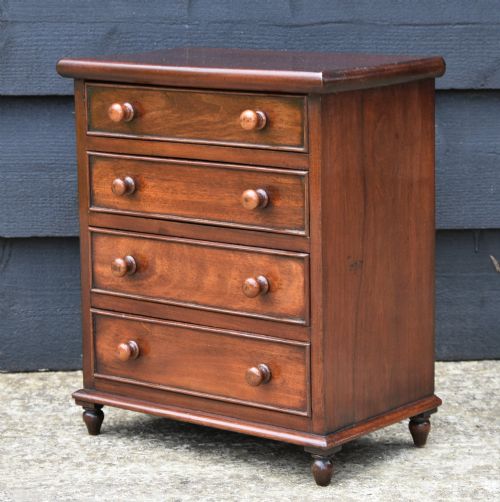
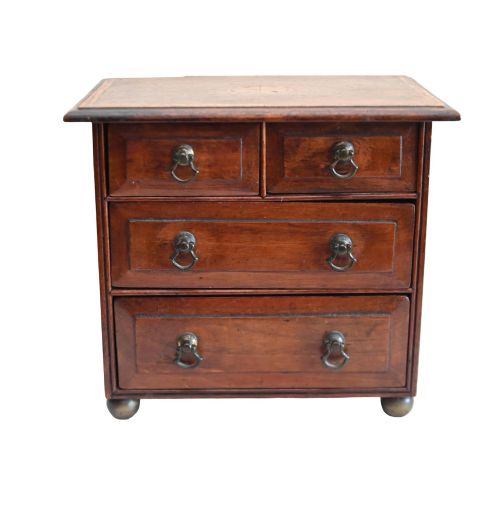
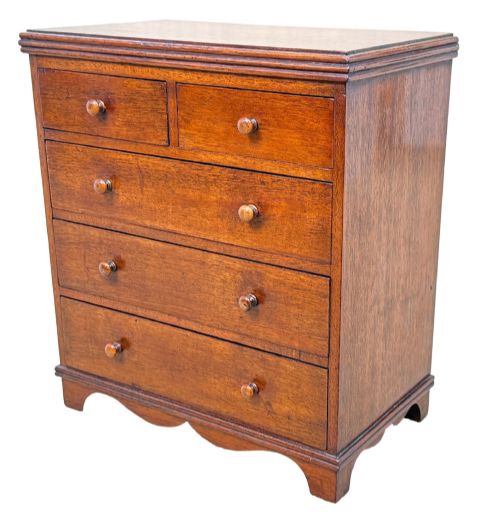
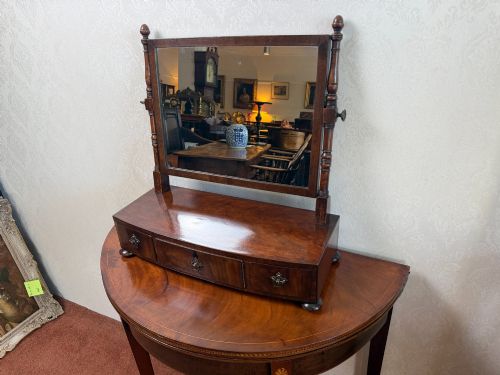
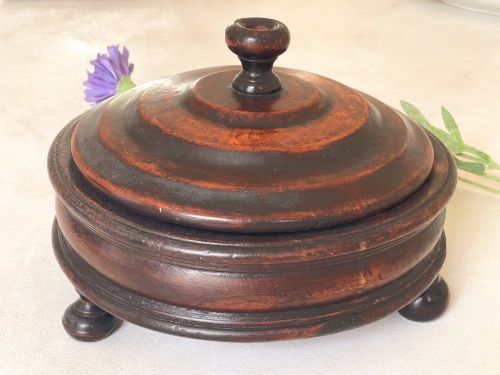
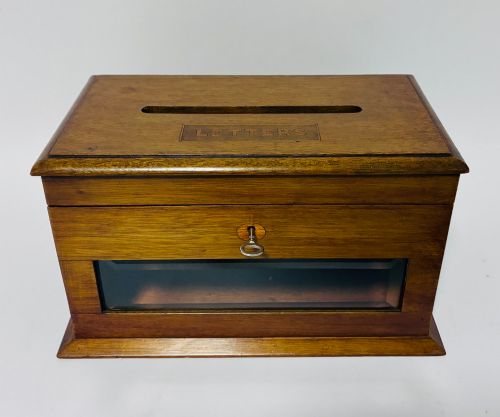
A mahogany tabletop box sits ready on a surface, offering neat storage for trinkets, letters, or toilet accessories.
Mahogany Tabletop Box
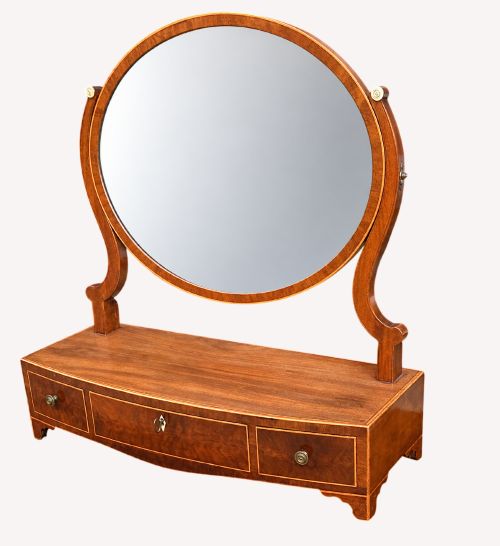
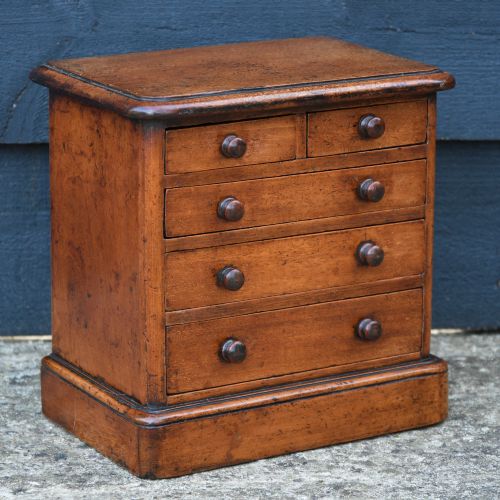
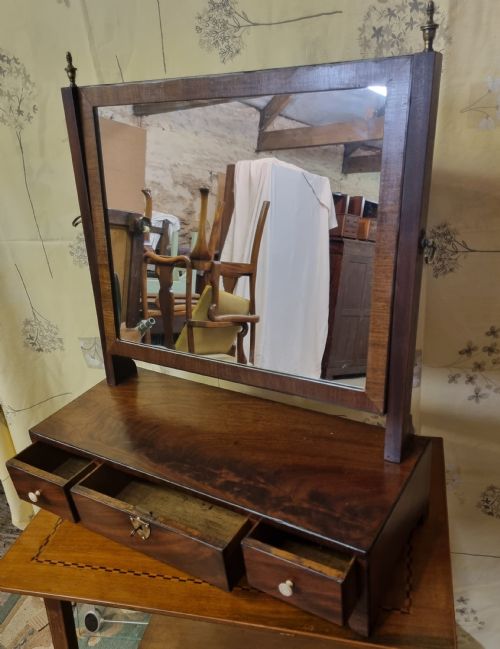
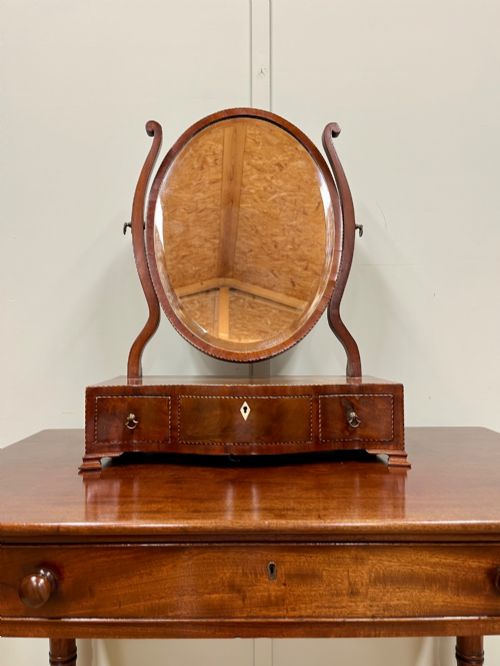
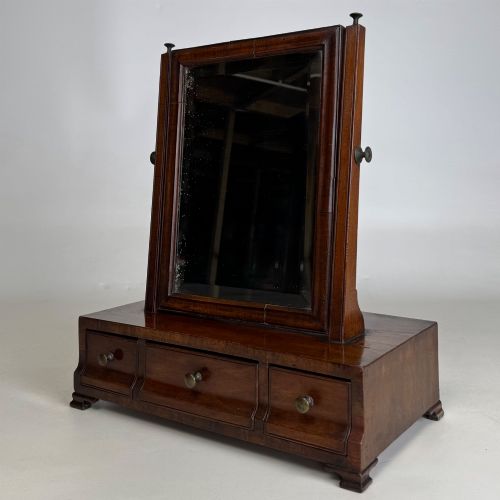
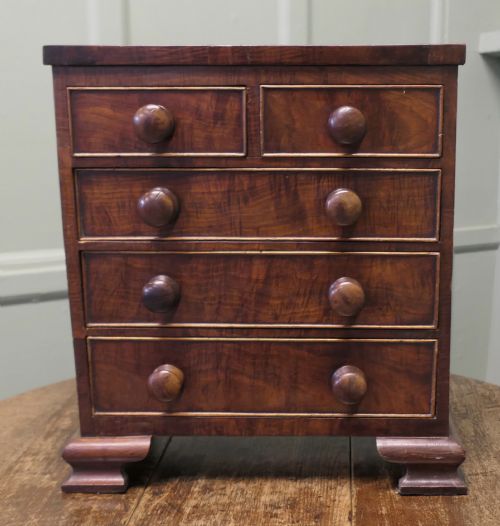
A mahogany tabletop box encompasses a diverse group of portable wooden containers designed for grooming, collection, and correspondence. The selections on this page centre heavily on dressing mirrors, toilet mirrors, miniature chests of drawers, and small display cabinets.
Makers constructed these pieces across the eighteenth, nineteenth, and early twentieth centuries, spanning periods from George II through to Edwardian times. Forms range from simple rectangular letter boxes to serpentine-fronted dressing mirrors and glass-fronted cabinets.
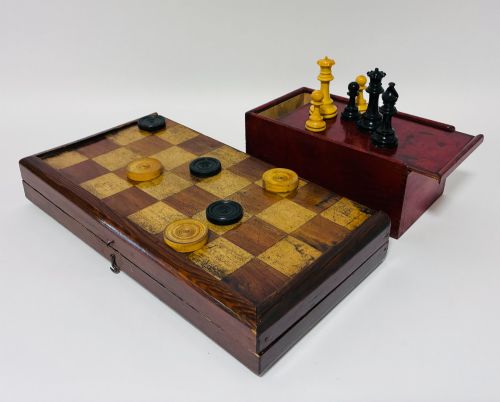
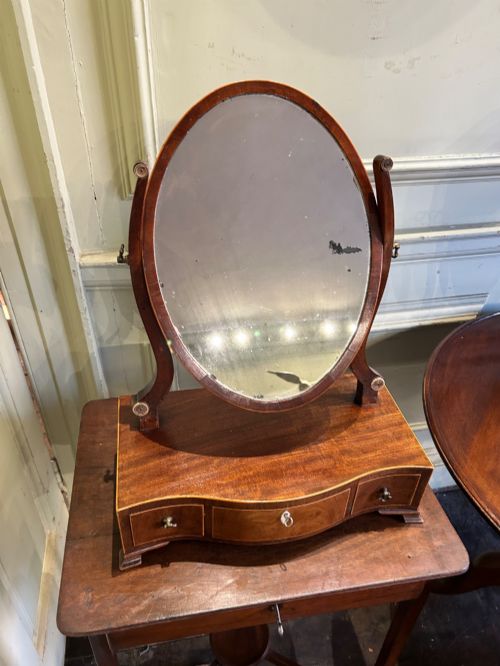
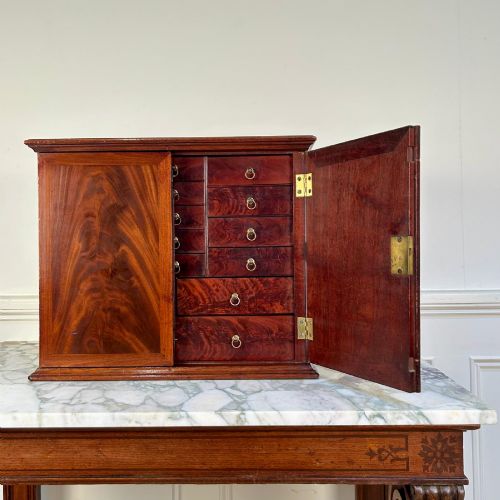
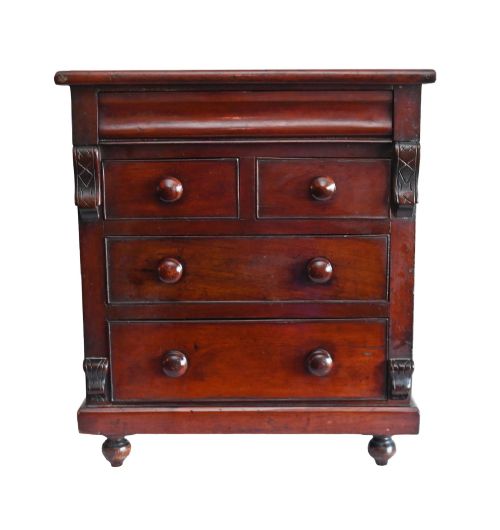
Buyers seeking a mahogany tabletop box will frequently encounter dressing and toilet mirrors featuring small base drawers alongside miniature chests often termed apprentice pieces. Specialised items such as collectors cabinets, microscope slide cases, and parlour games also appear.
What varies in quality
The degree of refinement in timber selection and decorative detail separates standard examples from exceptional ones. Finer pieces display carefully matched mahogany grains, subtle crossbanding, and well-executed serpentine or bowfront shapes.
Hardware quality also dictates overall merit, where original brass fixtures and delicate inlay work elevate a piece. The crispness of the carving on parcel-gilt mirrors or the precision of miniature drawer construction reflects the maker's skill.
Mahogany Tabletop Box Retail Price Guide 2026
Typical asking prices for mahogany tabletop box among the pieces listed under this phrase on Sellingantiques today, from the lower quarter to the upper quarter. They describe what is for sale here now, not the wider market.
Listings feature mahogany tabletop boxes spanning the eighteenth century through to the Edwardian period, utilising brass, glass, bone, and boxwood.
The Mahogany Tabletop Box Glossary
- Toilet mirror
- A small adjustable looking glass mounted on a wooden frame with a base containing small drawers. These pieces sat atop dressing tables or chests.
- Apprentice piece
- A miniature item demonstrating a craftsman's skill to gain master status within a guild. Many small chests of drawers carry this designation.
- Crossbanded
- A decorative border technique where veneer strips run perpendicular to the grain of the central panel. This adds visual framing to drawer fronts and mirror frames.
- Serpentine
- A curved line forming a wave shape with a convex centre flanked by concave sides. It appears on the fronts of higher-end mirrors and miniature chests.
- Collector cabinet
- A specialised small case fitted with multiple internal drawers for housing specimens or small valuables. Examples include microscope slide and coin cabinets.
Mahogany Tabletop Box: Frequently Asked Questions
What is a mahogany tabletop box used for?
These pieces served practical household functions ranging from personal grooming and letter storage to housing small collections. Dressing mirrors provided a reflective surface for daily toilet routines.
Miniature chests and specialty cabinets held valuables, jewellery, microscope slides, or small trinkets. They kept personal items organised and secure on tabletops.
Where should I place a tabletop box at home?
These compact pieces fit easily on dressing tables, chests of drawers, desks, or console tables in bedrooms and living spaces. Their portable nature allows them to sit comfortably on various flat surfaces.
Display cabinets and glass cases work well on tabletops where internal contents remain visible. Proper placement protects the polished wood and any delicate brass fittings from heavy knocks.
Are apprentice pieces genuine antiques?
Apprentice pieces date primarily from the Georgian and Victorian periods, representing historic skill demonstrations by woodworkers. Their small scale mirrors full-sized furniture designs with authentic period construction.
Collectors prize these miniature chests and cabinets for their charming proportions and traditional joinery. They reflect the exact materials and techniques used in larger household furniture of the time.