

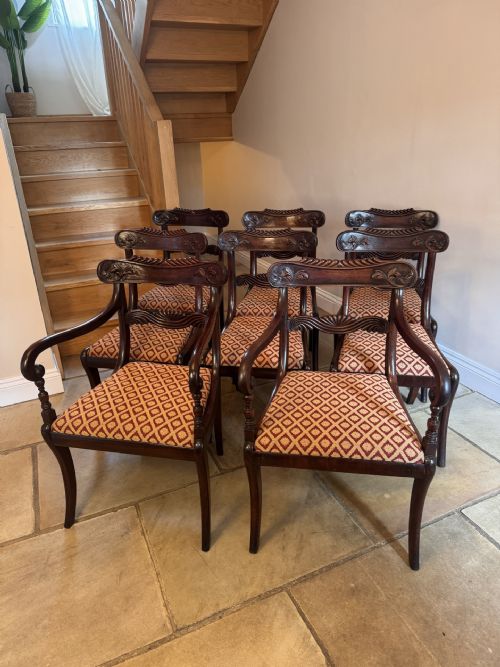
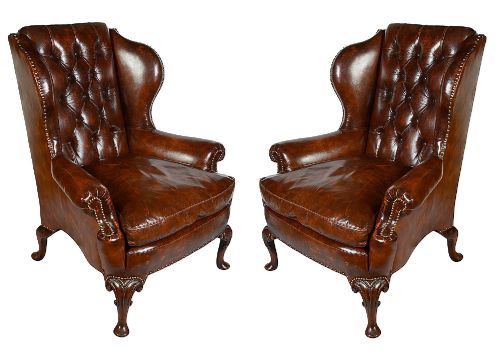
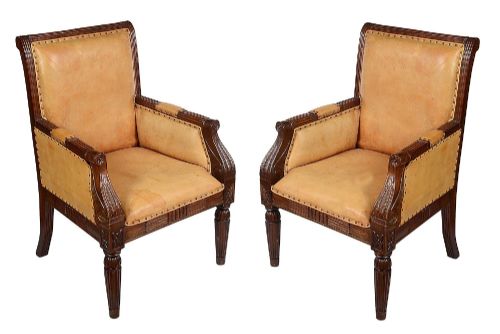
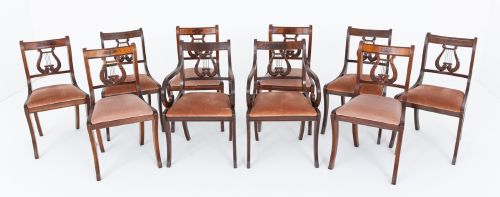
Mahogany Style Armchairs
Mahogany style armchairs combine robust tropical timber with classical carving, offering enduring seating for libraries, desks and dining tables.
Mahogany Style Armchairs
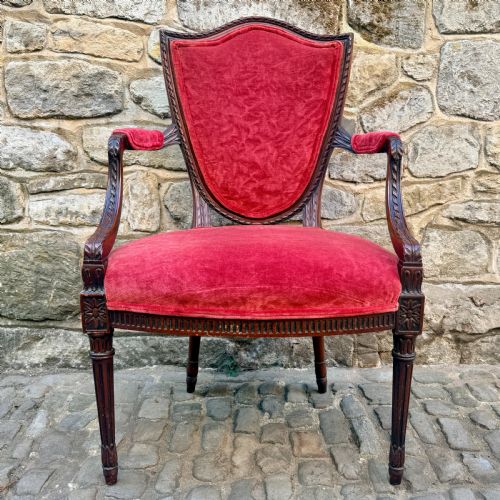
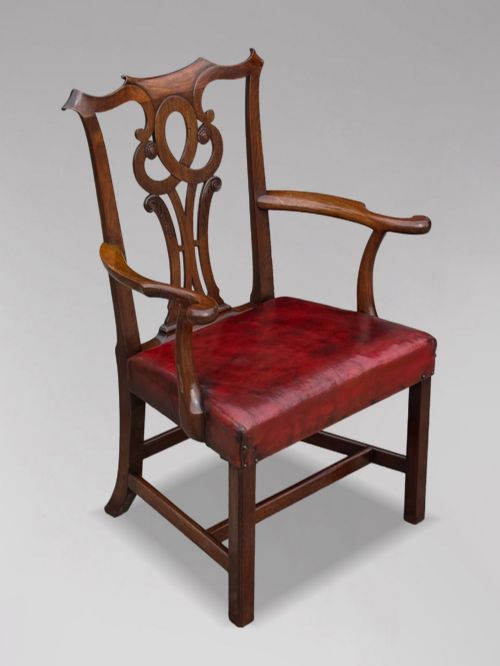
Mahogany style armchairs encompass seating shaped by Georgian, Victorian, Edwardian and later revival periods, spanning formats from open armchairs to library chairs and dining carvers. When searching for mahogany style armchairs, buyers most frequently encounter Chippendale, Hepplewhite and Regency revival pieces alongside authentic 18th-century originals.
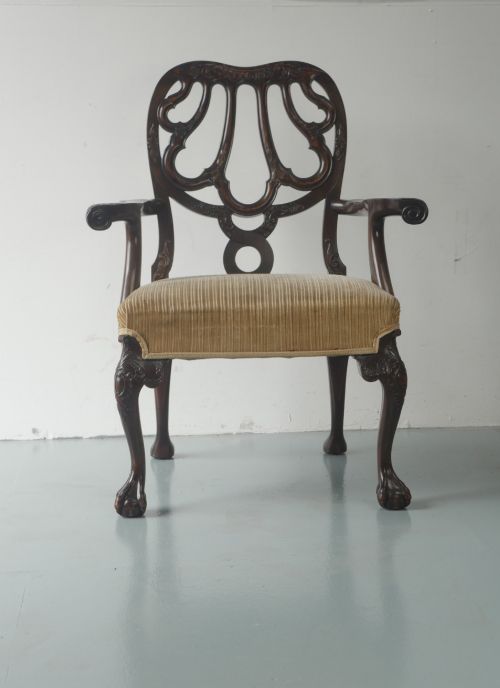
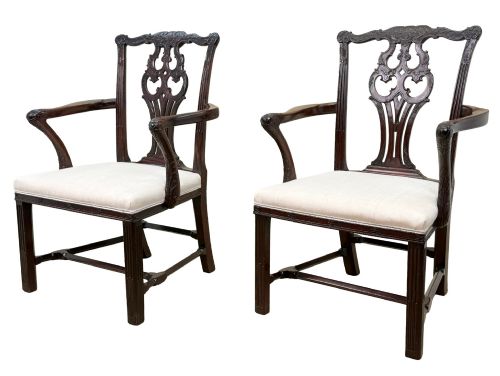
The selection ranges from single library seats and pairs of salon chairs to extensive dining sets complete with matching carvers. Workshop origins vary from English and Scottish makers to Irish interpretations featuring pronounced carved splats and scroll arms.
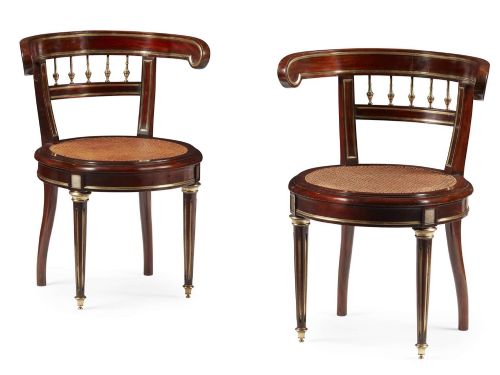
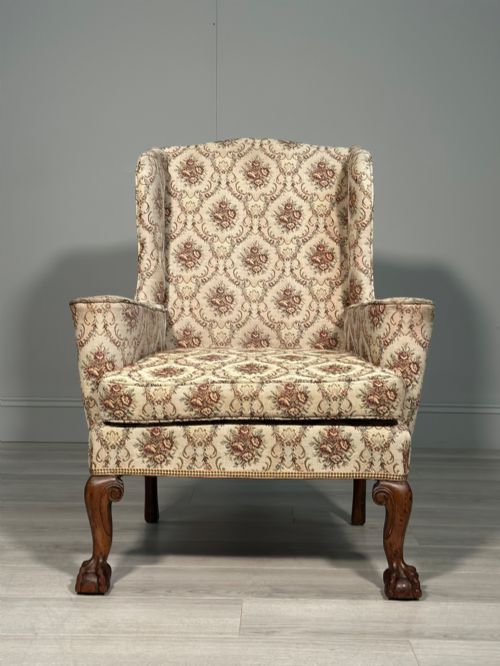
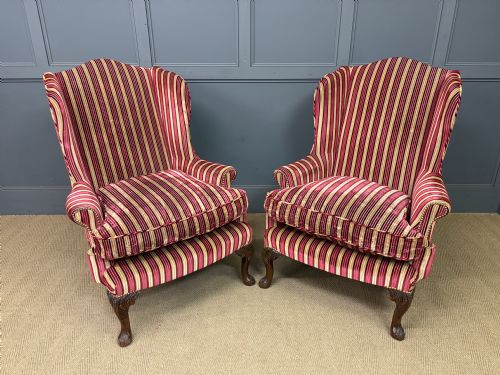
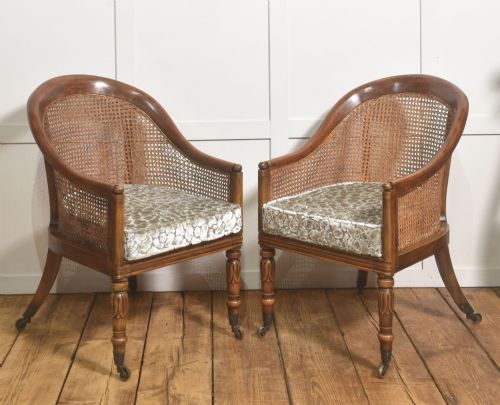
Forms adapt to specific domestic functions, including upholstered wing backs for fireside comfort, open armchairs for desks, and cane tub chairs for lighter interior settings. Each piece reflects the shifting design vocabulary of its period, from robust George III proportions to slender Edwardian interpretations.
How they were made
Construction relies primarily on dense, durable mahogany timber, selected for its stability and suitability for intricate hand carving on arms, legs and back splats. Joinery incorporates traditional techniques such as mortise and tenon joints to ensure structural rigidity across dining carvers and heavy library seats.
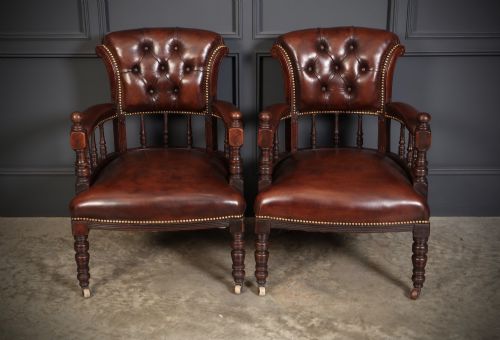
Upholstery methods vary by period, utilising supportive webbing, horsehair stuffing and traditional springs finished with leather, fabric, damask, velvet or cane panels. Brass castors, studs and gilt accents frequently complement the dark timber frames on Regency and Empire influenced examples.
Mahogany Style Armchairs Retail Price Guide 2026
Typical asking prices for mahogany style armchairs among the pieces listed under this phrase on Sellingantiques today, from the lower quarter to the upper quarter. They describe what is for sale here now, not the wider market.
Chair forms span dining seats, desk chairs, salon pieces and heavy library armchairs.
What varies in quality
Quality rests upon the crispness of the timber carving and the architectural proportion of the frame, where fluid lines on cabriole legs or pierced splats distinguish superior examples. Timber selection also dictates grade, with figured grain and rich natural patination marking out pieces executed by accomplished workshops.
Structural integrity and the retention of original elements, from leather upholstery to brass fittings, determine the standing of each armchair. Masterly joinery ensures that frames remain stable without excessive reinforcement, preserving the intended silhouette across centuries of use.
Howard And Sons·Giles Grendey·Philip Webb·Whytock And Reid
The Mahogany Style Armchairs Glossary
- Carver
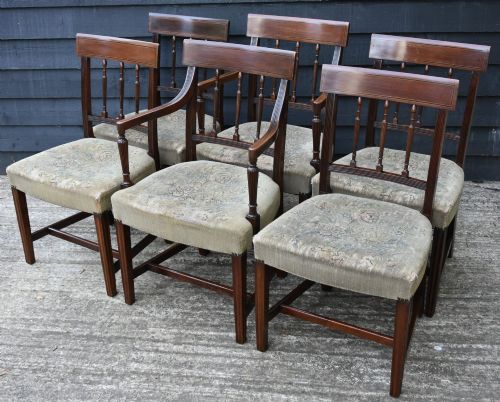
- An armchair designed with open sides to accommodate formal clothing, commonly accompanying a set of matching dining chairs.
- Chippendale
- A style inspired by 18th-century cabinet maker Thomas Chippendale, characterised by interlaced ribbon splats, cabriole legs and claw-and-ball feet.
- Hepplewhite
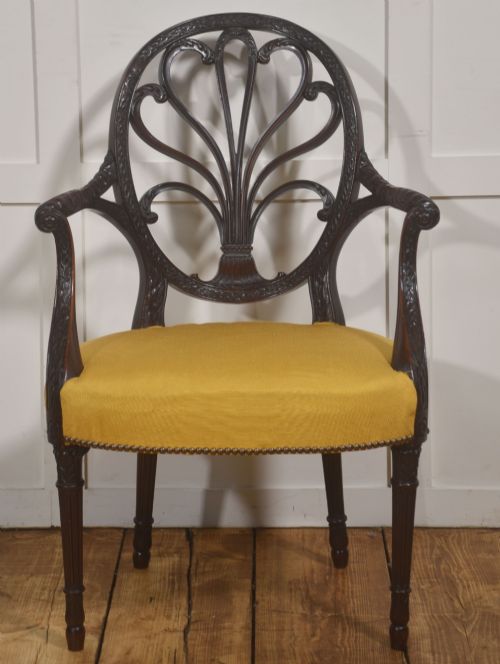
- A neoclassical style associated with delicate shield-back designs, tapering legs and refined, symmetrical proportions.
- Gainsborough
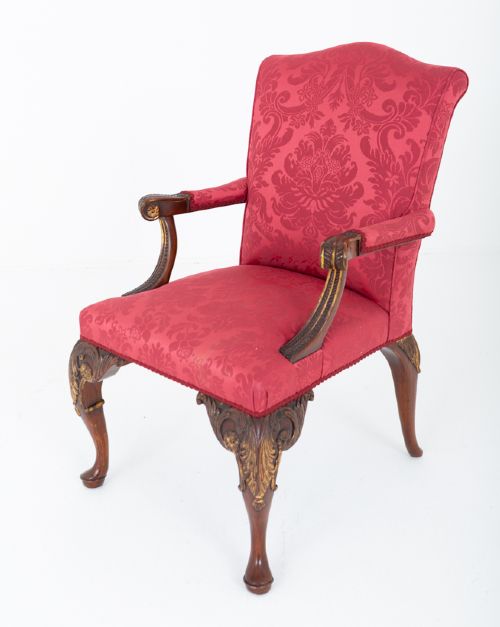
- A wide, low-seated upholstered armchair with open padded arms, originating in the mid-18th century for library use.
- Splat
- The vertical central strip of wood within the backrest of a chair, often intricately pierced or carved.
Mahogany Style Armchairs: Frequently Asked Questions
How do I identify a genuine period chair?
Examine the timber underneath for natural ageing, tool marks and construction methods consistent with 18th or 19th-century joinery.
Check for hand-cut joints rather than modern mechanical fixings, along with consistent patination across high-wear zones like the armrests.
Are these chairs suitable for daily dining use?
Many robust mahogany carvers and dining chairs are built for regular seating provided the frames and joints remain tight.
Inspect the structural stability of the leg junctions and ensure antique upholstery or cane seating can support daily weight.
What is the difference between a carver and a library chair?
Carvers typically feature slender frames designed to slide beneath dining tables alongside matching single chairs.
Library chairs offer deeper, wider seats with extensive padding intended for prolonged reading and private study.
How should I care for mahogany timber?
Keep wooden frames away from direct heat sources and strong sunlight to prevent the timber from drying out or splitting.
Apply microcrystalline wax periodically and buff with a soft cloth to maintain the natural lustre without building up heavy residues.