






Mahogany Splayed Leg Drawers
Mahogany splayed leg drawers bring compact elegance to a room, offering warm timber tones and slender support that lifts heavy forms.
Mahogany Splayed Leg Drawers
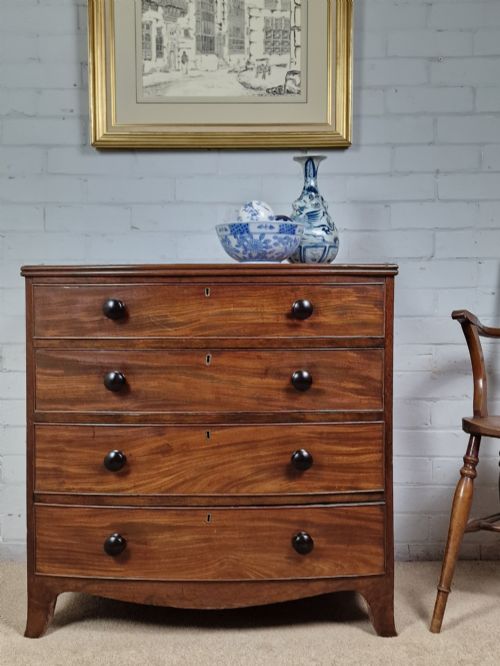
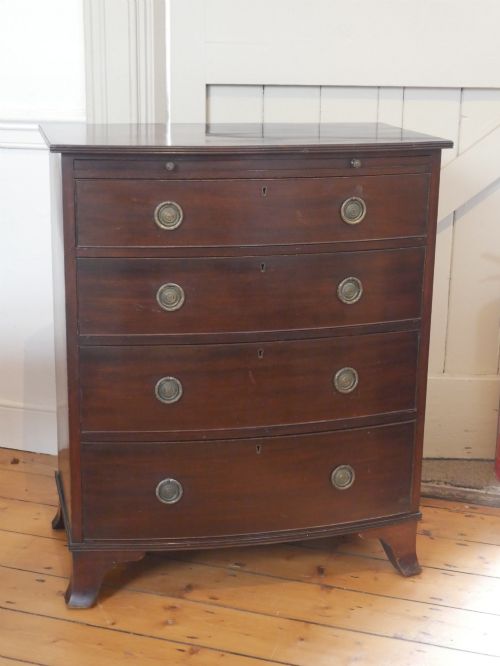
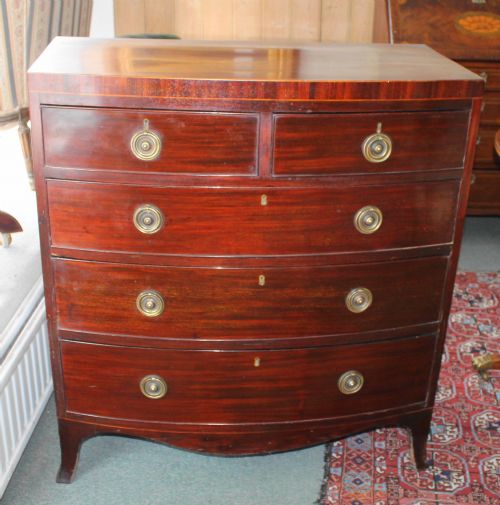
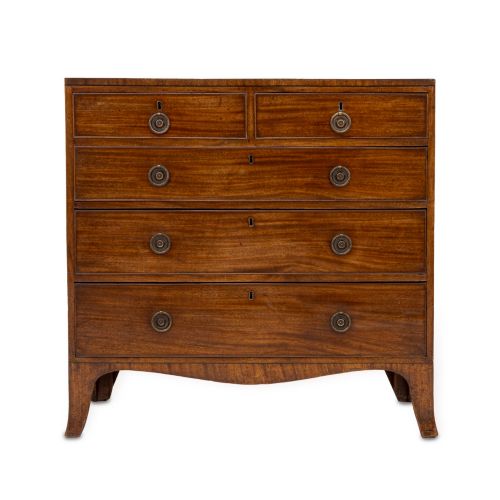
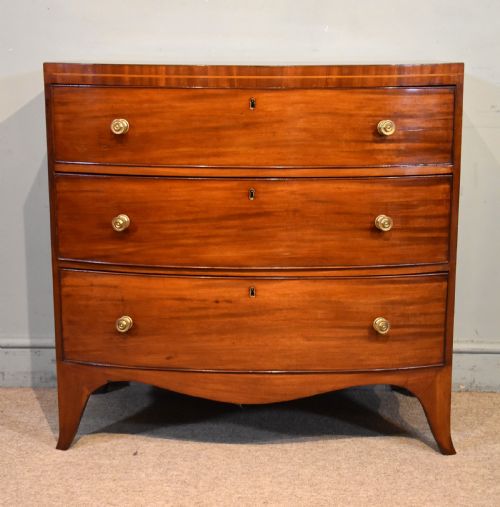
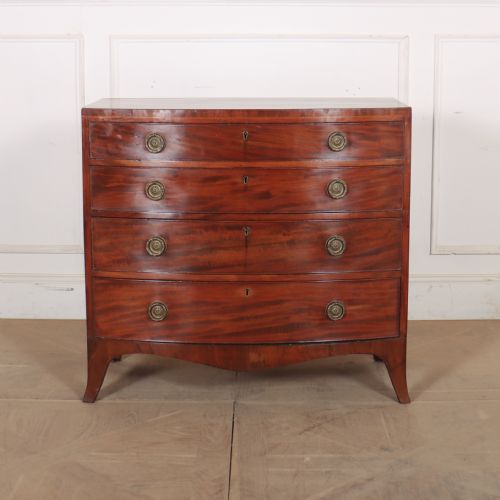
When you search for mahogany splayed leg drawers, you encounter pieces primarily from the Georgian, Regency, and nineteenth century periods. These items centre heavily on bow front chests of drawers, alongside tallboys and occasional tables fitted with drawers.
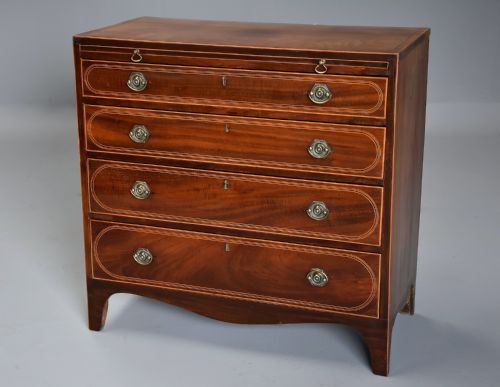
The version most commonly met on this page combines a rich mahogany carcass with outward-angled bracket feet. Makers shaped these supports to lighten the visual weight of case furniture.
Originating in domestic settings across Georgian and Regency England, these chests vary from small bow front designs to grander proportions. The splayed leg profile provides distinct stability while maintaining a refined silhouette.
How they were made
Cabinet makers built these pieces using solid mahogany and native timbers, frequently adding satinwood inlay and boxwood stringing for contrast along drawer fronts and top edges. Brass handles and escutcheons finished the hardware.
Construction techniques relied on dovetailed drawer joints and solid oak or secondary wood linings to ensure durability. Surfaces received polished finishes that enhanced the natural grain and patina of the timber.
Object forms include bow front chests, tallboys, pedestal Pembroke tables, and sofa tables.
What varies in quality
The grade of mahogany timber and the crispness of the satinwood inlay dictate the visual standard of each piece. Superior examples display carefully matched grain patterns across the drawer fronts and well-proportioned splayed feet.
Construction finesse also separates standard furniture from finer work, visible in the precision of the dovetailing and the retention of original brass hardware. Patina depth and surface preservation further define the standing of individual chests.
Druce & Co
The Mahogany Splayed Leg Drawers Glossary
- Bow front
- A convex curved front to a chest of drawers that softens the rectangular shape of the furniture. This form gained popularity during the Georgian and Regency periods.
- Splay foot
- A foot that spreads outward from the vertical base for stability and visual lightness. It often terminates in a bracket form on case pieces.
- Satinwood
- A durable, yellowish timber native to Ceylon and the West Indies, utilised for decorative stringing and contrasting inlay work. Cabinet makers prized it for its bright reflectivity.
- Tallboy
- A tall chest of drawers consisting of one chest stacked upon another, creating significant vertical storage capacity. Eighteenth-century makers frequently incorporated splayed feet or bracket bases beneath them.
- Stringing
- Thin inlaid lines of contrasting wood, such as boxwood, set flush into the surface of mahogany furniture. This technique frames drawer edges and top panels.
Mahogany Splayed Leg Drawers: Frequently Asked Questions
What periods do these chests come from?
The listings span the Georgian, Regency, and nineteenth-century eras, reflecting dominant cabinet-making styles from those decades.
Craftsmen during these periods favoured mahogany solids and veneers, often incorporating bow fronts and splayed feet.
How do I identify a splayed foot?
A splayed foot angles outward from the bottom corner of the piece, differing from straight bracket or turned feet.
This design feature lifts the carcass slightly and lightens the overall stance of chests and tables.
What woods are used besides mahogany?
Satinwood and boxwood appear frequently as decorative elements for stringing and inlay work on drawer fronts.
Oak and other secondary timbers generally form the internal drawer linings and structural framing.
Where were these pieces used originally?
These chests served primarily as bedroom or dressing room furniture for storing garments and personal linen.
Their compact proportions also suited smaller parlours and private chambers in period homes.
Are brass handles original?
Many pieces retain period brass drop handles or knobs, though replacement hardware occurs frequently on older furniture.
Examining the pin holes and backplate impressions helps determine if the mountings match the age of the timber.