

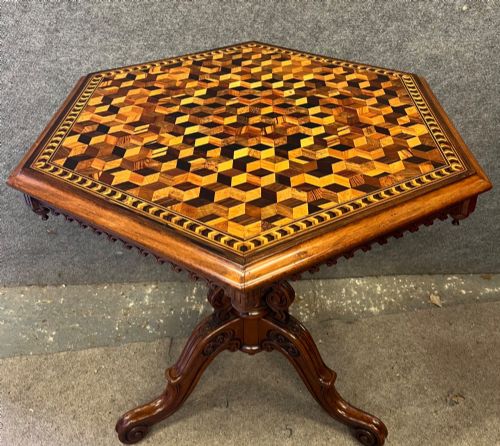
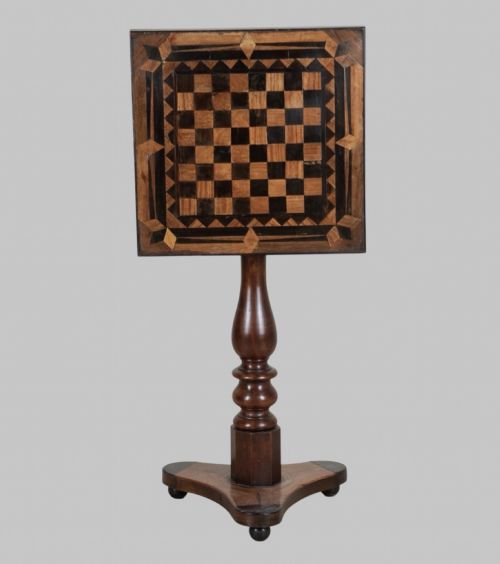
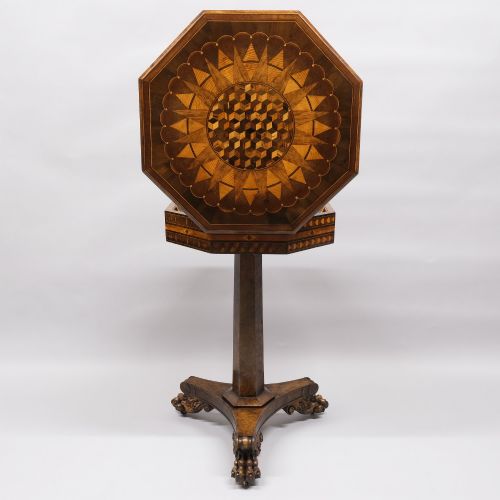


Mahogany Specimen Wood Table
These mahogany specimen wood table pieces gather timber and stone into intricate geometric displays.
Mahogany Specimen Wood Table
A mahogany specimen wood table brings together diverse timbers and stones in geometric patterns, most often seen on this page as circular or rectangular occasional tables and work tables from the nineteenth century. These pieces cross several periods, appearing across Georgian, Regency, William IV, and Victorian eras.
Makers utilised rich mahogany for structural frames while reserving complex parquetry, sunburst patterns, and pietra dura for the table tops. The forms range from lamp tables and side tables to games tables and desks, each designed to showcase decorative craftsmanship.
The selection reflects both British cabinet-making traditions and colonial craftsmanship, such as Jamaican parquetry work. Buyers encounter circular occasional tables with specimen timber tops alongside tables featuring marble inserts and specialised support structures.
How they were made
Cabinet-makers built the primary carcase using solid mahogany, walnut, or rosewood, applying precise joinery to ensure stable frames for the decorative tops. The surfaces required meticulous sawing and fitting of contrasting veneers.
Craftsmen arranged multiple timbers including boxwood, satinwood, and various specimen woods into sunburst and parquetry designs. Some examples incorporated marble or pietra dura panels set directly into the mahogany framework, secured with brass detailing.
Mahogany Specimen Wood Table Retail Price Guide 2026
Typical asking prices for mahogany specimen wood table among the pieces listed under this phrase on Sellingantiques today, from the lower quarter to the upper quarter. They describe what is for sale here now, not the wider market.
Listings feature mahogany alongside walnut, rosewood, satinwood, and boxwood.
What varies in quality
Quality rests in the precision of the wood-to-wood joints and the complexity of the parquetry or sunburst arrangement on the top. Superior examples demonstrate tight alignment between contrasting timbers and meticulous selection of grain.
The choice of secondary woods and the refinement of base supports, such as swan pedestals or turned columns, distinguish finer workshop output. Richness of mahogany patination and the integration of stone panels further elevate a piece.
Ralph Turnbull
The Mahogany Specimen Wood Table Glossary
- Parquetry
- A geometric mosaic of wood pieces used for decorative surfaces. It forms the patterned tops seen on many occasional tables.
- Pietra dura
- Inlaid work using cut and fitted polished coloured stones to create images or geometric designs. This technique appears on specific occasional table tops.
- Specimen wood
- Individual timber varieties collected for their distinct colours and grain patterns. Makers combined these woods to create contrasting geometric table surfaces.
- Work table
- A small specialised table fitted with compartments or a bag for needlework. Examples from the nineteenth century often display inlaid specimen wood veneers.
Mahogany Specimen Wood Table: Frequently Asked Questions
How do I date a mahogany table?
Dating relies on observing construction methods, timber choices, and stylistic markers associated with periods like the Georgian, Regency, and Victorian eras. Structural details and secondary woods offer key chronological clues.
Tables from the early nineteenth century often combine specific turning styles with particular inlay techniques characteristic of Regency and William IV workshops.
What are pietra dura tables?
Pietra dura tables incorporate finely cut and fitted polished stones into the surface design rather than wood veneers alone. These stone inlays create durable and colourful geometric or pictorial scenes.
Such tops are typically set within mahogany frames, combining stonemasonry techniques with traditional cabinet-making.
How were work tables used?
Work tables served as functional furniture for sewing, needlework, and other domestic crafts. They often included internal compartments or fitted storage beneath the decorative top.
In period interiors, these pieces combined utility with display, allowing owners to showcase fine parquetry and specimen wood veneers in living spaces.