

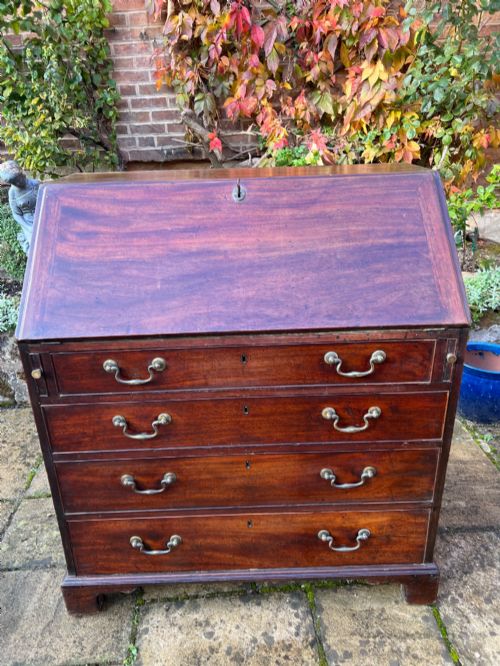
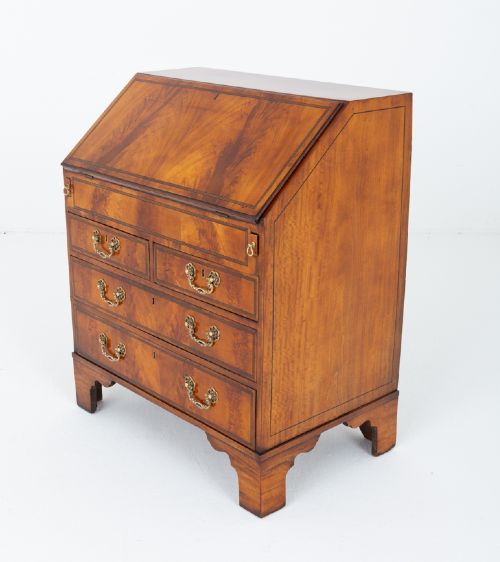

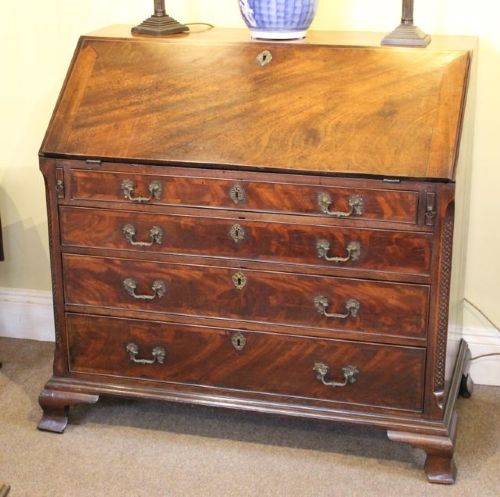
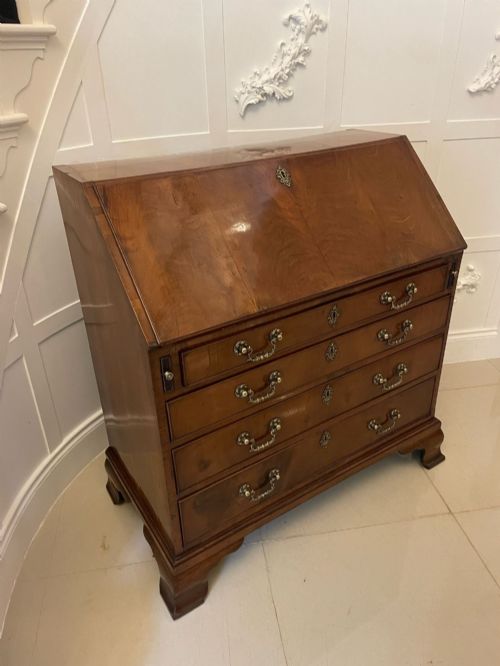

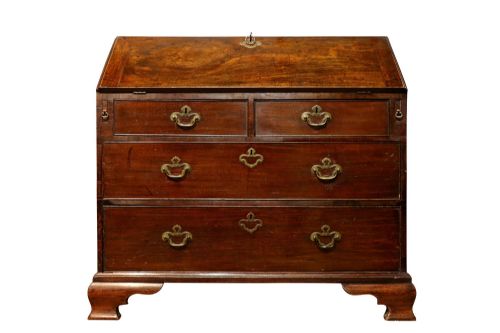


Mahogany Slope Front Bureau
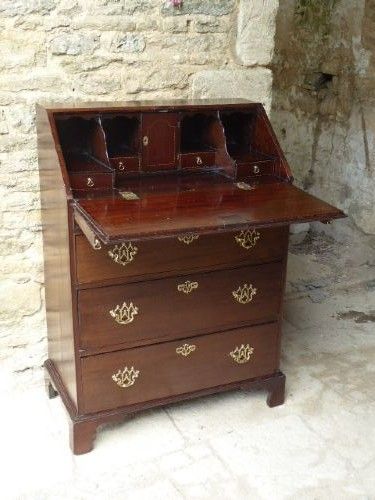
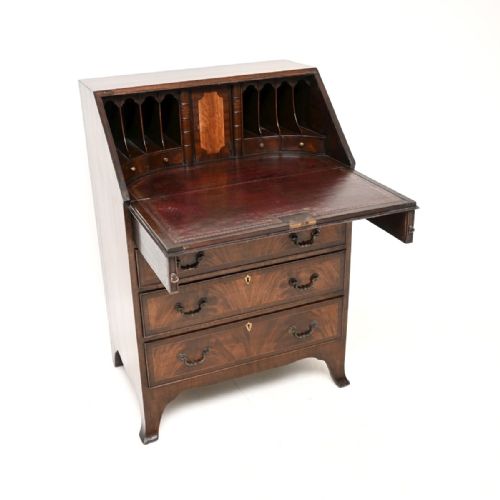
A mahogany slope front bureau provides a practical writing surface that conceals fitted drawers and pigeonholes when closed.
Mahogany Slope Front Bureau
A mahogany slope front bureau offers a dedicated writing surface that drops down to reveal fitted interior compartments. Buyers searching for a mahogany slope front bureau encounter examples primarily from the Georgian and George III periods, alongside later Victorian, Edwardian, and 20th-century interpretations.
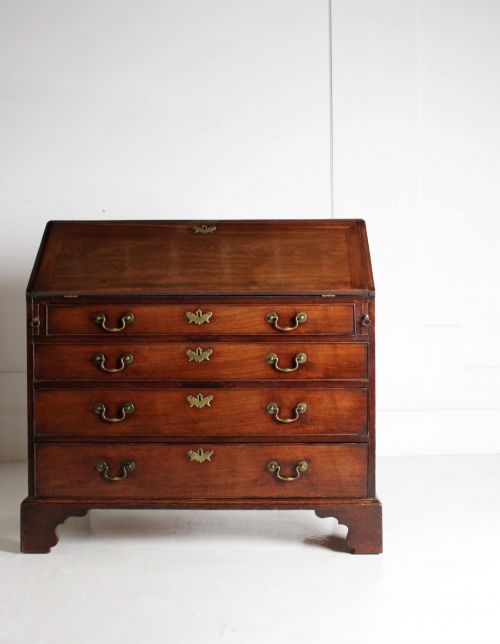
The form typically combines a slanted writing flap with a bank of graduated drawers below. Pieces span various scales, from small examples to larger bureau bookcases and bureau cabinets.
Origins range across English workshops of the 18th century through to later revival styles. Surviving pieces demonstrate the enduring utility of a domestic writing desk with lockable storage.
Materials and construction methods
Makers utilised solid mahogany and mahogany veneers, occasionally incorporating Cuban mahogany, oak for drawer linings, and fruitwood inlay or satinwood details. Brass hardware such as escutcheons and handles appears throughout the periods represented.
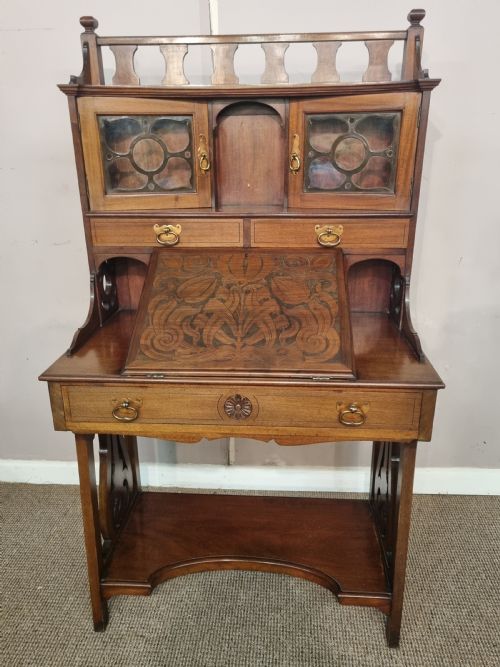
Construction relies on traditional cabinet-making joints to house the fall front, writing slope, and internal drawers. Decorative techniques include floral marquetry and inlaid wood work to enhance the surface appearance.
Mahogany Slope Front Bureau Retail Price Guide 2026
Typical asking prices for mahogany slope front bureau among the pieces listed under this phrase on Sellingantiques today, from the lower quarter to the upper quarter. They describe what is for sale here now, not the wider market.
Several small bureaus retain working keys to lock the slope.
Assessing quality in writing furniture
Quality rests on the selection of timber figure, the crispness of any inlaid wood or marquetry, and the structural integrity of the fall front hinge mechanism. The execution of the fitted interior compartments also distinguishes finer workshops from standard production.
The retention of original brass hardware, working keys, and untouched surfaces contributes significantly to the integrity of a piece. Attention to secondary timbers like oak in the drawer construction further indicates standard of manufacture.
Gillows
The Mahogany Slope Front Bureau Glossary
- Bureau
- A writing desk with a sloping flap that covers internal pigeonholes and small drawers. This form evolved during the 17th and 18th centuries into a standard domestic furnishing.
- Fall front
- A hinged writing flap that pulls down to a horizontal position for writing. It conceals the fitted interior when closed upright.
- Marquetry
- Decorative veneer patterns formed by fitting together small pieces of wood, often floral or pictorial in design. Makers utilised contrasting timbers such as satinwood and fruitwood for visual depth.
- Davenport
- A compact form of small desk featuring a sloping writing surface and drawers opening to the side. The evidence associates this type with the Regency, Victorian, and early periods.
- Escutcheon
- A protective plate surrounding a keyhole, usually fashioned from brass. It guards the surrounding wood from wear caused by the insertion of keys.
Mahogany Slope Front Bureau: Frequently Asked Questions
How do I use a slope front bureau?
Lower the hinged writing flap to access the internal compartments and write on the leather or wood surface.
Close and lock the flap to conceal correspondence and keep the interior secure.
What is inside a bureau?
The interior contains an arrangement of small drawers, pigeonholes, and occasionally a central concealed compartment.
These compartments organise letters, writing instruments, and small documents.
How do I date a mahogany bureau?
Examine the construction methods, timber choice, and secondary woods such as oak drawer linings.
Stylistic indicators like bracket feet, hardware, and inlay types help distinguish Georgian examples from Edwardian or later pieces.
Where should I place a bureau at home?
Position the piece against a flat wall with sufficient clearance in front for the drop-front flap to open fully.
Keep the timber away from direct heat sources and strong sunlight to protect the polish and veneer.