
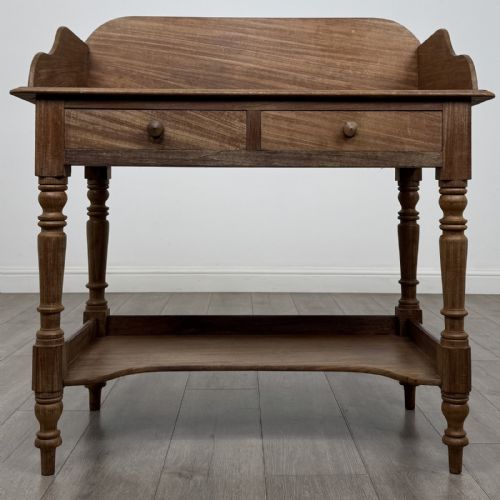
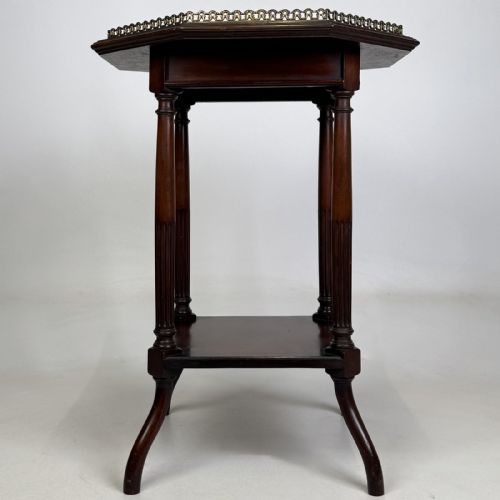
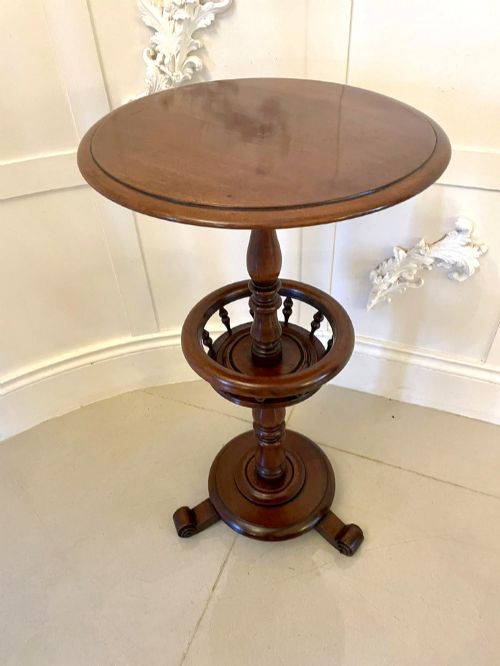
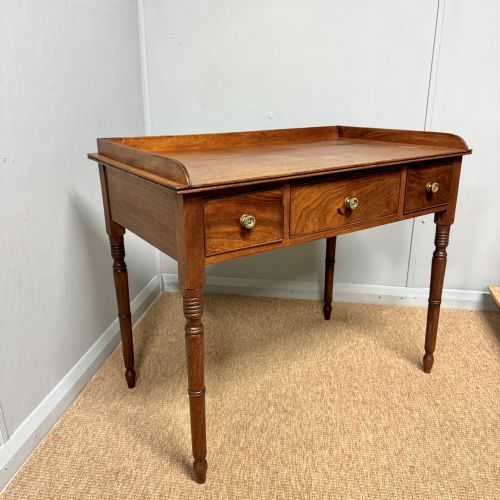
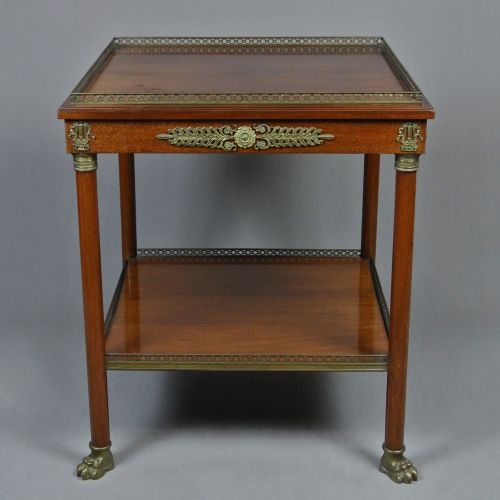
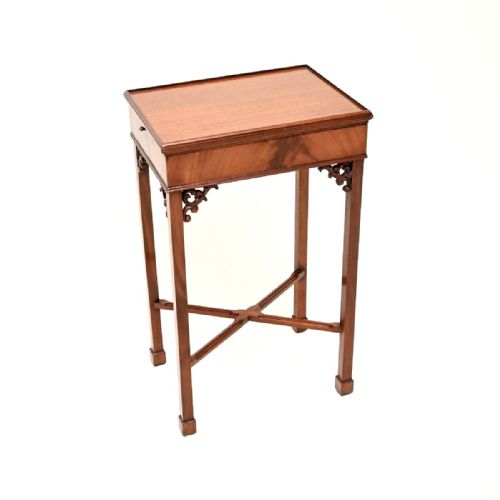
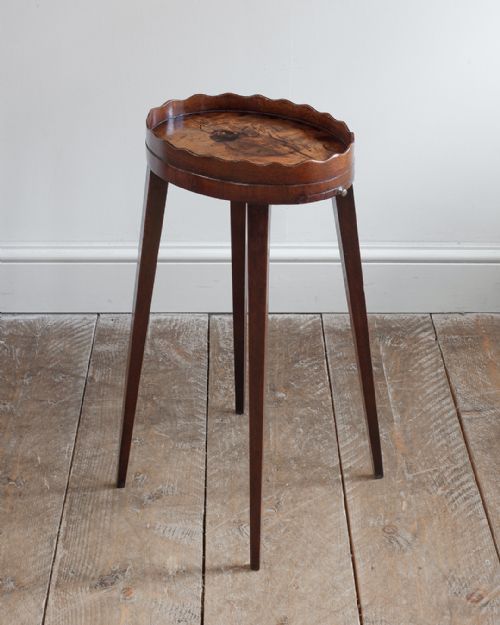
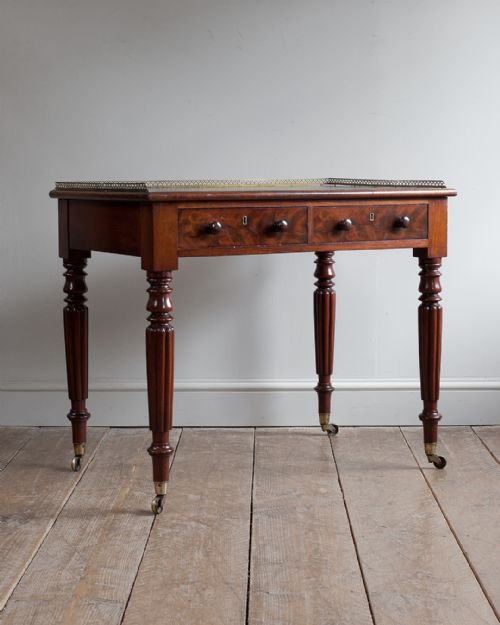

Mahogany Side Table Gallery
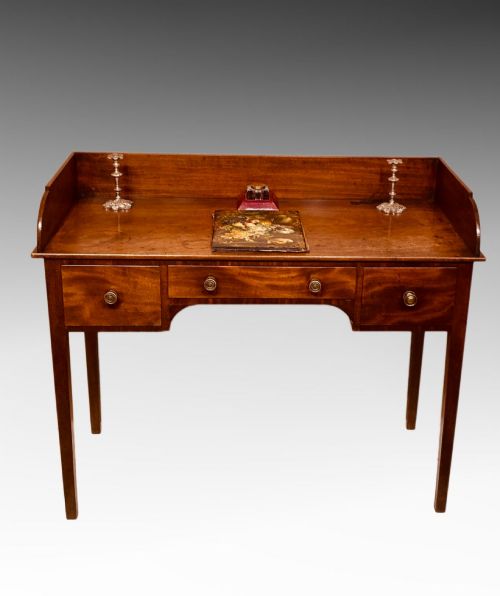
When you seek a mahogany side table gallery, you find refined timber surfaces bordered by raised surrounds designed to keep small items secure.
Mahogany Side Table Gallery
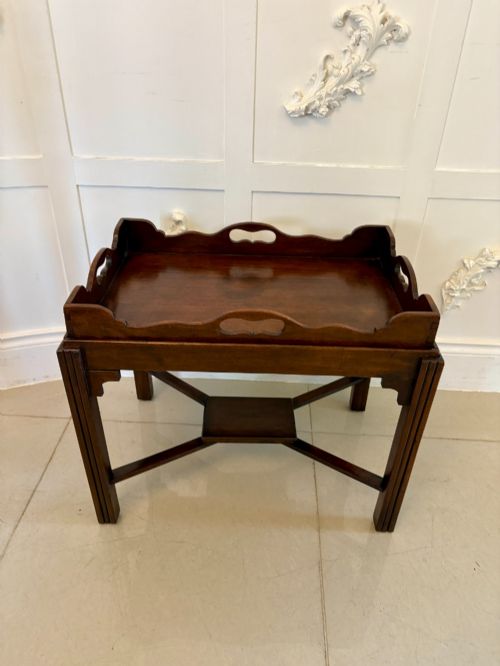
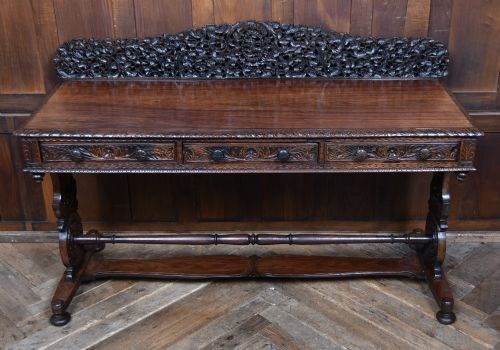
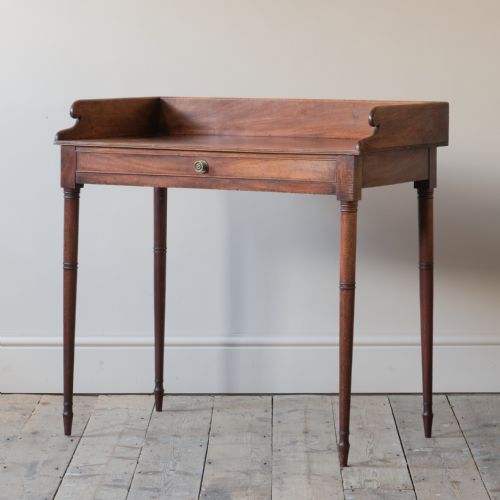
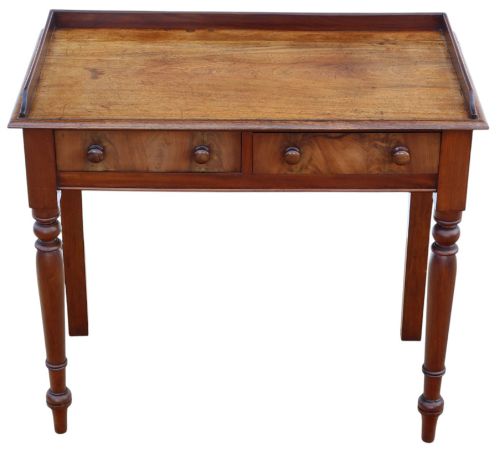
A mahogany side table gallery brings together practical surfaces and raised timber or brass borders from periods spanning the eighteenth, nineteenth, and early twentieth centuries. Buyers seeking a mahogany side table gallery commonly encounter tray tops, washstands, and occasional tables shaped by Georgian, Regency, and Victorian makers.
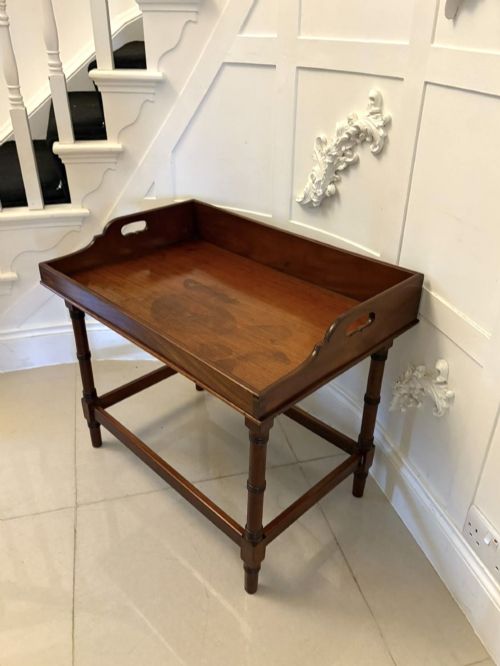
These pieces function as compact serving surfaces, bedside stands, and writing desks where the raised gallery edge secures lamps, papers, and small vessels. The selection encompasses freestanding central tables alongside folding butler trays mounted on separate folding stands.
Origins range from English workshops influenced by Chippendale designs to French makers working in Louis XIV and Empire styles. Each specimen demonstrates how cabinetmakers adapted the fundamental side table format to meet changing domestic habits across different reigns and decades.
Materials and construction
Construction relies primarily on solid mahogany and flame mahogany veneer applied to secondary timbers, providing deep figuring and rich surface warmth. Cabinetmakers shaped raised galleries from continuous moulded strips of wood, often pierced with handgrips or fitted with brass mounts.
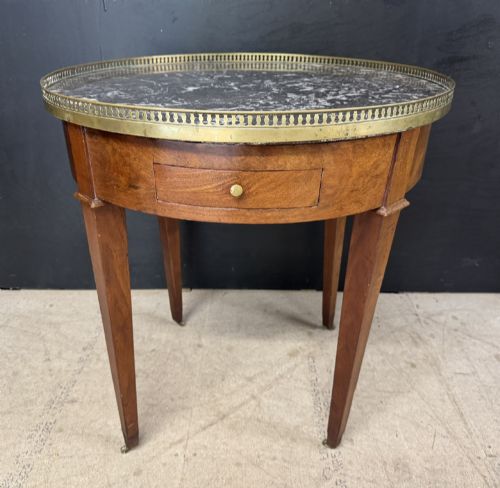
Details such as brass bound decoration, ormolu mounts, and white marble tops introduce contrasting textures to the timber bodies. Drawer linings, dovetail joints, and turned legs reflect the specific regional joinery traditions of English and continental workshops.
Listings feature mahogany side table gallery forms spanning the Georgian, Regency, Victorian, and Edwardian periods alongside French designs.
Judging execution and finish
Quality rests upon the crispness of the gallery moulding, the integration of the raised border into the table top, and the choice of timber veneer. Superior examples display symmetrical flame mahogany figures and seamless joints where the gallery meets the surface edge.
The presence of crisp cast ormolu, finely chased brass handles, and heavy marble inserts elevates a piece above standard utility furniture. Finer specimens show careful hand-finishing to the interior drawer surfaces and retention of patinated polish.
Maison Millet·Gillows·François Linke·A Hugnet Paris
The Mahogany Side Table Gallery Glossary
- Gallery
- A raised wooden, brass, or metal rim fitted around the top of a table or tray to prevent objects from sliding off. This feature is characteristic of serving and lamp tables.
- Flame mahogany
- A veneer cut from the fork of the mahogany tree, producing a distinctive ripple pattern resembling flickering flames. Cabinetmakers applied this figure to prominent table tops.
- Butler tray
- A portable rectangular tray with hinged or fixed sides, frequently placed upon a folding wooden stand for serving drinks or meals. Many examples date from the Georgian period.
- Ormolu
- Gilded bronze mounts cast and chased in decorative foliage or classical motifs, applied to French and English furniture frames. This material adds metallic contrast to dark timber.
- Gueridon
- A small circular occasional table supported by a central pillar or three legs, often featuring a marble top. French makers produced these forms in mahogany during the nineteenth century.
Mahogany Side Table Gallery: Frequently Asked Questions
How do I date a mahogany table?
Dating relies on examining the construction methods, timber selection, and hardware style. Georgian and Regency pieces typically show hand-cut dovetails and simpler timber framing, while Victorian and Edwardian examples may incorporate machine-sawn elements.
Stylistic cues such as brass mounts, leg turnings, and veneer thickness help place a piece within its manufacturing decade. Comparing the secondary woods inside drawers further clarifies the regional origin and period.
Where were these tables used?
These tables served multiple functions in drawing rooms, bedrooms, and dining spaces. They held lamps beside seating areas, supported washing basins in bedrooms, or acted as serving surfaces for tea and wine.
Portable tray versions allowed servants to transport items between rooms before placing the tray back onto its dedicated stand. Their compact proportions made them adaptable to various domestic interiors.
How do I care for mahogany?
Maintenance involves keeping timber surfaces away from direct heat sources and strong sunlight to prevent veneer splitting and fading. Regular dusting with a dry, soft cloth preserves the polished finish without building up heavy wax residues.
Occasional application of traditional beeswax feeds the dry wood and enhances its natural grain depth. Avoid placing wet items directly on antique surfaces by using protective coasters or fitted glass inserts.