
Mahogany Side Sideboard
When you search for a mahogany side sideboard, you are looking at substantial dining room servers, console tables, and cabinets designed for storage and display.
Mahogany Side Sideboard
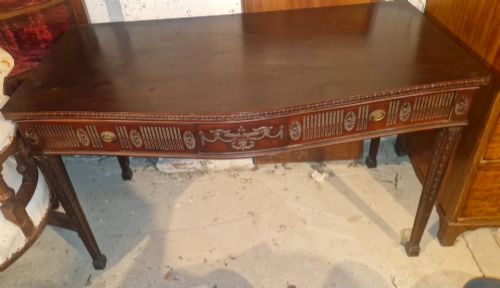
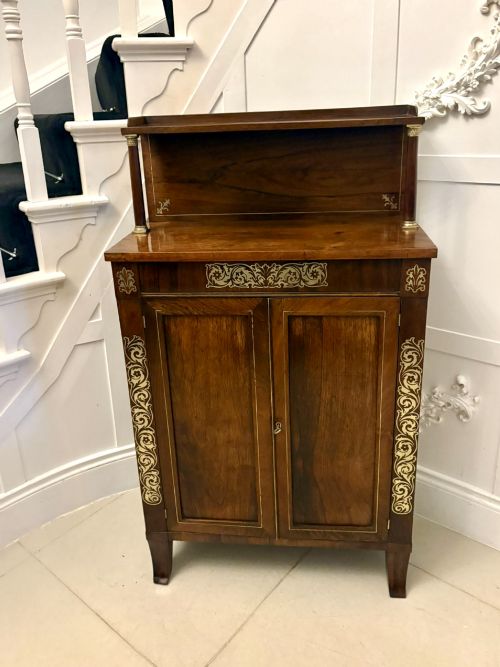
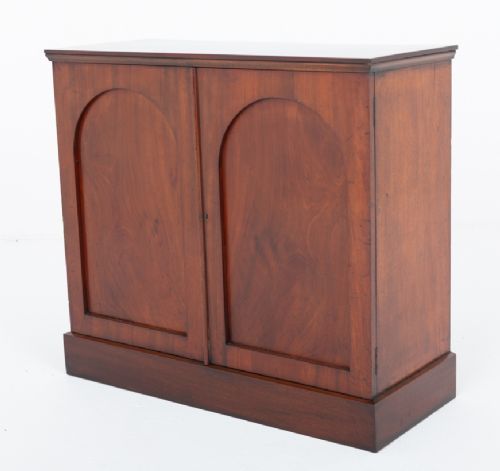
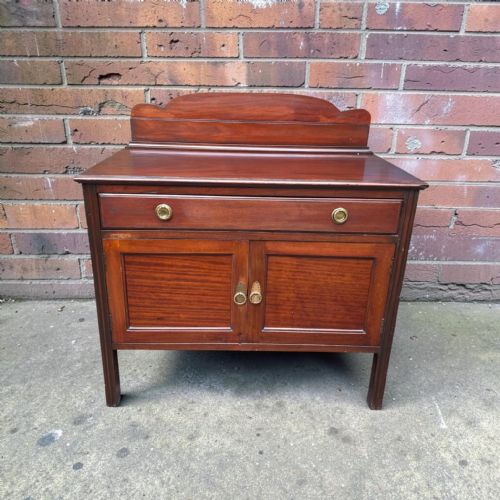
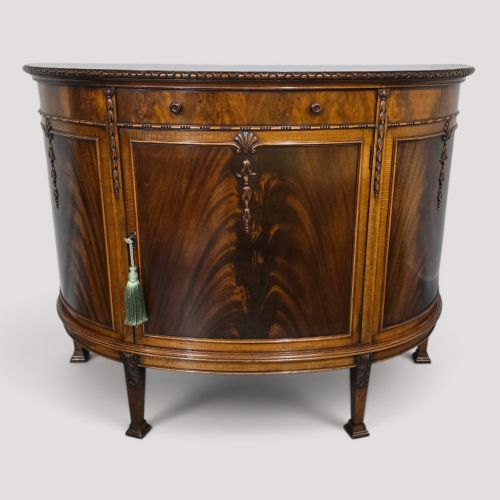
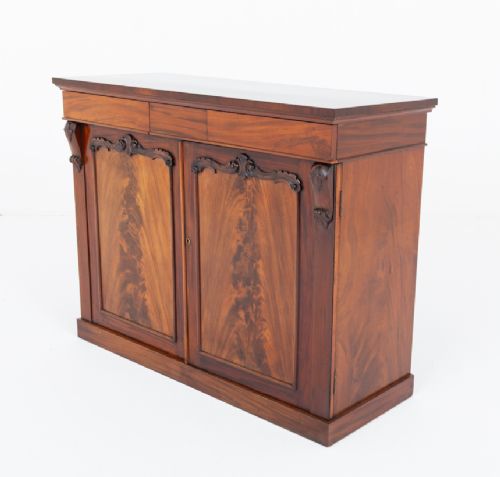
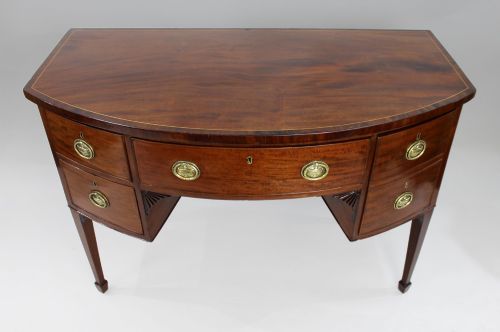
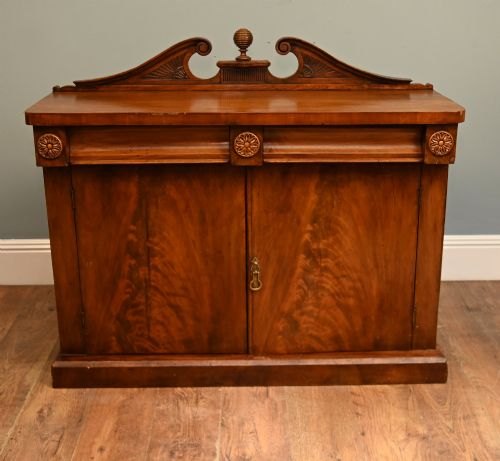
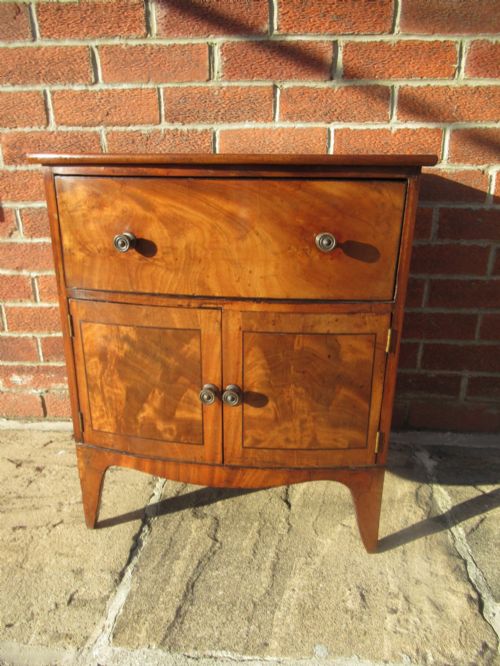
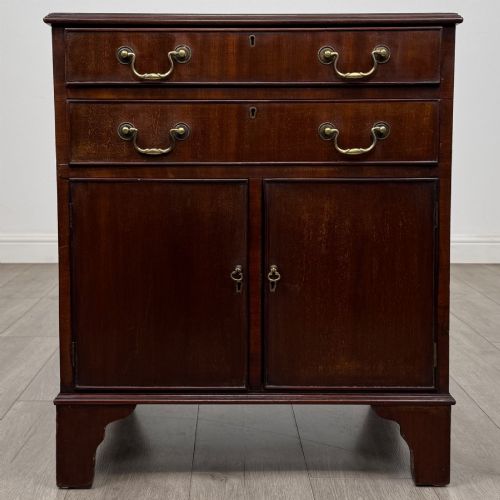
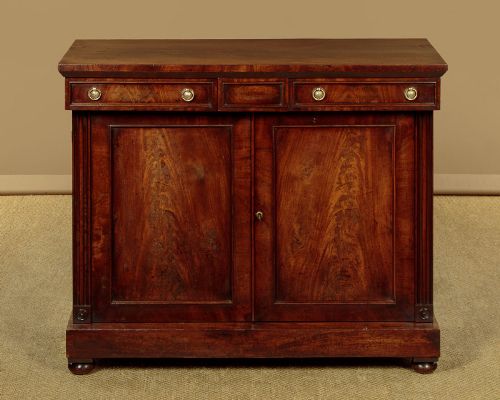
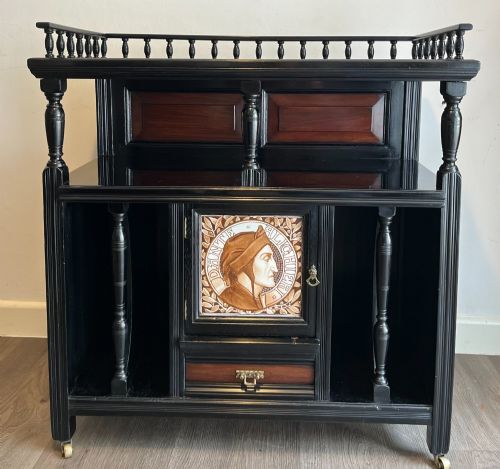
A mahogany side sideboard encompasses a diverse group of dining and living room serving pieces, low cupboards, and console tables that emerge across Georgian, Regency, and Victorian periods. You will frequently encounter bow-fronted servers, chiffoniers with mirror backs, and two-door cabinets designed to stand against a wall.
The form evolved from simple 18th-century serving tables into complex pieces fitted with cellarettes, tier buffets, and glazed doors by the late 19th century. Pieces range from compact Edwardian side tables to large exhibition-quality Victorian breakfront sideboards.
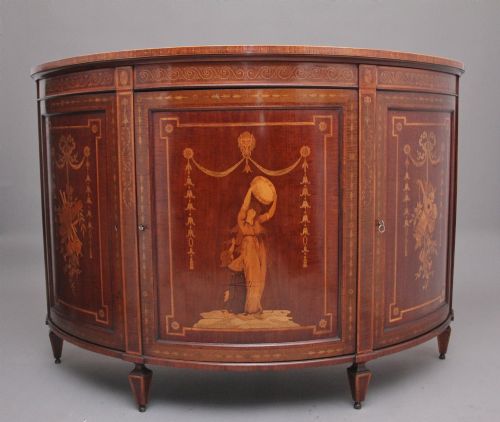
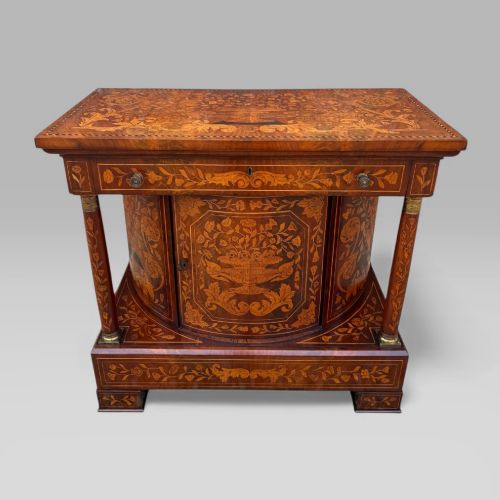
Makers and workshops utilised specific regional proportions, creating everything from Dutch marquetry console wall tables to strict Sheraton-style servers. The overarching purpose remains the containment of dining paraphernalia and the display of plate upon a polished timber surface.
Materials and construction
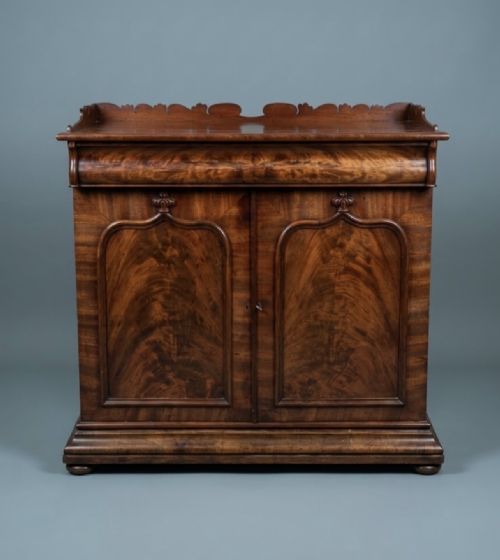
Makers relied heavily on solid mahogany and figured flame mahogany veneers, often enhanced with contrasting satinwood crossbanding and delicate fruitwood marquetry. The natural grain of the timber was selected deliberately to catch the light across large expanses of doors and drawer fronts.
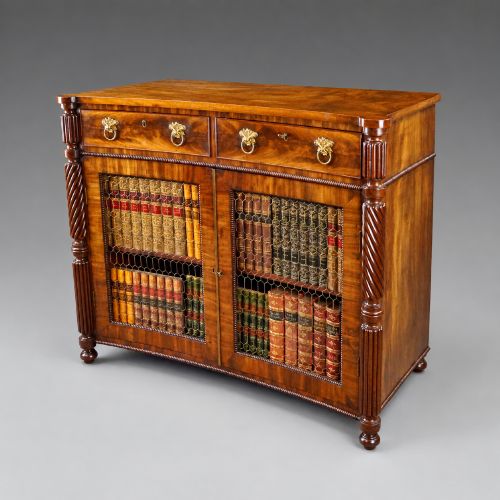
Fine brass details - including gallery rails, grille doors, inlay lines, and original castors - frequently accent the primary wood structure. Structural support is provided by robust secondary timbers hidden beneath veneers, ensuring stability for heavy marble or timber tops.
Listings span the 18th, 19th, and early 20th centuries, incorporating Georgian, Regency, Victorian, and Edwardian aesthetic movements.
Markers of distinction
Quality rests upon the selection of timber figure, such as the liveliness of flame mahogany veneer against straight-grained borders, and the precision of cabinet-making seen in hand-cut dovetails and flush-fitting doors. Superior pieces display harmonious proportions and restrained carving rather than excessive ornamentation.
Gillows·Lamb of Manchester·Maple & Co.
The Mahogany Side Sideboard Glossary
- Chiffonier
- A low cabinet with doors enclosing shelves, frequently surmounted by a small shelf or mirror back, popular during the Regency and Victorian periods.
- Cellarette
- A fitted compartment or drawer within a sideboard designed specifically for holding bottles of wine or spirits upright.
- Crossbanding
- A narrow strip of veneer laid perpendicularly to the grain of the main surface to create a decorative framing border, often utilising contrasting timbers like satinwood.
- Breakfront
- A piece of furniture whose central section projects forward from the flanking outer sections, creating a dynamic architectural silhouette.
- Marquetry
- Elaborate decorative patterns formed by the insertion of small pieces of tinted woods, ivory, or metal into a veneered surface.
Mahogany Side Sideboard: Frequently Asked Questions
What is a chiffonier?
A chiffonier is a compact enclosed cabinet designed for a dining room or parlour, often featuring doors below and a small tier or mirror above.
These pieces emerged strongly during the Regency era and remained popular through the Victorian period for storing serving ware.
How do I spot a Georgian sideboard?
Georgian sideboards typically exhibit clean lines, tapered legs, and restrained inlay work such as satinwood crossbanding on flame mahogany.
They emphasise classical proportion and utility, frequently incorporating subtle brass gallery rails rather than heavy mirror backs.
What is flame mahogany?
Flame mahogany is a highly figured wood veneer sliced from the point where branches join the main trunk, creating a distinctive wave pattern.
Cabinet-makers prized this veneer for the dramatic visual texture it brought to central drawer fronts and door panels.
Where were these sideboards used?
These pieces served primarily in dining rooms to hold silver, linen, and wine during grand meals.
Over time, smaller variations migrated into hallways and drawing rooms as general display and storage cabinets.