
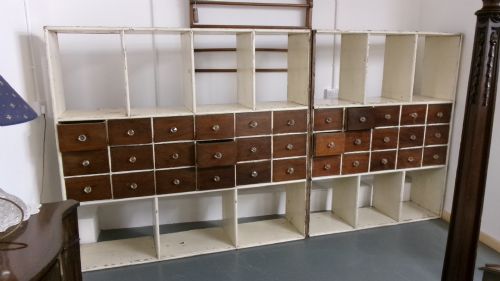


Mahogany Shop Fittings
Mahogany shop fittings bring commercial heritage into domestic rooms through glazed display cabinets, counters and banks of drawers built for Victorian and Edwardian trade.
Mahogany Shop Fittings
These items originate from retail environments including chemist shops, drapers, grocers and jewellers, designed to present merchandise to customers. You will frequently encounter display cabinets, haberdashery units and serving counters constructed from solid timber and glass.
Pieces span the nineteenth and twentieth centuries, encompassing Victorian, Edwardian and Art Deco commercial styles. Makers and retailers such as Pollards and G H Gledhill often supplied these durable fixtures to high streets.
Materials and construction
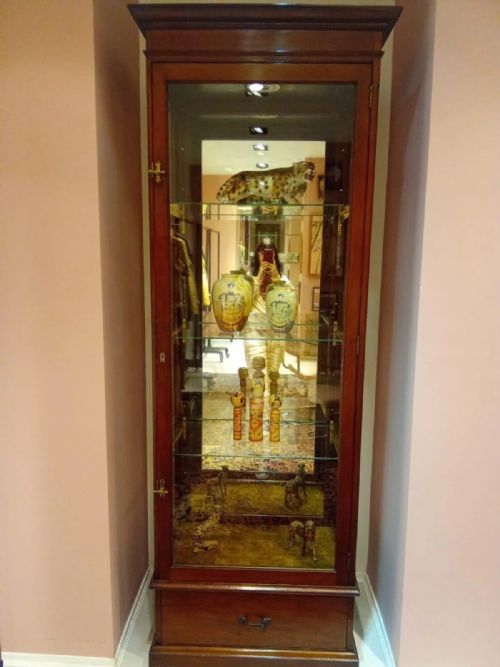
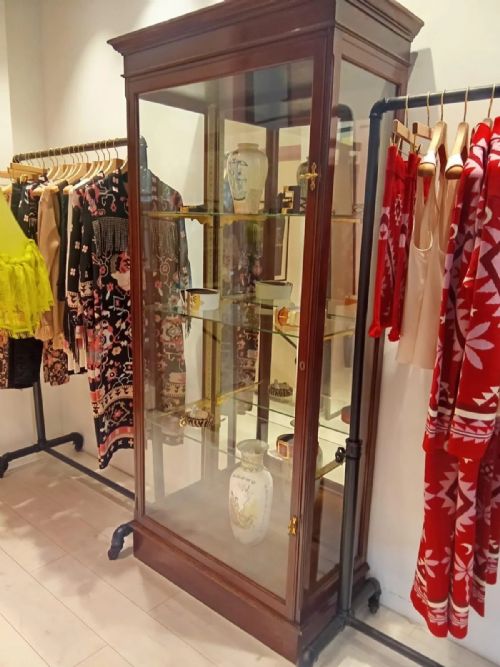
Constructed predominantly from dense mahogany timber frames, these fittings utilise large panes of clear glass to maximise visibility for retail merchandise. Interior shelving is frequently adjustable to accommodate varying stock heights.
Metal elements including brass, cast iron, steel and bronze appear on hardware, hinges, brackets and mirrors. Mirrored interiors are common in display cabinets to reflect light through the glass shelves and amplify the appearance of the contents.
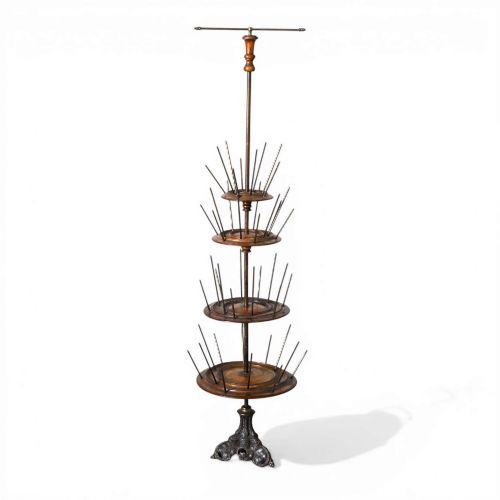
Cotton reel display trees once spun on counters to tempt sewists into buying thread by the yard.
Evaluating quality and authenticity
Quality rests in the structural integrity of the timber framing and the proportion of original glazed panels. Superior examples feature robust joinery designed to withstand heavy daily retail use alongside original brass fittings and maker markings.
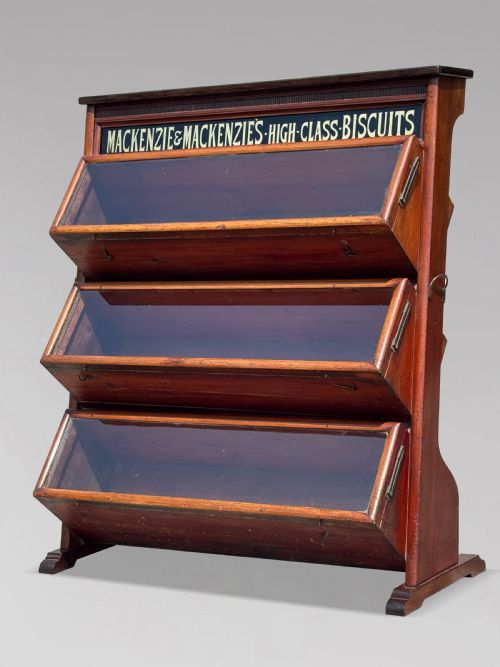
The presence of authentic business signage, hand-written lettering, original mirrors and specialised internal layouts distinguishes high-grade commercial survivals from standard domestic adaptations.
Mackenzie's Biscuits·Fry’s Chocolate·Robert West Gunsmith·John Stow Ltd·Chadwick’s Sewing Cottons·Rowntree’s Chocolates·G H Gledhill Halifax·E. Pollard & Co. Ltd.·Jenners of Edinburgh
The Mahogany Shop Fittings Glossary
- Vitrine
- A glass-fronted display cabinet used for exhibiting precious goods or retail stock. These units often feature glazed sides and adjustable internal shelving.
- Haberdashery cabinet
- A multi-drawer storage unit originally utilised in drapers shops for ribbons, cottons and small sewing accessories. They typically incorporate glass fronts or pulls for stock identification.
- Shop counter
- A heavy timber retail desk designed for serving customers and conducting transactions. Many incorporate glazed display sections on the customer-facing side.
- Chemist shop fitting
- Specialised cabinetry and dispensing furniture originating from nineteenth-century pharmacies. These frequently combine banks of small drawers with glazed shelving for medicinal bottles.
Mahogany Shop Fittings: Frequently Asked Questions
How do I use a shop display cabinet at home?
These cabinets suit living spaces or kitchens for storing and exhibiting tableware, books or collections. The glazed sides and adjustable shelves allow for clear visibility of contents.
Larger floor-standing units provide substantial storage capacity while maintaining a formal aesthetic suitable for domestic interiors.
What is a haberdashery cabinet?
A haberdashery cabinet is a specialised multi-drawer unit originally built for drapers to organise sewing items, threads and small garments. The narrow drawers and glazed fronts allowed shop assistants to locate stock quickly.
Today these pieces serve well in domestic settings for organising small accessories, stationery or collectibles.
How can I date a mahogany shop fitting?
Dating relies on architectural styling, hardware design and construction methods visible across the piece. Victorian examples often display heavier timber sections and traditional joinery, whereas Edwardian and 1920s pieces may incorporate simpler lines or Art Deco influences.
Maker plaques, merchant stamps and original hand-lettered signage also help establish the manufacturing era.
Are these pieces made of solid mahogany?
The framing and structural elements of these commercial fixtures utilise solid mahogany to withstand the rigours of daily Victorian and Edwardian retail trade. Secondary timbers may appear in internal drawer construction or backing panels.
Glass panels, brass hardware and mirrored inserts are integrated directly into the timber framework.