

Mahogany Serpentine Front Commode
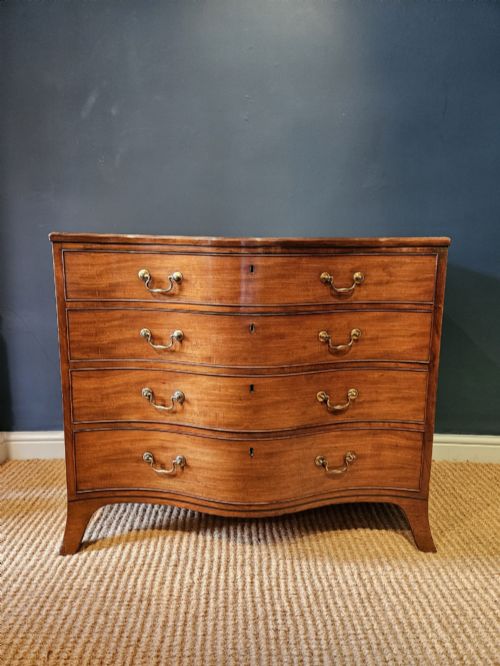
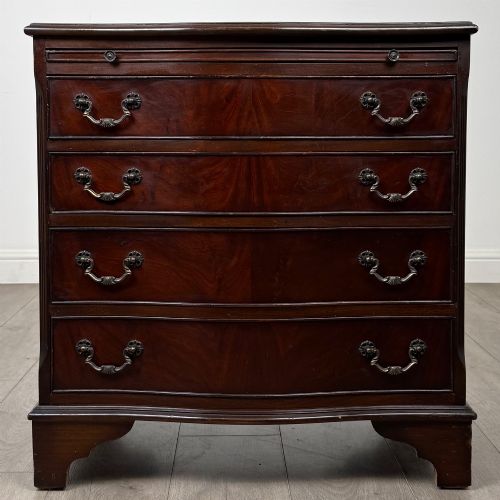
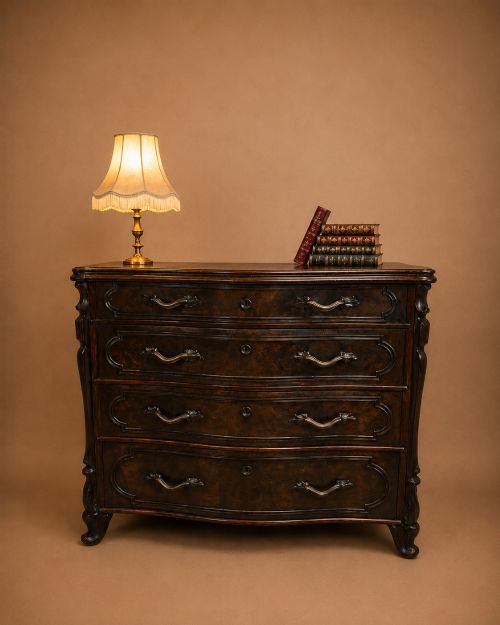
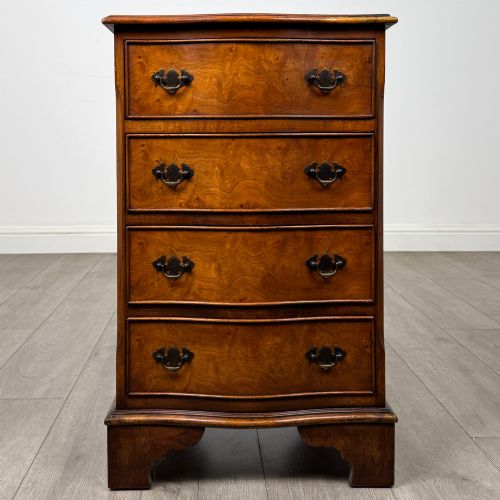
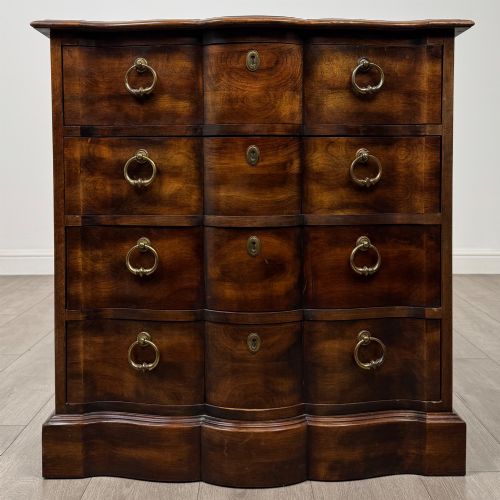
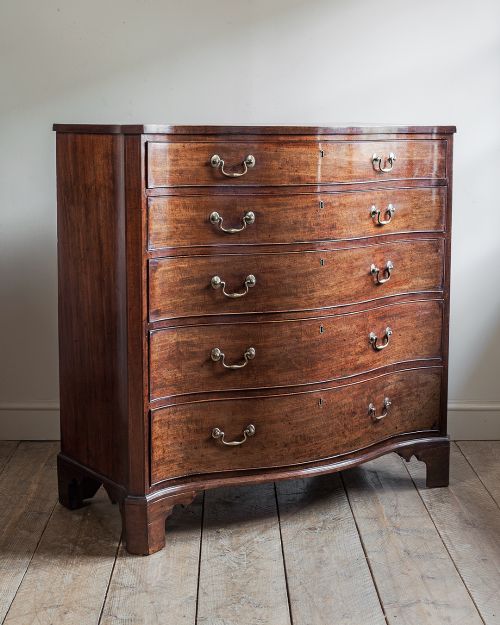
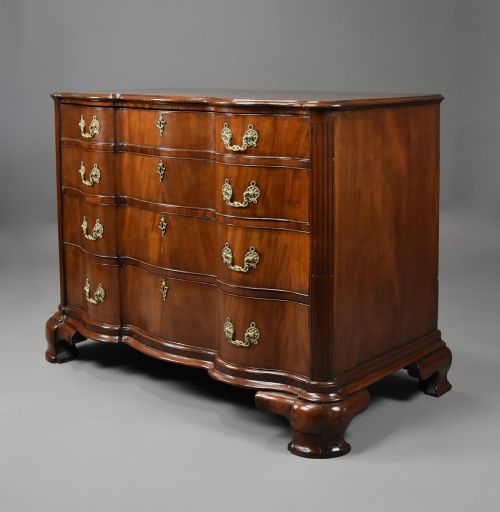
A mahogany serpentine front commode brings together curved fronts, rich timber, and eighteenth-century elegance to anchor a formal room.
Mahogany Serpentine Front Commode
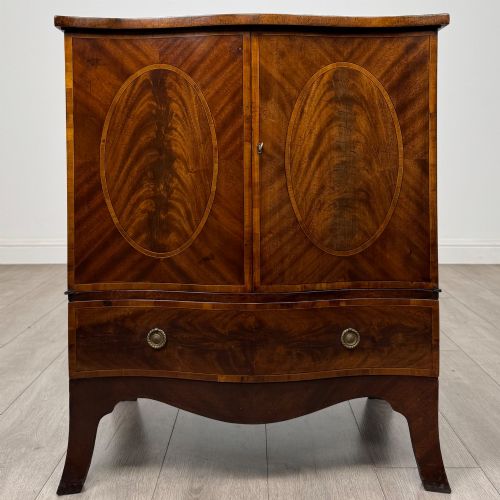
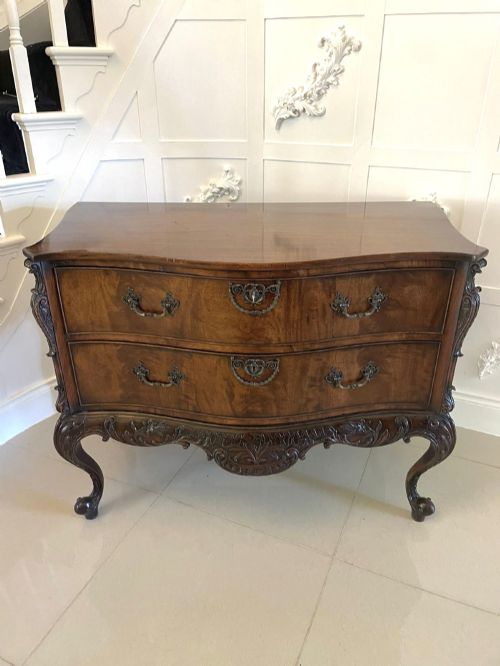
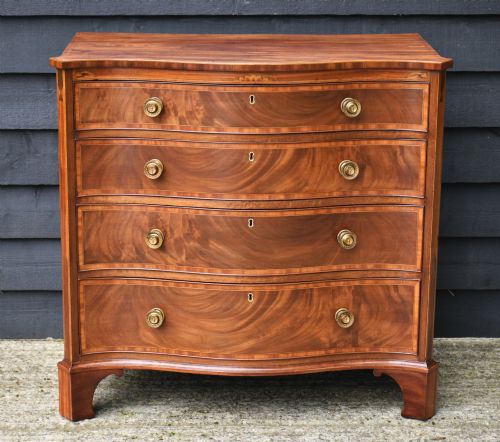
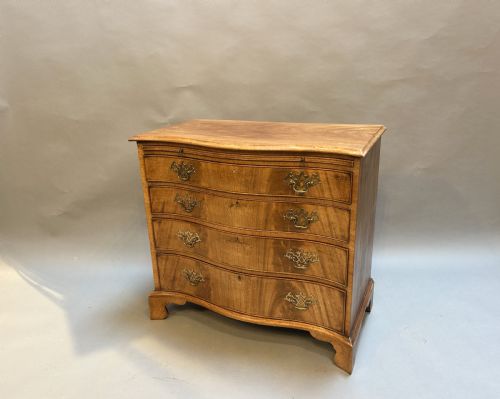
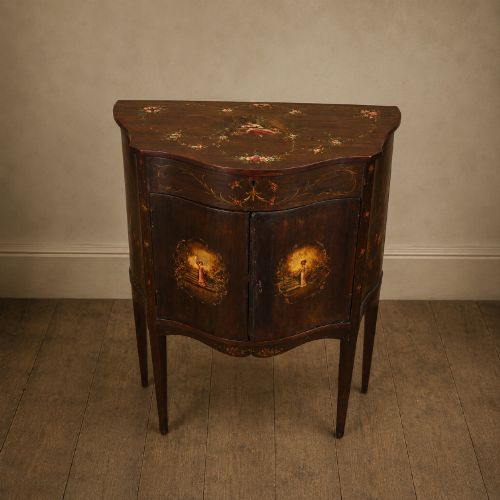
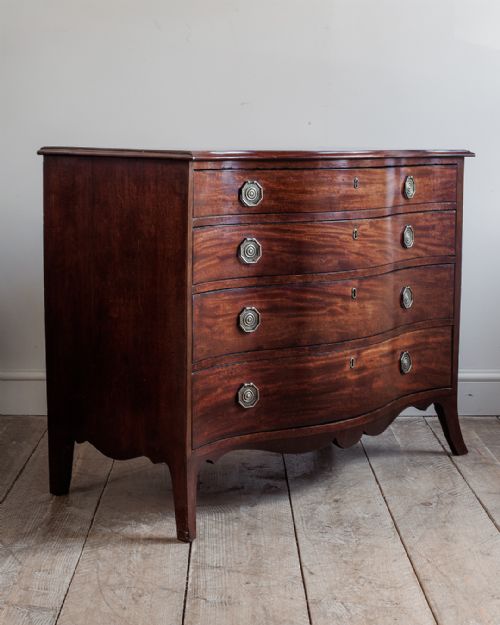
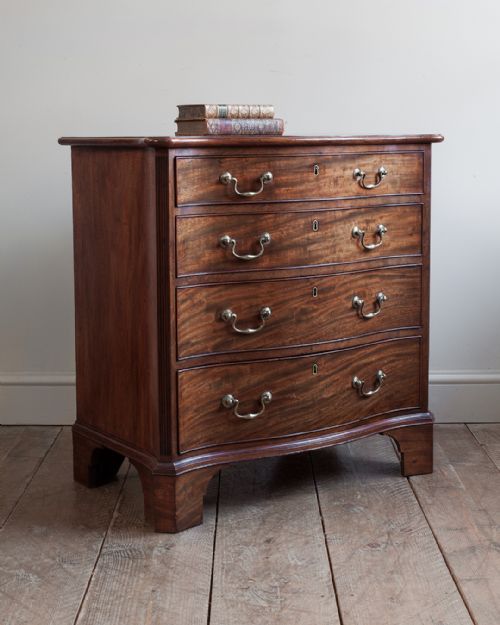
When you search for a mahogany serpentine front commode, you encounter sophisticated case pieces defined by their undulating, S-shaped fronts. These items primarily manifest as chests of drawers, alongside occasional side cabinets, bedside tables, and cupboards.
The pieces span periods from the Georgian era through to the Victorian, Edwardian, and later revivals. Eighteenth-century examples appear alongside nineteenth-century interpretations and twentieth-century Edwardian pieces.
Makers and designers from the Georgian period onward utilised this flowing outline to demonstrate cabinet-making skill. Buyers meet both substantial large-scale chests and smaller bedside variants.
How they were made
Cabinet-makers built these carcasses predominantly from solid and figured mahogany, supported by secondary timbers such as oak. Workshops often integrated satinwood, boxwood, and marquetry for decorative contrast on drawer fronts and surfaces.
Shaping the deep serpentine curve required thick timber and precise planning so the drawers followed the undulating line smoothly. Brass handles and escutcheons complemented the rich grain of the wood.
Listings feature mahogany, satinwood, and boxwood inlay across Georgian, Victorian, and Edwardian periods.
What varies in quality
The standard of timber selection largely dictates the visual impact of a piece, with figured mahogany and fiddleback grain marking out superior examples. Crispness in the execution of the serpentine curve and fine inlay work further separate standard productions from the finest items.
Original brass hardware, sound structural framing, and well-fitted drawer linings indicate meticulous construction from the period. Later revivals vary according to the fidelity of their proportions and the depth of the mahogany grain.
The Mahogany Serpentine Front Commode Glossary
- Serpentine
- A front outline that curves outward in the centre and inward at the ends. This sweeping contour requires expert carpentry to ensure drawers operate smoothly.
- Commode
- A decorative storage chest or cabinet standing on legs or feet. In British usage, the term often describes low drawer chests or French-influenced case pieces.
- Figured mahogany
- Timber showing distinctive, rippled grain patterns such as flame or fiddleback. Cabinet-makers reserved these desirable boards for prominent exterior surfaces.
- Inlay
- Pieces of contrasting wood or other materials fitted into recesses in a timber surface to form patterns. Boxwood and satinwood frequently serve this decorative function.
- Marquetry
- Detailed decorative veneer work forming pictorial or geometric designs. Artisans cut various tinted woods together to assemble complex pictures across the drawer fronts.
Mahogany Serpentine Front Commode: Frequently Asked Questions
Where did these commodes go in a house?
These pieces traditionally stood in principal rooms such as drawing rooms, parlours, and formal bedrooms. Their finished fronts and polished surfaces suited spaces meant for entertaining guests.
Smaller variants also functioned as bedside tables or side cabinets in private chambers, offering convenient concealed storage.
How do I spot a Georgian piece?
Eighteenth-century examples display hand-cut dovetails, cedar or oak drawer linings, and a natural wax patina acquired over generations. The timber feels dense and heavy, showing rich depth in the mahogany grain.
Construction details on older items reflect eighteenth-century workshop practices, whereas later revivals often incorporate machine-cut elements or different secondary woods.
Can I use one as a bedside table?
Compact versions, including bedside cupboards and small chests, adapt readily to modern bedroom layouts. Their proportions provide practical surface space and drawer storage beside a bed.
Measuring the height and depth ensures the piece clears surrounding furniture and allows drawers to open past nearby walls.
What is the difference between a chest and a commode?
While both terms describe drawer storage, commode frequently denotes pieces influenced by French styling or items featuring marble tops. Traditional British chests focus primarily on timber construction and graduating drawer tiers.
Both forms utilise the characteristic serpentine curve to soften the profile of the furniture.