
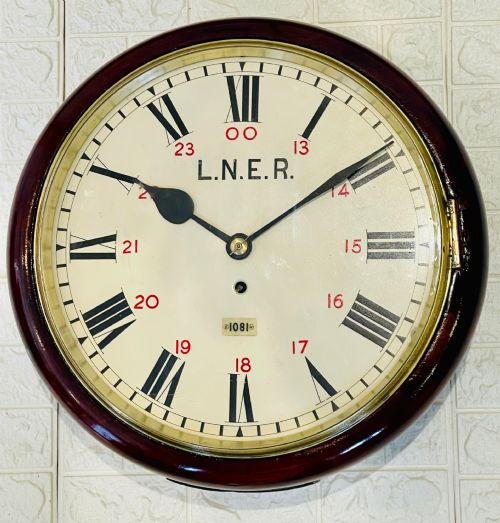
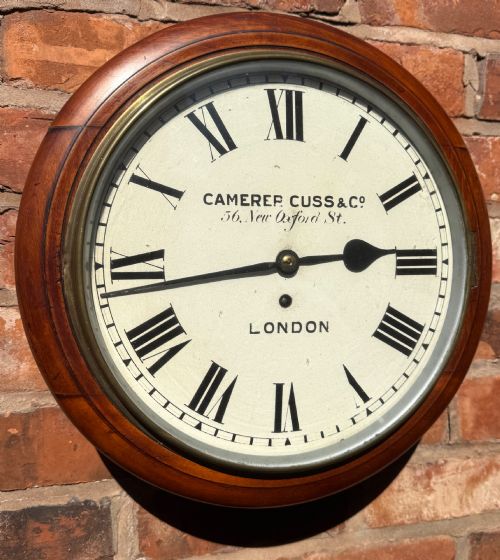

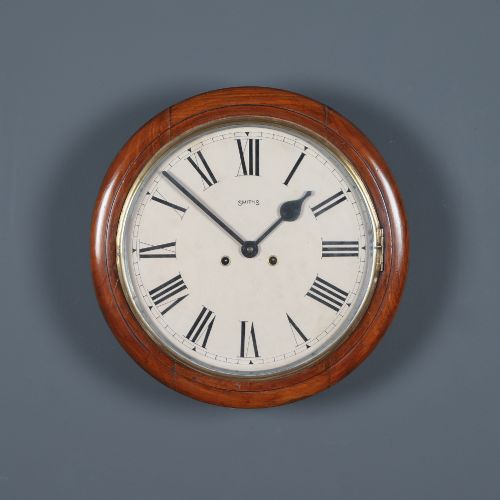
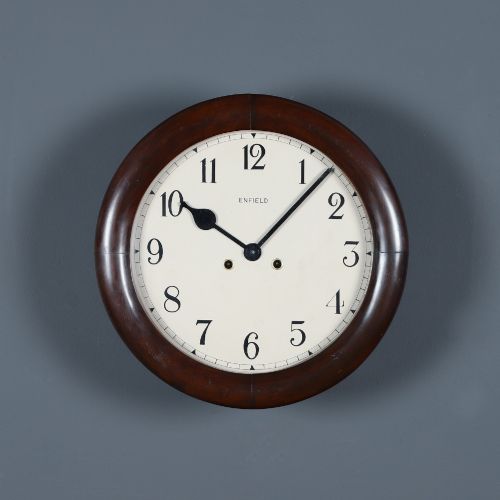


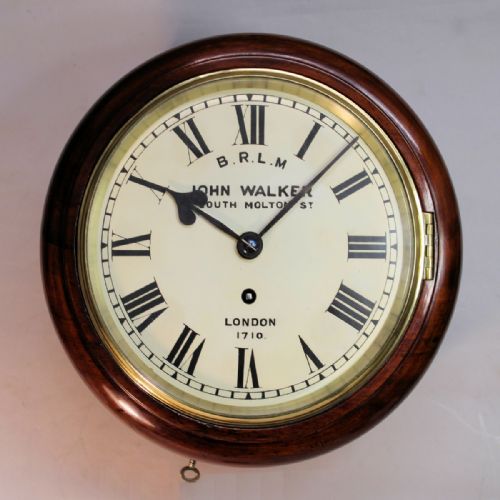
Mahogany Railway Wall Clock
Mahogany railway wall clocks are robust timepieces built for platforms and offices, prized by collectors for their utilitarian design and clear dials.
Mahogany Railway Wall Clock
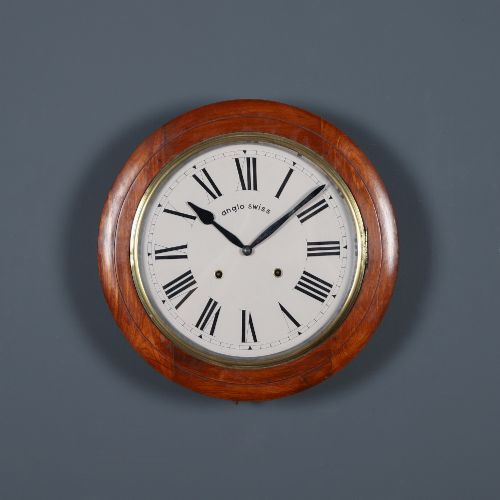
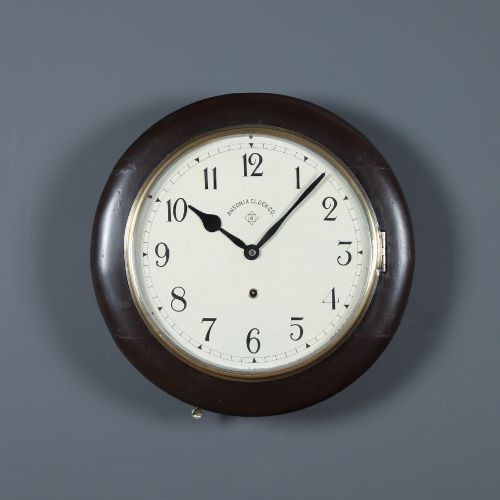
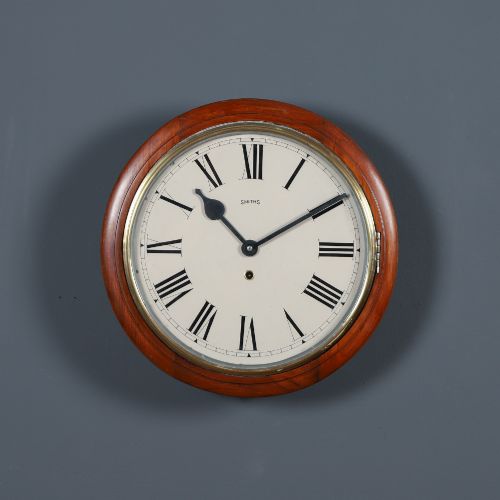
A mahogany railway wall clock is a heavy-duty timekeeping instrument originally commissioned by transport networks to keep precise time in bustling stations, waiting rooms, and administrative offices. These pieces range from compact eight-inch dials to large twenty-four-inch display faces, designed for maximum legibility from a distance.
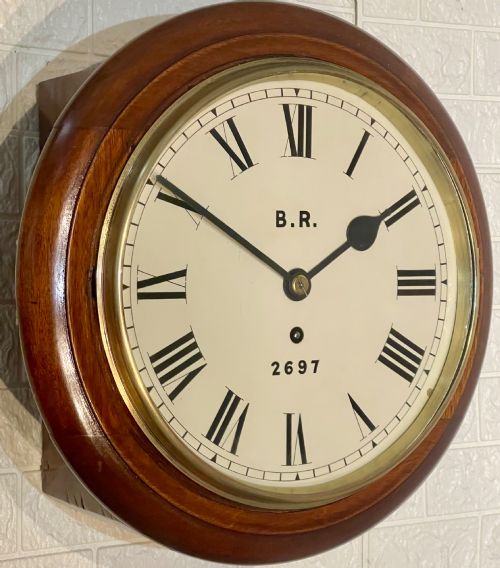
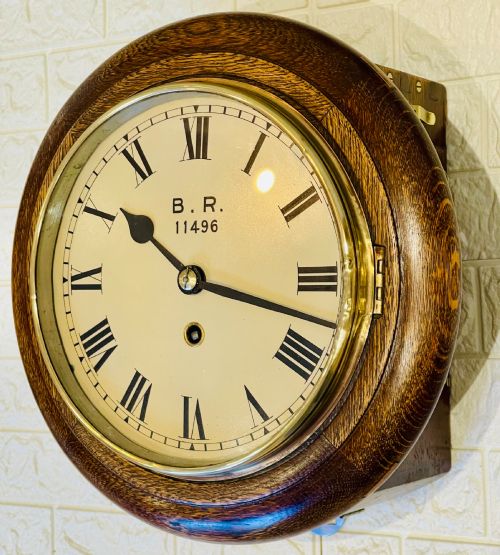
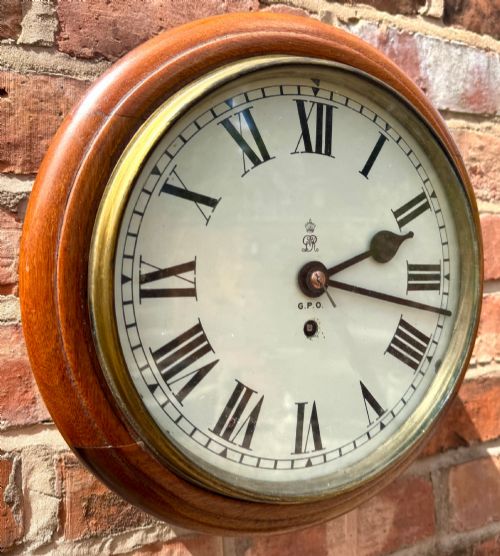
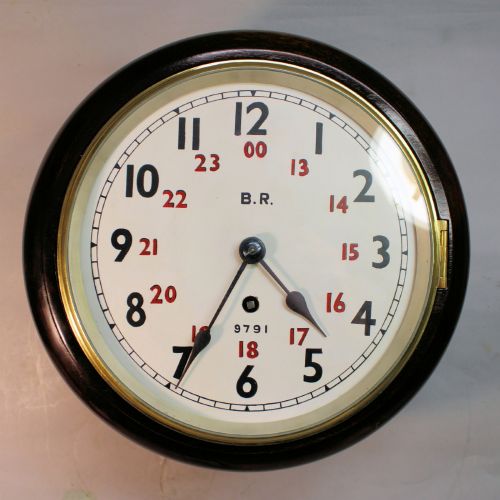
The most common examples encountered on this page are Victorian and later models housed in deep solid timber surrounds with hinged bezels. Many carry specific company initials or station names painted onto the dial or stamped directly into the wooden casing, connecting them to historic routes like the Great Western Railway or the London and North Eastern Railway.
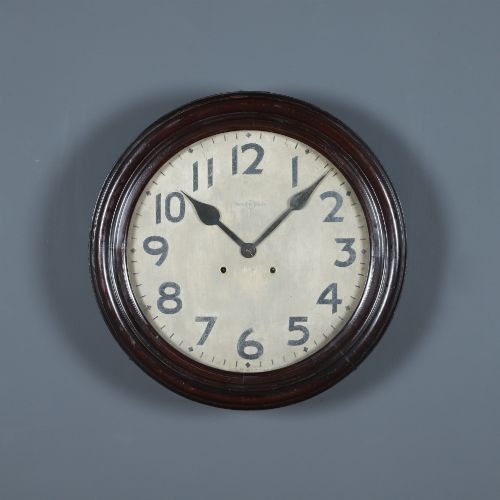
The selections span from the mid-nineteenth century through to the mid-twentieth century, encompassing traditional fusee movements as well as later striking and chiming mechanisms. Alongside dedicated railway pieces, the inventory includes closely related school and office wall clocks sharing the same round mahogany format.
How they were made
The heavy circular cases are predominantly turned or joined from solid mahogany, paired with cast brass bezels that secure thick curved or flat glass protecting the paper, metal, or painted iron dials. Inside, fusee movements utilise a chain or gut line and a conical pulley to maintain equal power to the escapement as the mainspring unwinds.
Dials were typically painted iron or wood, with bold black Roman numerals and minute markers applied by hand to ensure high visibility in smoky or dim station environments. Access doors positioned on the side or rear of the wooden housing allowed station masters to regulate the pendulum and wind the movement regularly.
Station clocks often carry secret numbers stamped into their timber backs, leaving modern owners to hunt down which remote platform their dial once watched over.
What varies in quality
Quality in these timepieces rests upon the precision of the movement and the integrity of the original case construction. Heavy-plate fusee movements with well-cut gear teeth represent higher standards of clockmaking compared to later mass-produced spring-driven alternatives.
The preservation of original painted dials and crisp company lettering heavily influences the desirability of a piece. Examples retaining matching serial numbers stamped across the internal movement and the timber case demonstrate superior factory pairing and subsequent care.
Camerer Cuss And Co·Smiths·Enfield·Ansonia·Anglo Swiss Watch Co·John Walker·Thomas Gibbs·Bennetts Cheapside London
The Mahogany Railway Wall Clock Glossary
- Fusee
- A conical pulley connected to the mainspring by a chain or cord. This mechanism ensures even tension is delivered to the clock train as the spring runs down.
- Bezel
- The brass or wooden ring that holds the glass cover over the dial. It usually hinges open to allow hand-setting and winding.
- Dial
- The face of the clock where the numerals and minute tracks are displayed. On transport clocks, these are kept uncluttered for instant reading.
- Timepiece
- A clock that indicates the hours and minutes without a striking or chiming mechanism. These movements focus purely on the accuracy of the running train.
- Drop-dial
- A clock case featuring an extended lower trunk below the round face. This wooden drop often houses a longer pendulum and bears the access door.
Mahogany Railway Wall Clock: Frequently Asked Questions
What is a fusee movement?
A fusee movement is a mechanical system featuring a conical pulley and chain designed to equalise the power output of the mainspring. This traditional method ensures consistent timekeeping as the clock runs down between windings.
Such movements are typical of nineteenth-century British timepieces and are valued by collectors for their durability and craftsmanship.
How do I wind my wall clock?
Most of these clocks require a specialised winding key inserted directly into a small hole in the dial face. Turning the key clockwise tensions the mainspring inside the movement.
Care must be taken not to overwind the mechanism, stopping as soon as firm resistance is felt.
Where were these clocks used?
These clocks were mounted on the walls of railway platforms, ticket offices, signal boxes, and station master headquarters. They provided accurate time for passengers and staff to coordinate train schedules.
Later models also served in schools and government offices sharing similar administrative needs.
How do I date a railway clock?
Dating relies on examining the construction style of the mahogany case, the design of the hands, and any railway company lettering present on the dial. Initials corresponding to specific historical rail networks provide a reliable chronological window.
Internal maker signatures and serial numbers stamped on the movement plates offer further historical context.