




Mahogany Quilt Stand
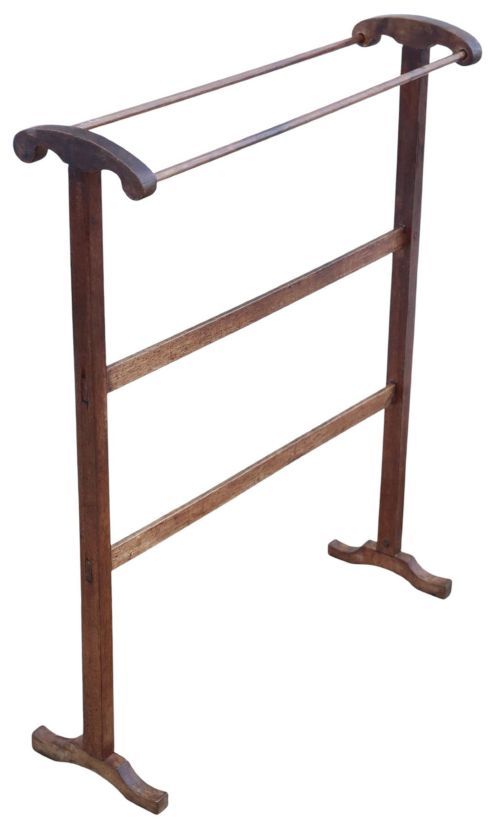
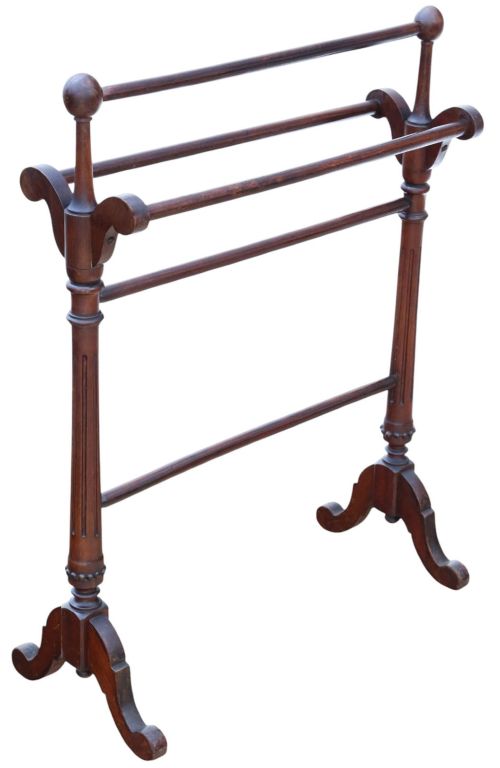
These mahogany quilt stand examples provide sturdy timber frames designed to hold household linens, bringing period practicality directly to the bedroom.
Mahogany Quilt Stand
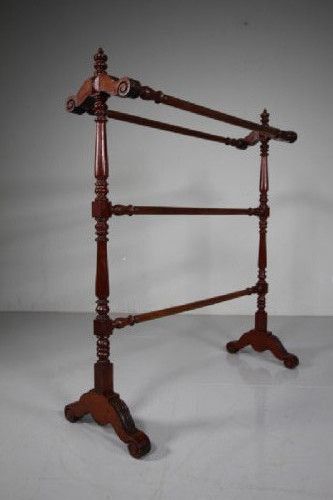
A mahogany quilt stand serves as a functional piece of household furniture for displaying or drying textiles, appearing across this selection in various period iterations. When you search for a mahogany quilt stand, you encounter floor-standing frames primarily built to support multiple rails of linen or fabric.
The pieces on this page span several distinct eras, including Regency, Victorian, and Edwardian styles, alongside general nineteenth-century examples. Most items appearing here take the form of towel rails or multi-bar clothes stands utilising the same foundational framing principles.
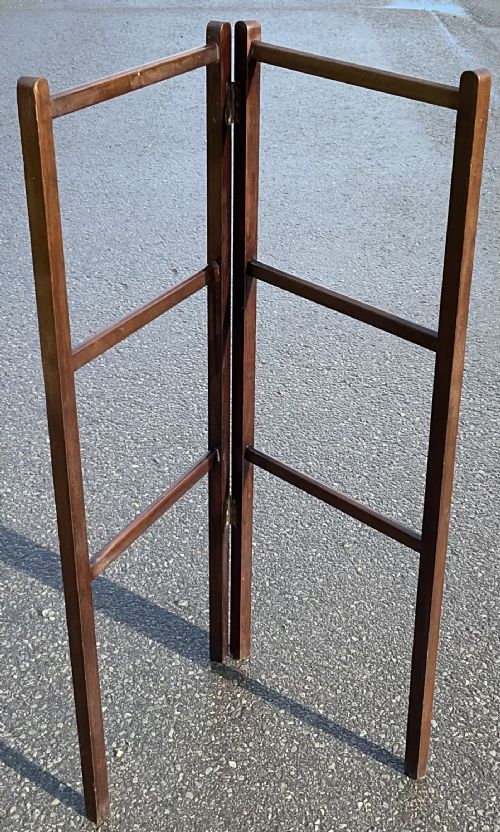
Origins represented in the current selection lean towards English cabinet-making traditions, with construction dates stretching from eighteen-eighty through to nineteen-ten. Buyers frequently find folding designs or five-bar configurations designed for everyday domestic utility.
Materials and construction methods
Makers constructed these frames predominantly using solid mahogany and hardwood timbers, occasionally combining oak or incorporating contrasting secondary woods. This choice of primary material ensured structural rigidity across multiple swinging rails and upright supports.
Detailing often included decorative elements such as satinwood and boxwood inlay work, adding subtle geometric or floral contrast to the dark timber surfaces. Selected examples also integrated brass fittings and hardware to secure pivoting joints or strengthen stress points.
Mahogany Quilt Stand Retail Price Guide 2026
Typical asking prices for mahogany quilt stand among the pieces listed under this phrase on Sellingantiques today, from the lower quarter to the upper quarter. They describe what is for sale here now, not the wider market.
Current listings feature items from nineteen hundred, nineteen ten, the nineteenth century, the Regency era, and eighteen eighty.
Assessing quality and craftsmanship
Superior examples demonstrate meticulous timber selection, displaying rich grain patterns and precise joinery that withstands the physical strain of daily folding and hanging. Lesser items rely on plain timber stocks without the careful grain matching seen on finer specimens.
The presence of decorative embellishments, such as delicate satinwood and boxwood stringing or inlaid banding, elevates a piece above standard utilitarian utility. Heavier or oversized constructions also indicate a higher grade of manufacture intended for substantial domestic environments.
The Mahogany Quilt Stand Glossary
- Mahogany
- A durable tropical hardwood prized for its deep reddish-brown colour and stable grain structure. It serves as the primary material for the majority of these pieces.
- Satinwood
- A lustrous yellowish timber utilised for decorative inlay work and contrasting borders. Cabinet-makers employed it to highlight specific panels or rails.
- Boxwood
- A dense, pale wood commonly cut into thin strips for stringing and geometric inlay. It provides a sharp visual contrast against dark mahogany surfaces.
- Edwardian
- A stylistic period spanning the early twentieth century, noted here for lighter framing and inlaid decorative motifs. Pieces from this era often feature folding mechanisms.
- Regency
- An architectural and furniture style associated with the early nineteenth century, characterised by classical restraint and substantial proportions. Items from this period display heavier timber scantlings.
Mahogany Quilt Stand: Frequently Asked Questions
What is a mahogany quilt stand used for?
These pieces provide a stable wooden frame with multiple horizontal rails designed for holding household textiles, blankets, and linens. They functioned historically in bedrooms and dressing rooms to air or display fabrics.
Today, they serve a similar practical purpose while adding period character to domestic interiors as freestanding storage furniture.
How do I identify an Edwardian stand?
Edwardian examples typically date from around nineteen hundred to nineteen ten, featuring lighter framing and occasionally folding designs. They frequently incorporate decorative inlay work using satinwood and boxwood.
These pieces tend to be more slender than their nineteenth-century predecessors while maintaining sturdy structural rails.
Are these stands suitable for modern homes?
The slender footprint and practical multi-bar design make these frames straightforward to integrate into contemporary bedrooms or bathrooms. They offer genuine utility for hanging garments or textiles without occupying excessive floor space.
The warm mahogany tones and subtle inlay details also blend easily with traditional or mixed-period interior schemes.
What is the difference between Victorian and Regency pieces?
Regency items generally exhibit heavier proportions and classical influences dating from the early nineteenth century. Victorian pieces, emerging later in the same century, often showcase robust construction and straightforward utilitarian forms.
Both periods rely heavily on solid mahogany, but the earlier Regency items lean towards grander architectural silhouettes.