
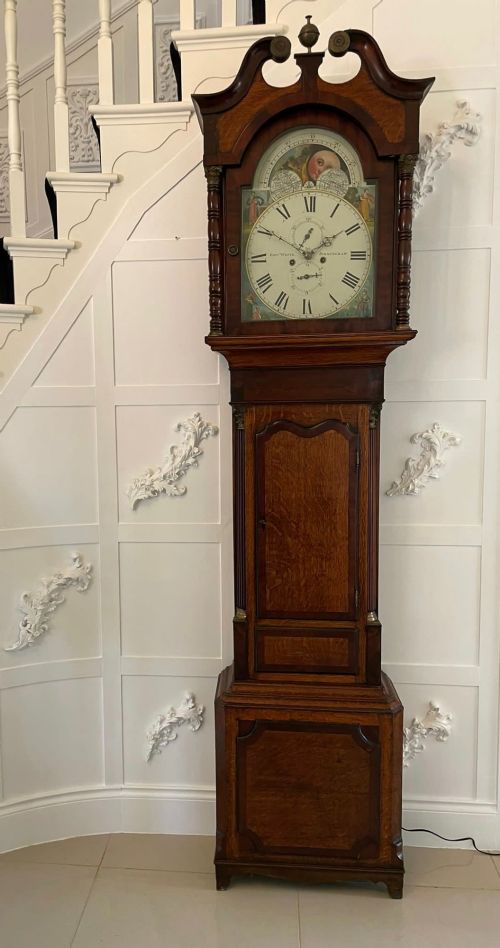
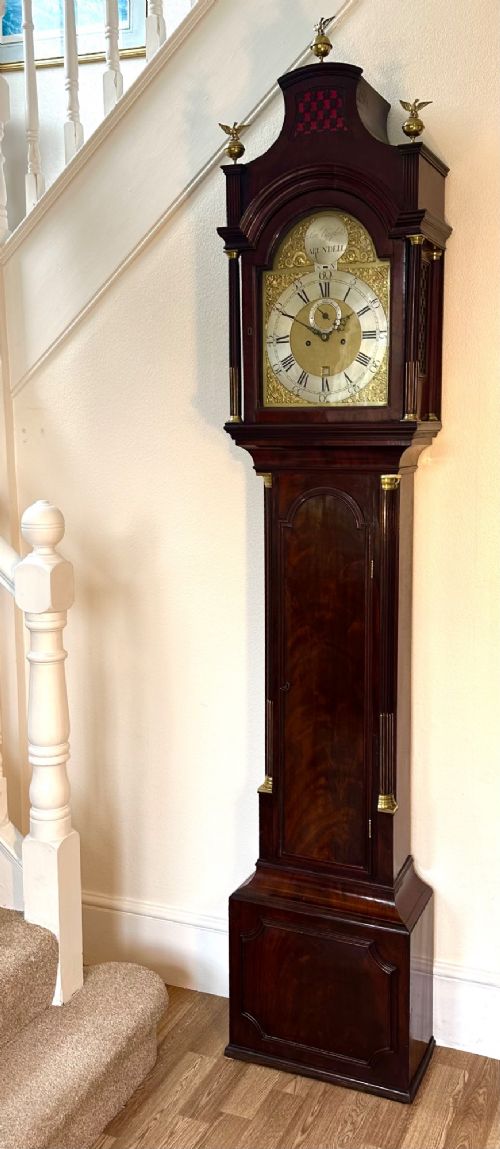
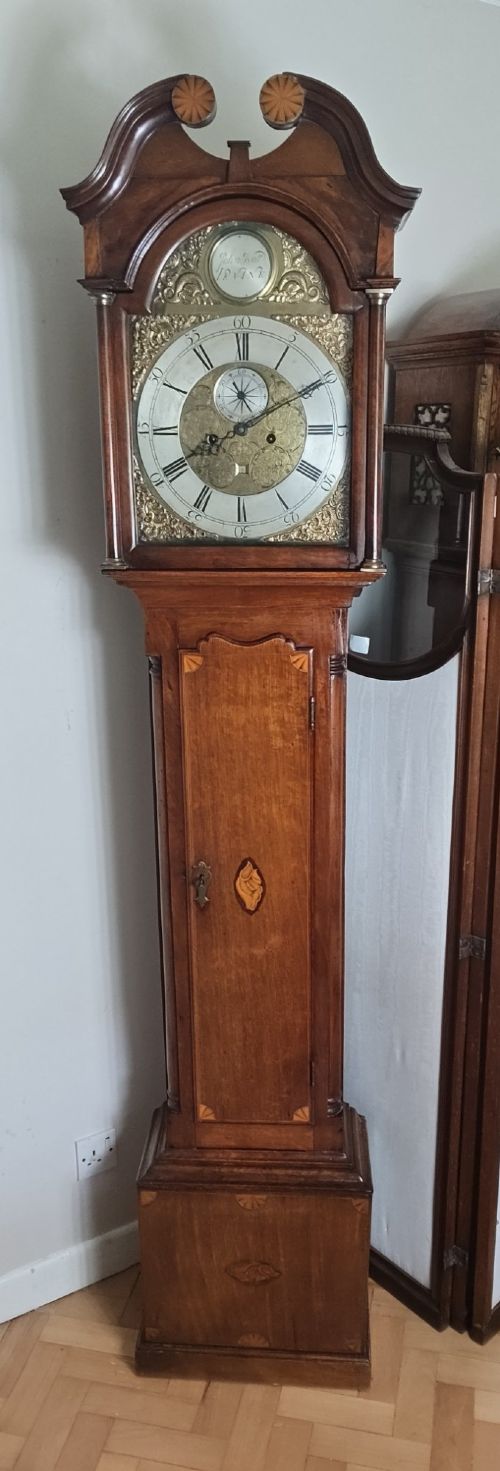
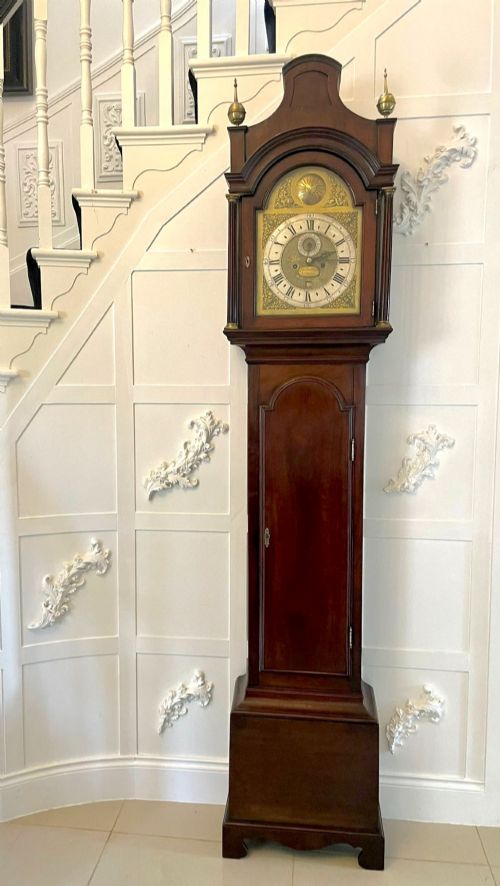
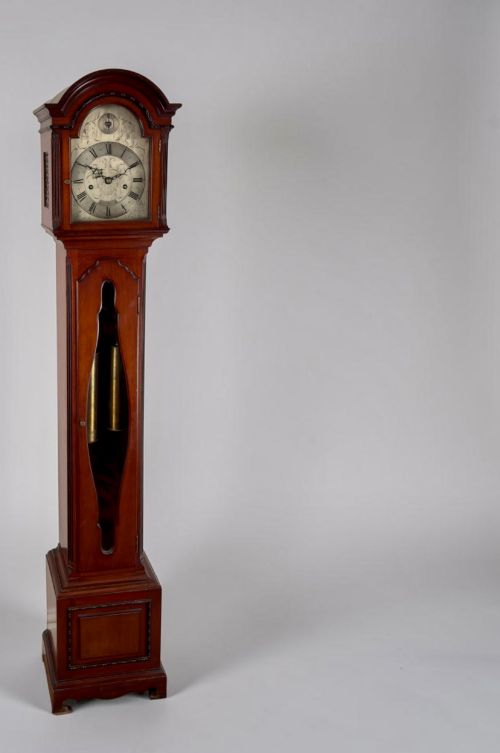
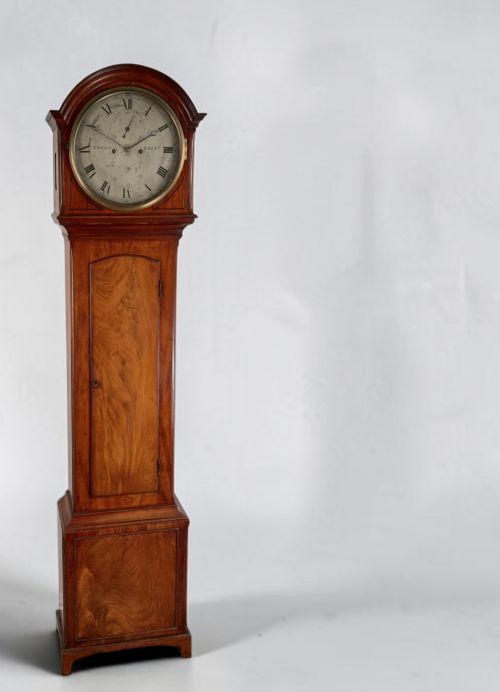
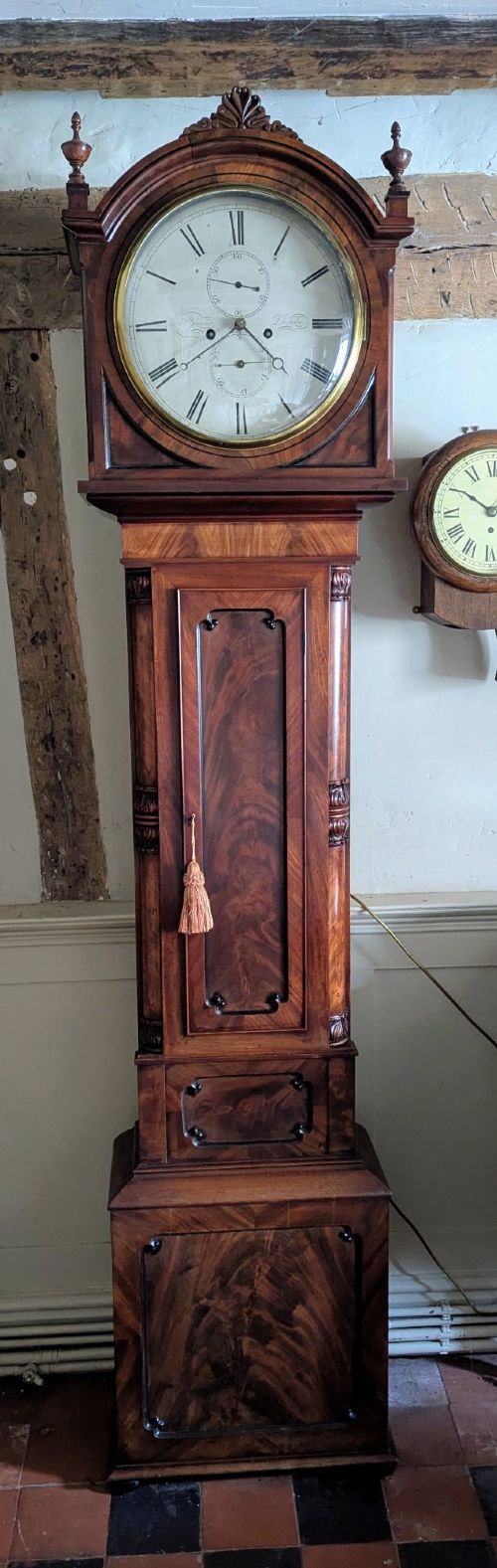
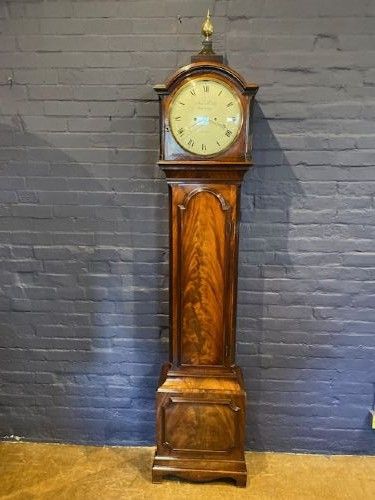
Mahogany Pendulum Floor Clock
A mahogany pendulum floor clock brings a measured rhythm and substantial presence to a room, recording hours through steady pendulum swings.
Mahogany Pendulum Floor Clock
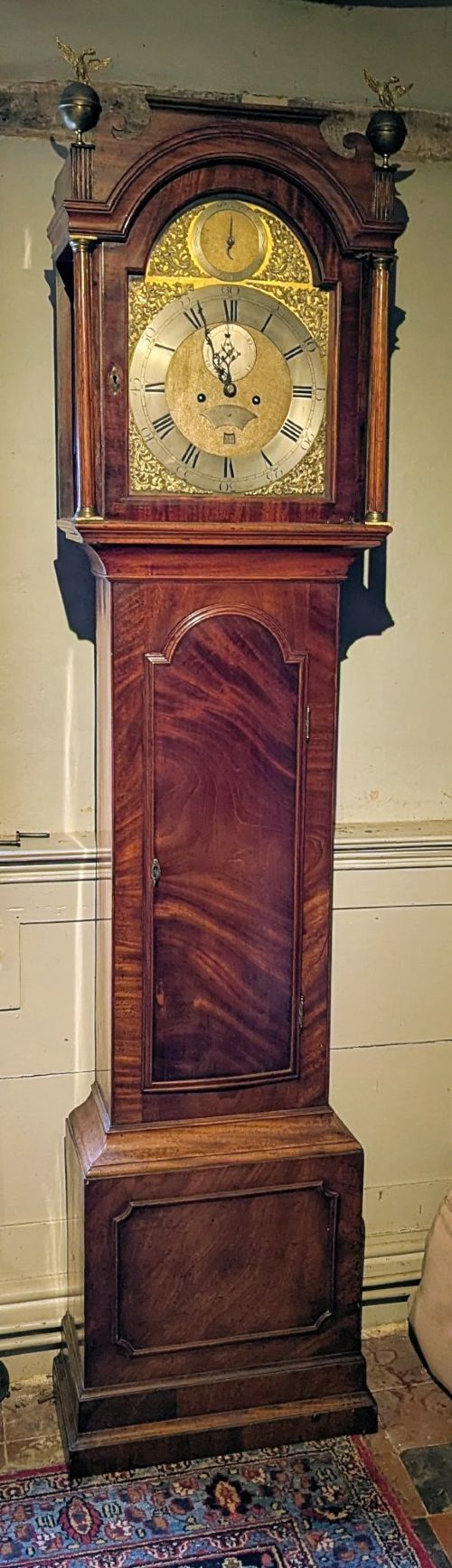
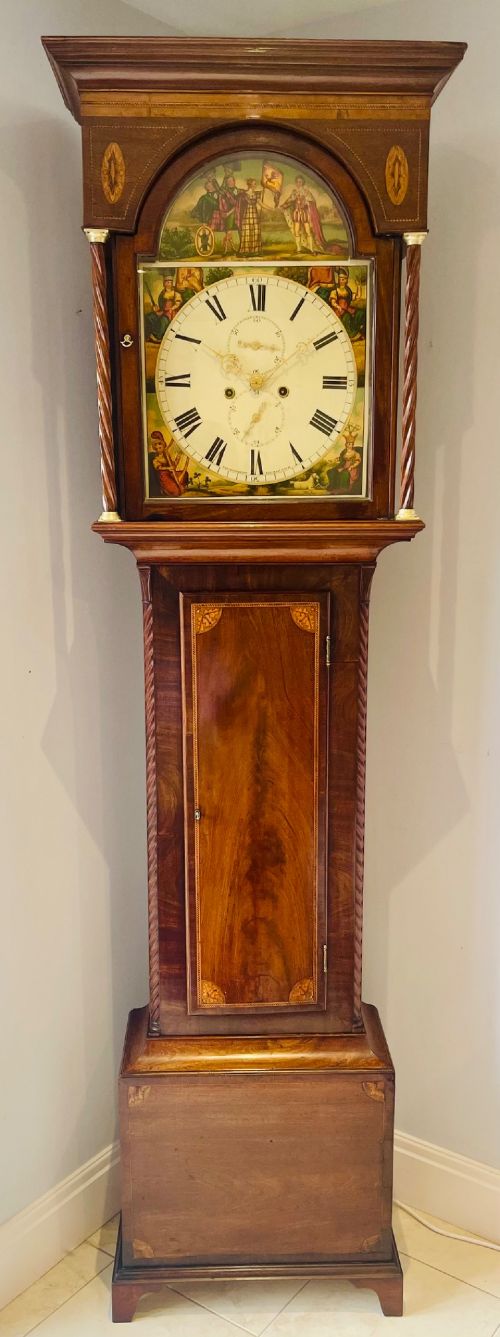
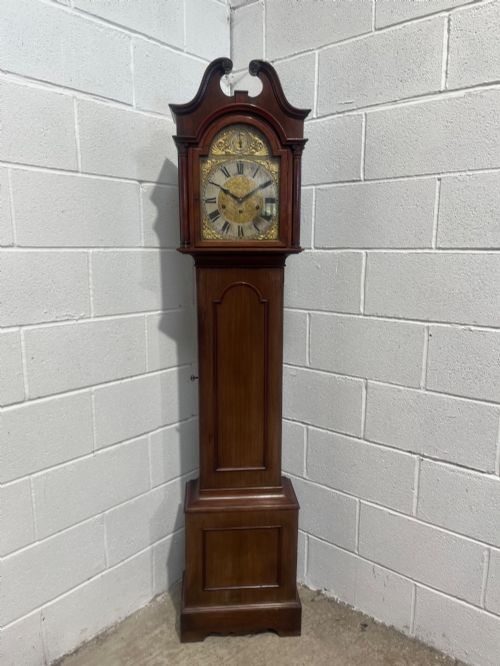
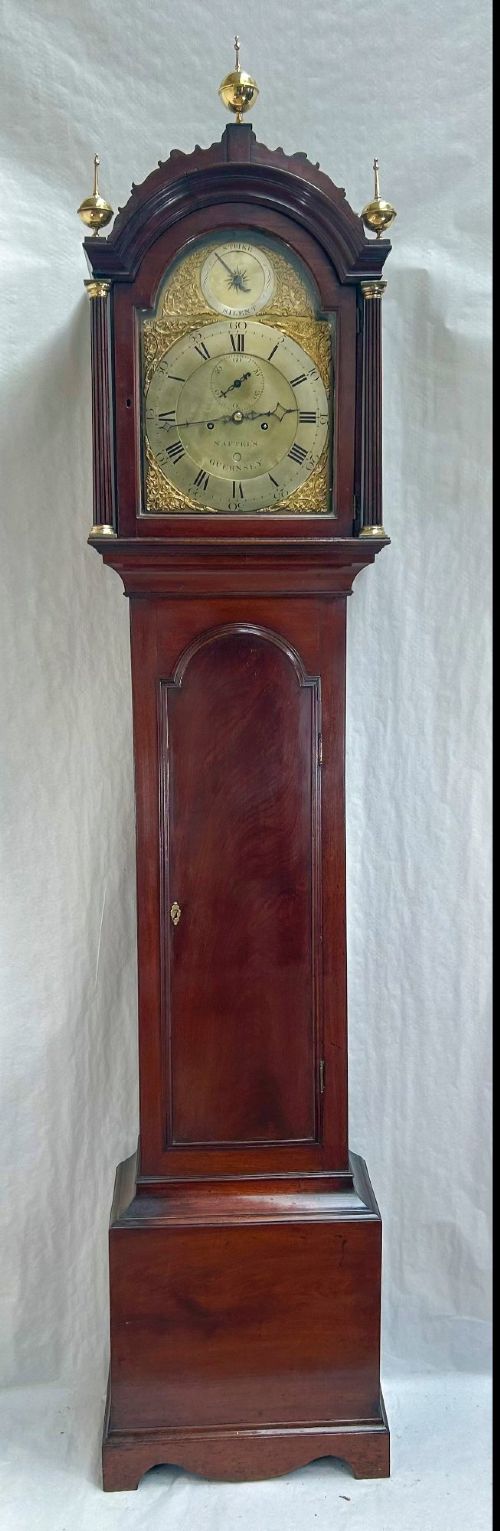
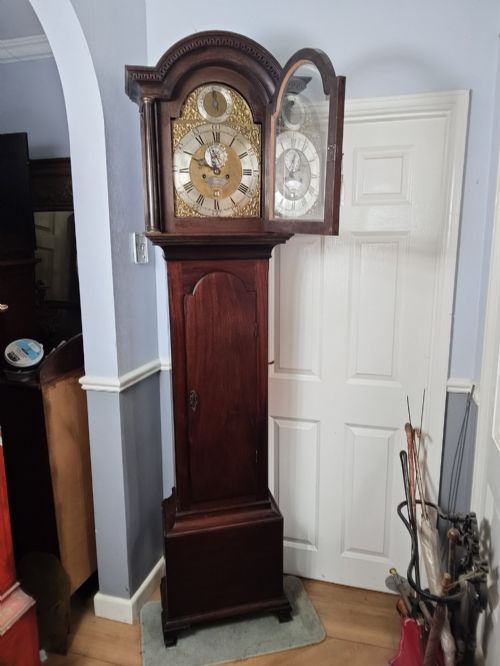
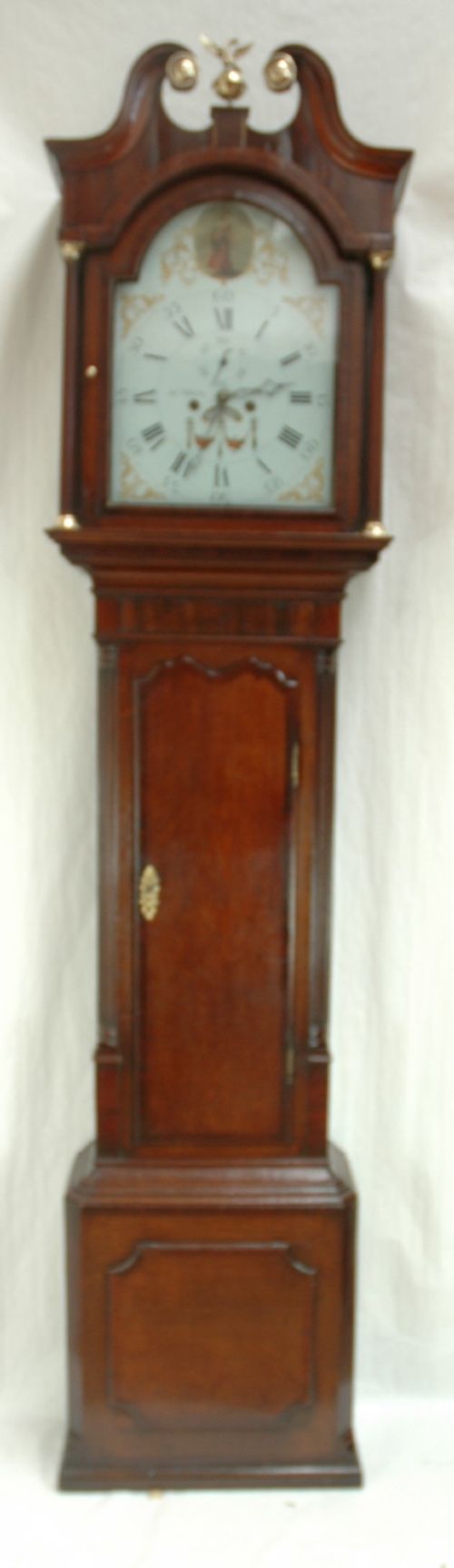
When searching for a mahogany pendulum floor clock, buyers encounter tall floor-standing timepieces that dominate a room with their vertical proportions and architectural cases. The pieces catalogued here span from the eighteenth century through to the Edwardian era, appearing predominantly as grandfathers, longcases, and smaller domestic variations such as grandmother clocks. Originating from workshops across England and Scotland, these items combine cabinetry with mechanical timekeeping.
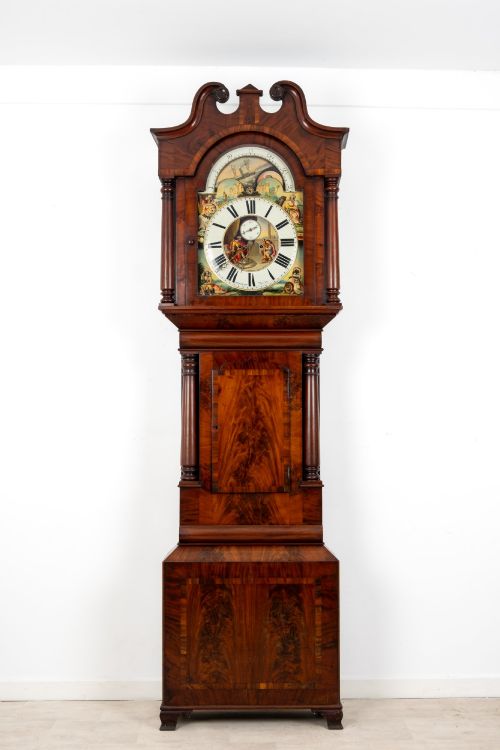
The prevailing form on this page is the classic longcase clock enclosed in mahogany, sometimes featuring flame veneers, inlay, or brass dials. Makers from London, provincial English towns, and Scottish burghs constructed these pieces to house eight-day or thirty-hour movements driven by weights and controlled by a swinging pendulum. Buyers select them for their combination of fine cabinet timber and intricate mechanical dials.
Examples stretch across Georgian, Regency, Victorian, and Edwardian periods, demonstrating how the tall case evolved from severe eighteenth-century lines to more compact domestic proportions by nineteen hundred. Some incorporate specialised mechanisms like moon rollers, strike-silent functions, or quarter-chiming capabilities. Each version reflects the specific regional taste of the maker who signed the dial.
How these clocks were constructed
Cabinetmakers built the tall housings using solid mahogany or applied flame mahogany veneers over secondary timbers such as oak, securing the tall trunk doors with brass hinges and locks. The glass hood doors protected painted iron or brass dials, which often featured subsidiary seconds rings, calendar apertures, or rotating moon phases driven by the motion work behind. Craftsmen selected dense timber to withstand the tension of suspended lead weights hung on cords or chains.
The interior movements rely on brass wheel trains, steel pivots, and iron arbors assembled by hand within heavy brass plates. Escapements, whether anchor or deadbeat, regulate the descent of the weights in coordination with the pendulum rod, which typically uses a heavy brass-faced bob. Regional clockmakers sourced these brass castings and dials before engraving their names and towns directly onto the metal surface.
One provincial Scottish clock carries a mysterious horse motif stamped directly onto the dial face.
What separates the best pieces
Quality rests upon the crispness of the cabinetmaker's joinery and the sophistication of the dial work rather than mere scale. Superior examples display carefully matched flame mahogany veneers, well-executed string inlay or paterae, and heavy brass bezels that fit flush against the hood glass. The choice of timber grain across the trunk door dictates the visual impact of the case.
Mechanically, the distinction lies in the finish of the brass movement plates, the accuracy of the wheel cutting, and the quality of the dial painting or brass engraving. Signed dials by known makers carrying strike-silent options or moon phases represent higher tiers of production. The structural integrity of the hood slides and the original weight-driven setup further elevate a piece.
Charles Shuckburgh·Gillett and Johnston·Green of Edinburgh·James McCabe·Parkinson Bros·Benjamin Taylor·Rickards Wotton Under Edge·D Williams·Priory of Dundee·George Hallifax·Mclennan London·Edward Shepley·Matt Wylie Paisley·Thwaites London·Charles Dowsett
The Mahogany Pendulum Floor Clock Glossary
- Longcase
- A tall floor-standing clock enclosing a hanging pendulum and weights, commonly termed a grandfather clock. These housing units provide protection for the delicate gear train while serving as architectural furniture.
- Grandmother clock
- A smaller, scaled-down version of the traditional longcase clock, typically produced during the Edwardian period or later. They occupy less floor space while retaining the mechanical pendulum movement.
- Moon phase
- A dial mechanism featuring a rotating disc that tracks the lunar cycle behind a shaped aperture. This complication required specialised gearing connected to the primary hour wheel.
- Strike-silent
- A mechanical feature allowing the user to disengage the striking train so the clock marks the hours in silence. This mechanism is controlled by a small lever positioned on the dial face.
- Paterae
- Small circular decorative ornaments carved or inlaid into the mahogany woodwork, frequently seen on Georgian and Regency pieces. They add a refined classical detail to the frieze or trunk.
Mahogany Pendulum Floor Clock: Frequently Asked Questions
How do I wind an eight-day longcase clock?
Winding involves inserting a crank key into the winding holes on the dial face and turning it clockwise until the weights rise near the top of the trunk. Care must be taken not to overwind the mechanism.
Most eight-day movements require this attention once a week. Keeping a consistent schedule ensures the pendulum maintains an even beat.
Where should I place a floor clock in my home?
These clocks require a stable, dry interior wall away from direct sunlight, central heating vents, and heavy vibrations. A firm floor prevents the case from rocking.
Sufficient vertical clearance is necessary to accommodate the full height of the tall mahogany case. Placing the piece on a level surface ensures the pendulum swings with an even tick.
What is the difference between a grandfather and a grandmother clock?
Grandfather clocks are the standard full-size longcases produced largely throughout the eighteenth and nineteenth centuries. They stand impressively tall and house heavier weight-driven movements.
Grandmother clocks are significantly shorter variants built primarily during the twentieth century. They offer the traditional aesthetic of a pendulum floor clock in a more compact domestic scale.
How can I tell a Georgian mahogany clock from a later revival piece?
Georgian pieces display construction methods appropriate to the period, including hand-cut dovetails, secondary oak linings, and original brass dial fixings. The patination of the mahogany shows deep, natural ageing.
Revival versions often feature machine-sawn timber, standardised modern screw fittings, and cleaner internal finishes. Examining the movement backplate and the timber inside the trunk reveals these manufacturing differences.