
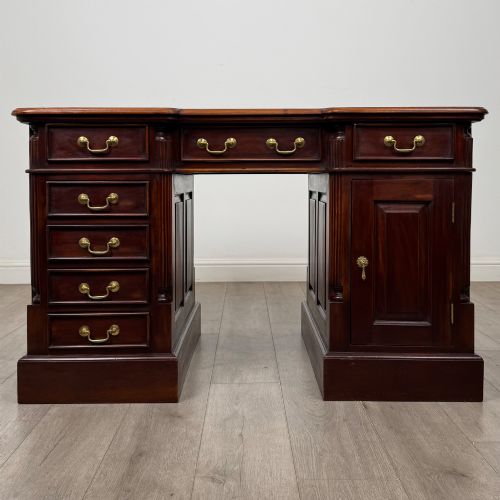
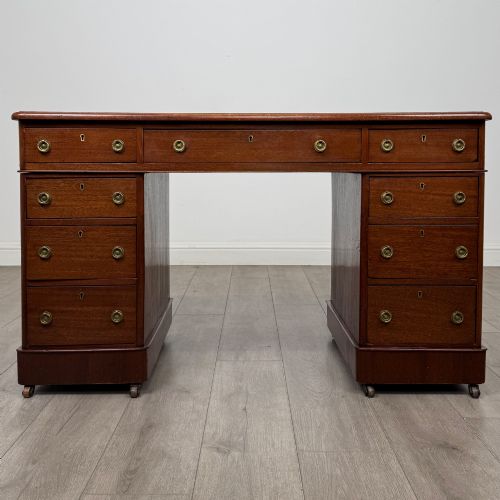
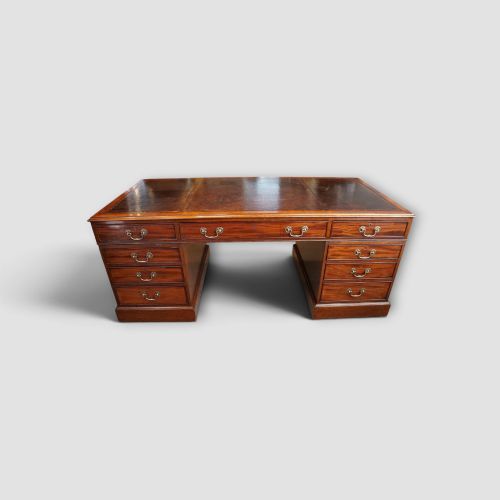
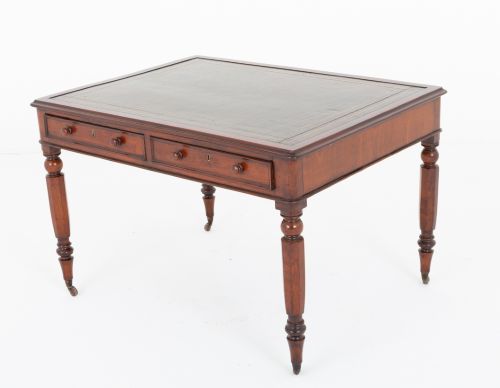


Mahogany Partners Writing Table
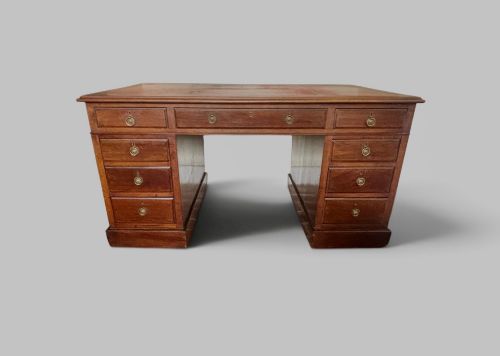
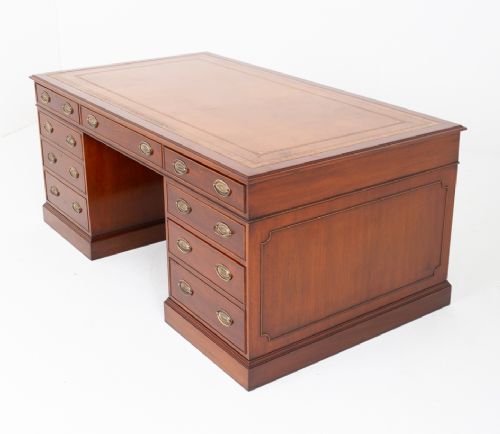
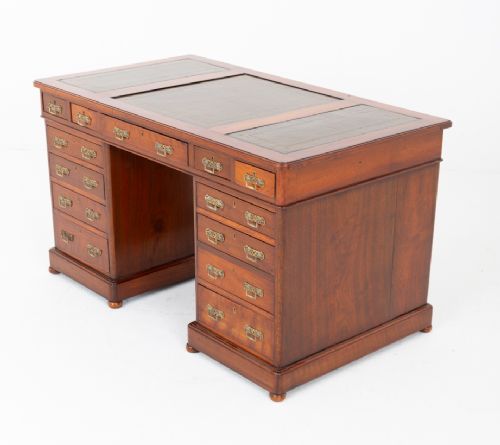
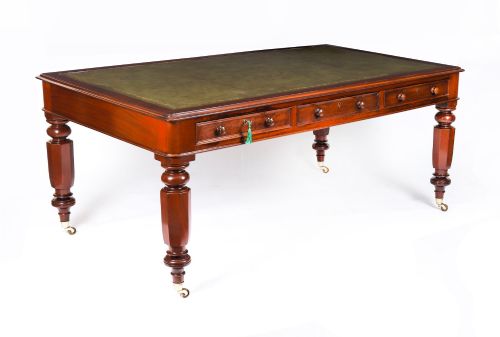
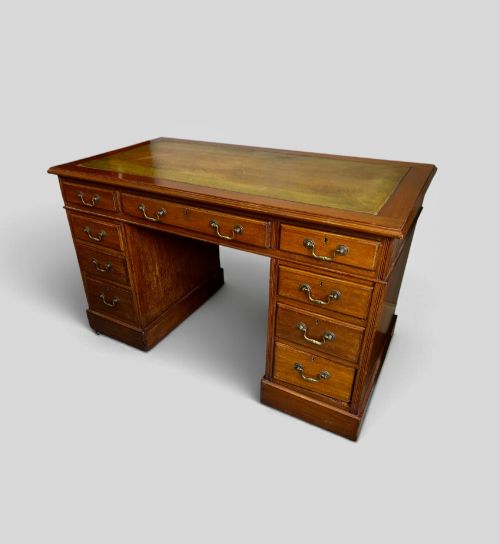
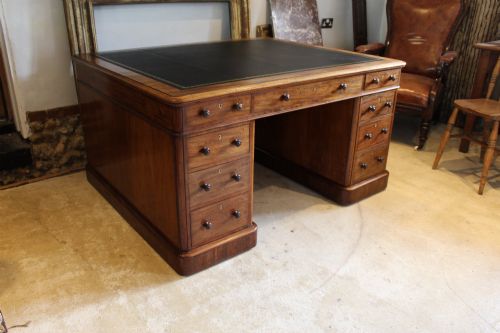
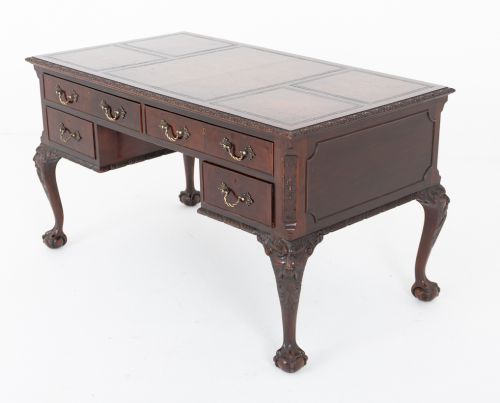
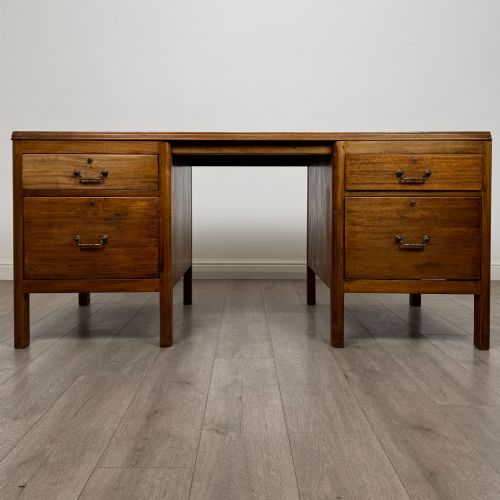
A mahogany partners writing table is a substantial freestanding double-sided desk built for two people to work opposite one another.
Mahogany Partners Writing Table
A mahogany partners writing table is a substantial freestanding double-sided desk built for two people to work opposite one another. You will most frequently encounter Victorian and nineteenth-century examples alongside Georgian and Regency variants on this page.
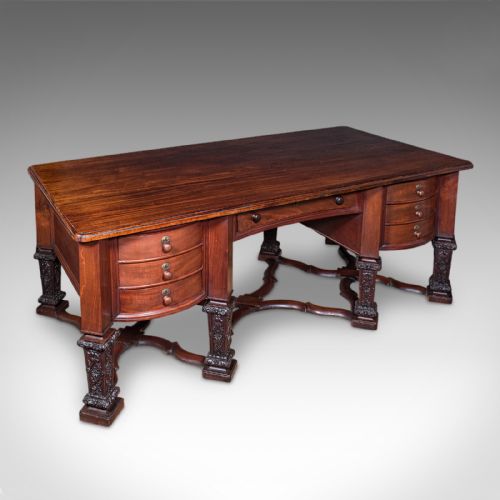
These pieces typically feature banks of drawers on both sides or a long writing surface supported by pedestals or legs. They served in libraries, studies and administrative offices where professionals needed shared workspace.
The selections range from robust six-drawer library tables to grand pedestal desks executed in flame mahogany. Each piece reflects the formal requirements of nineteenth-century domestic and institutional interiors.
Materials and construction methods
Cabinetmakers built these tables using solid mahogany and flame mahogany veneers applied to secondary woods. Brass hardware, tooled leather writing surfaces and subtle marquetry inlay or satinwood details completed the primary construction.
Joinery relied on dovetailed drawer construction and sturdy framing to support the heavy dual-pedestal or four-legged formats. Workshops employed ebonised wood and gilt wood accents to add visual depth to the polished timber.
Some partners desks still contain original ink stains trapped inside the top drawers, left behind by busy writers centuries ago.
Evaluating craftsmanship and proportion
Quality rests in the selection of timber figures, particularly the depth of flame mahogany and the crispness of any carved detailing. Superior examples display balanced proportions, original tooled leather inserts and well-matched grain across both working faces.
The integrity of the internal drawer construction and the presence of original brass handles distinguish workshop output. Pieces attributed to documented makers demonstrate meticulous attention to structural finishing that remains hidden from casual view.
Trollope & sons·Charles Andrea Nosotti·Edwards & Roberts·Maple & Co·Gillows·W. Priest
The Mahogany Partners Writing Table Glossary
- Partners desk
- A large freestanding double-sided desk designed with drawers or cupboards accessible from both facing positions. This configuration allowed two individuals to work independently at the same piece of furniture.
- Pedestal desk
- A heavy table comprising a top resting upon two separate banks of drawers or columns. This form provides substantial storage capacity while maintaining a clear central kneehole space.
- Flame mahogany
- A decorative wood veneer harvested from the fork of the mahogany tree where branches meet the trunk. The cutting process produces a distinctive swirling flame-like pattern highly prized by cabinetmakers.
- Library table
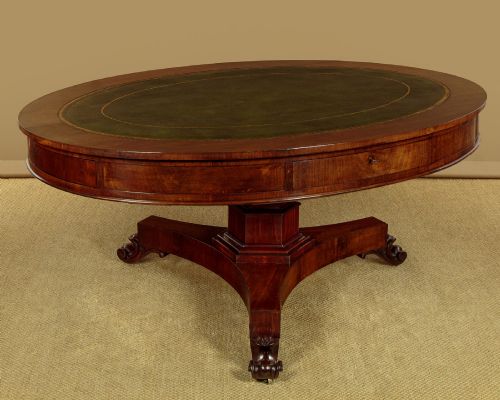
- A large freestanding table utilised for reading and sorting documents rather than intensive daily correspondence. These pieces often feature frieze drawers and finished backs for display in open rooms.
- Tooled leather
- Leather upholstery stamped and gilded around the perimeter with decorative hand-pressed rolls and corner tools. This material provides a durable and smooth writing surface atop the wooden framework.
Mahogany Partners Writing Table: Frequently Asked Questions
What is a mahogany partners writing table?
A mahogany partners writing table is a large double-sided desk designed for two people to sit and work opposite each other. These pieces feature functional drawers or cupboards accessible from both sides.
Cabinetmakers constructed them as freestanding furniture intended to sit in the centre of a room rather than against a wall. They combined expansive writing surfaces with substantial storage to serve professional libraries and studies.
How were partners desks used historically?
Partners desks accommodated two individuals working simultaneously, such as a lawyer and a clerk, or business associates reviewing documents. The dual-sided design permitted equal access to writing implements and stored papers.
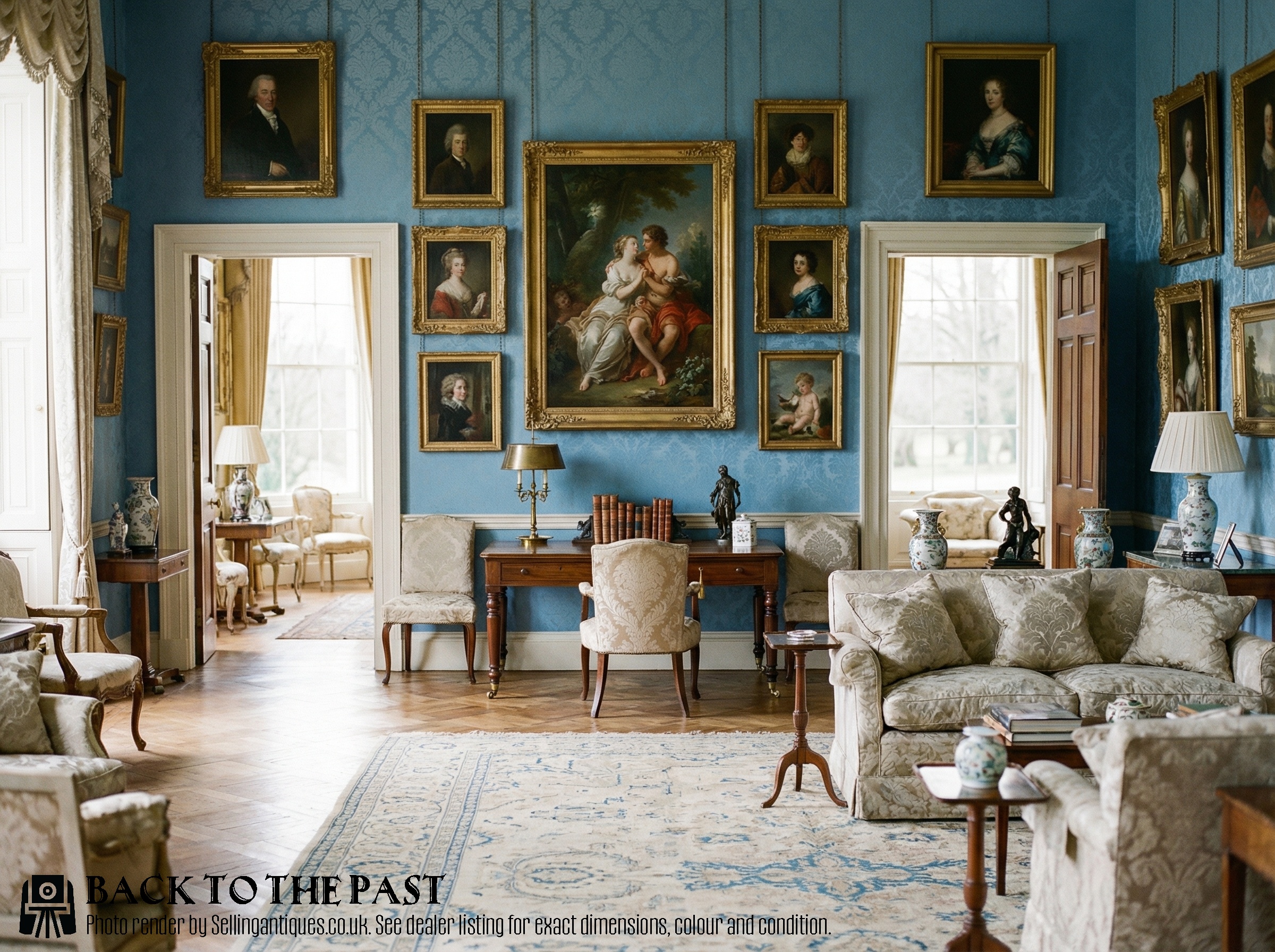
Their placement in the middle of grand rooms allowed light from windows to fall across the writing surface from the side. They functioned as central hubs for administrative tasks and correspondence in large households and offices.
How do I care for a leather writing surface?
Leather writing surfaces require gentle cleaning with a slightly damp cloth followed by a neutral leather conditioner to prevent drying. Avoid harsh chemical cleaners and excessive moisture which can damage the surrounding timber and gold tooling.
Keep the desk away from direct sunlight and heat sources to protect the leather from fading and cracking over time. Regular maintenance preserves the suppleness and appearance of the antique hide.
How can I tell a Georgian desk from a Victorian one?
Georgian desks typically exhibit simpler, restrained classical proportions with understated bracket feet or straight legs and subtle mahogany figuring. Cabinetmakers during this earlier era favoured structural elegance and understated brass work.
Victorian examples frequently display heavier proportions, more pronounced flame mahogany veneers, elaborate carving, and pedestal bases with plinth feet. Revival styles from the nineteenth century often blend Georgian proportions with denser ornamentation.