
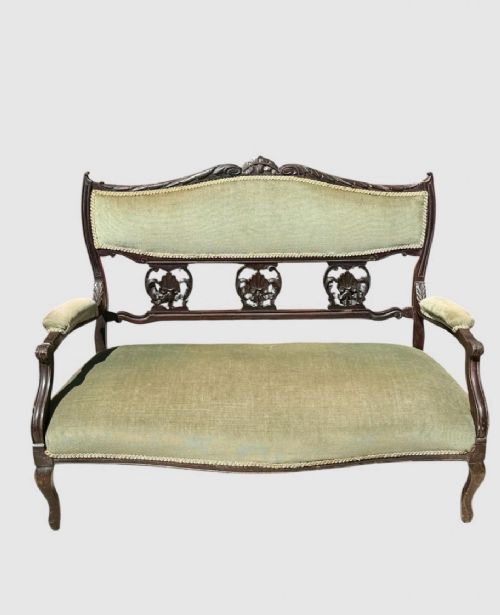


Mahogany Parlour Bench
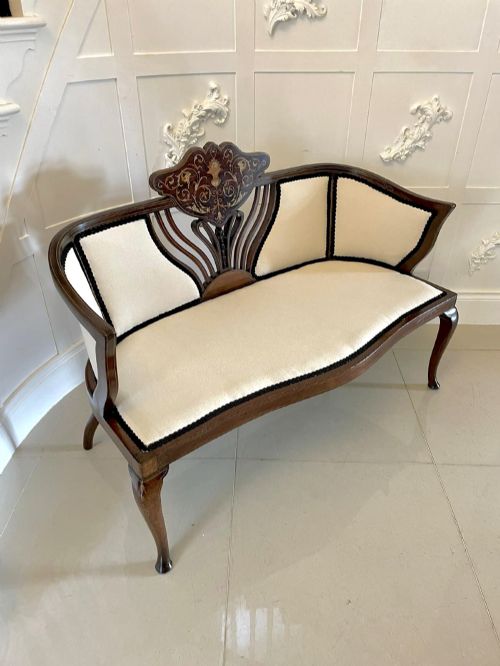
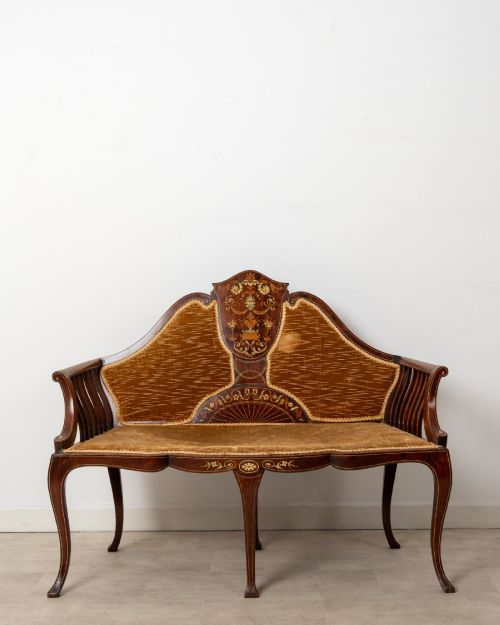
A mahogany parlour bench offers refined seating, combining solid timber frames with delicate inlay to anchor a traditional room.
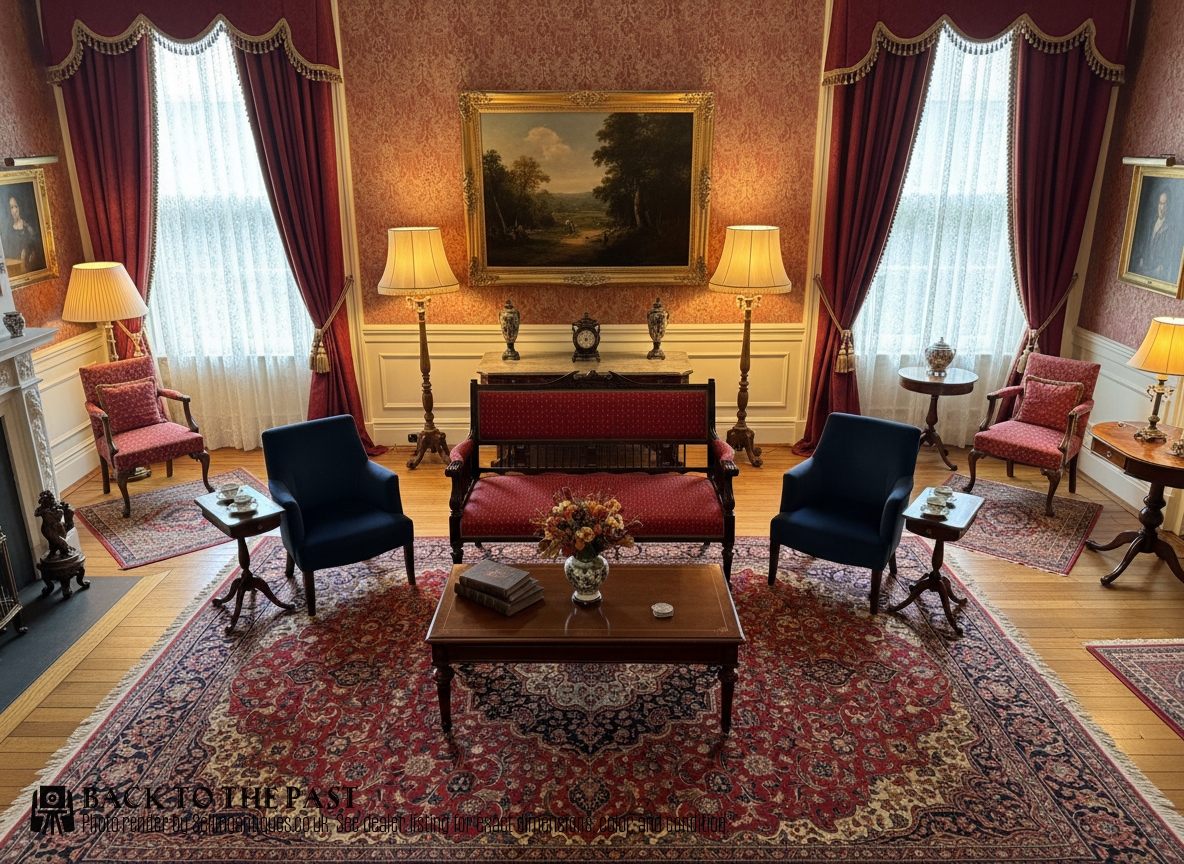
Mahogany Parlour Bench
A mahogany parlour bench belongs to a group of seating forms that includes settees, salon sofas, and two-seater couches. These pieces appear across Victorian, late Victorian, and Edwardian periods, stretching from eighteen seventy into the nineteen thirties.
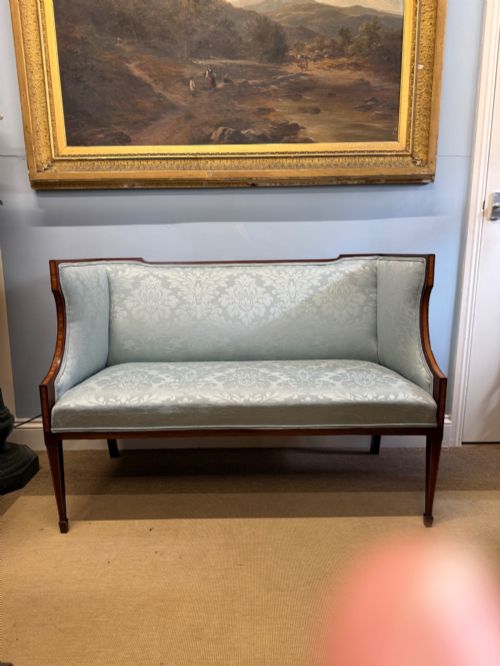
Most examples found here date from the Edwardian era and late nineteenth century, reflecting the lighter aesthetic of Sheraton Revival and Edwardian Art Nouveau design. They function as principal seating in reception rooms or as decorative end-of-bed furniture.
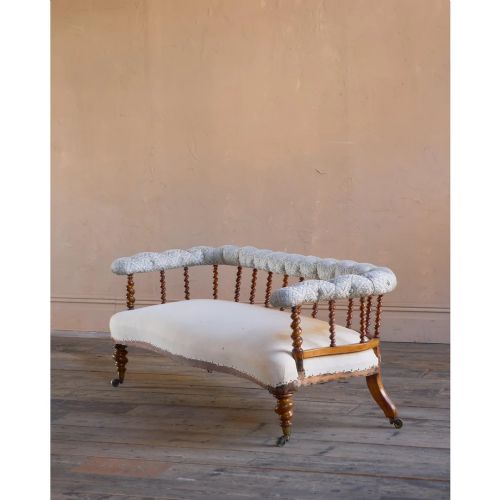
The construction typically involves a timber framework configured for two people, often accompanied by matching parlour suites or salon chairs. Makers utilised varied backrest styles, ranging from spindle backs to upholstered cameo panels.
Materials and construction methods
Makers constructed the primary frames using solid mahogany, frequently embellished with contrasting satinwood and boxwood inlay or delicate marquetry. Some pieces incorporate bone details alongside elaborate carved and turned wooden elements.
Upholstery forms a major part of the construction, utilising fabrics such as velvet alongside internal padding. Brass components occasionally appear in castors or decorative hardware supporting the wooden feet.
Some Edwardian parlour benches doubled as refined end-of-bed seating, complete with hidden bone inlay details.
Distinctions in craftsmanship
Quality rests primarily on the crispness of the timber carving and the precision of the satinwood and boxwood inlay work. Superior examples display tightly fitted joints and refined proportions in the arms and backrests.
The choice of upholstery materials and the original condition of the wooden frame further separate standard production items from finer salon pieces. Pieces retaining harmonious original details command greater appreciation among collectors.
C. Hindley & Sons
The Mahogany Parlour Bench Glossary
- Mahogany
- A durable tropical hardwood prized for its rich reddish-brown colour and stable grain. It forms the structural foundation for the majority of these settees.
- Inlay
- A technique where contrasting materials like satinwood, boxwood, or bone are inserted into recessed cavities in the mahogany surface to create decorative patterns.
- Marquetry
- Elaborate veneer work assembled to form pictorial or geometric designs across the wooden panels of the frame.
- Settee
- A small upholstered sofa designed to seat two or more people comfortably within a parlour or drawing room setting.
- Sheraton Revival
- A late nineteenth and early twentieth-century design style emulating the classical elegance and fine proportions associated with eighteenth-century cabinetmaker Thomas Sheraton.
Mahogany Parlour Bench: Frequently Asked Questions
What is a parlour bench?
A parlour bench is a formal two-seater sofa or settee designed for a nineteenth or early twentieth-century reception room. These pieces combine wooden frames with upholstered seats for refined entertaining.
They bridge the gap between chairs and large sofas, offering compact seating that often matches surrounding salon furniture.
Where should I place a mahogany parlour bench?
These benches fit well in drawing rooms, hallways, or spacious bedrooms where traditional seating adds character. Their decorative backs make them suitable for placement against walls or at the foot of a bed.
Positioning them away from direct sunlight protects the mahogany finish and sensitive upholstery fabrics.
How do I date a mahogany settee?
Dating relies on observing stylistic markers, such as heavy carved Victorian motifs versus lighter Edwardian inlay and Sheraton Revival influences. Construction techniques and secondary woods also provide clues to the decade of origin.
Comparative study of recorded pieces from eighteen seventy to nineteen thirty helps establish a reliable timeframe.
Are these benches comfortable for daily use?
Parlour benches were originally built for formal sitting rather than lounging, featuring upright backs and firm padding. Their comfort depends heavily on the condition of the internal webbing and upholstery.
Many period examples retain supportive seating, while others require updating to suit modern relaxation preferences.