



Mahogany Oval Handles
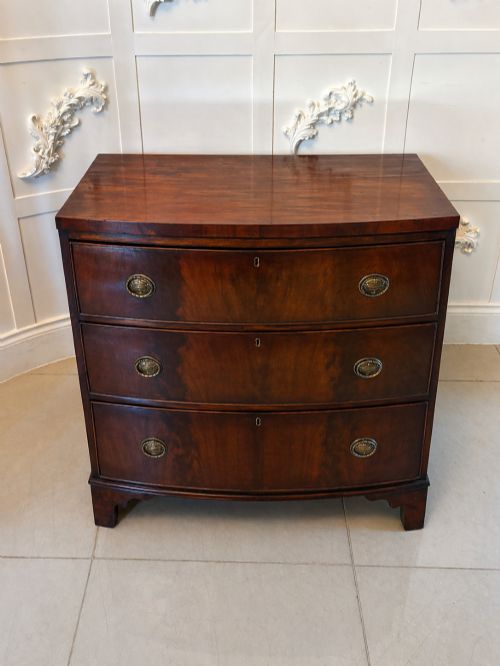
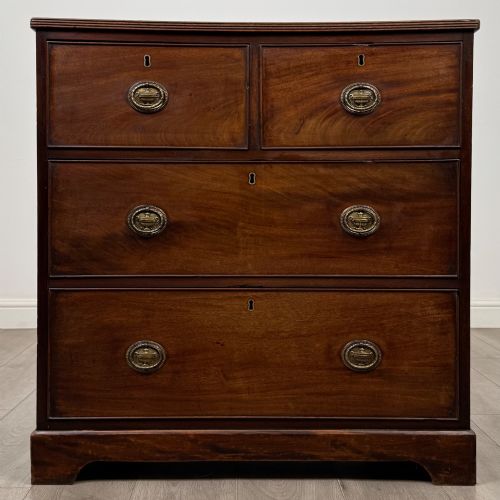
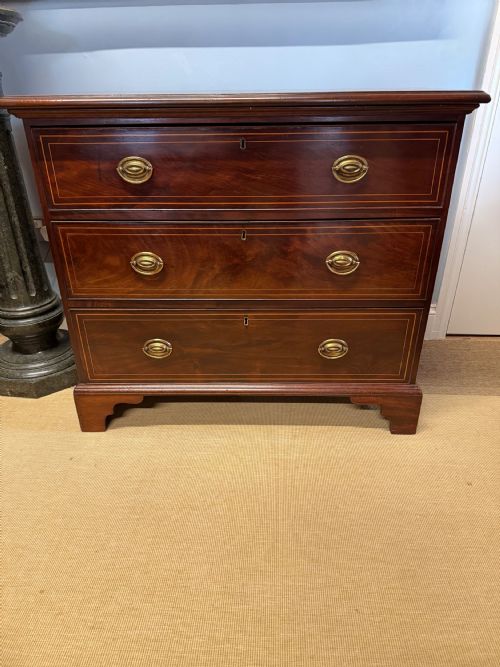
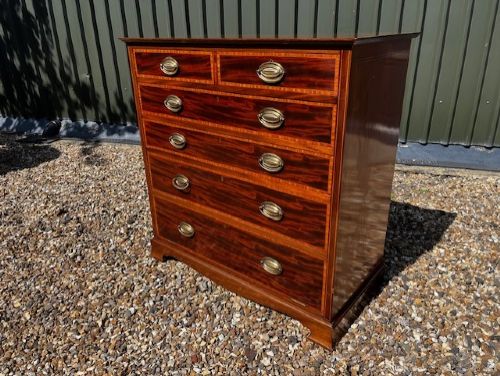
Mahogany oval handles bring character to period chests of drawers and dining furniture, offering a refined detail for traditional interiors.
Mahogany Oval Handles
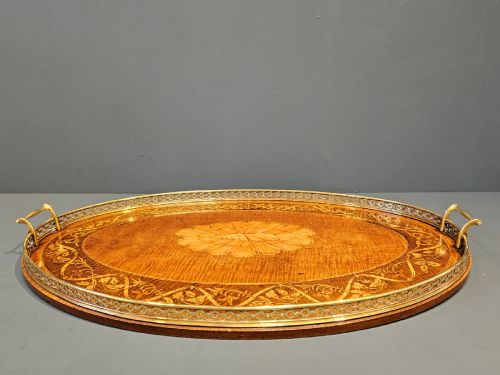
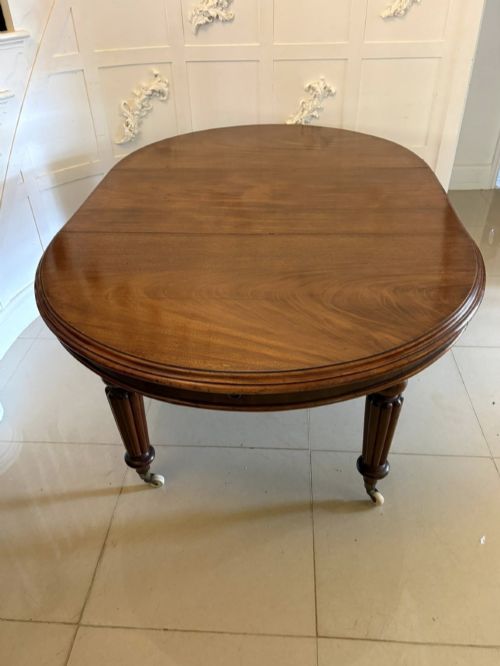
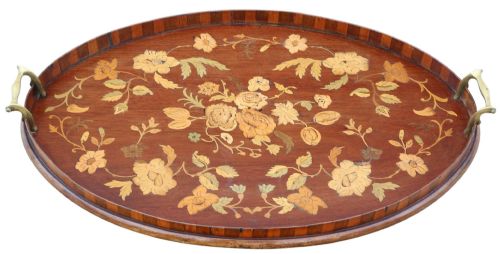
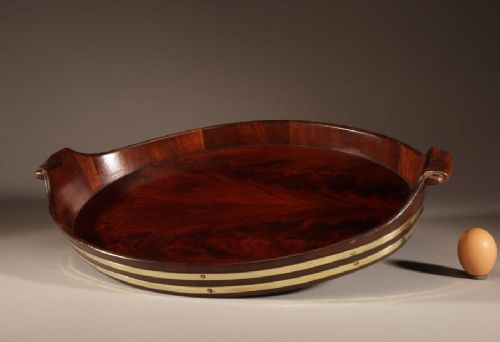
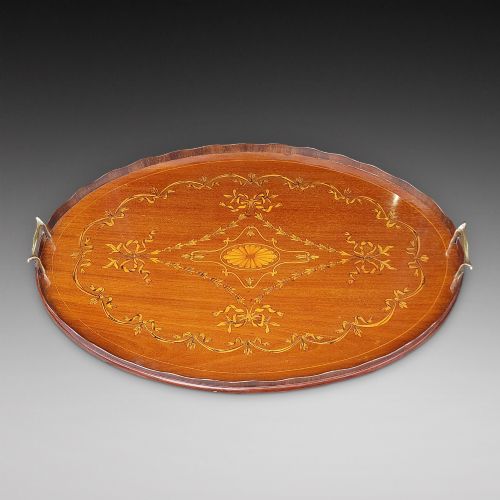
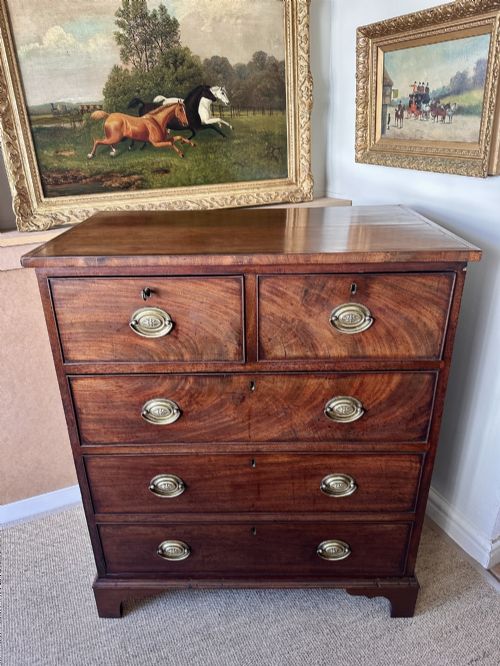
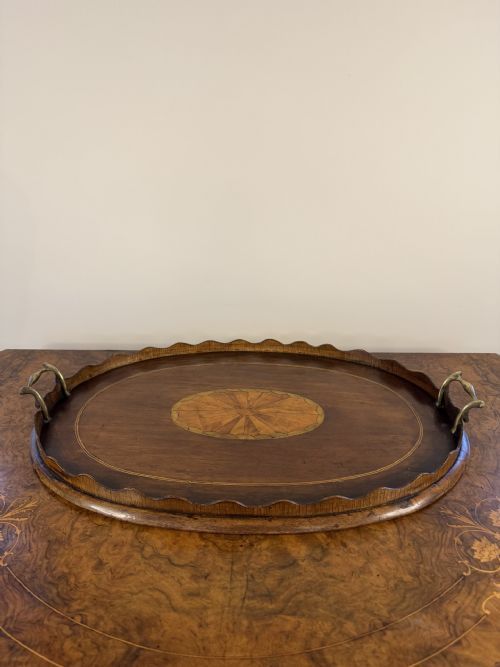
When searching for mahogany oval handles, buyers generally encounter period chests of drawers, serving trays, and dining tables incorporating brass hardware or specific handle backplates. These pieces span the Georgian, Regency, and Victorian eras, demonstrating how functional cabinetry evolved alongside decorative serving pieces.
The selections on this page highlight items where mahogany forms the primary body, paired frequently with brass elements, satinwood inlay, and boxwood details. Chests of drawers and occasional tables represent the core forms available to collectors of this aesthetic.
Originating largely from Georgian and Edwardian workshops, these items reflect the craftsmanship of the eighteenth and nineteenth centuries. Buyers find both utilitarian serving trays and principal case furniture displaying characteristic timber figuring.
Materials and construction methods
Cabinet makers utilised solid mahogany and applied veneers to construct the main carcases, serving trays, and table tops. Secondary timbers like oak frequently appear in drawer linings and internal framing.
Decorative surfaces often incorporate satinwood inlay, marquetry, and boxwood stringing to create contrasting geometric or floral patterns. Brass fittings, including drop handles and bound edges, provide functional contrast to the dark timber.
Joinery techniques from the Georgian and Victorian periods relied on hand-cut dovetails for drawers and sturdy peg or dowel joints for tables and cellarettes.
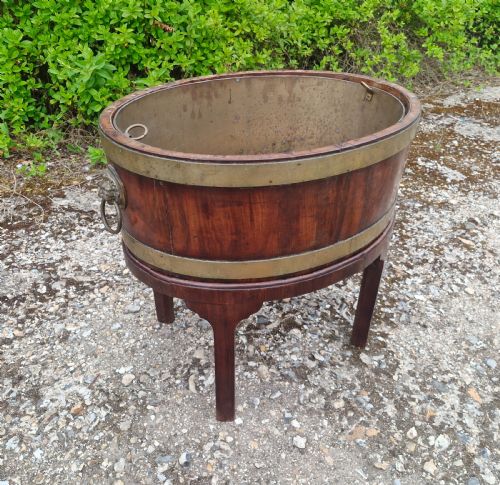
Object forms include chests of drawers, serving trays, dining tables, occasional tables, bureaux, and wine coolers.
Factors of execution and design
The fineness of the timber figuring and the precision of the marquetry inlay dictate the distinction between standard items and superior examples. Master craftsmen selected rich, highly grained mahogany and executed crisp, tight joints.
Hardware execution plays a major role, as original brass mounts and shaped backplates display sharper cast details and heavier gauge metalwork than later replacements. The integration of secondary woods such as clean oak drawer linings reflects high standards of workshop production.
Proportion and architectural balance separate exceptional case pieces and serving trays from ordinary production. Subtle enhancements like serpentine fronts and fine stringing demonstrate deliberate design hierarchy.
The Mahogany Oval Handles Glossary
- Marquetry inlay
- Decorative patterns formed by fitting contrasting veneers into a prepared wooden surface. This technique creates elaborate pictorial or floral designs on tray centres and drawer fronts.
- Butler's tray
- A portable wooden tray with hinged sides, designed for serving and often mounted on a folding stand. These pieces frequently feature shaped handles or brass corners.
- Wine cooler
- A lined timber vessel used to chill bottles during formal dining, often bound with brass hoops. Georgian examples frequently employ coopered construction techniques.
- Satinwood
- A lustrous, yellowish timber utilised for contrasting inlay work and banding on mahogany furniture. It gained widespread popularity during the Sheraton and Regency periods.
- Serpentine front
- A curved piece of cabinetry featuring a convex centre flanked by concave sides. This undulating profile requires advanced woodworking skill to construct successfully.
Mahogany Oval Handles: Frequently Asked Questions
What periods do these pieces date from?
The listings span the Georgian, Regency, Victorian, and Edwardian eras, covering the late eighteenth through the early twentieth centuries.
Most items reflect the design sensibilities of the Georgian and Sheraton periods, alongside later revival pieces.
How do I care for mahogany surfaces?
Maintenance involves applying appropriate beeswax and avoiding direct sunlight to preserve the rich colour and grain of the timber.
Regular dusting with a soft, dry cloth protects the polished finish without building up heavy wax layers.
Are the brass mounts original?
Many pieces retain their period brass handles and escutcheons, though hardware inspection requires checking for uniform patina and matching fixing holes.
Georgian and Regency items frequently showcase heavy brass backplates that complement the dark mahogany tones.
What function did butler's trays serve?
Butler's trays were utilised in large households for transporting dining items between rooms before being placed on folding stands for service.
Today, they function primarily as decorative coffee tables or portable serving surfaces in residential settings.