
Mahogany Open Cabinet
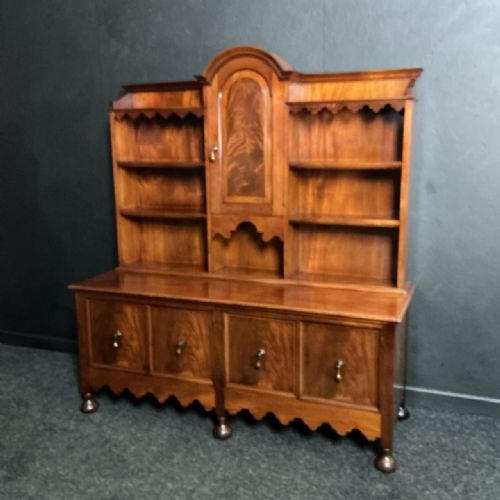
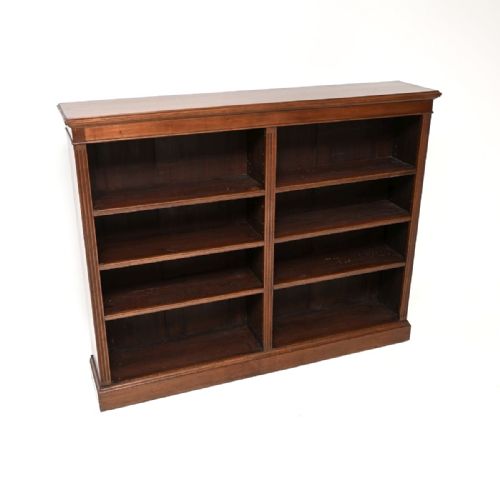
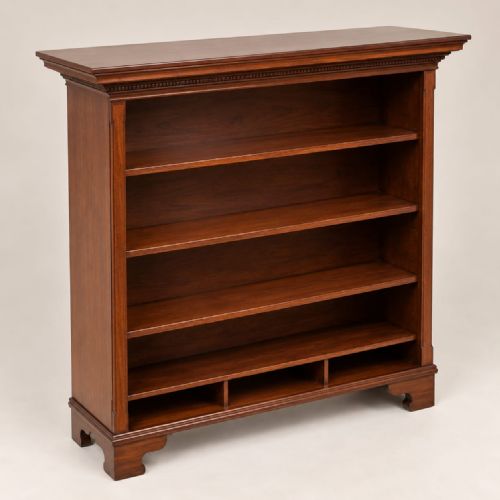
A mahogany open cabinet offers accessible shelving and display space, bringing rich timber grain and classic proportion to a room.
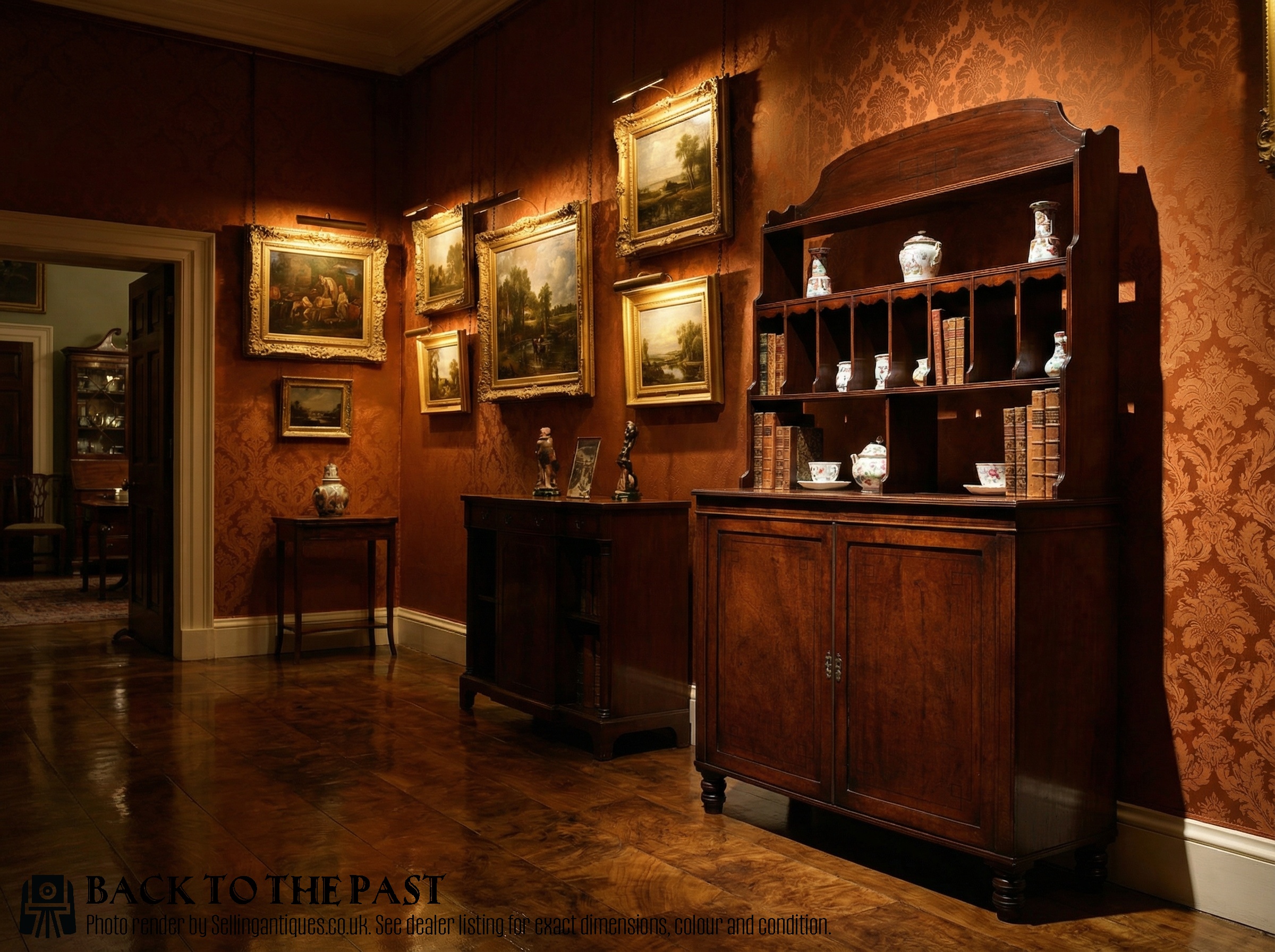
Mahogany Open Cabinet
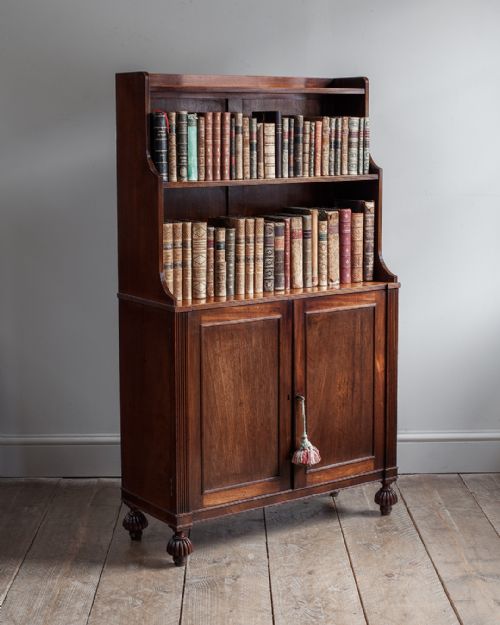
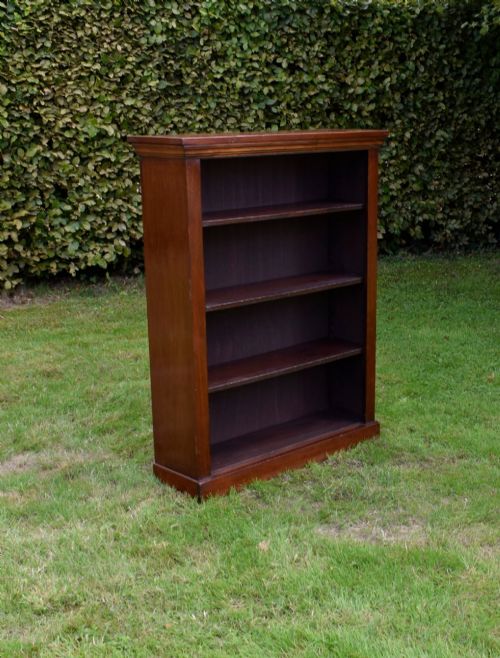
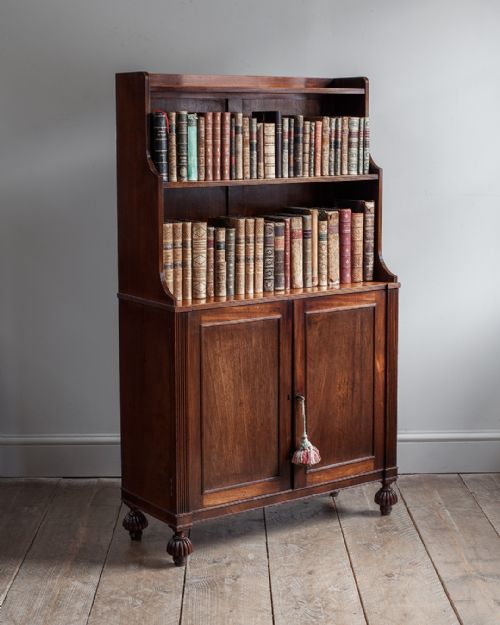
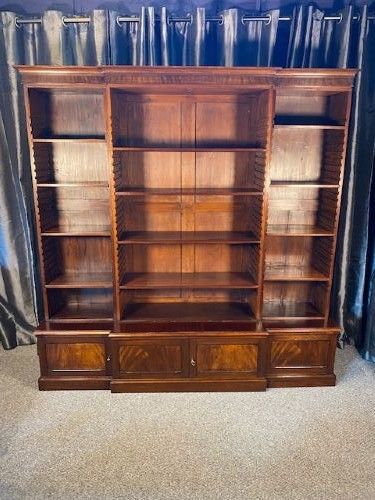
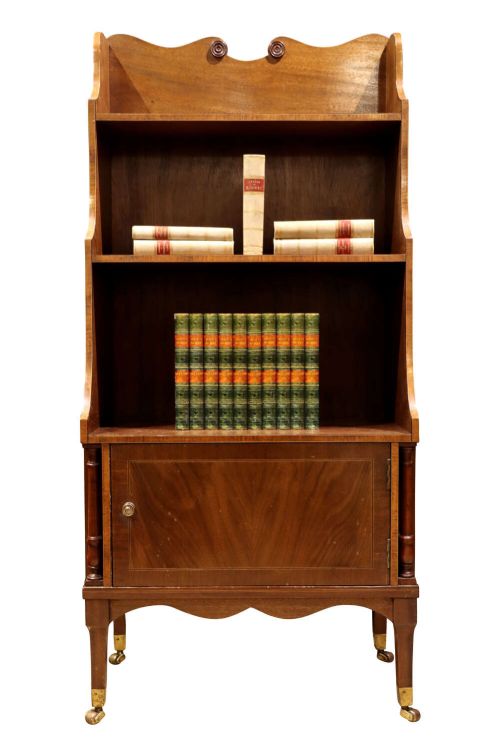
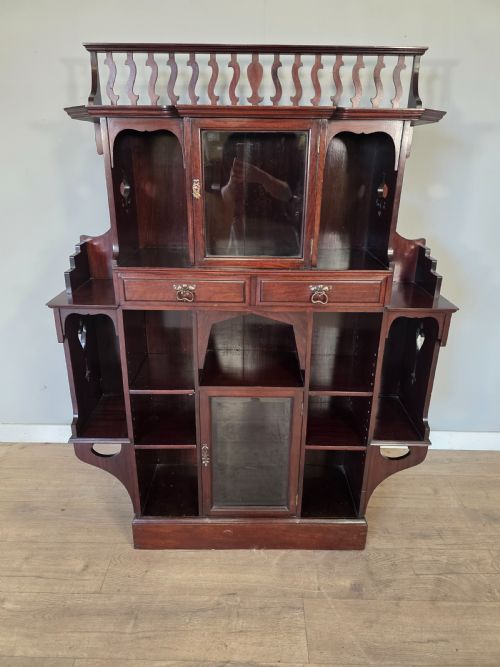
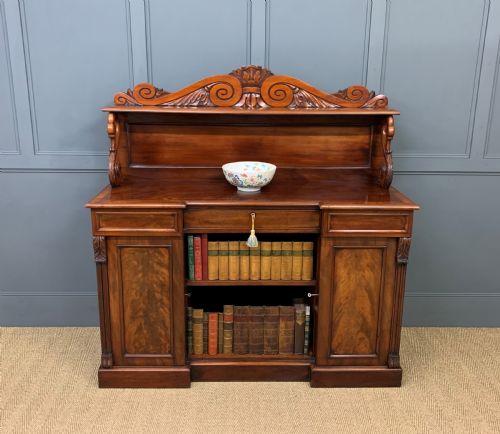
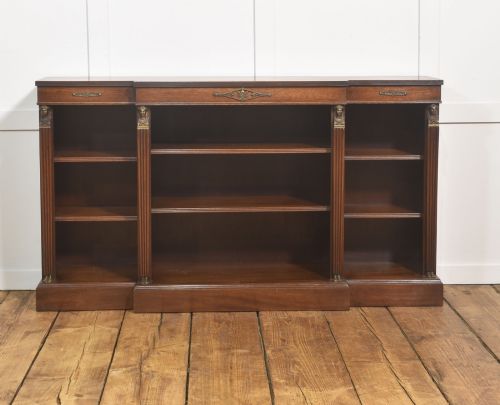
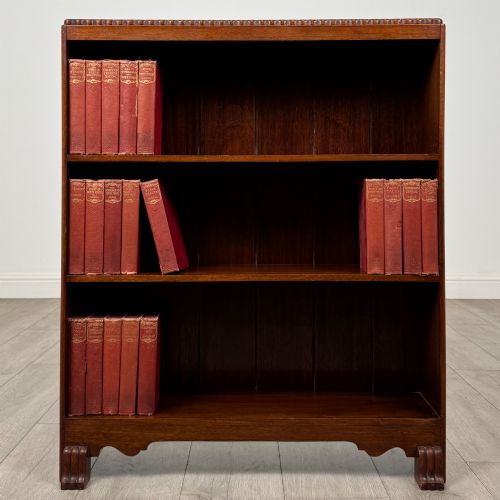
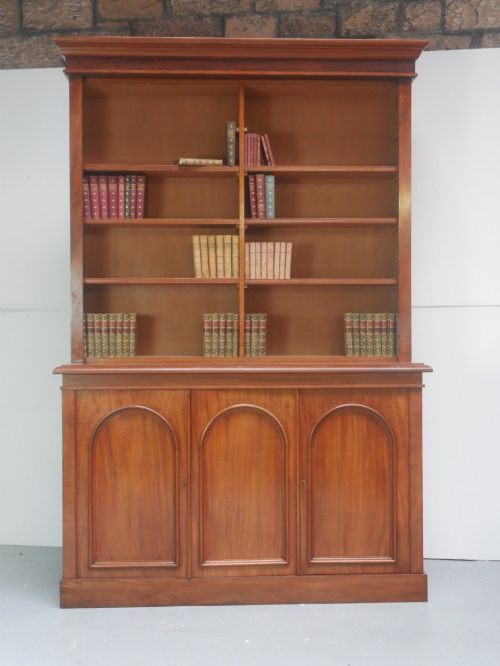
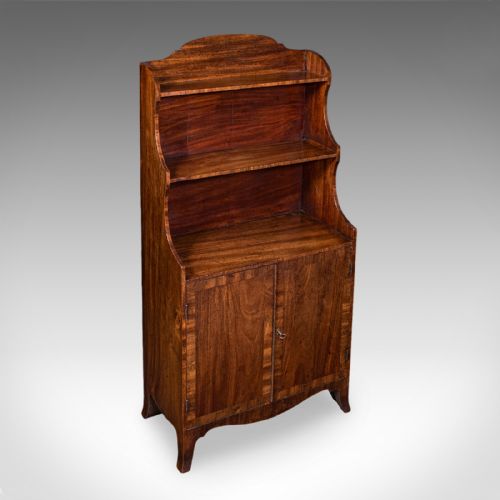
A mahogany open cabinet serves as a versatile piece for storing books and displaying cherished objects without enclosing them behind glass doors. These items appear across various periods including the Regency, Victorian, and Edwardian eras, spanning forms from dwarf bookcases to tall waterfall shelves and side cabinets.
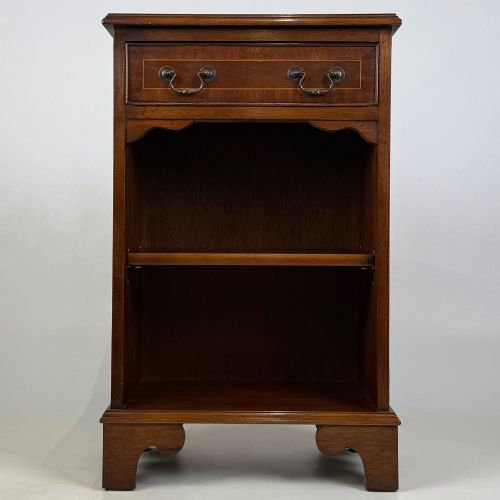
The pieces listed on this page encompass compact bedside cabinets with open sections, narrow bookcases, and large breakfront designs. Makers from history such as Edwards and Roberts, Holland and Sons, and Whytock and Reid demonstrate the breadth of craftsmanship found within this category.
How they were made
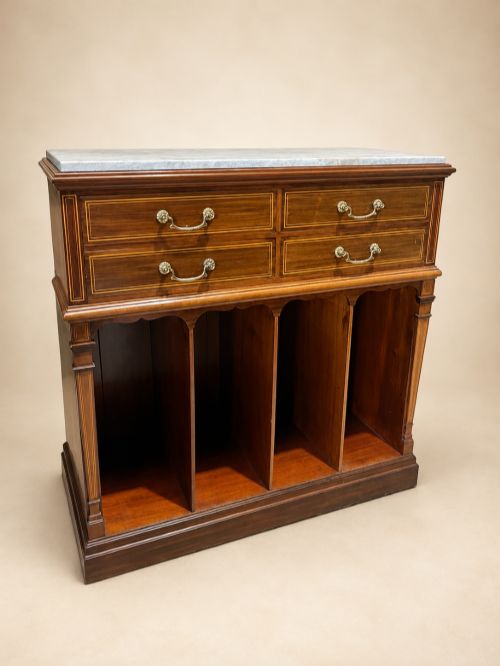
Makers utilised solid mahogany and flame mahogany veneer over supportive timber carcases to achieve deep, rich grain patterns across the exterior surfaces. Satinwood stringing and inlay often provide contrasting linear detail around the edges and panels.
Functional hardware such as brass castors, ormolu mounts, and brass gallery rails add structural refinement and mobility to specific pieces from the Regency and Victorian periods.
Some nineteenth century library cabinets featured leather edged shelving, ensuring precious book bindings met a soft, cushioned surface whenever pushed home.
What varies in quality
The degree of refinement in the timber selection and veneer matching dictates the visual impact of an open cabinet. High quality examples display continuous, highly figured flame mahogany across prominent surfaces rather than mismatched grain.
Attention to secondary details such as inlaid satinwood banding, fine brass castors, and integrated leather edging on shelving separate standard utility items from distinguished cabinet maker productions.
Edwards and Roberts·Holland and Sons·Shapland and Petter·Whytock and Reid·Robert Strahan·Morison and Co·C Mellier and Co
The Mahogany Open Cabinet Glossary
- Flame mahogany
- A veneer cut from timber where the branch meets the main trunk, creating a distinctive flamelike pattern across the surface. This figuring is highly prized for cabinet fronts and top panels.
- Waterfall bookcase
- A set of open shelves that steps back progressively from bottom to top, creating a cascading profile. These pieces date frequently from the Regency and Victorian periods.
- Breakfront
- A cabinet design where the central section projects forward from the flanking wings. This architectural arrangement creates depth and shadow across the piece.
- Satinwood
- A durable, yellowish timber native to Ceylon and India, frequently utilised for contrasting stringing and inlay work on mahogany furniture. It provides a bright, reflective border to darker panels.
- Galleried
- A low decorative railing, often made of brass, fitted around the top edge of a cabinet or side table to prevent items from sliding off. This feature appears frequently on bedside and small display pieces.
Mahogany Open Cabinet: Frequently Asked Questions
What is a mahogany open cabinet?
A mahogany open cabinet is a piece of wooden furniture designed for storage and display without solid or glass doors enclosing the main shelving area. These items range from small bedside cabinets to large library bookcases.
They provide immediate access to books and decorative objects while showcasing the deep reddish-brown tones and grain of mahogany timber.
How do I date a mahogany cabinet?
Dating relies on observing the stylistic characteristics, construction methods, and materials associated with specific periods like Regency, Victorian, or Edwardian. Regency pieces often feature clean architectural lines and waterfall steps, whilst later Victorian and Edwardian examples may incorporate inlaid satinwood and brass castors.
The presence of specific maker stamps or labels also helps establish a precise era of manufacture.
Where should I place an open bookcase?
An open bookcase fits well in studies, living rooms, and bedrooms where easy access to books and display items is desired. Their open fronts make them ideal for daily use rather than archival storage.
Positioning them away from direct sunlight protects the mahogany timber and any veneer work from fading over time.
Are shelves adjustable in antique cabinets?
Many nineteenth and early twentieth century cabinets feature adjustable shelving supported by rack-and-pinion mechanisms or wooden pegs. This allows the internal layout to accommodate books and objects of varying heights.
Some smaller or earlier pieces retain fixed shelving built directly into the structural carcase.