

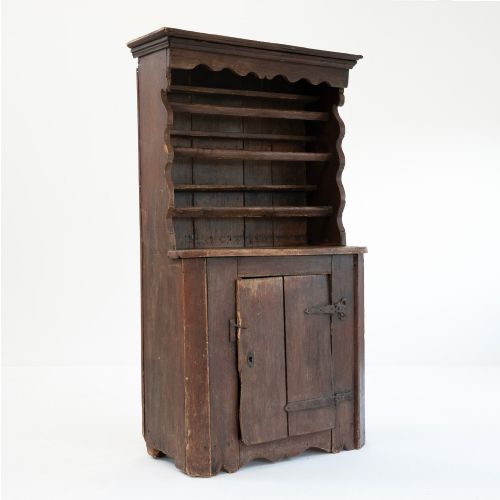
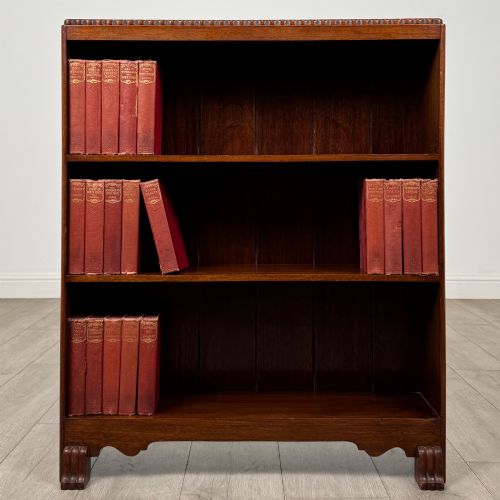
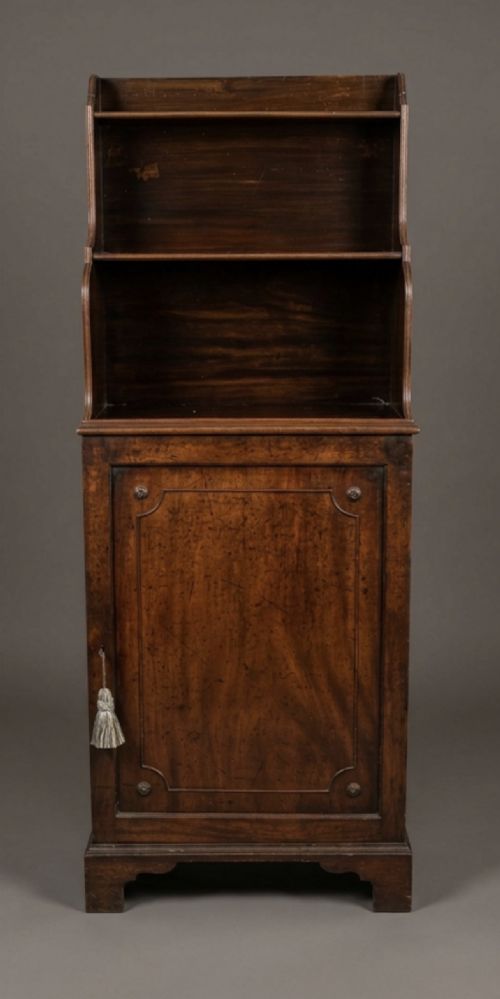
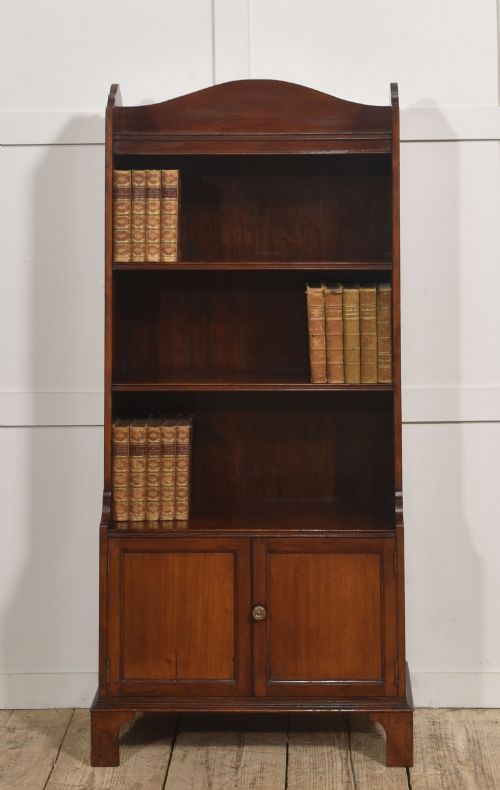


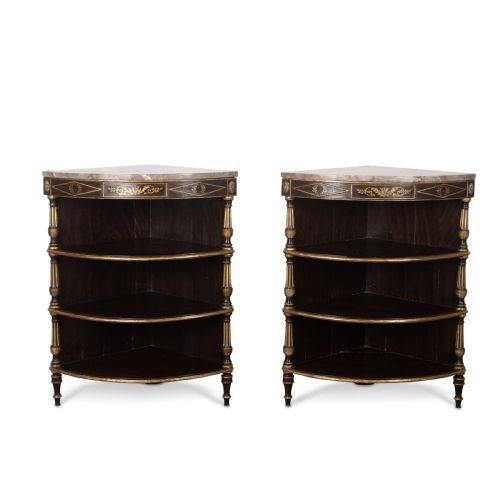

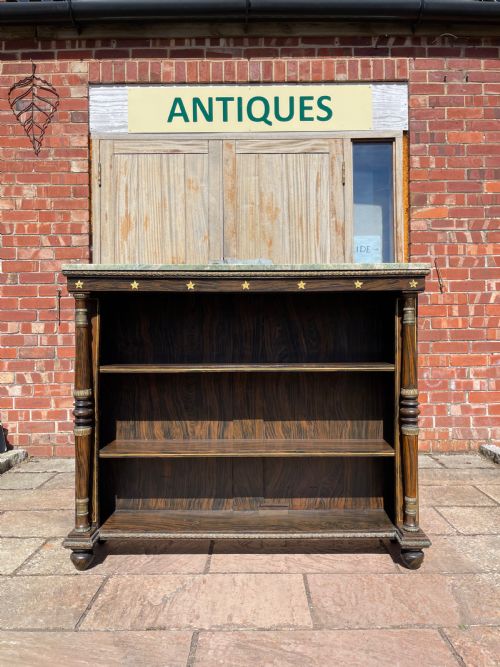


Georgian Open Top Cabinet
These georgian open top cabinet pieces are sturdy storage furniture built to display books and domestic objects.
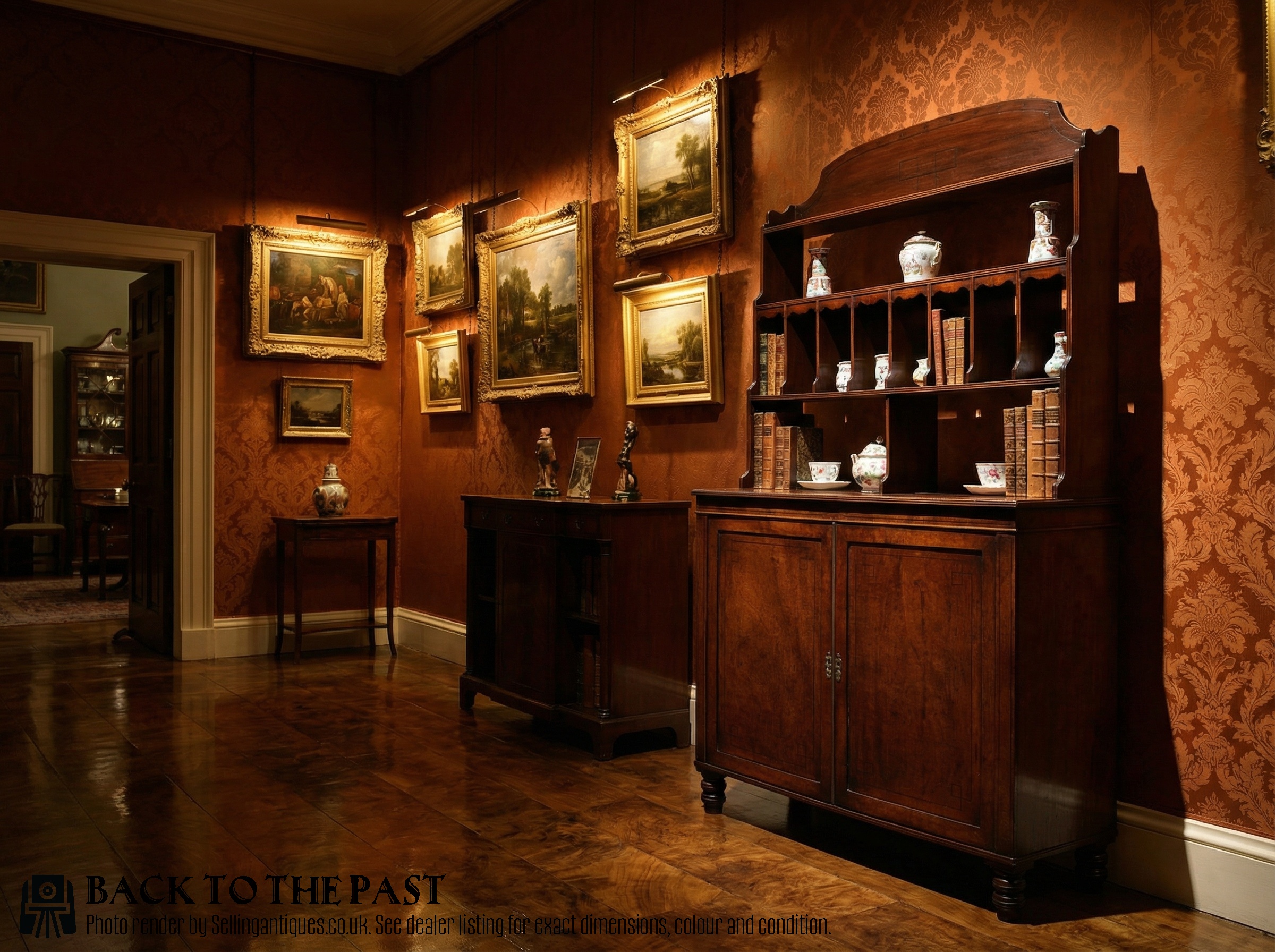
Georgian Open Top Cabinet
When you search for a georgian open top cabinet, you find tall display furniture designed for books and ornamental storage. The selections span the eighteenth century, the regency period, and later revival years up to nineteen-ten.
You meet bookcases, kitchen dressers, side cabinets, and corner cabinets on this page. Woods include mahogany, rosewood, satinwood, pine, and painted wood.
Makers and designers from the Georgian, Regency, George IV, William IV, and Irish Country traditions shape the variety here.
How they were made
Cabinet makers utilised dense hardwoods like mahogany and rosewood, often pairing them with satinwood or pine. Structural details frequently include brass hardware and wrought iron fittings.
Surfaces receive decorative finishes including simulated paint, parcel gilding, and marble tops. Bookcases and cabinets feature open shelving above enclosed cupboards or leather dummy books.
Georgian Open Top Cabinet Retail Price Guide 2026
Typical asking prices for georgian open top cabinet among the pieces listed under this phrase on Sellingantiques today, from the lower quarter to the upper quarter. They describe what is for sale here now, not the wider market.
Listings feature items spanning the eighteenth century through to nineteen-ten, covering Georgian, Regency, and William IV periods.
What varies in quality
The distinction between standard utility items and exceptional pieces rests in the selection of timbers and the finesse of the joinery. Figured mahogany or rosewood veneers demonstrate superior workshop standards.
Finishes such as parcel gilt detailing, marble slabs, and simulated paintwork elevate the visual ambition of a piece. Original surfaces carry more authority than later repainting or heavy restoration.
Gillows
The Georgian Open Top Cabinet Glossary
- Waterfall bookcase
- A set of open shelves diminishing in depth from bottom to top. This form appears frequently in nineteenth century mahogany and satinwood examples.
- Parcel gilt
- Partially gilded surface decoration. It highlights carved wooden details on Regency rosewood and gilt items.
- Dummy books
- Faux book spines attached to cabinet doors or panels. These conceal storage compartments or create a uniform library aesthetic.
- Corner cabinet
- A storage unit built to fit a room angle. Evidence shows marble top variants from the Regency era.
Georgian Open Top Cabinet: Frequently Asked Questions
What is a waterfall bookcase?
A waterfall bookcase is an open shelving unit where each tier steps back from the one below it, creating a cascading profile.
Such pieces often appear in nineteenth-century mahogany or satinwood configurations designed for book display.
How are these cabinets dated?
Cabinet dating relies on secondary wood choices, fixing methods, and stylistic cues from periods like the Regency or William IV eras.
Revival pieces from nineteen-ten emulate earlier Georgian forms through specific proportion and decorative restraint.
Where were these pieces used?
These items served primarily in libraries, parlours, and dining rooms to hold books and display ceramics.
Corner cabinets and side cabinets adapted the same display function for smaller domestic spaces.
What woods were used?
Cabinet makers worked predominantly with mahogany, rosewood, and satinwood for visible exterior surfaces.
Secondary construction often involved pine, while painted wood and simulated finishes provided alternative decorative schemes.