
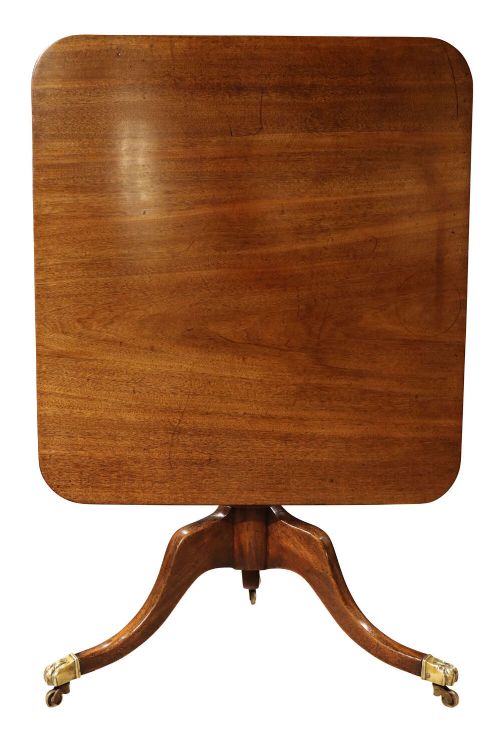
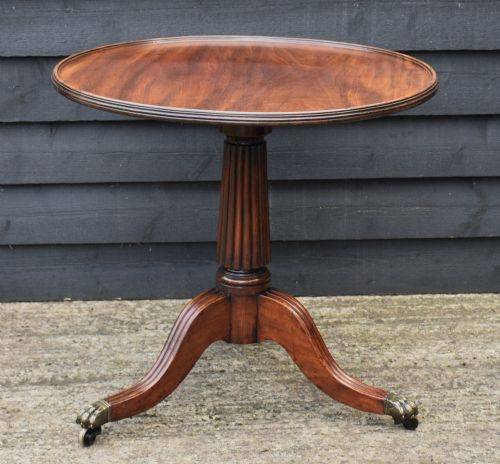
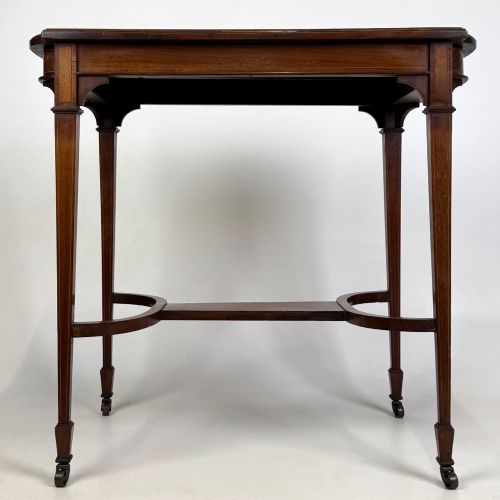
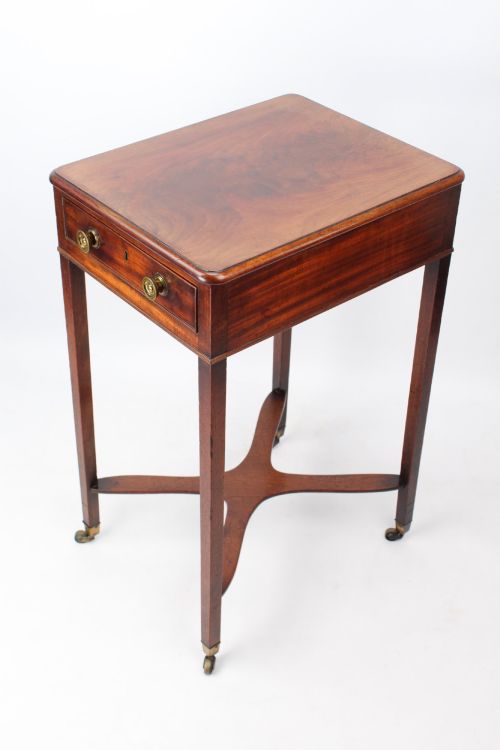

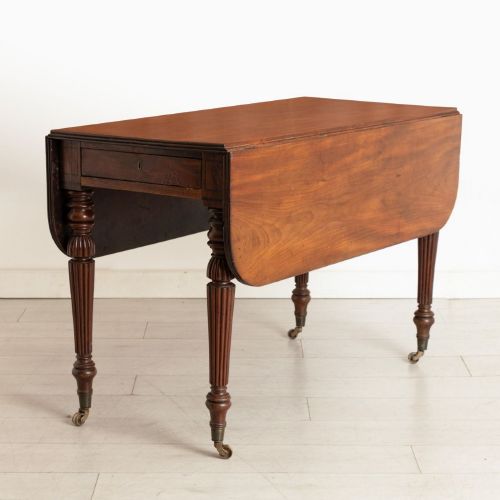
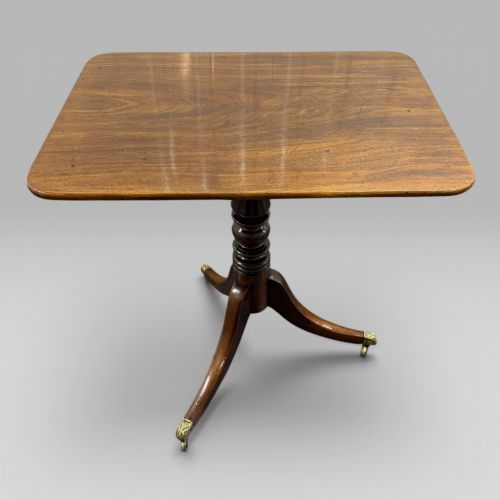

Mahogany Occasional Table Castors
These mahogany occasional table castors bring mobility and period charm to a room, spanning the Georgian, Regency, and Victorian eras.
Mahogany Occasional Table Castors
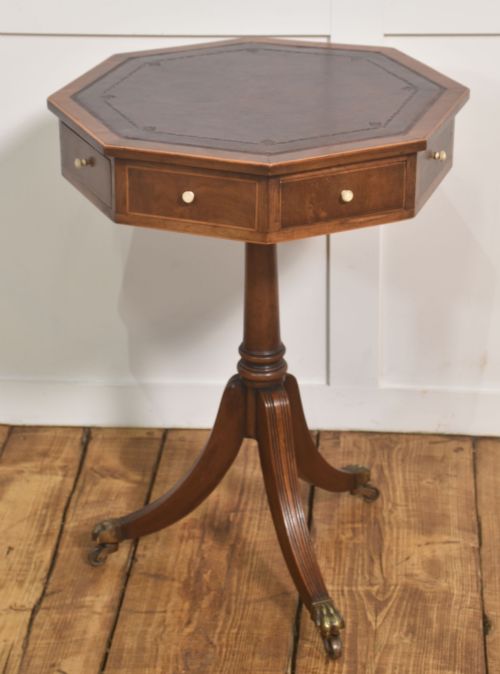
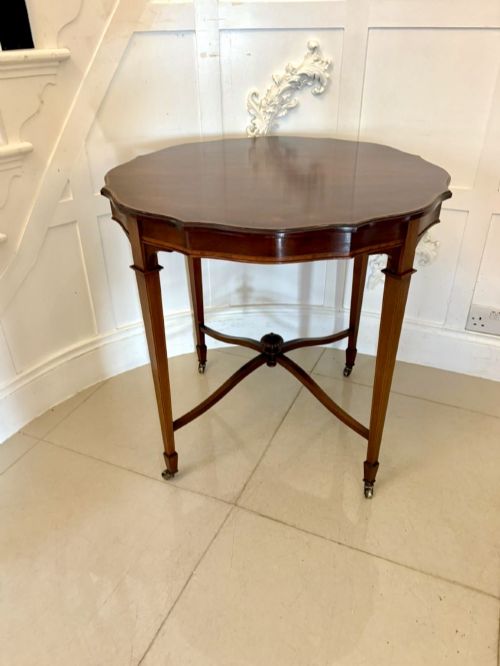
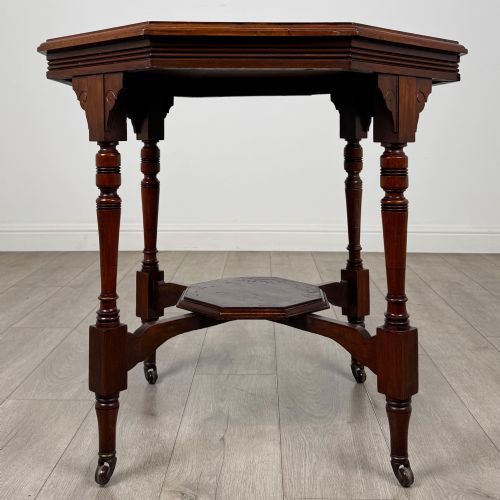
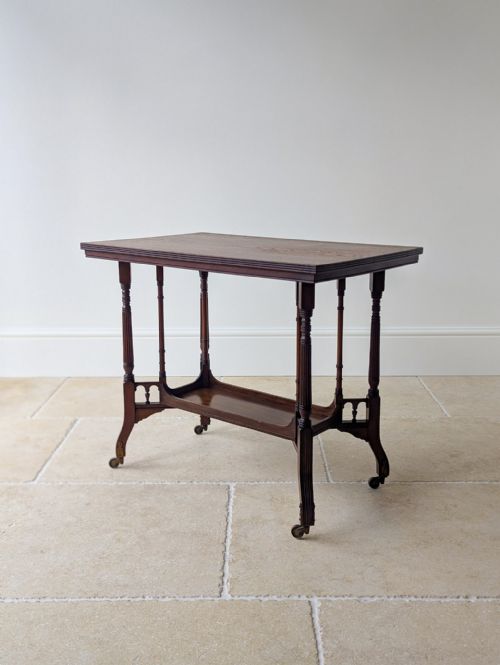
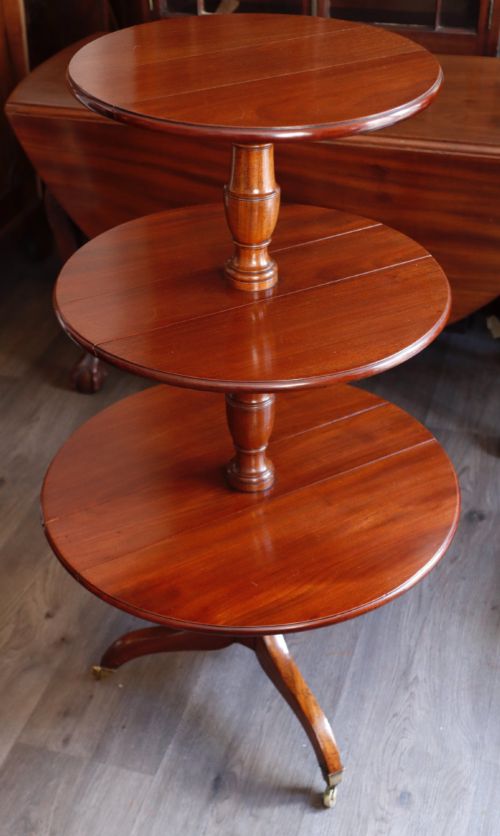
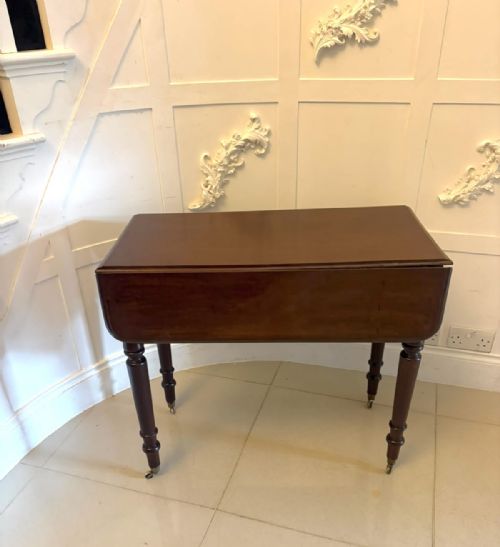
When you search for mahogany occasional table castors, you encounter movable small tables designed for lamps, reading, and tea. The items listed now include side tables, drum tables, Pembroke tables, and work tables.
Most examples originate from the Georgian, Regency, and Victorian periods, alongside Edwardian and early twentieth century revivals. These pieces frequently feature wheeled feet to allow easy repositioning across a room.
Judging quality in portable tables
Quality rests in the figure of the mahogany timber and the crispness of any boxwood or satinwood inlay. Finer pieces demonstrate precise joinery in drop-leaf hinges and tilt-top mechanisms.
The integrity of the brass castors and the original movement of the wheels distinguish superior examples from later replacements. Proportion and restraint in decorative carving separate workshops of high skill.
The listings span multiple centuries, ranging from eighteenth century George III pieces to early twentieth century Edwardian and revival interpretations.
Gregory & Co·Andrew Thomson & Sons
The Mahogany Occasional Table Castors Glossary
- Castor
- A small wheel mounted on a swivel at the foot of a table leg to allow easy movement. These fittings are commonly cast in brass.
- Pembroke table
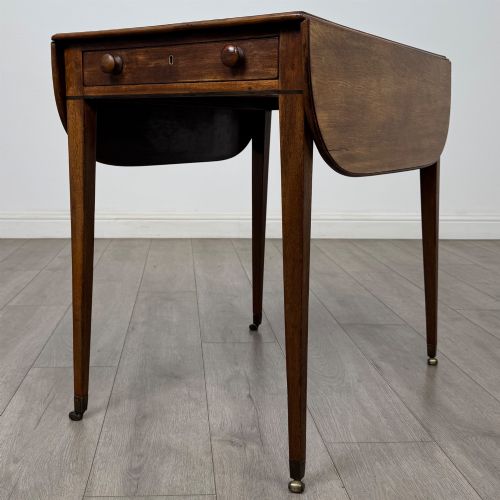
- A small rectangular table with hinged drop leaves on either side. Many examples include one or two small drawers.
- Drum table
- A circular library or occasional table with a deep top resembling a drum. They often stand on a central pillar with branching legs.
- Tilt top
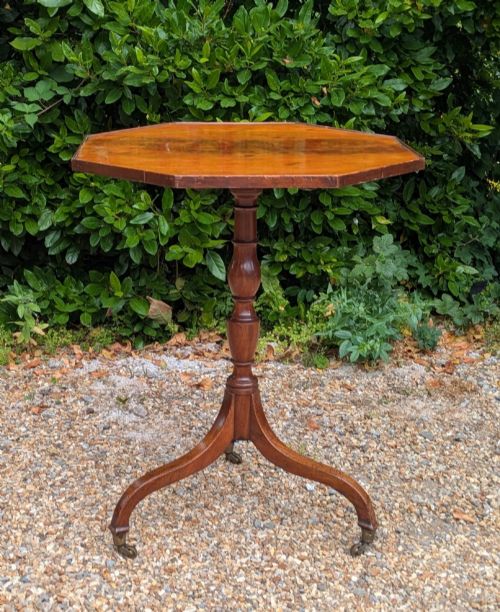
- A table mechanism allowing the surface to pivot and lock vertically when not in use. This feature saved floor space in period interiors.
- Sutherland table
- A narrow drop-leaf table with exceptionally wide leaves that fold down almost vertically. They operate on swinging leg gates.
Mahogany Occasional Table Castors: Frequently Asked Questions
What is a Pembroke table?
A Pembroke table is a small occasional table featuring two hinged drop leaves on opposing sides. They were designed for versatility in sitting rooms and parlours.
Many examples incorporate a single drawer and stand on slender legs fitted with castors for mobility.
How do tilt-top tables work?
A tilt-top table uses a pivoting mechanism beneath the surface that allows the table top to rotate into a vertical position. This saved valuable floor space in smaller period rooms.
Locked flat during use, the top rests securely on a pedestal base.
What timber was used for these tables?
The primary timber across these listings is mahogany, with specific mentions of Cuban mahogany and figured grain. Cabinetmakers often accented the dark wood with satinwood and boxwood inlay.
Secondary materials include leather panel inserts and brass for the castor wheels.
How do I date a mahogany table?
Dating relies on stylistic markers, construction methods, and materials recorded across the Georgian, Regency, and Victorian periods. Georgian pieces display simpler, robust lines while Regency and Victorian examples introduce classical revival motifs.
Inlay styles and hardware also provide clear indicators of manufacture era.