


Mahogany Music Chest
A mahogany music chest keeps sheet music flat and tidy while adding rich timber warmth to a room.
Mahogany Music Chest
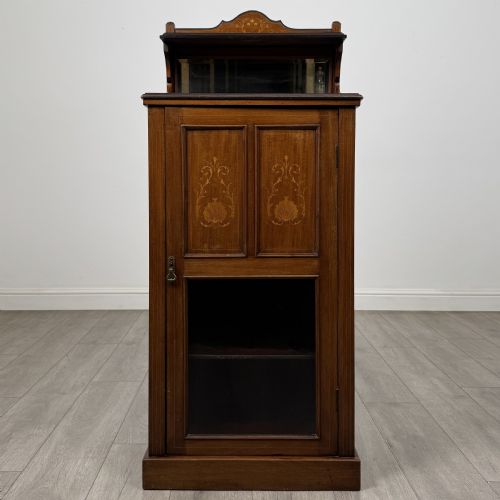
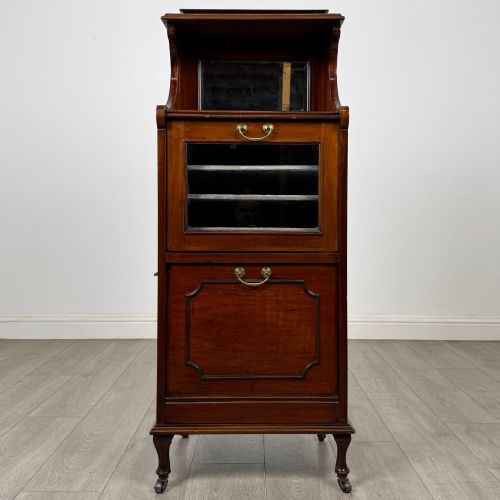
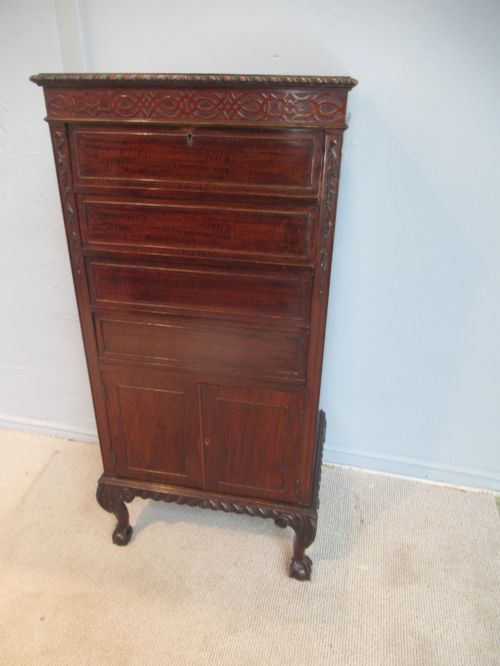
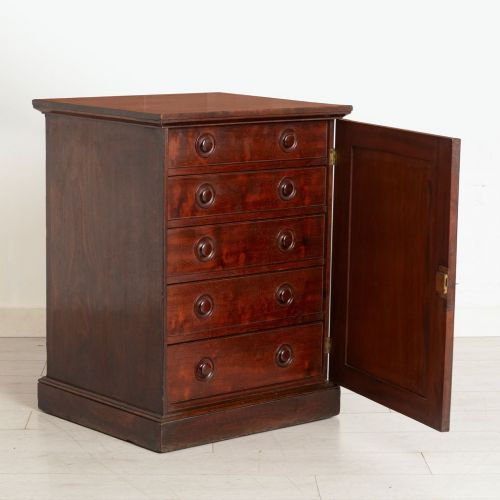
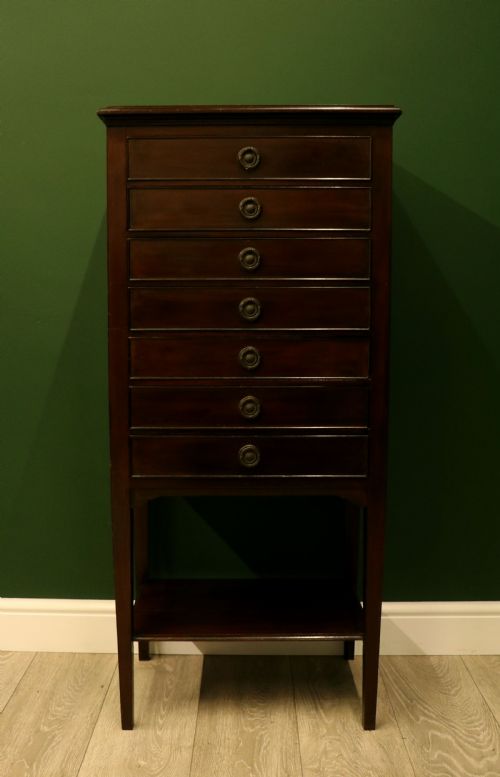
A mahogany music chest is a tall, narrow storage piece designed specifically to organise sheet files, folios and scores. These items appear most frequently from the Edwardian and Victorian eras, often standing upright with multiple shallow drawers or a drop-front fall design.
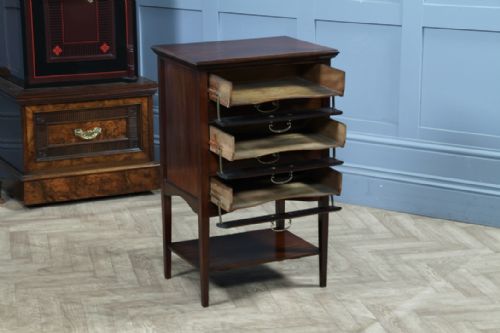
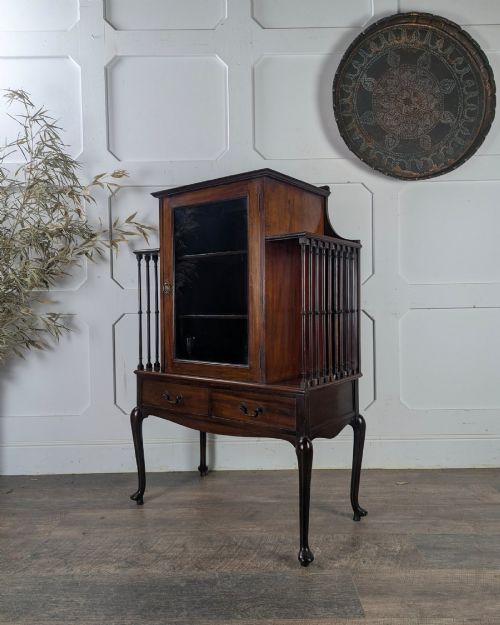
Buyers encounter variations ranging from plain timber filing units to decorated display cabinets featuring glass doors and internal shelving. Many examples incorporate specific adaptations such as drop-front drawers that tilt downward for easy sorting of delicate paper sheets.
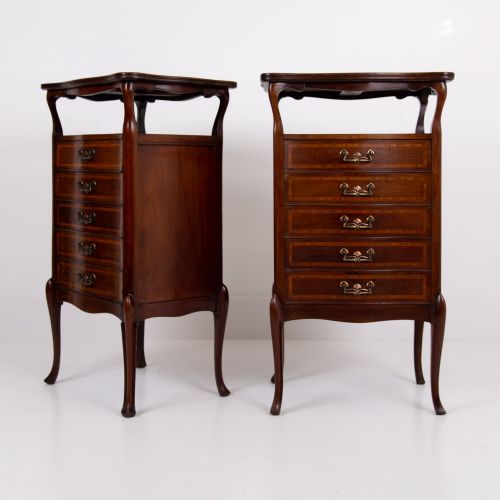
The silhouette remains distinctly slender to fit tight parlour corners while offering surprising internal capacity through stacked banks of drawers. Makers also produced paired sets and variations with integrated shelving compartments for musical instruments or boxes.
Materials and Construction
Cabinet makers utilised solid mahogany and smooth mahogany veneers over secondary timbers to build the main carcase, ensuring stability across the tall frame. This primary timber frequently displays deep reddish brown tones that darken gracefully over the decades.
Inlaid versions incorporate contrasting light woods such as satinwood and boxwood, forming delicate stringing or floral motifs across the drawer fronts and top panels. Brass handles, drop pulls and occasional glass panels complete the structural hardware of these musical storage units.
Musicians used these slim cabinets so their sprawling sheet collections stopped tumbling off the piano stool during energetic practice.
Distinctions in Execution
Quality reveals itself in the crispness of the inlaid banding and the precision with which the timber grain matches across the drawer fronts. Finer examples display meticulous dovetail joinery on every internal drawer, ensuring the shallow compartments glide smoothly without binding.
The choice of secondary woods and the weight of the cast brass hardware separate standard workshop production from high-end cabinet makers. Presence of original bevelled glass, working locks and intact fall-front mechanisms elevate the integrity of the piece.
Keeble London·Fyne Ladye
The Mahogany Music Chest Glossary
- Drop-front drawer
- A specialised drawer front hinged at the bottom that tilts outward when opened, allowing easy access to stacked sheets of paper without bending them.
- Inlay
- A decorative technique where contrasting pieces of wood like satinwood or boxwood are fitted into recesses in the primary mahogany surface to form patterns.
- Folio cabinet
- A tall storage unit designed to hold large, unbound paper portfolios, prints and oversized musical scores flat within shallow horizontal compartments.
- Marquetry
- Elaborate decorative veneer work assembled into pictorial or geometric designs using various coloured woods applied to the carcase exterior.
- Canterbury
- A low open-framed stand featuring vertical partitions, originally built to hold sheet music or books near a piano or seating area.
Mahogany Music Chest: Frequently Asked Questions
What is a music chest?
A music chest is a specialised piece of antique furniture built with multiple shallow drawers or drop fronts to store sheet music flat.
These compact cabinets kept delicate paper scores protected from dust and bending in Victorian and Edwardian drawing rooms.
How do drop front drawers work?
Drop front drawers feature hinges at the lower edge allowing the front panel to tilt downward at an angle when pulled.
This clever mechanism allows musicians to leaf through stacks of music sheets easily without removing the entire drawer from the cabinet.
Can I store vinyl records in them?
Many Edwardian music chests offer internal drawer dimensions that accommodate modern twelve-inch LP vinyl records alongside traditional paper folios.
The sturdy mahogany construction and deep drawers provide practical, stylish storage for music collections of various formats.
How do I date a mahogany music chest?
Dating relies on observing stylistic markers such as Arts and Crafts simplicity, Art Nouveau curves, or Edwardian satinwood inlay.
Construction details like hand-cut dovetails, secondary wood types, and specific hardware styles also help narrow down the manufacturing decade.