



Mahogany Mirror Back Dresser
A mahogany mirror back dresser combines deep timber tones with reflective glass to anchor a dining room.
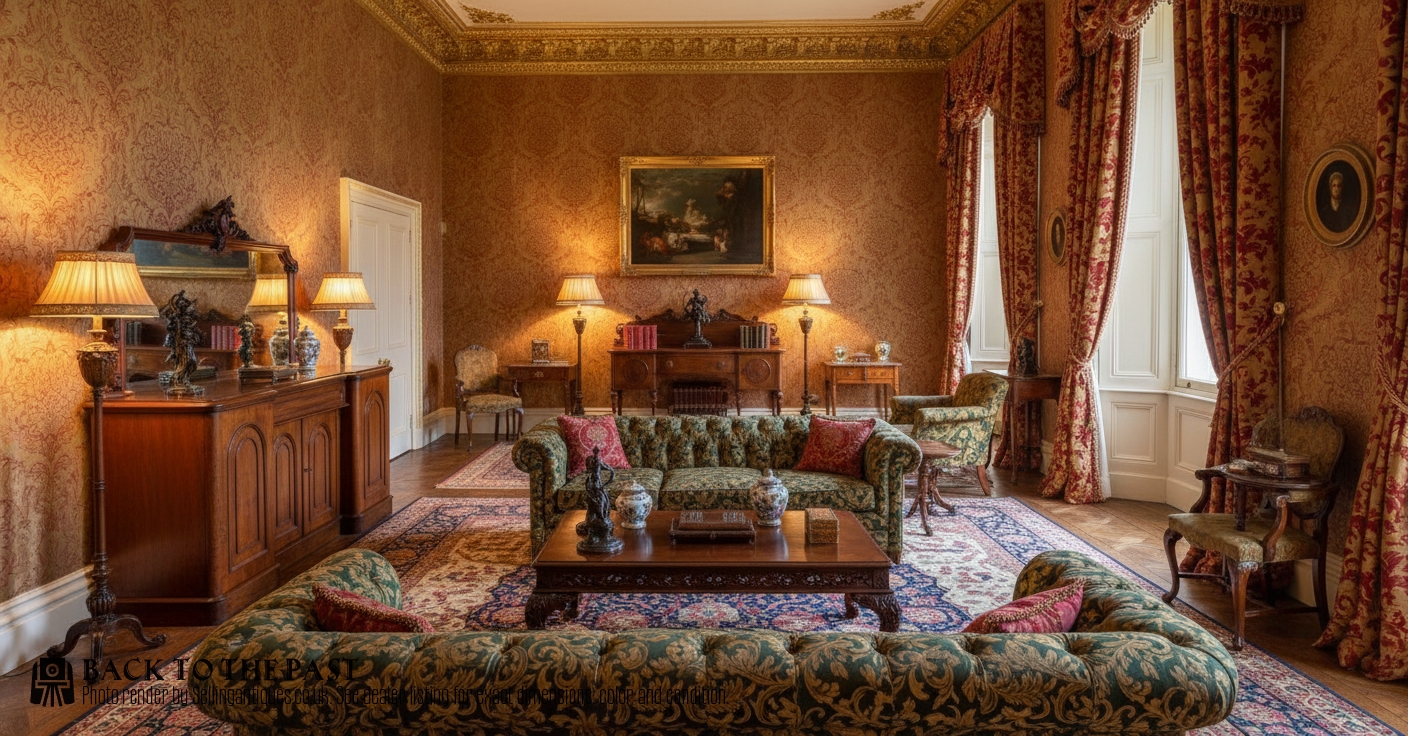
Mahogany Mirror Back Dresser
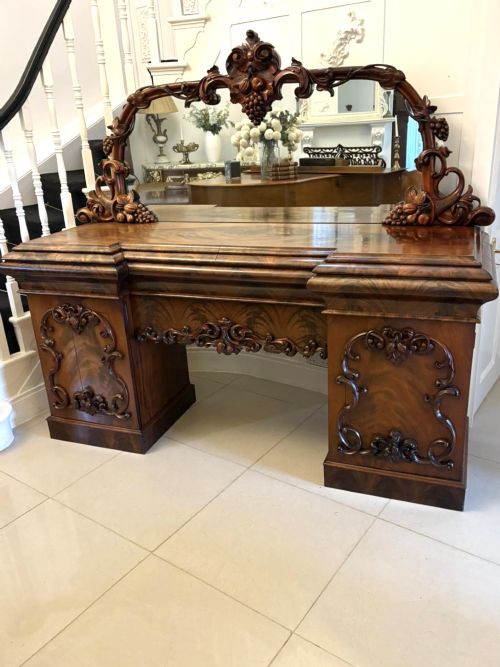
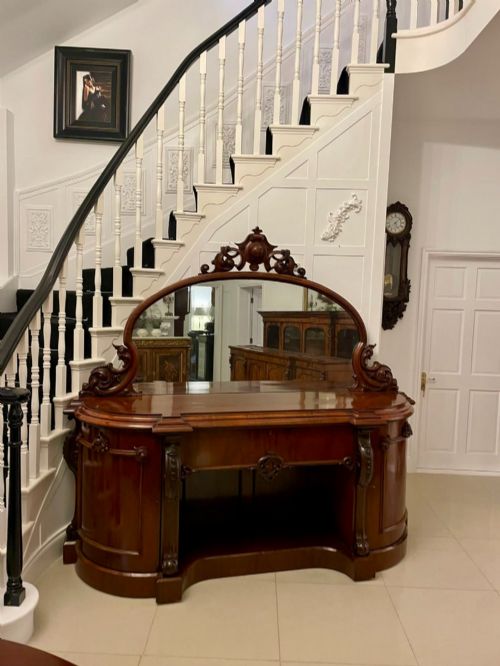
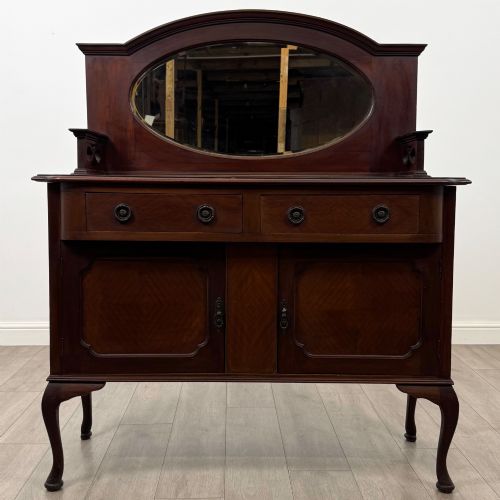
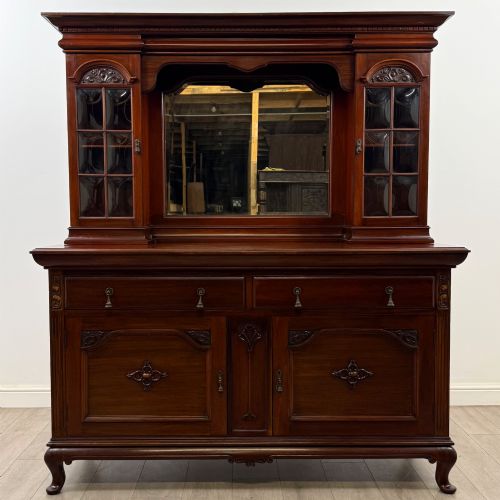
A mahogany mirror back dresser offers a substantial presence in a room, combining a lower storage base with an upper display shelf and glass panel. These pieces serve primarily as sideboards, side cabinets, and display units within dining spaces or reception rooms.
The versions met most often on this page date from the Victorian and Edwardian periods, stretching from the mid-nineteenth century into the early twentieth century. They manifest in styles ranging from formal Victorian carving to cleaner Arts and Crafts or Art Nouveau lines.
How they were made
Cabinet makers utilised solid mahogany and flame mahogany veneer over structural timbers, applying transparent finishes to accentuate the grain. Glass plates were set into carved wooden frames above the main surface, accompanied by brass or copper hardware.
Construction methods relied on traditional joinery techniques for the multi-door bases and display compartments. Carved ornamentation, inlaid details, and shaped mirror frames were applied by hand to the primary timber structure.
Mahogany Mirror Back Dresser Retail Price Guide 2026
Typical asking prices for mahogany mirror back dresser among the pieces listed under this phrase on Sellingantiques today, from the lower quarter to the upper quarter. They describe what is for sale here now, not the wider market.
Wiping down an eighteen fifty mirror back reveals reflections that have silently watched dining rooms for over a century.
What varies in quality
The distinction between standard and superior pieces rests on the selection of timber and the depth of manual carving. Figured or flame mahogany veneer demonstrates a more deliberate choice of raw material than plain stock.
Execution of decorative elements such as inlaid patterns, copper fittings, and moulded mirror surrounds separates basic utility furniture from ambitious workshop output. The integration of the mirror back into the lower sideboard structure dictates the visual harmony of the entire piece.
Shapland & Petter·Maple & Co
The Mahogany Mirror Back Dresser Glossary
- Mahogany
- A durable tropical hardwood known for its reddish-brown colour and stable working properties. It takes a high polish and serves as the primary material for these cabinets.
- Mirror glass
- A reflective sheet glass backed with a metallic coating, fitted into the upper wooden framework to bounce light across a room. In older pieces, the glass may show subtle signs of age.
- Flame mahogany veneer
- A thin slice of timber cut from wood where the branch meets the trunk, producing a distinctive flickering flame pattern. It is applied over a secondary wood base for decorative effect.
- Arts and Crafts
- A design movement favouring honest construction, simple forms, and handcrafted metal details over heavy historic revival ornament. Pieces in this style emphasise natural timber textures.
- Sideboard
- A low piece of furniture used for storing dining utensils and serving food, often surmounted by cupboards or display shelving. It forms the base component beneath the mirror back.
Mahogany Mirror Back Dresser: Frequently Asked Questions
How do I clean the mirror glass?
Wipe the glass surface gently with a soft cloth dampened in a mild vinegar solution or specialised glass cleaner. Avoid spraying liquid directly onto the glass to prevent moisture seeping behind the silvered backing or into the antique wooden frame.
Dry the surface immediately with a lint-free cloth to prevent streaks. Take care not to let cleaning solutions come into contact with the surrounding mahogany timber or brass hardware.
Can I remove the mirror back?
The mirror back is typically integrated structurally with the lower base cabinet using screws, dowels, and wooden brackets. Dismantling the upper section from the sideboard requires careful handling and usually involves accessing fixings from the rear.
Because these components were fitted together during initial construction, separating them can alter the stability and original appearance of the furniture. It is generally best to move the piece as a single unit where possible.
What rooms suit a mirror back dresser?
These pieces suit dining rooms, large hallways, and spacious living areas where their considerable height and reflective glass can be accommodated. They provide surface space for serving or display while reflecting light back into the interior.
Placement should account for natural light sources to maximise the effect of the mirror glass without creating harsh glares. Ensure the floor surface is level to support the substantial weight of the timber base and upper frame.
How do I date an Edwardian piece?
Edwardian pieces generally date from between one thousand nine hundred and nineteen ten, displaying lighter proportions and simpler lines than earlier Victorian furniture. Influences from Arts and Crafts or Art Nouveau movements often appear in the hardware and carved details.
Construction methods during this era incorporated mechanized timber preparation alongside traditional assembly. Examining the interior linings, drawer joints, and backboards helps confirm the early twentieth-century production period.