

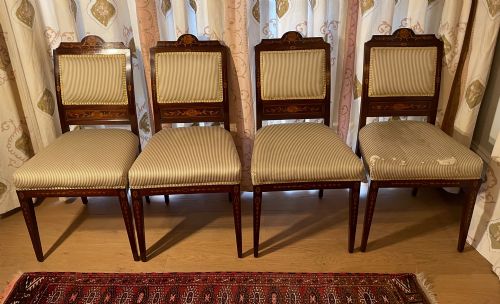
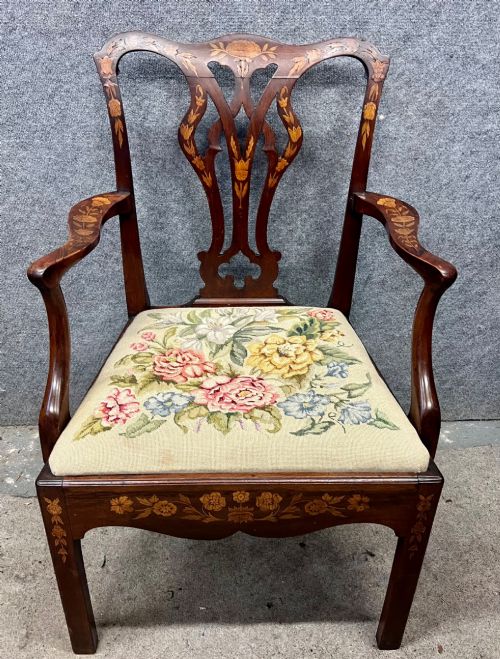
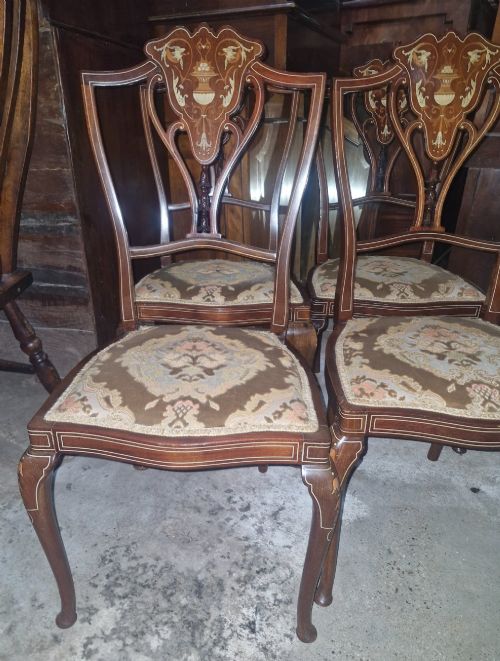

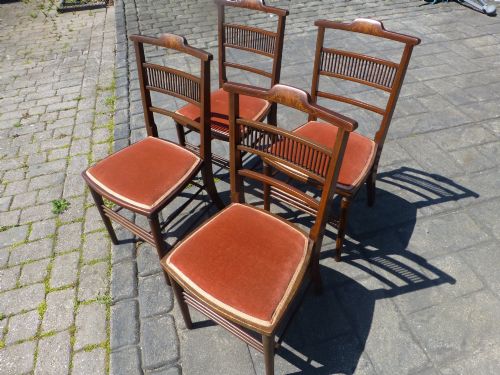
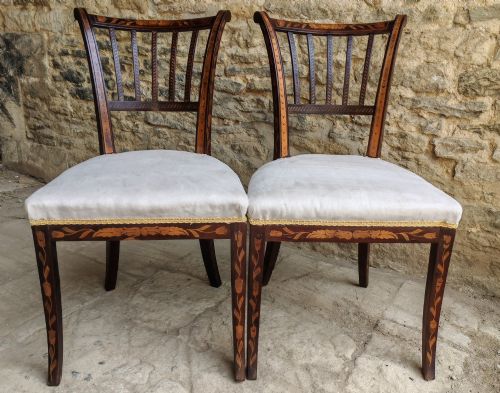


Mahogany Marquetry Dining Chairs
Mahogany marquetry dining chairs combine warm timber with precise wood inlay, offering both functional seating and decorative presence for the dining room.
Mahogany Marquetry Dining Chairs
Mahogany marquetry dining chairs encompass a variety of seating forms designed for the dining table, ranging from single side chairs to extensive sets. The selections span multiple periods, with Edwardian and Victorian examples appearing frequently alongside 19th-century and Georgian pieces.
Buyers encounter different seating configurations in mahogany marquetry dining chairs, including armchairs, elbow seats, and matching sets of four, six, or twelve. These pieces originate from distinct stylistic revivals and eras, displaying both formal dining designs and lighter salon forms.
How they were made
Cabinet makers utilised solid mahogany and walnut for the primary structure of these chairs, applying contrasting timbers for decorative effect. Wood inlay, satinwood, and boxwood form elaborate floral and geometric marquetry patterns across the splats and crest rails.
Many examples incorporate secondary materials such as brass mounts or stringing to accentuate the timber frames. Original and updated upholstery fabrics, including velvet, provide the padding for drop-in and fixed seat pads.
Mahogany Marquetry Dining Chairs Retail Price Guide 2026
Typical asking prices for mahogany marquetry dining chairs among the pieces listed under this phrase on Sellingantiques today, from the lower quarter to the upper quarter. They describe what is for sale here now, not the wider market.
Several chairs feature high backs originally intended to fend off chilly draughts in grand 19th-century dining rooms.
What varies in quality
The precision of the wood inlay dictates much of the visual distinction between chairs, with tighter joints and sharper floral motifs marking superior execution. The crispness of the carved mahogany frames and the depth of the timber grain also influence the overall character.
Completeness of a matching set alters how the seating functions around a dining table, as uniform sets of four, six, or more carry greater presence than assembled pairs. The retention of original brass details and structural timber integrity further define the standard of individual pieces.
Shoolbred
The Mahogany Marquetry Dining Chairs Glossary
- Marquetry
- A decorative technique of applying thin veneers of wood to a structure to form pictorial or geometric patterns. It differs from inlay by assembling the pattern on a veneer background before fixing it to the timber.
- Satinwood
- A durable, yellowish timber often used for contrasting details in marquetry and stringing. Its lustrous grain provides bright highlights against darker mahogany.
- Hepplewhite Style
- A lightweight, elegant furniture design style characterised by shield-back chairs and tapered legs. Pieces in this style often feature delicate floral marquetry.
- Side Chair
- An upright chair without arms, designed primarily for use at the sides of a dining table. These form the majority of standard dining sets.
Mahogany Marquetry Dining Chairs: Frequently Asked Questions
How do I clean mahogany marquetry?
Dust the timber regularly with a soft, dry cloth to prevent particulate buildup on the delicate veneer. Apply a quality beeswax periodically to nourish the mahogany and protect the inlaid sections.
Avoid using modern liquid sprays or silicones, which can penetrate the grain and damage older finishes. Keep the chairs away from direct heat sources and strong sunlight to prevent the timber and veneer from drying out.
Are these chairs comfortable for daily use?
Most dining chairs from the Victorian and Edwardian periods offer upright support suitable for meals and gatherings. The inclusion of upholstered pad seats provides standard dining comfort.
Armchairs and elbow seats within the selection offer slightly more relaxed proportions for the ends of a table. Consider the seat height and depth relative to your modern dining table before daily deployment.
How do I date a marquetry chair?
Examine the timber construction methods beneath the seat frame and look for tool marks that indicate hand-working versus machine production. The prevailing style, such as Edwardian satinwood banding or Victorian geometric marquetry, provides a primary chronological anchor.
Compare the specific brass inlay techniques and wood species against known period manufacturing standards. Subtle shifts in leg tapering and back splat design help differentiate Georgian origins from later revival pieces.
Can I mix different sets together?
Combining chairs from different periods or styles works best when a common timber, such as mahogany, links the pieces visually. Pairing armchairs from one era with side chairs from a similar stylistic revival creates a cohesive dining arrangement.
Pay attention to seat height and overall scale to ensure uniformity around the table surface. Matching wood tones generally bridges minor variations in marquetry pattern or chair design.