

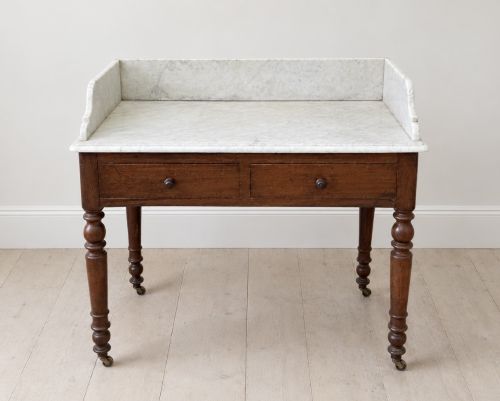
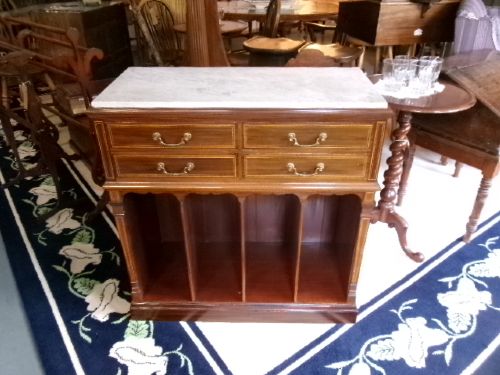
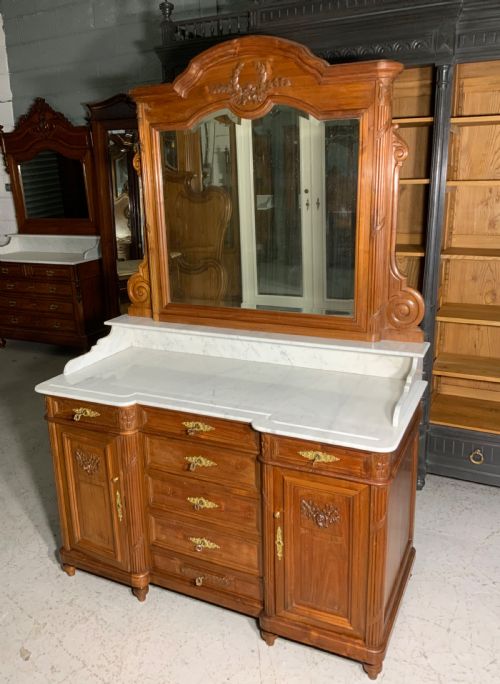
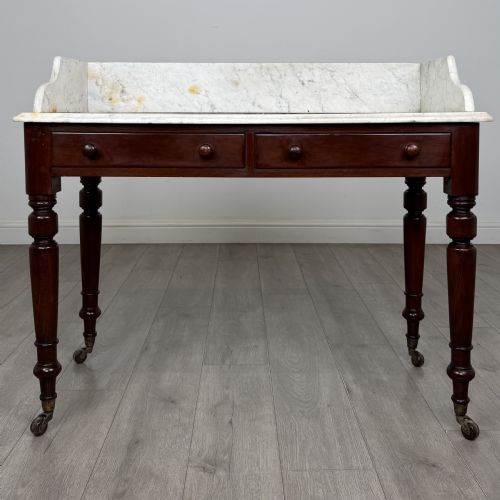


Mahogany Marble Washstand
A mahogany marble washstand brings solid timber and cool stone together for practical daily use.
Mahogany Marble Washstand
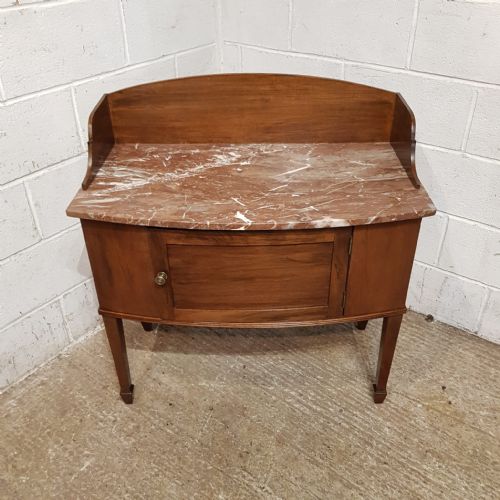
When you search for a mahogany marble washstand, you find pieces built to hold water basins and toiletries in nineteenth and early twentieth-century bedrooms. The form combines a sturdy mahogany frame with a heavy stone slab designed to withstand daily splashing.
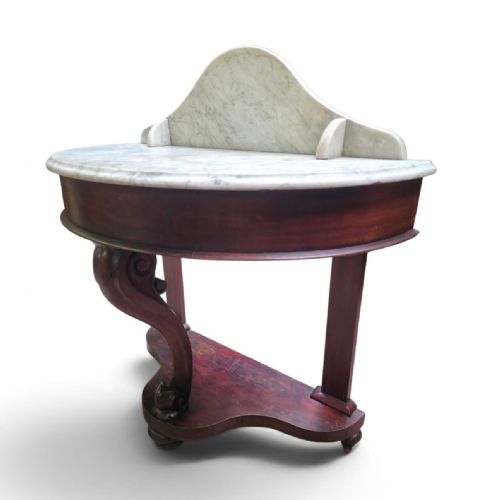
Most examples date from the Victorian and Edwardian eras, spanning variations from plain functional washstands to grand duchess styles with mirrored backs and cupboards. Alongside standard rectangular washstands, the archive records demi-lune shapes designed to fit corners.
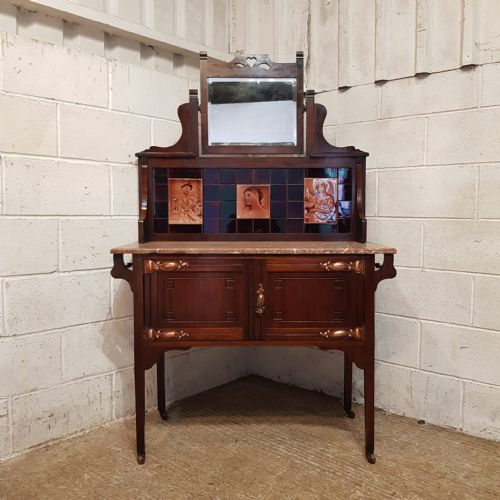
Makers occasionally produced pieces in specific movements, such as Art Nouveau or Aesthetic styles, incorporating ceramic tiles and brass mounts into the timber framework. These variations reflect how bedroom furniture evolved from utilitarian washing stations into decorative furnishings.
What Varies in Quality
Quality rests primarily on the selection of materials, from the depth of grain in the mahogany to the thickness and figuring of the marble top. Superior examples show refined proportions and careful matching of timber veneers across drawers and doors.
The integration of secondary materials dictates the standard of the piece, distinguishing simple utilitarian stands from elaborately carved or inlaid specimens with matching tile backs and brass hardware.
Mahogany Marble Washstand Retail Price Guide 2026
Typical asking prices for mahogany marble washstand among the pieces listed under this phrase on Sellingantiques today, from the lower quarter to the upper quarter. They describe what is for sale here now, not the wider market.
Some demi-lune washstands were cleverly curved to hug bedroom corners, proving that even Victorian splash management required intelligent spatial design.
Maples·Doveston Bird And Hull
The Mahogany Marble Washstand Glossary
- Demi-lune
- A half-moon shape used for tables and washstands designed to fit flat against a wall or tuck into a corner. This curved profile saved floor space in smaller bedrooms.
- Duchess washstand
- A grander variation combining the washing surface with a raised back, often incorporating mirrors, small drawers, or cupboards. These substantial pieces sat predominantly in large Victorian and Edwardian chambers.
- Carrara marble
- A type of white or blue-grey stone quarried in Italy, valued for its smooth texture and water-resistant qualities. It served as the standard hygienic surface for high-end washstands.
- Tile back
- A vertical panel inset with glazed ceramic tiles placed behind the marble top to prevent water splashes from staining the wall. They appeared frequently on late nineteenth-century and Edwardian designs.
- Aesthetic style
- A late Victorian movement focusing on art for art's sake, resulting in furniture with simpler lines and often featuring Japanese-inspired brass hardware or decorative tiles.
Mahogany Marble Washstand: Frequently Asked Questions
What is a mahogany marble washstand?
A mahogany marble washstand is a piece of bedroom furniture featuring a wooden frame and a stone top, built during the nineteenth and early twentieth centuries.
They provided a stable, waterproof surface for a basin, jug, and personal washing items before modern indoor plumbing became standard in bedrooms.
Are the marble tops original?
Most marble tops are original to their mahogany bases, cut to fit the exact dimensions and weight requirements of each individual cabinet or table frame.
Because marble provided the necessary waterproof function, the stone was selected during initial production to match the structural proportions of the washstand.
How can I use a washstand today?
These pieces function well in modern hallways, bedrooms, or bathrooms as side tables or sink surrounds due to their durable stone surfaces.
The lower shelves, cupboards, and drawers offer practical enclosed storage while the wooden frames bring historical character to contemporary interiors.