
Mahogany Low Library Bookcase
A mahogany low library bookcase gives any room warmth and practical display space, offering sturdy timber and accessible shelves.
Mahogany Low Library Bookcase
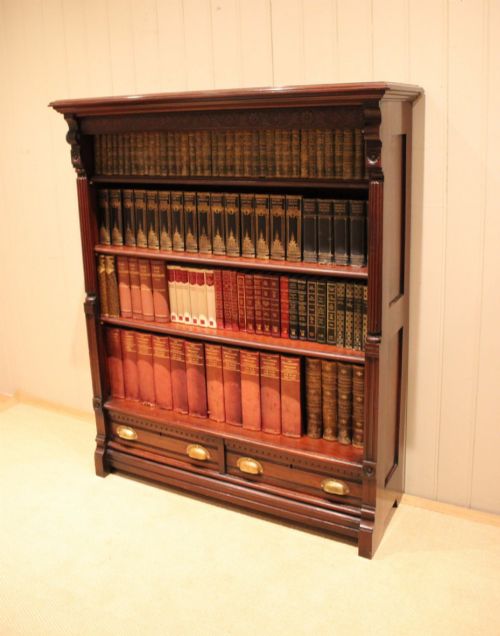
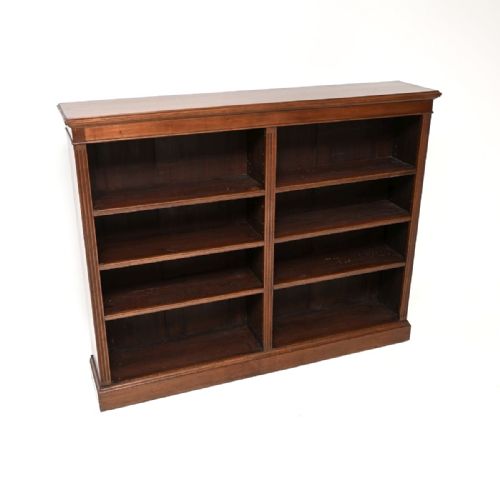
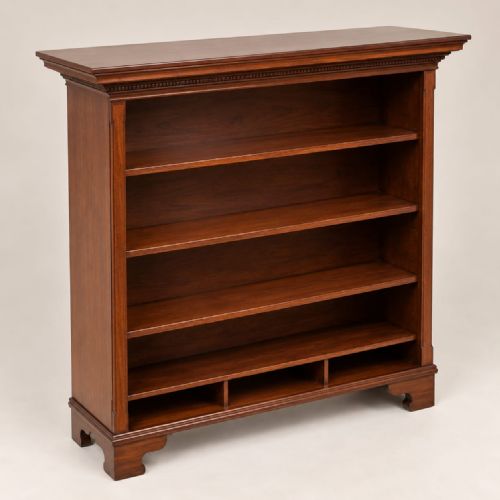
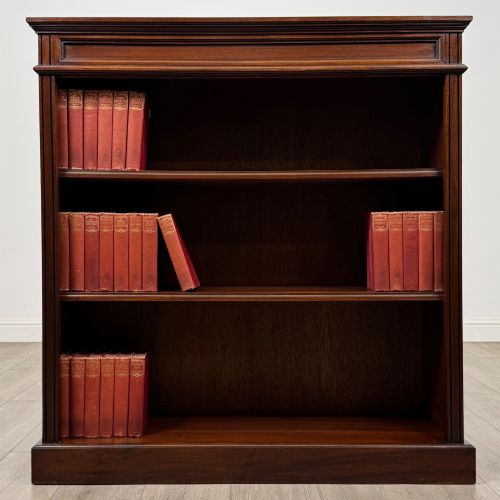
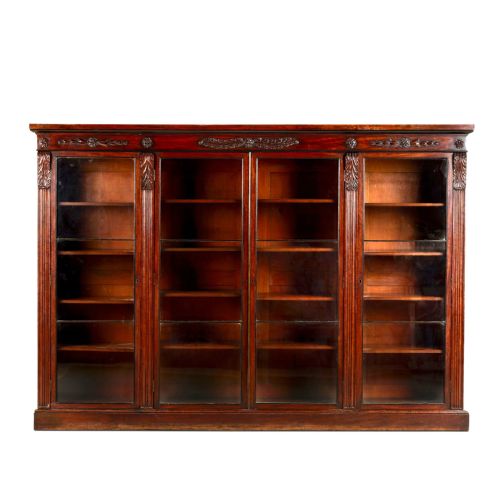
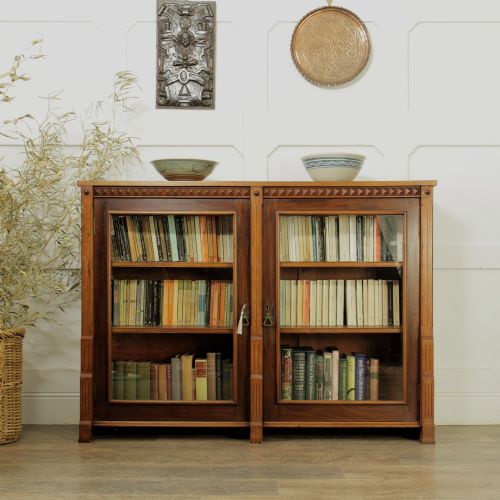
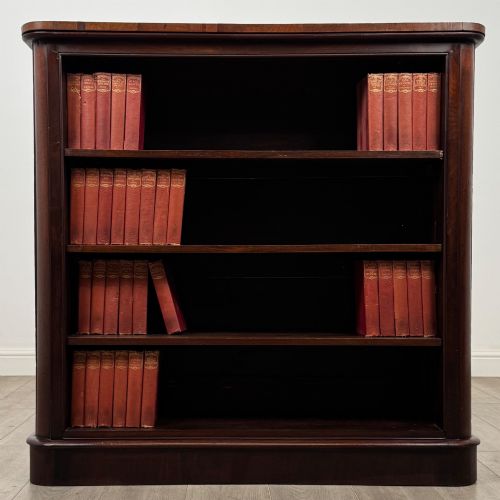
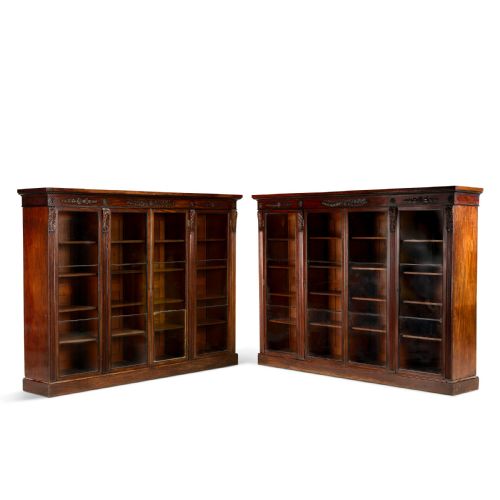
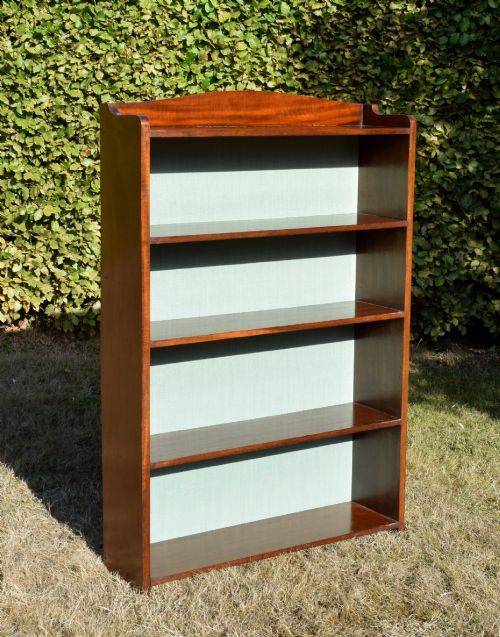
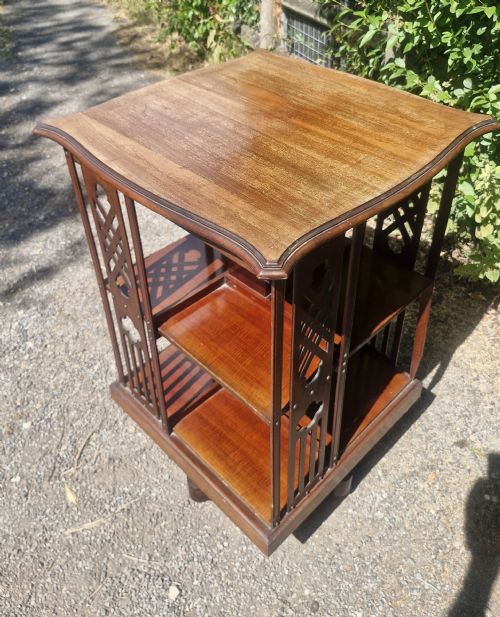
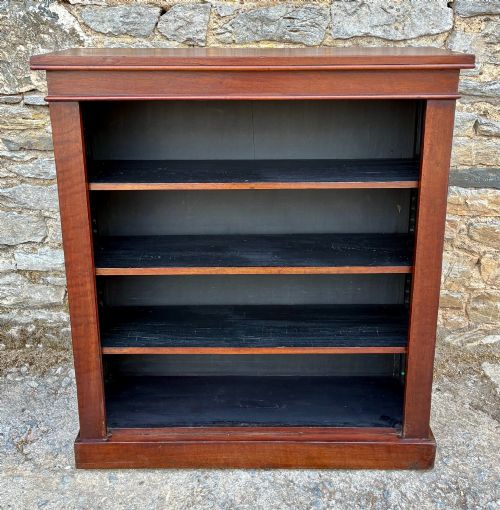
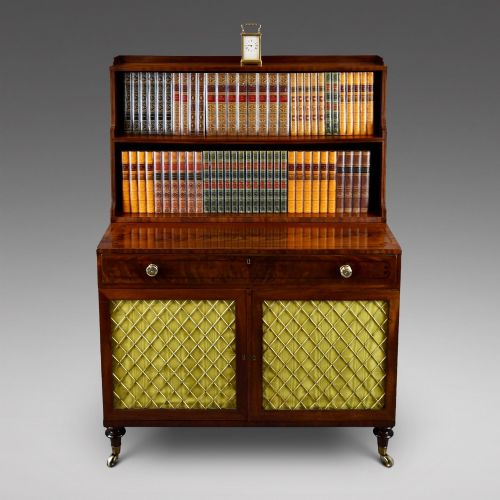
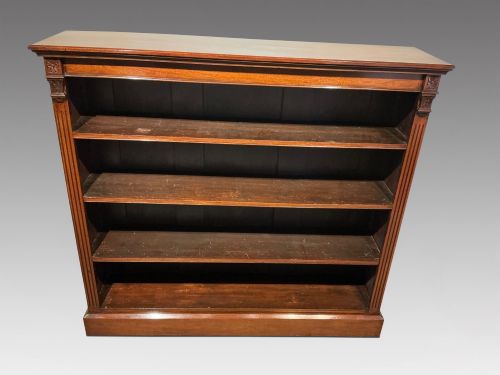
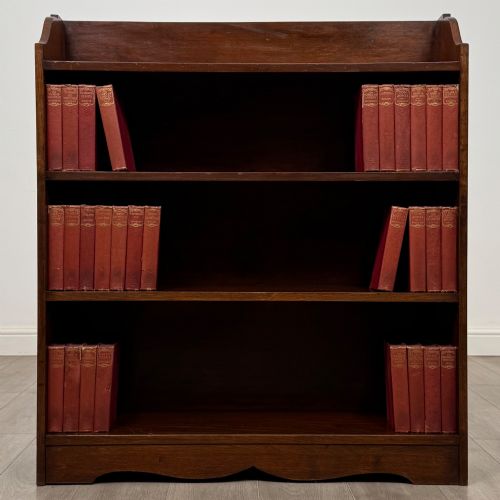
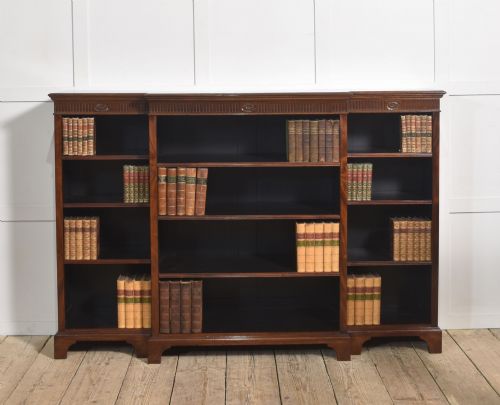
A mahogany low library bookcase brings together substantial timber storage and convenient lower heights suited to domestic rooms. These pieces appear in forms ranging from simple open shelving to breakfront designs and waterfall shapes.
The selections span the Regency, Victorian, and Edwardian periods, alongside George III examples. Most items on this page are open front bookcases designed to keep books within easy reach.
Makers such as Lamb of Manchester and Gillows occasionally emerge in the records for these library pieces. Buyers encounter proportions built for heavy volumes alongside lighter decorative cabinets.
How they were made
Makers constructed these bookcases primarily using mahogany, often selecting flame grain veneers for breakfront and cabinet surfaces. Secondary woods like pine appear in internal framing and drawer linings.
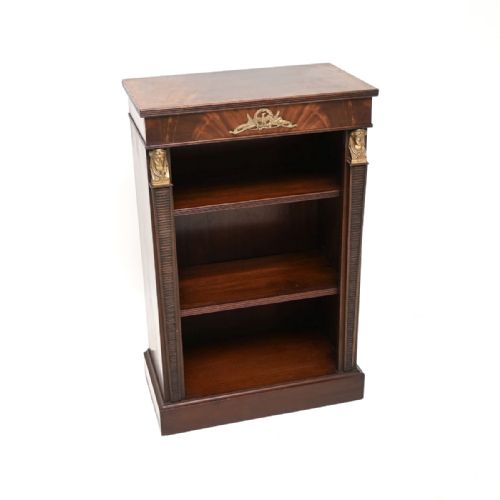
Metal elements such as brass castors and ormolu mounts provide mobility and decorative contrast on finer examples. Glass doors feature on glazed double and display variants, while adjustable shelf mechanisms allow flexible storage.
The records show pieces spanning the Regency, Victorian, and Edwardian eras, alongside George III examples.
What varies in quality
The distinction between standard and exceptional pieces rests on timber selection and decorative restraint. Figured flame mahogany veneers and balanced proportions separate ambitious cabinet work from utility furniture.
Integration of brass hardware, precise joinery, and refined moulding profiles indicate superior workshop production. Sound construction of adjustable shelf tracks and solid backing boards completes the measure of quality.
Lamb of Manchester·Gillows
The Mahogany Low Library Bookcase Glossary
- Breakfront
- A piece of furniture with a central section that projects forward from the flanking wings. This architectural arrangement creates depth and shadow across the library bookcase front.
- Waterfall bookcase
- A set of open shelves that steps back progressively from bottom to top, resembling cascading water. These compact pieces often feature curved galleries and delicate side supports.
- Ormolu
- Gilded bronze used for decorative mounts and enrichment on furniture. It adds metallic contrast to dark mahogany surfaces.
- Flame mahogany
- Timber veneer cut from the fork of a tree where the branch meets the trunk, producing a distinctive flickering flame pattern. Cabinet makers reserved this striking grain for principal display surfaces.
- Adjustable shelf
- Shelving supported on movable pegs, ratchets, or metal tracks to alter vertical spacing. This practical feature accommodates books of varying heights.
Mahogany Low Library Bookcase: Frequently Asked Questions
Where did these bookcases live?
These pieces originated in domestic libraries, studies, and drawing rooms of large houses where owners needed accessible storage for working collections of books.
Their lower stature allowed light to pass across room walls while keeping heavy volumes at hand.
How do I style a low bookcase?
Place the bookcase against a principal wall in a study or sitting room to anchor the space and display leather-bound volumes. The top surface provides an ideal platform for table lamps, small sculptures, or framed pictures.
Ensure books are arranged with enough breathing room around decorative objects to maintain a balanced look.
Are the shelves adjustable?
Many examples include adjustable shelves supported by wooden ratchets, peg holes, or metal track systems. This adaptability accommodates volumes of different heights without wasting vertical space.
Fixed shelves do appear on certain simpler or earlier pieces.
How do I tell Regency from Victorian?
Regency pieces often display cleaner classical lines influenced by ancient Greek and Roman design, dating roughly from the early nineteenth century. Victorian examples tend to be heavier in proportion, reflecting later nineteenth-century tastes for rich grain and ornate detail.
Examining secondary timbers and construction methods helps clarify the manufacturing era.