

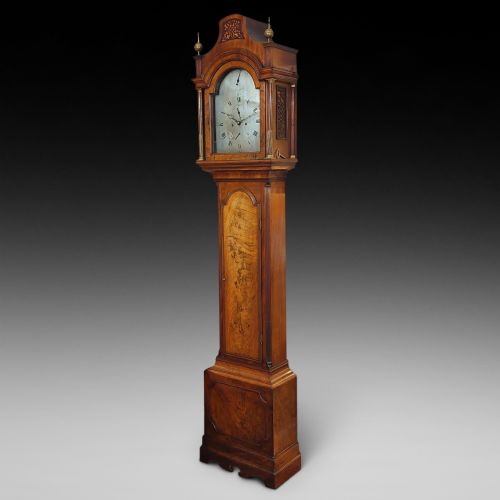
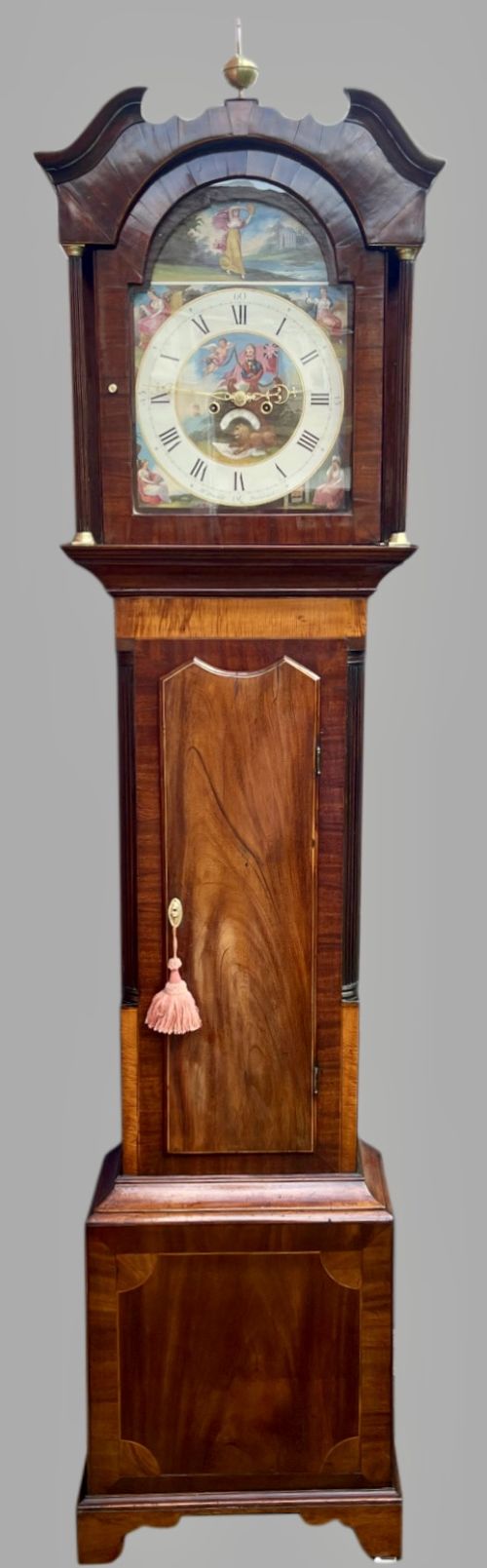
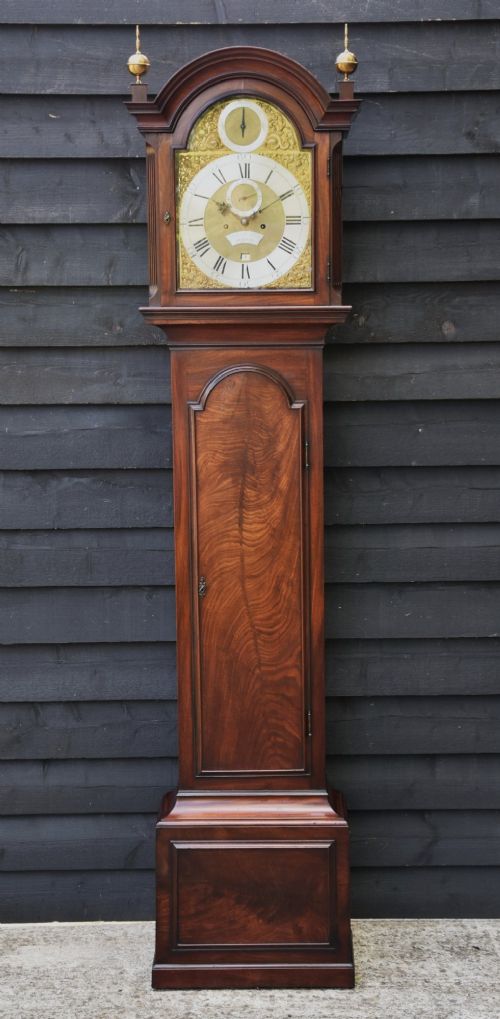
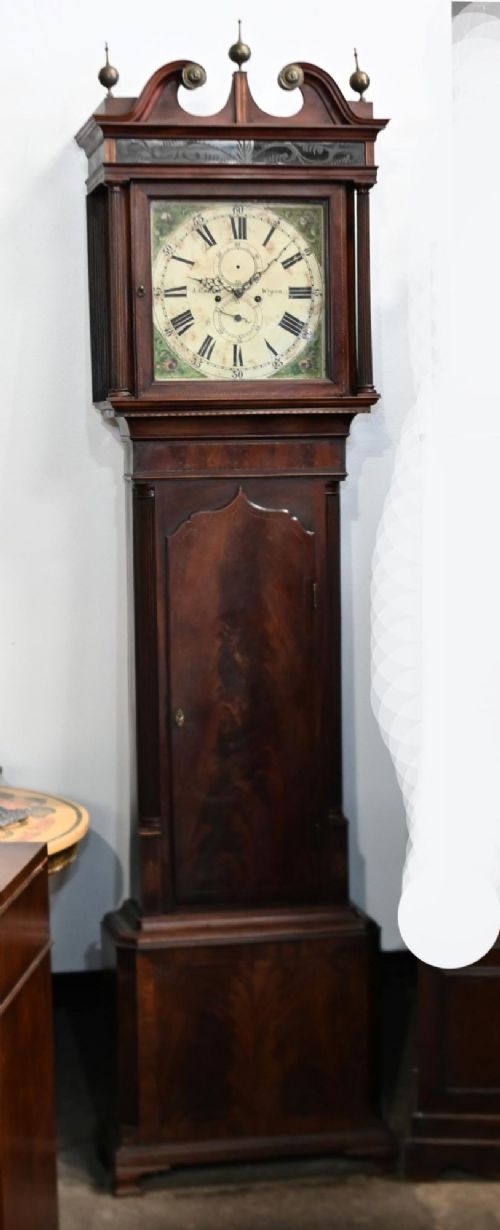
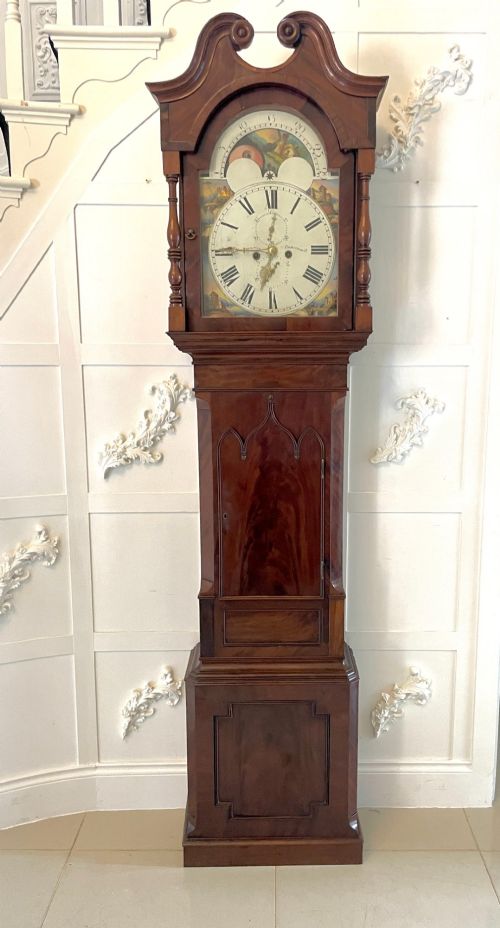
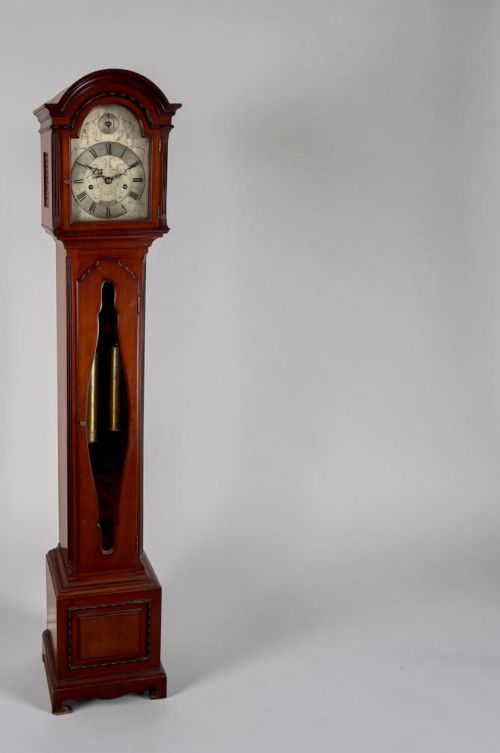
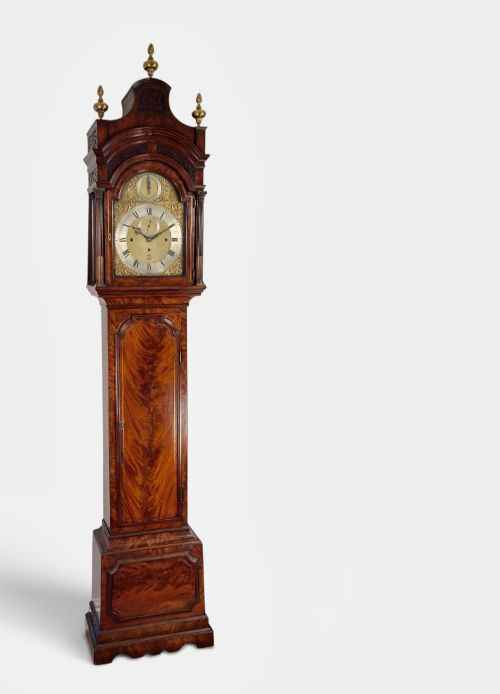
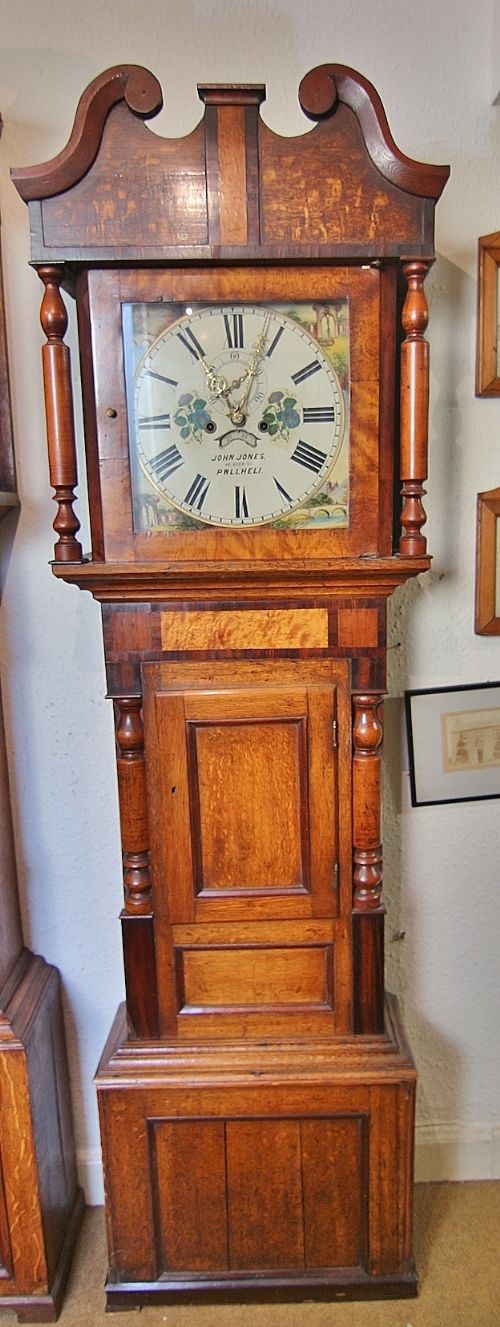
Mahogany Longcase Grandfather Clock
A mahogany longcase grandfather clock marks the passing hours with traditional weight-driven movements housed in tall timber cases.
Mahogany Longcase Grandfather Clock
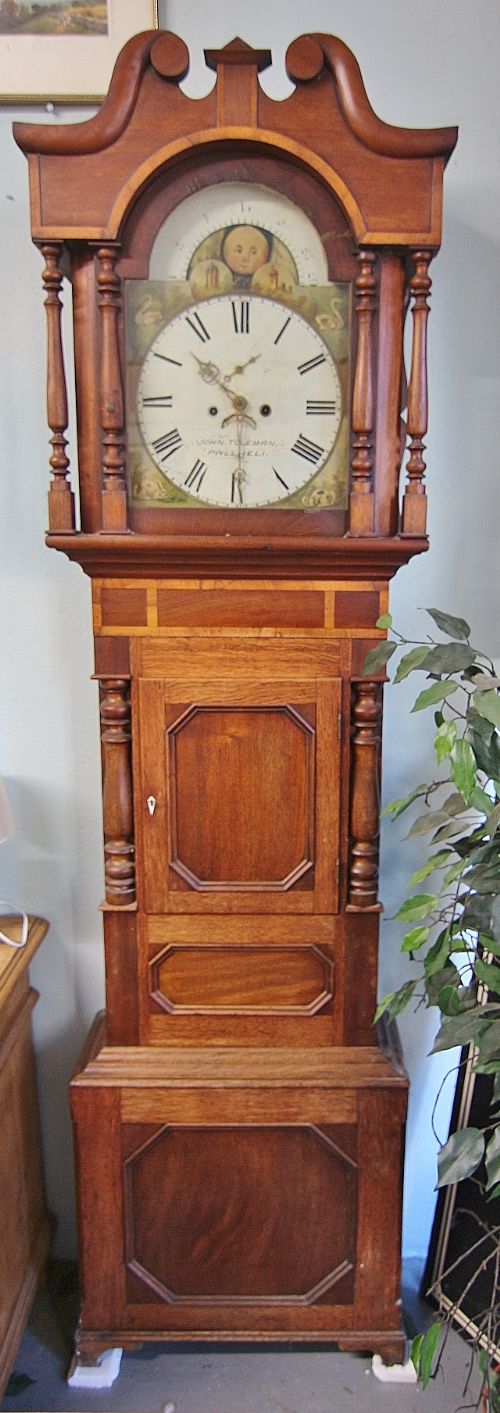
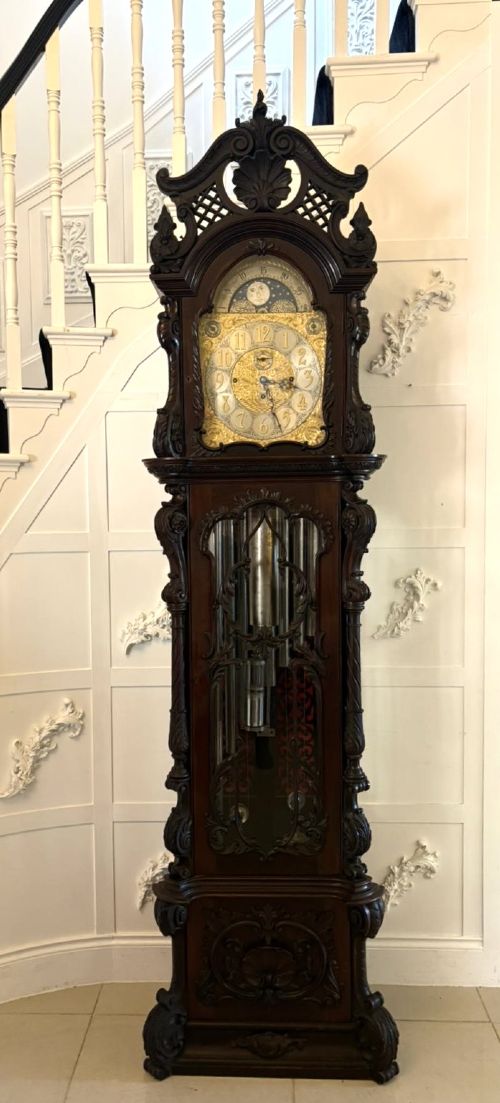
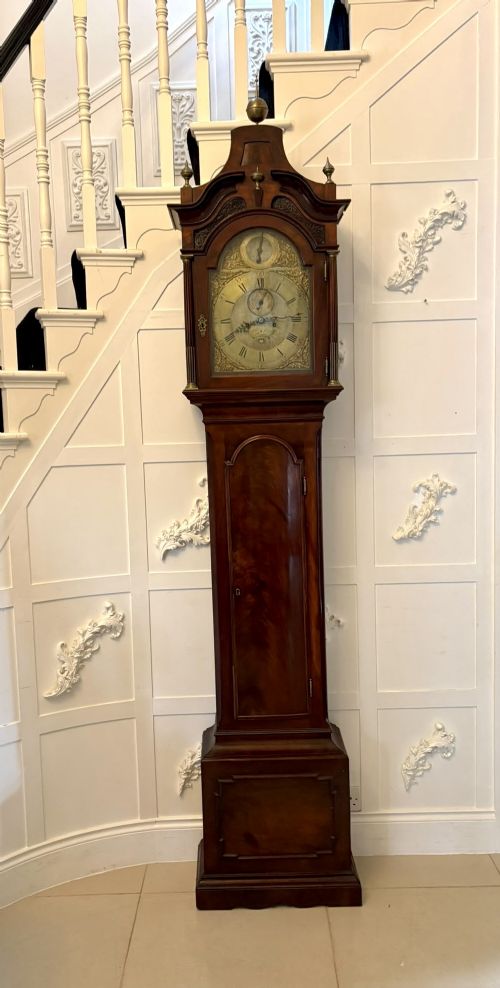
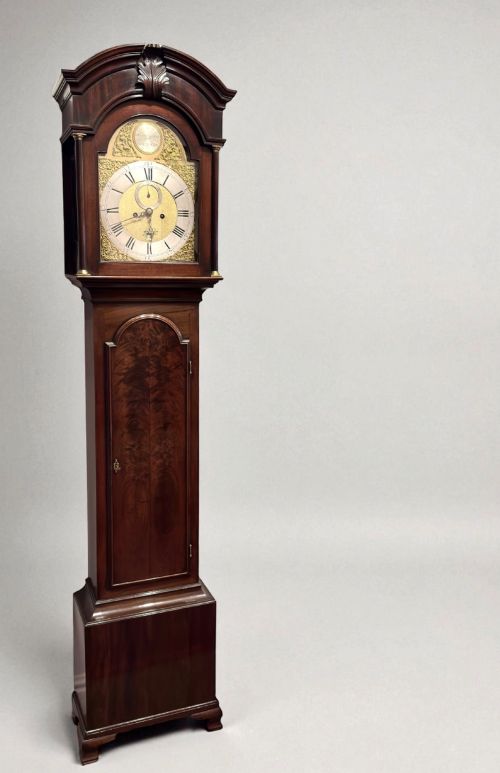
A mahogany longcase grandfather clock is a tall floor-standing timepiece designed to house a pendulum and weights within a wooden case. These pieces emerge primarily from Georgian, 19th Century, and Edwardian periods, displaying regional variations from England, Wales, and Scotland.
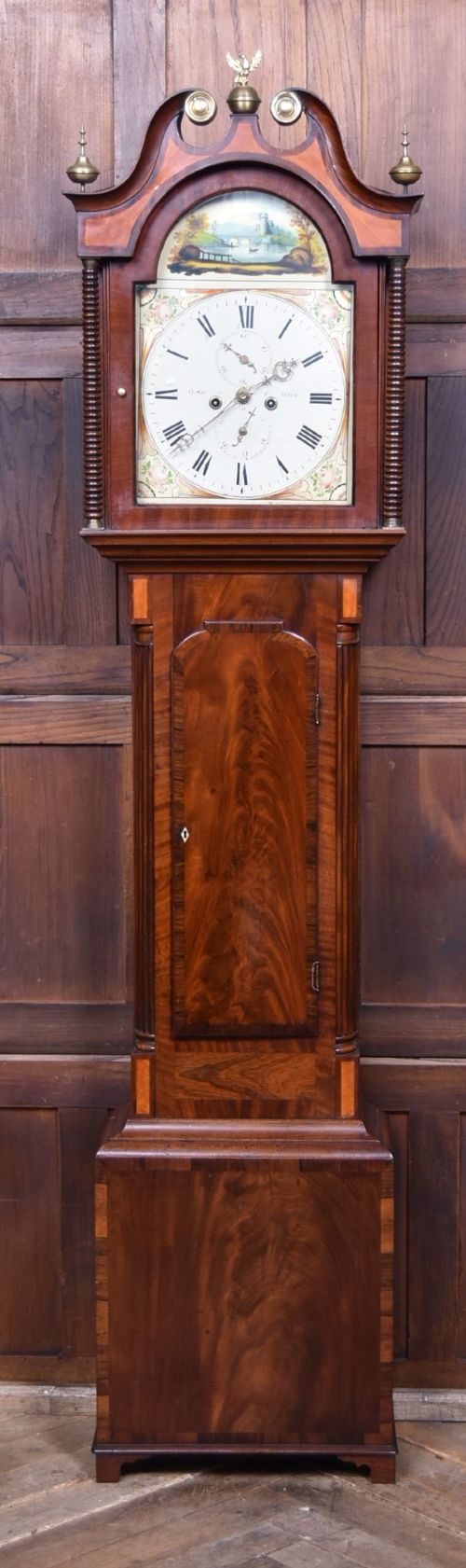
The most common examples on this page date from the Georgian and 19th Century periods, constructed with tall wooden hoods protecting the dial and trunk doors enclosing the swinging pendulum.
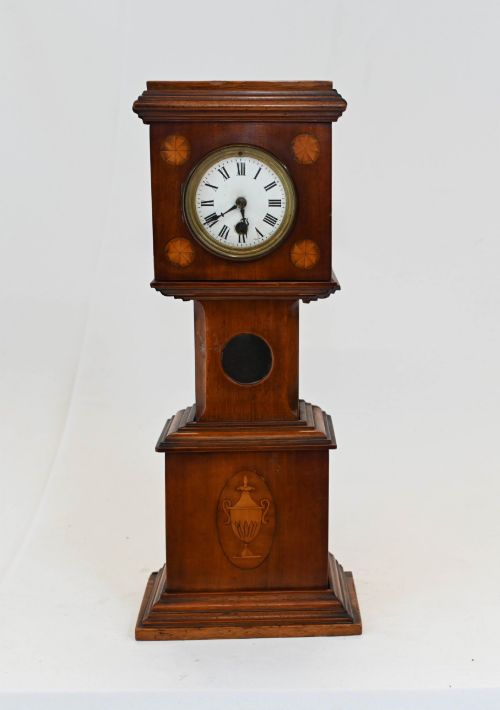
Makers adapted the proportions across the eras, ranging from full-sized London and provincial examples down to smaller grandmother and miniature formats produced by the early 20th Century.
Materials and construction methods
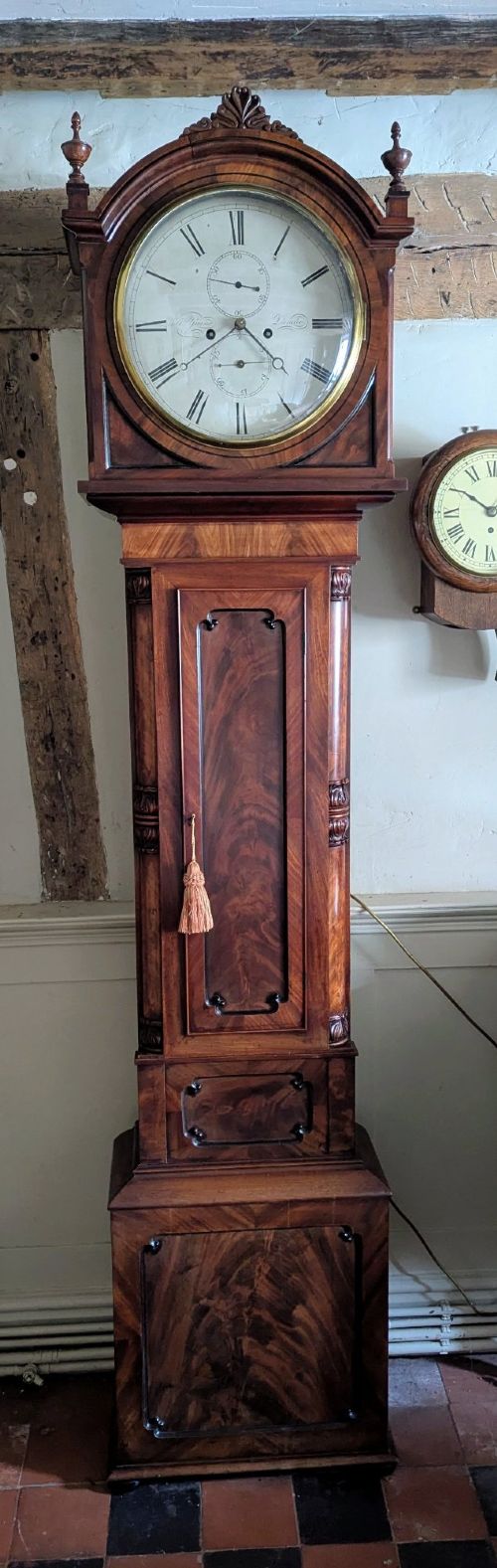
Cases combine solid timber and veneers, frequently utilising mahogany and flame mahogany alongside secondary woods like oak, accented with satinwood inlay and paterae.
Dials display painted iron or brass plates, paired with glazed glass doors and steel movement components driven by brass gear trains.
Mahogany Longcase Grandfather Clock Retail Price Guide 2026
Typical asking prices for mahogany longcase grandfather clock among the pieces listed under this phrase on Sellingantiques today, from the lower quarter to the upper quarter. They describe what is for sale here now, not the wider market.
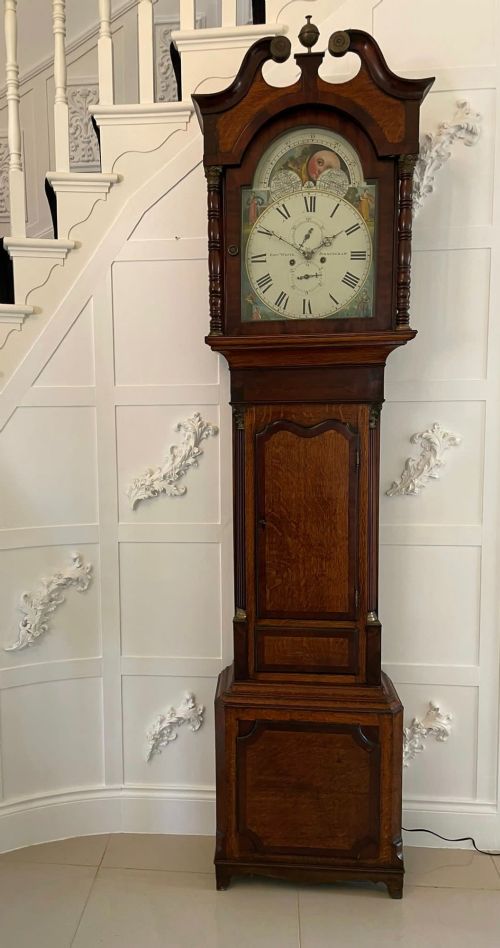
Some regional makers included automated moon rollers to track the night sky while keeping standard daytime hours.
Distinctions in craftsmanship
Quality rests in the precision of the mechanical movement and the depth of the cabinet work, distinguishing standard provincial timepieces from signed metropolitan productions with moon phases or chiming capabilities.
Subtleties in timber selection, such as figured flame mahogany veneers and crisp inlay work, separate standard workshop output from exhibition quality pieces.
Coats of Wigan·John Taylor London·Edward White Birmingham·Charles Shuckburgh London·Hendrie Ogg Dunfringline·Gordon of Aberdeen·Gillett and Johnston of Croydon·Green of Edinburgh·John Ellicott of London·D Straiton Montrose·Tait Peebles·James Field of Hempstead·Robb Montrose·James McCabe·Handley and Moore London·Samuel Kellett of Bredbury·Winsor Bishop Norwich·Parkinson Bros Batley
The Mahogany Longcase Grandfather Clock Glossary
- Longcase clock
- A tall pendulum clock housed in a wooden case resting on the floor. These tall clocks protect the delicate mechanical movement and weights.
- Grandmother clock
- A smaller version of the traditional longcase clock, typically produced in the 20th Century. They share the same mechanical principles in a more compact height.
- Moon phase
- A dial mechanism tracking the lunar cycle alongside the time of day. It uses a rotating disc behind the painted iron or brass face.
- Arch dial
- A clock face featuring a rounded upper section above the main circular dial. This space often houses subsidiary dials or painted decorative scenes.
Mahogany Longcase Grandfather Clock: Frequently Asked Questions
How do I wind an eight day clock?
An eight day mahogany longcase grandfather clock requires winding through the dial holes using a matching crank key every week to lift the internal weights.
Careful rotation ensures the weights rise evenly without putting undue tension on the gut lines or chains supporting them.
Where should I place a longcase clock?
Tall timepieces need a stable, dry interior wall away from direct sunlight, central heating vents, and exterior doors to protect the timber case and movement.
Placing the case on a level floor ensures the pendulum swings with an even beat and the escapement ticks regularly.
What is the difference between a grandfathers and grandmother clock?
A traditional grandfather clock stands over six feet tall with full-length trunk doors, while grandmother clocks are reduced in height and scale, often dating from the 20th Century.
Both utilise similar weight-driven or spring-driven movements housed in wood cases.