

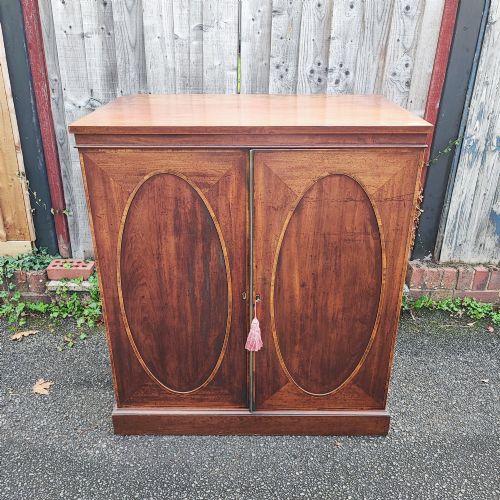
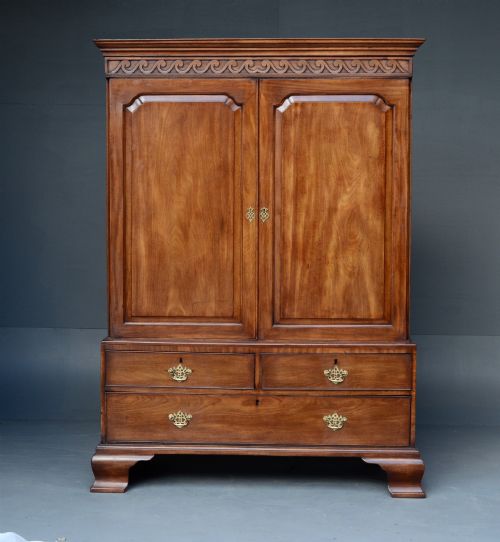
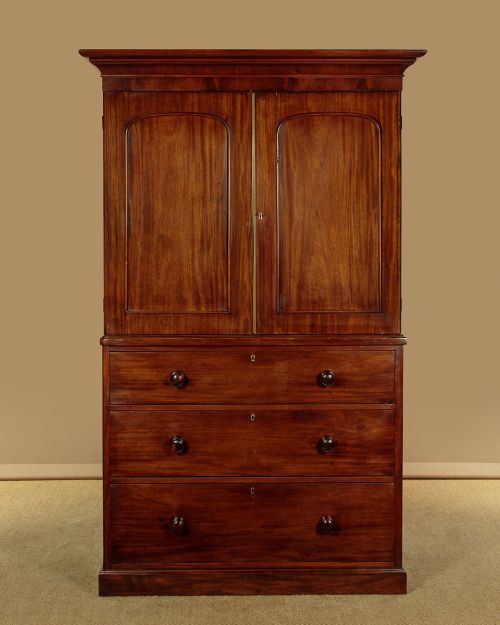
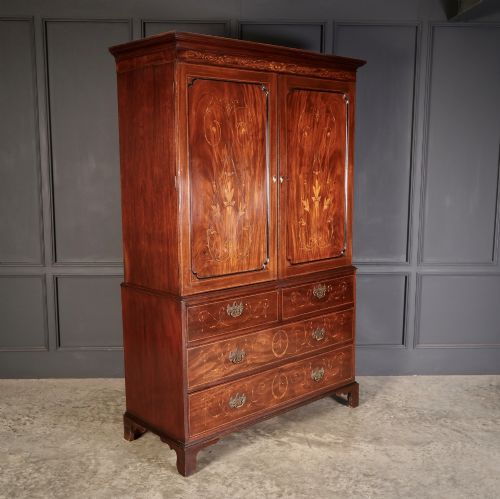
Mahogany Linen Cabinet
Mahogany linen cabinet pieces are substantial storage furniture designed for textiles, emerging across Georgian, Regency, and Edwardian periods.
Mahogany Linen Cabinet
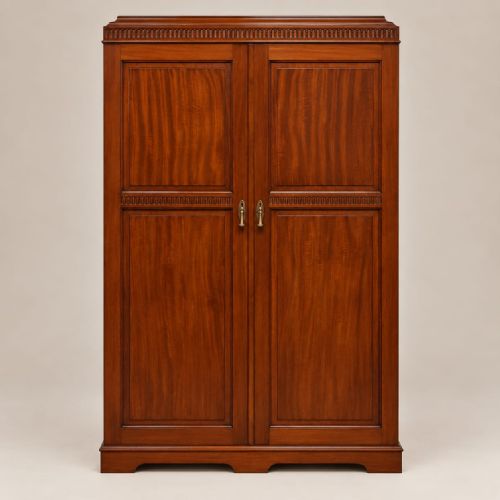
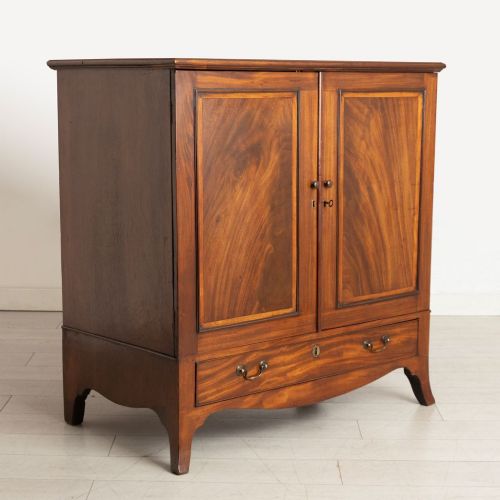
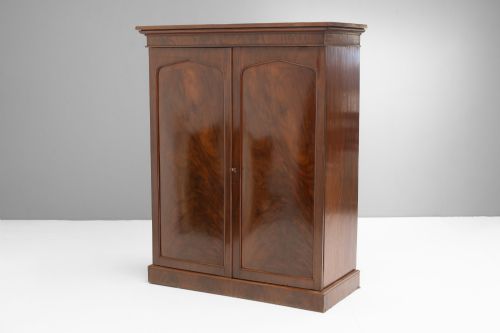
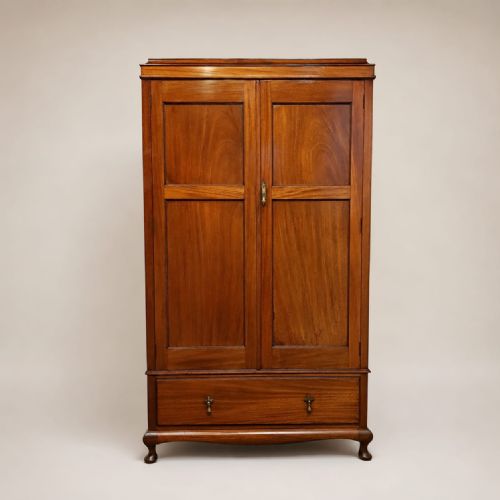
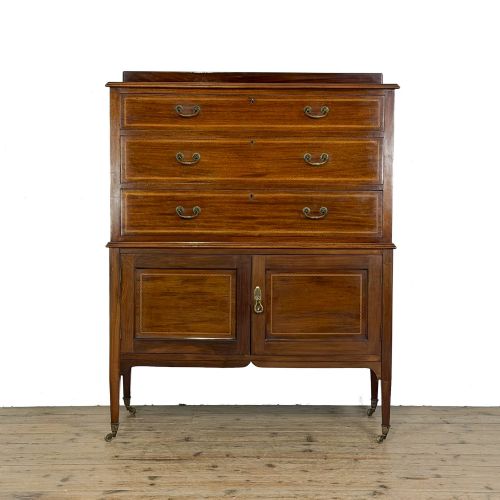
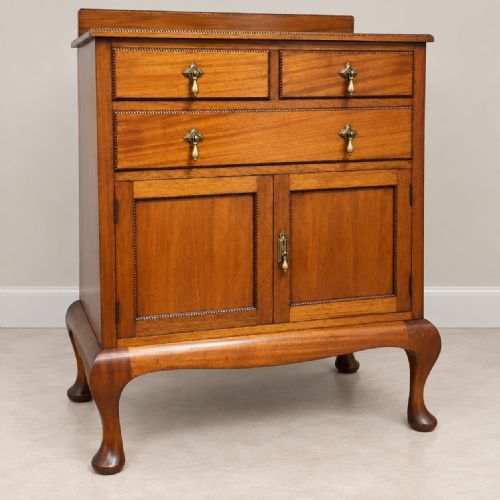
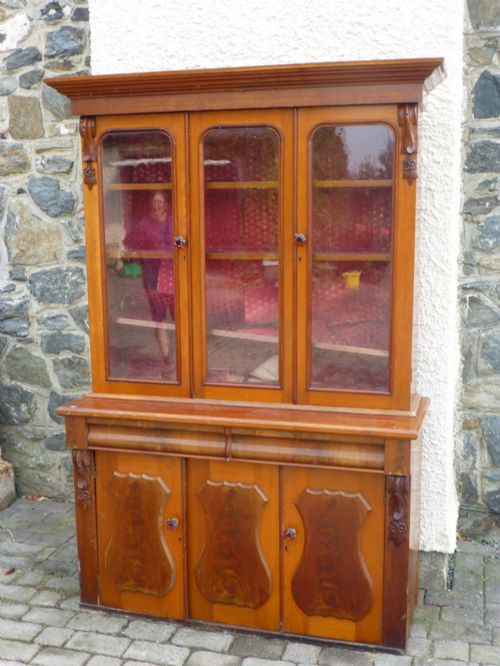
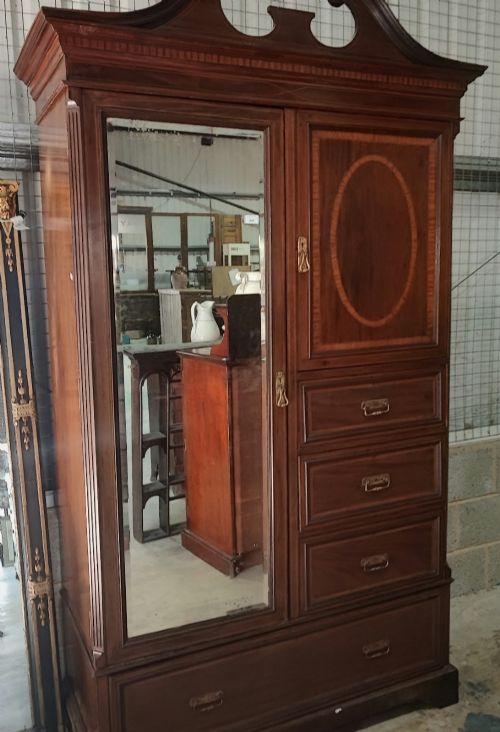
When you search for a mahogany linen cabinet, you encounter sturdy storage furniture built to house household linens and garments. These pieces appear as linen presses, wardrobes, cupboards, and tallboys across Georgian, Victorian, and Edwardian periods.
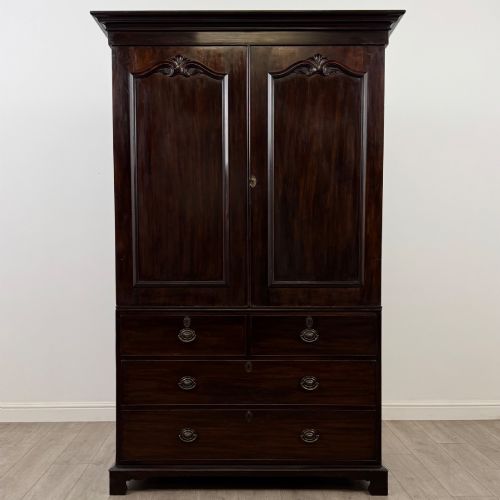
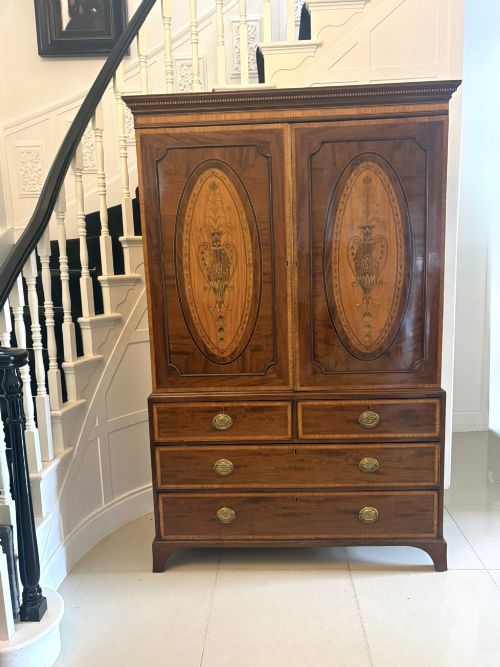
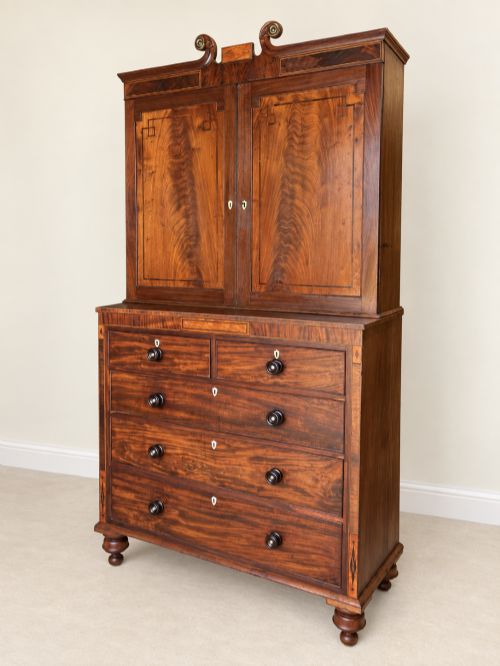
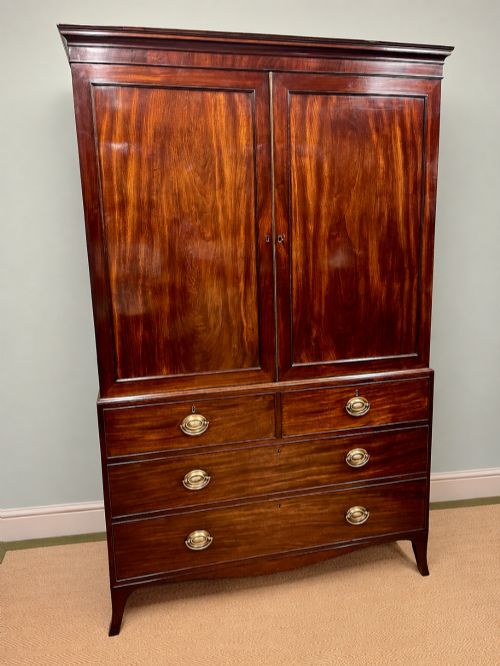
The most common version on this page is the Georgian or nineteenth-century linen press, typically featuring upper panelled doors concealing sliding trays above a chest of drawers. Pieces range from large country house editions to small provincial cupboards in solid mahogany or flame mahogany veneer.
How they were made
Cabinet makers utilised solid mahogany and flame mahogany veneer, often supporting the primary structure with secondary timbers such as oak and pine. Surfaces frequently incorporate satinwood inlay, brass hardware, and glass elements.
Construction techniques include crossbanding, blind fretwork cornices, and carved details. Pieces span simple vernacular builds to sophisticated cabinetwork featuring graduated drawers and fitted interiors.
Mahogany Linen Cabinet Retail Price Guide 2026
Typical asking prices for mahogany linen cabinet among the pieces listed under this phrase on Sellingantiques today, from the lower quarter to the upper quarter. They describe what is for sale here now, not the wider market.
Listings feature periods spanning the eighteenth, nineteenth, and early twentieth centuries, constructed in mahogany, satinwood, oak, and pine.
What varies in quality
The standard of timber selection marks the primary division in quality, ranging from plain solid planks to highly figured flame mahogany veneer with careful grain matching. Finer items display precise cabinetmaking, such as crisp blind fretwork and well-executed satinwood inlay.
Proportion and interior fitting also distinguish superior examples. Pieces with original sliding trays, well-fitted drawers, and harmonious scale command attention over altered or heavier vernacular items.
Edwards and Roberts·Druce and Co.·Heals
The Mahogany Linen Cabinet Glossary
- Linen Press
- A tall storage piece comprising an upper section with doors enclosing sliding trays, sitting above a chest of drawers. This form was traditionally used for storing folded linen before hanging wardrobes became standard.
- Flame Mahogany Veneer
- A thin slice of mahogany timber cut from the fork of the tree where branches join the trunk, producing a distinctive flickering flame pattern. Cabinet makers applied this veneer to primary surfaces for decorative effect.
- Compactum
- A multi-functional wardrobe combining hanging space, drawers, shelves, and sometimes a linen press within a single footprint. These large pieces offered comprehensive bedroom storage.
- Blind Fretwork
- Carved ornamentation applied to a flat surface in geometric or Chinese-inspired lattice patterns, popular on mid-eighteenth-century case furniture. It creates texture without projecting beyond the moulding profile.
- Crossbanding
- A narrow strip of veneer laid around the border of a drawer front or tabletop with the grain running perpendicular to the main panel. This technique frames the primary timber and adds visual contrast.
Mahogany Linen Cabinet: Frequently Asked Questions
What is a linen press used for?
A linen press was originally designed to store household linen flat on internal sliding trays, keeping textiles pressed and organised.
Over time, many of these cabinets were converted into hanging wardrobes by removing the internal trays to accommodate modern clothing requirements.
How do I date a mahogany cabinet?
Dating relies on architectural styles, construction methods, and timber characteristics. Georgian pieces often show classical proportions and fine inlay, while Victorian and Edwardian examples introduce different cornice details and varied drawer configurations.
Hardware style, such as brass drop handles versus later knobs, also provides clear clues to the decade of manufacture.
What is flame mahogany?
Flame mahogany is a highly decorative wood veneer derived from the junction where branches meet the main trunk of the tree. The grain swirls in a pattern resembling flickering flames.
Cabinet makers prized this timber for drawer fronts and door panels on high-status Georgian and Regency furniture.
Are linen presses different from wardrobes?
A traditional linen press specifically pairs upper shelving or sliding trays behind doors with a chest of lower drawers. A wardrobe is built primarily for hanging garments from a rail.
Many antique pieces labeled as wardrobes evolved from earlier press designs or combined both functions.