

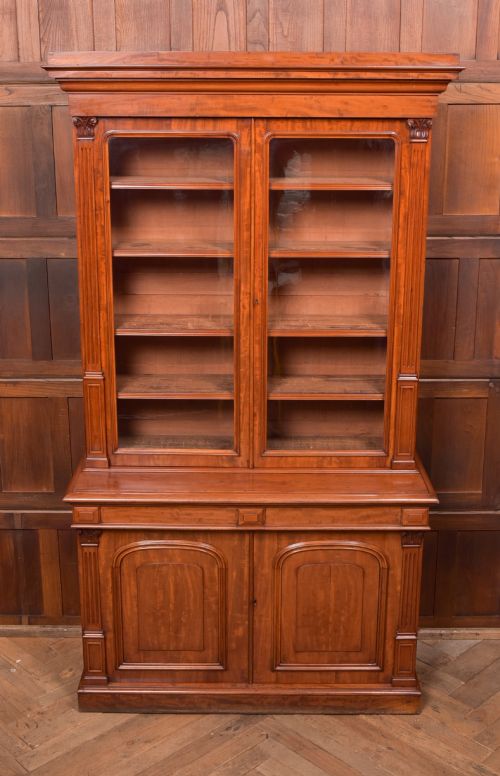


Mahogany Library Storage
Mahogany library storage gathers the heavy bookcases, cabinets and cupboards that kept volumes safe through the nineteenth and early twentieth centuries.
Mahogany Library Storage
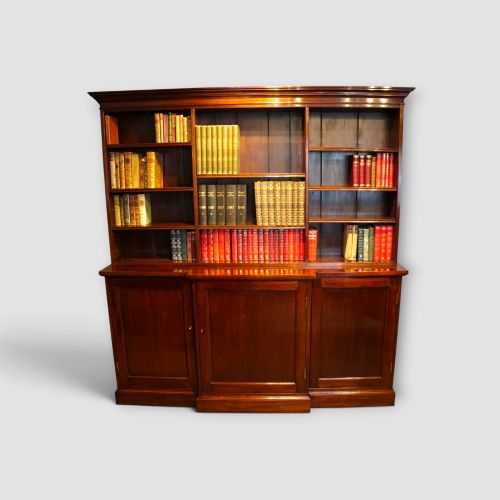
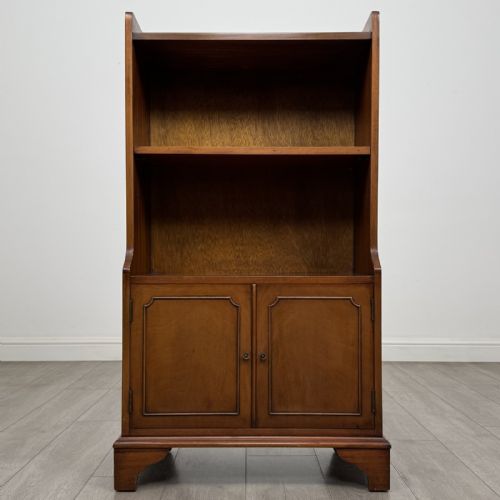
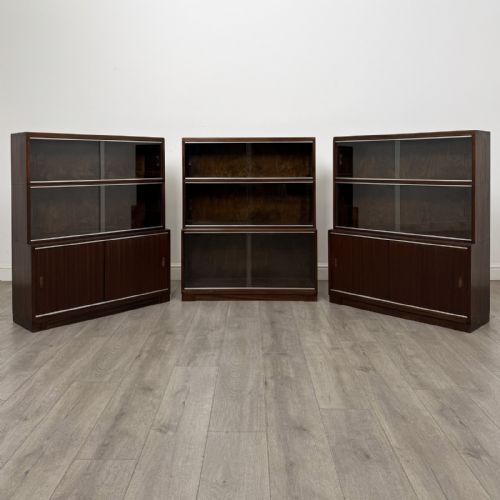
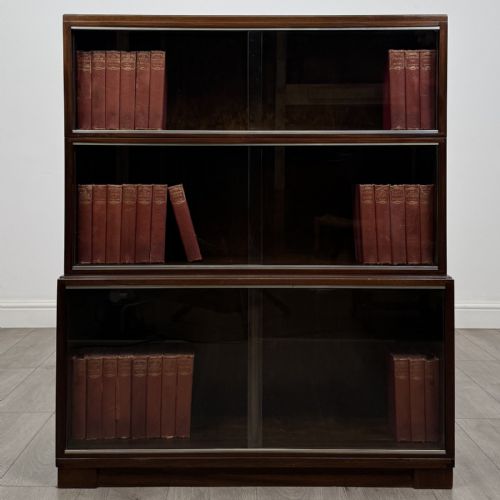
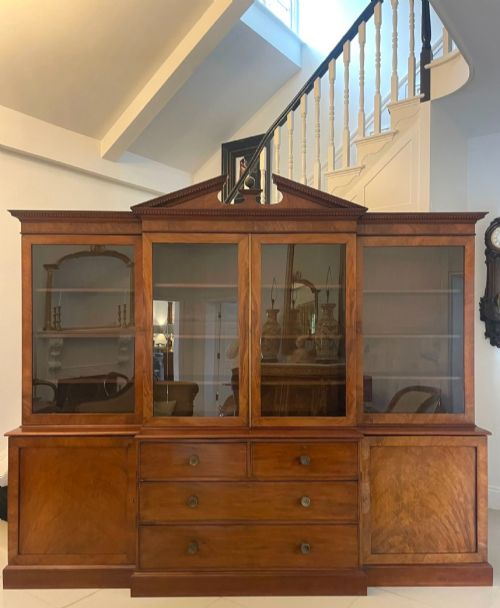
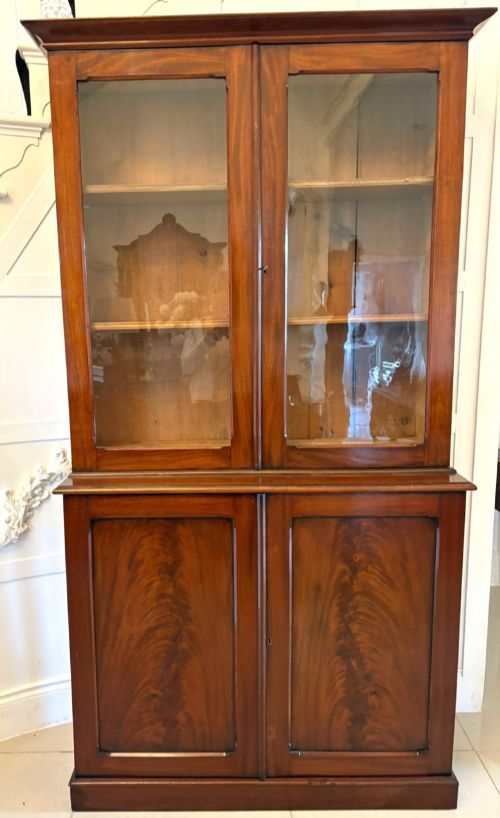
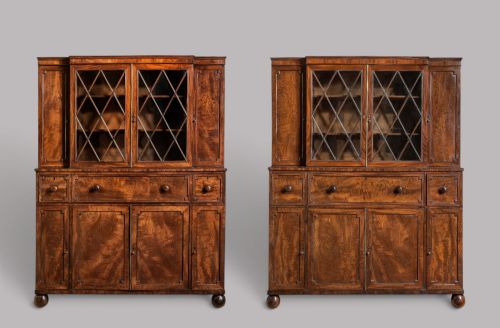
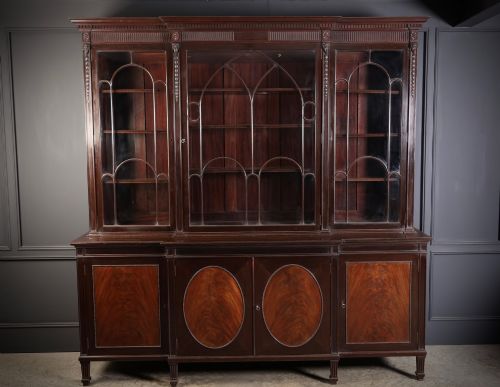
Mahogany library storage encompasses large glazed bookcases, open shelves and breakfront cabinets built for institutional and domestic rooms. You will frequently encounter Victorian and Edwardian examples alongside earlier Regency and George III designs.
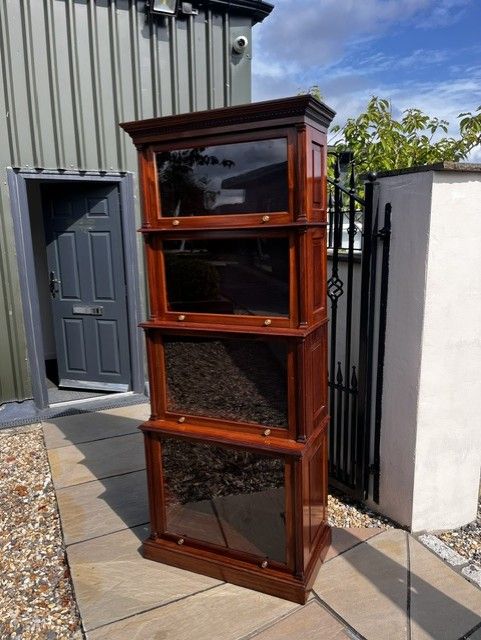
The forms range from towering breakfront bookcase cabinets with glazed upper doors to revolving bookcases, low whatnots and functional bedsteps fitted with storage. These pieces were built to house substantial private collections of leather-bound volumes.
Makers such as Gillows, Maple & Co. and Hille contributed to this heritage, producing pieces that span from restrained upright cases to elaborate architectural breakfronts. Most options on this page date from the nineteenth century up to the nineteen-twenties.
How they were made
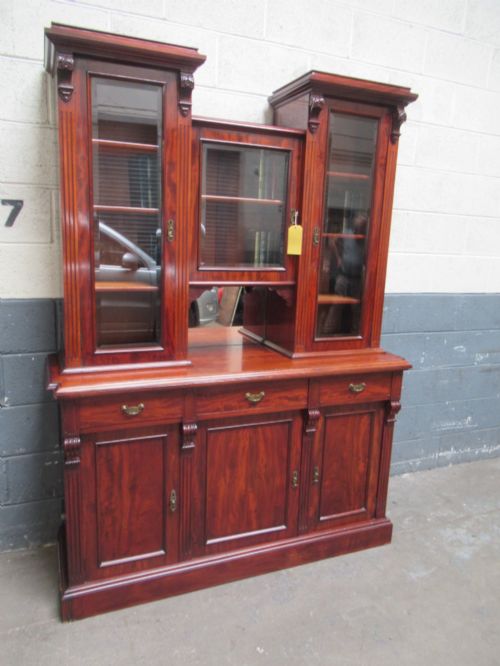
Joiners built these pieces primarily from solid mahogany and mahogany veneer, often selecting flame mahogany for drawer fronts and cabinet doors to display rich grain patterns. Secondary timbers provided internal framing while brass hardware and glass panes completed the doors.
Construction techniques relied on sturdy carcase work, dovetailed drawers and adjustable wooden shelving supported by robust vertical uprights. Glazed sections utilised wooden astragals to hold individual panes securely within large door frames.
Mahogany Library Storage Retail Price Guide 2026
Typical asking prices for mahogany library storage among the pieces listed under this phrase on Sellingantiques today, from the lower quarter to the upper quarter. They describe what is for sale here now, not the wider market.
Some ingenious bedsteps double as private commodes while holding your midnight reading.
What varies in quality
Quality rests upon the selection of timber figures, the precision of the cabinetwork and the architectural proportion of the overall form. Pieces featuring matched flame mahogany veneers and carved mouldings stand apart from simpler utility items.
The integrity of the original glass, the smooth operation of adjustable shelving mechanisms and the retention of original brass handles distinguish superior examples. Finer pieces demonstrate careful attention to concealed construction details and balanced proportions.
Gillows·Maple & Co.·Hille
The Mahogany Library Storage Glossary
- Breakfront
- A cabinet design where the central section projects forward from the flanking wings. This architectural arrangement creates depth and visual weight.
- Flame mahogany
- A veneer cut from the fork of the mahogany tree where the branch meets the trunk. It produces a distinctive flickering flame pattern.
- Astragal
- A narrow moulding used to hold panes of glass within a glazed cabinet door. These divide the window into smaller geometric sections.
- Whatnot
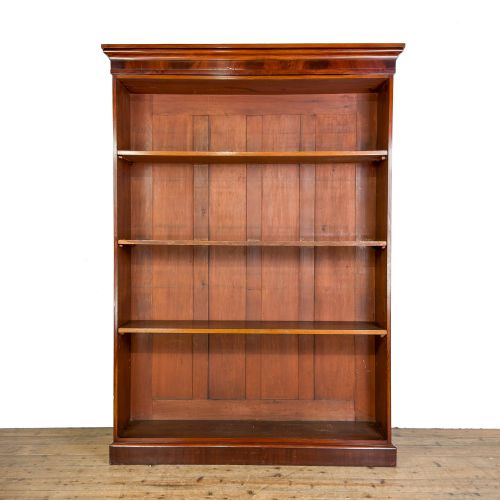
- A piece of open shelving designed for books or display objects. These tiered stands date widely across the nineteenth century.
- Bedsteps
- A set of small steps used for climbing into high period beds, frequently fitted with hinged treads revealing hidden storage space.
Mahogany Library Storage: Frequently Asked Questions
How do I adjust wooden shelves?
Period bookcases typically utilise wooden ratchet strips, brass studs or traditional saw-tooth tracks affixed to the interior sides. You simply lift the shelf to clear the supports and reposition it at the desired height.
This adaptability allowed nineteenth-century owners to accommodate varying folio heights and book sizes as collections expanded.
Are revolving bookcases stable?
Revolving bookcases sit upon a concealed central pivot and ball-bearing mechanism that allows the entire tier to spin freely. Despite this movement, heavy solid mahogany bases provide a low centre of gravity to prevent tipping.
Edwardian readers placed these compact units beside armchairs to keep reference volumes within arm's reach.
How do I identify Victorian pieces?
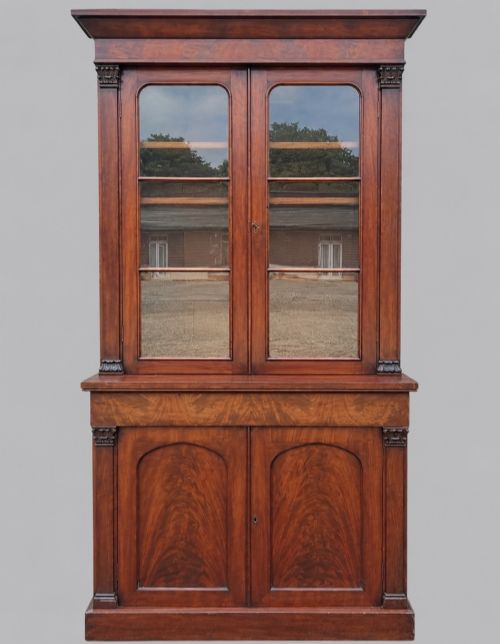
Victorian library storage often displays darker mahogany tones, heavier proportions and robust architectural mouldings. Many examples incorporate glazed upper doors with arched astragals and deep cupboard bases.
Construction methods from this era frequently include machine-planed timbers alongside hand-cut dovetails on internal drawers.