
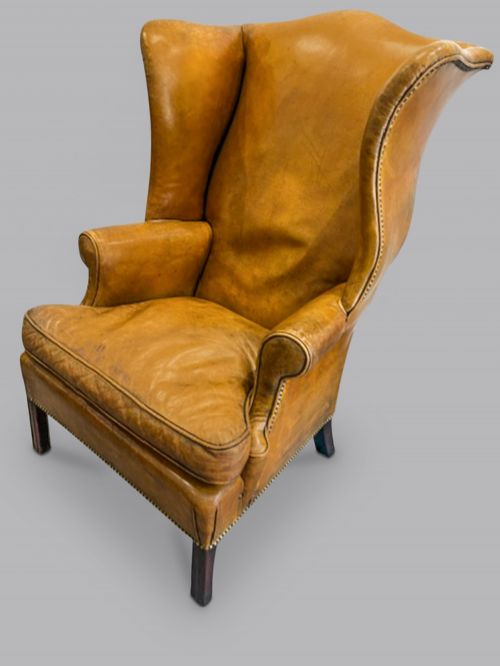
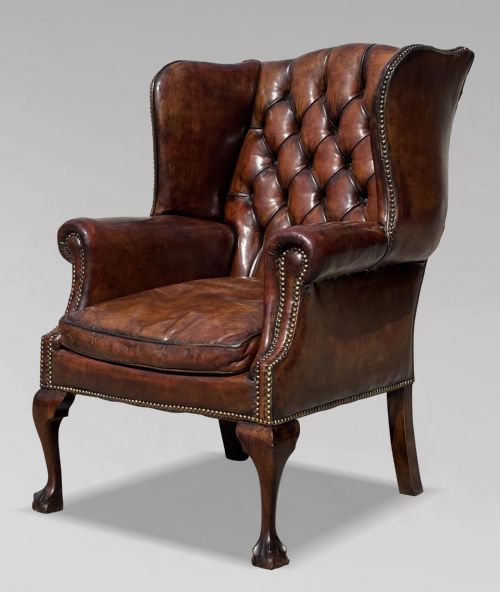
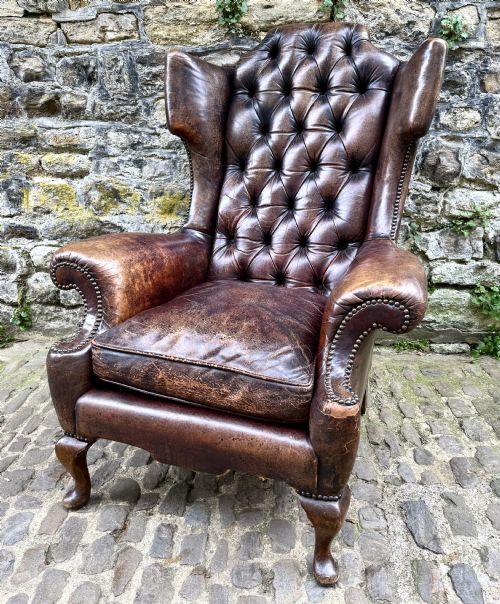


Mahogany Leather Wing Chair
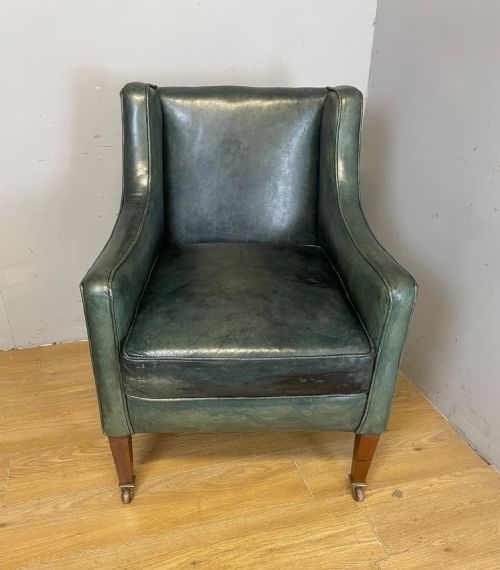
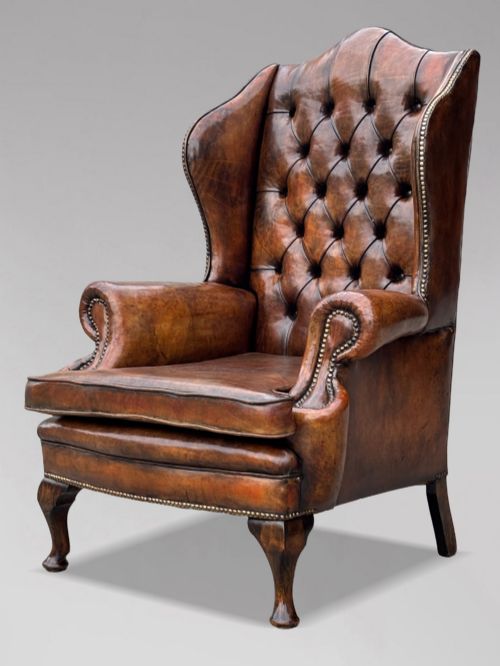
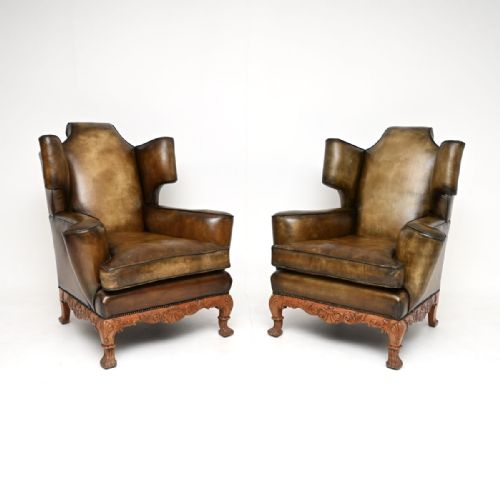
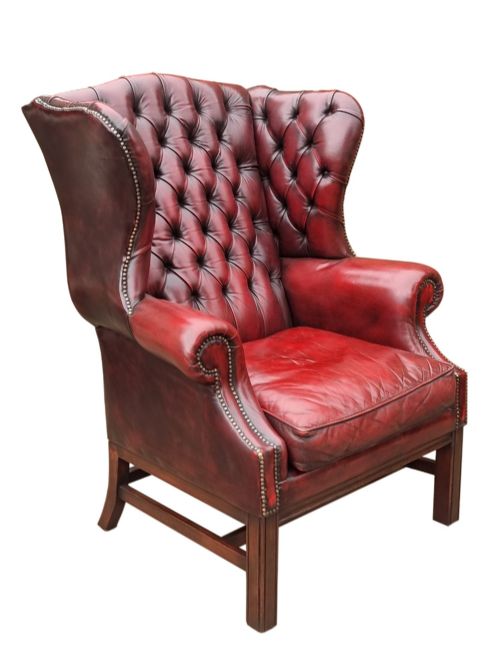
A mahogany leather wing chair brings traditional comfort and period presence to a room, built with sheltering sides to keep out drafts.
Mahogany Leather Wing Chair
The selection ranges from genuine 18th-century and 19th-century pieces to later revivals from the 20th century. Buyers frequently encounter George III originals alongside Georgian style reproductions and Victorian or Edwardian interpretations.
Armchairs dominate the selection, spanning standard library models, deep Chesterfield armchairs, and specialised seating such as porters chairs or reclining invalid chairs. Each variation retains the high back and upholstered wings characteristic of the type.
Materials and construction
Makers utilised solid mahogany and hardwood for the structural frames and legs, ensuring the weight of the chair remained stable. Brass details, iron mechanisms, and wood components frequently form part of the internal framing and adjustable fittings on specialised library or reclining models.
Upholstery relies on traditional leather or hide, often hand-dyed in shades of brown, green, or burgundy. Individual brass tacks frequently secure the leather edges to the wooden framework around the wings and seat base.
Some Victorian library chairs include built-in mechanical legs and reclining functions for convalescing readers.
Factors that distinguish quality
The integrity of the mahogany frame and the depth of carving on the legs set finer examples apart from standard productions. Crisp execution in the joinery and substantial proportions indicate superior craftsmanship.
The condition and character of the leather surface influence the overall merit of the piece. Natural patination and hand-finished detailing provide an authenticity that mass-produced alternatives lack.
J Foot And Son·John Ward·Gillows
The Mahogany Leather Wing Chair Glossary
- Wingback
- A chair design featuring projecting side panels attached to the arm rests. This element was originally devised to deflect drafts away from the head and torso.
- Hide
- Unsplit animal skin utilised for upholstery. This material develops a softer texture and richer tone with age and regular use.
- Porters chair
- An enclosed seat designed to keep drafts away from a servant stationed near an entrance hall. These often feature a domed hood over the winged back.
- George III style
- A revival aesthetic mimicking the proportions and ornamentation popular during the late 18th century. Pieces in this category date from subsequent decades.
- Button back
- An upholstery method where depressions are created by pulling tacks or thread through the padding into the wooden base. This technique secures the stuffing and forms a patterned surface.
Mahogany Leather Wing Chair: Frequently Asked Questions
How do I date a wing chair?
Dating relies on examining the timber species, joinery methods, and the style of the leg supports. Older examples show hand-cut joints and timber characteristics typical of 18th-century cabinet making.
Later revivals from the 19th and 20th centuries often incorporate machine-cut elements or revival styling cues that reflect the period of their manufacture.
Were these chairs used in libraries?
Libraries and studies frequently housed these seating options because the enclosed sides offered privacy and comfort for reading. The sturdy wood frames suited rooms dedicated to study and business.
Many surviving pieces retain proportions and arm heights suited for use beside a writing desk or reading table.
How should I maintain leather upholstery?
Leather surfaces benefit from regular dusting and occasional treatment with appropriate conditioners to prevent the material from drying out. Avoiding direct sunlight and excessive heat preserves the natural finish and suppleness of the hide.
Proper care maintains the patination that develops naturally on older leather over decades of use.
What is the difference between Georgian and George III style?
Original pieces date strictly to the Georgian era, spanning the reigns of the Georges from the 18th century. George III style refers to later reproductions made during the 19th or 20th centuries that imitate those earlier designs.
Examining the internal timber construction and hardware helps determine whether a piece is an 18th-century original or a later revival.