


Mahogany Leather Wing Armchair
A mahogany leather wing armchair combines deep-seated comfort with a formal silhouette, offering draught-protected warmth and enduring architectural presence.
Mahogany Leather Wing Armchair
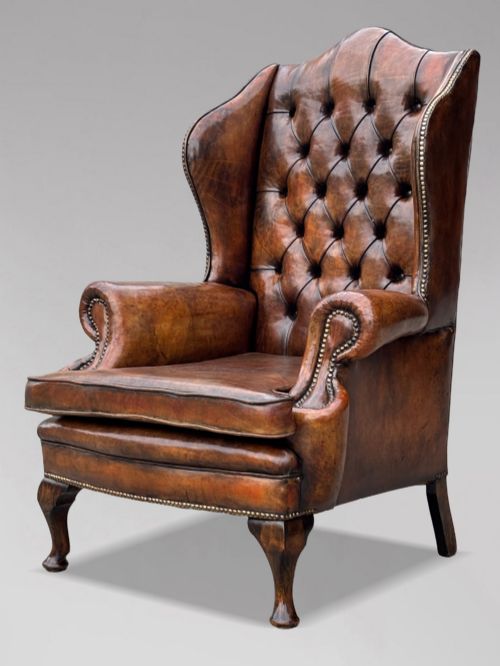
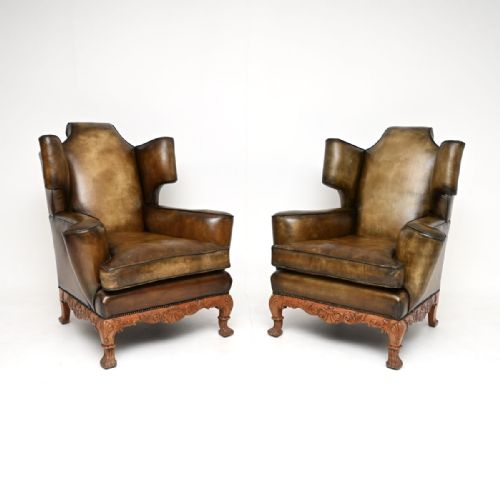
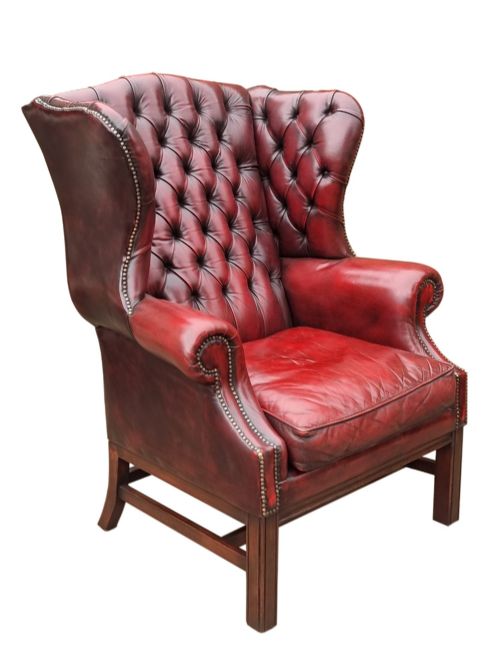
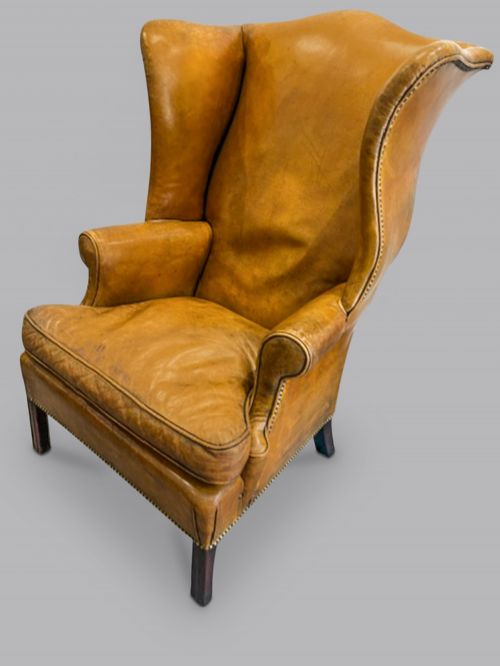
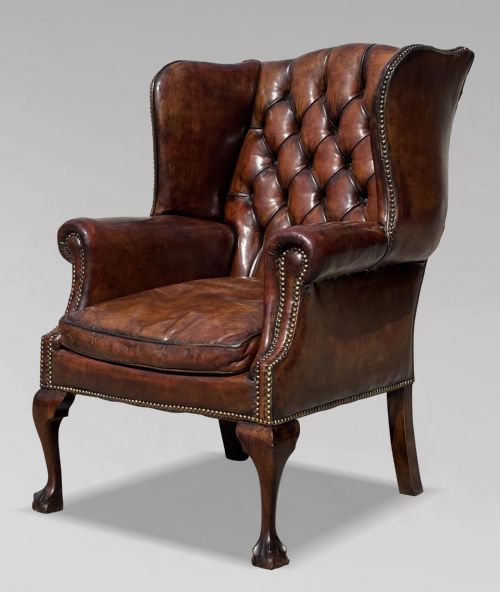
A mahogany leather wing armchair is a substantial seating form featuring projecting side panels designed originally to shield the sitter from draughts near an open hearth. These chairs span several centuries, appearing in genuine 18th-century forms alongside later Georgian Revival interpretations from the 19th and early 20th centuries.
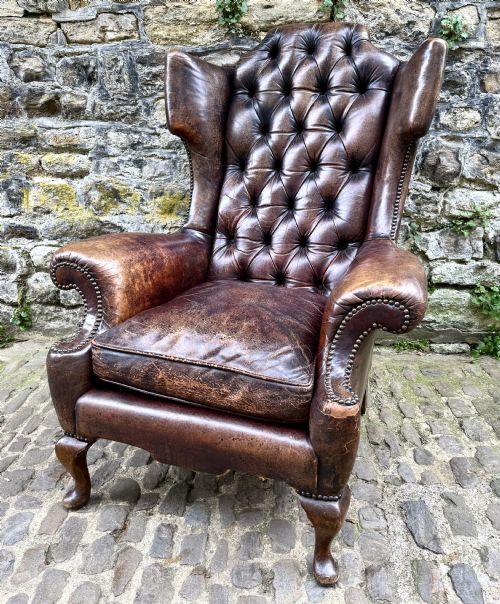
The versions most commonly met on this page combine exposed mahogany frames with buttoned or plain leather upholstery, often drawing inspiration from George III designs. Alongside standard library and drawing-room seating, variants include metamorphic library chairs and specialised reclining or invalid chairs from the Victorian period.
Distinctions in Quality
Quality rests heavily on the integrity of the mahogany frame, where robust timber scantlings and precise cabinet-maker joinery separate superior examples from routine workshop production. The articulation of the carved details, particularly on the legs and arm terminals, reveals the hand of a skilled maker.
The condition and treatment of the leather upholstery dictate much of the character, with hand-dyed hides and traditional patination marking out pieces that have aged gracefully. The internal webbing, springing and stuffing determine whether the chair retains its correct architectural proportions and supportive posture.
Several armchairs include built-in mechanical reclining actions designed for Victorian invalids, turning a quiet reading nook into an adjustable medical contraption.
J Foot And Son·John Ward
The Mahogany Leather Wing Armchair Glossary
- Wingback
- A chair style featuring lateral panels attached to the arms and backrest, originally conceived to trap heat from a fireplace. These extensions also served to shield the occupant from ambient draughts.
- Buttoned
- An upholstery method where depressions are formed across the leather surface by securing deep tufts with twine or thread tied to the internal webbing. This technique keeps the stuffing evenly distributed.
- Library armchair
- A specialised seating form designed for long periods of reading, frequently constructed with generous proportions and supportive armrests. These pieces often utilised robust mahogany frames to withstand daily study use.
- Hide
- The natural leather skin used to upholster the chair, subject to varied tanning and dyeing processes. High-grade hides develop a rich surface sheen and tactile softness through age and handling.
Mahogany Leather Wing Armchair: Frequently Asked Questions
How do I spot a reproduction?
Examine the timber shrinkage, joinery methods and the uniformity of the leather patination to determine the actual age of the piece. Genuine older frames display authentic tool marks and structural wear consistent with centuries of use.
Compare the proportions and carving style against documented period examples. Reproductions often utilise machine-sawn components and applied artificial ageing rather than natural wear.
Where should I place this chair?
These chairs demand sufficient floor space to complement their high backs and projecting side wings. Libraries, studies and drawing rooms provide traditional settings that match their original domestic context.
Keep the leather away from direct heat sources and strong sunlight to prevent drying and cracking. Adequate clearance allows the silhouette to command the room properly.
How do I care for the leather?
Clean the surface gently with a soft, dry cloth to remove dust and prevent particulate accumulation within the button creases. Avoid harsh chemical cleaners that strip the natural oils from the hide.
Apply specialist leather balms sparingly to maintain suppleness and prevent the material from splitting. Consistent environmental humidity preserves both the wooden frame and the leather upholstery.
What defines the George III style?
George III pieces typically exhibit classical proportions, straight or slightly cabriole mahogany legs, and restrained carving. The lines remain balanced and formal without excessive ornamentation.
Revival pieces from later periods adopted these exact proportions and stylistic cues. Studying the timber grain and internal construction helps differentiate original 18th-century manufacture from 20th-century copies.