


Mahogany Leather Dining Chairs
Mahogany leather dining chairs bring substantial timber warmth and practical seating to the dining room through enduring periods of design.
Mahogany Leather Dining Chairs
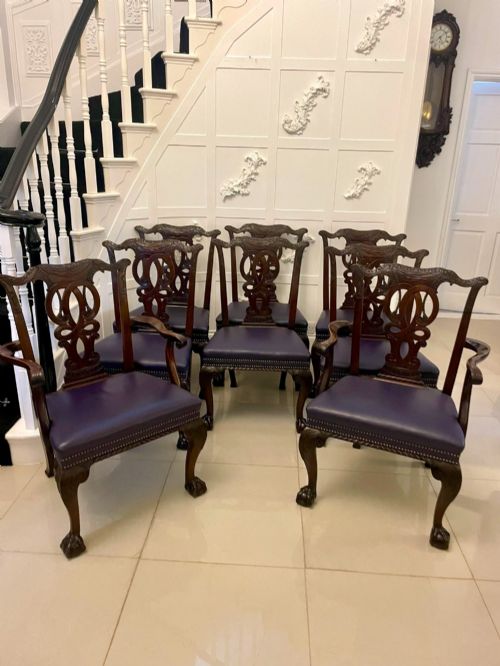
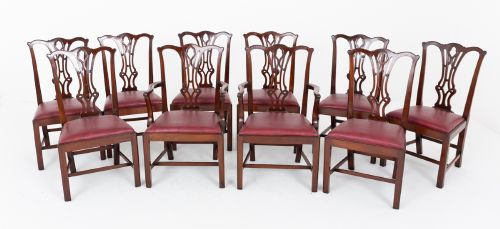
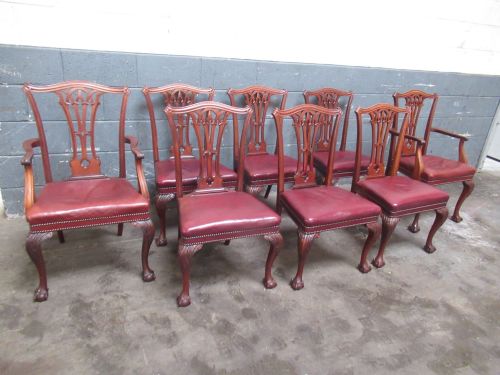
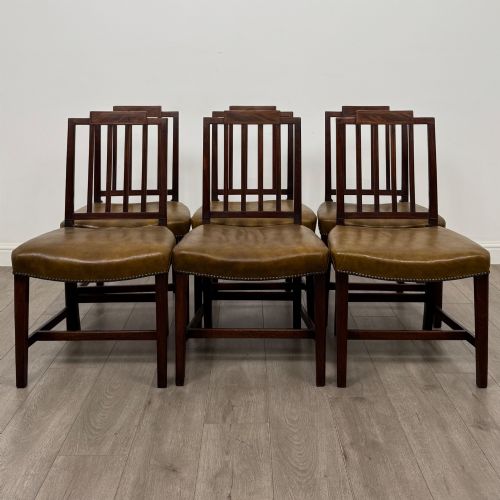
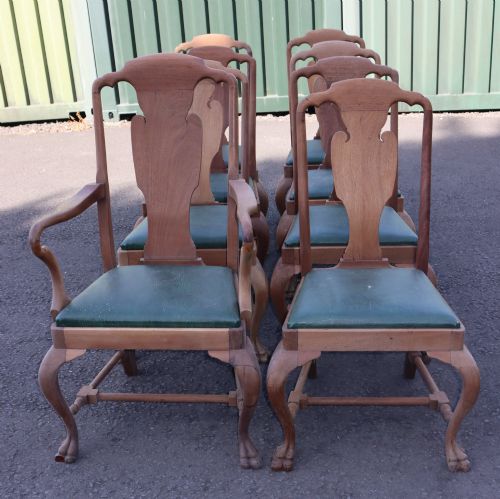
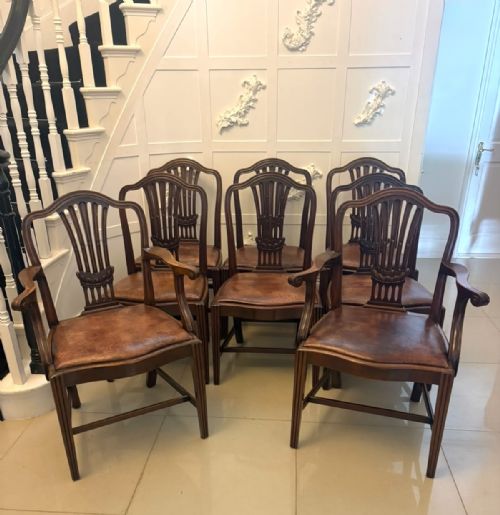
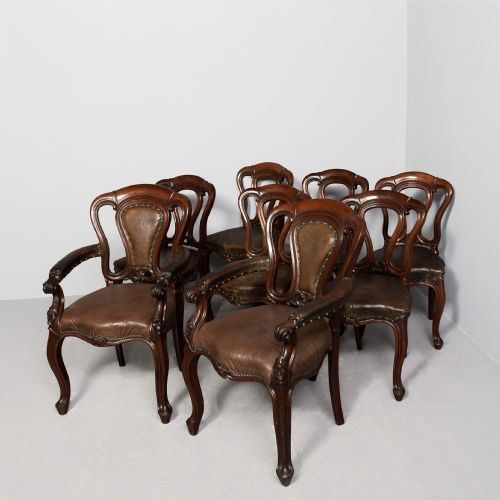
Mahogany leather dining chairs span formal dining sets and individual carvers originating from Georgian, Victorian, and Edwardian periods. Buyers encounter matched sets of six or eight alongside larger assemblies intended for substantial dining tables.
The selection frequently includes revival pieces from the late nineteenth and early twentieth centuries, drawing heavily on Chippendale, Hepplewhite, and Regency idioms. These revival iterations offer the visual weight of earlier centuries combined with robust later construction.
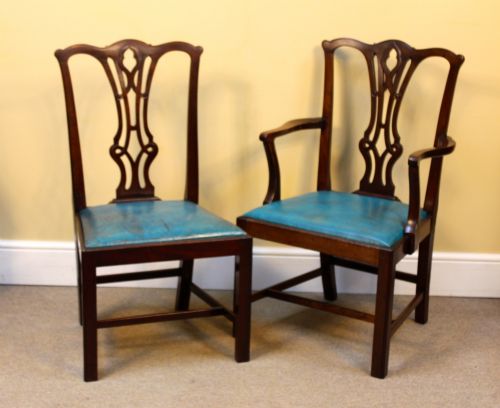
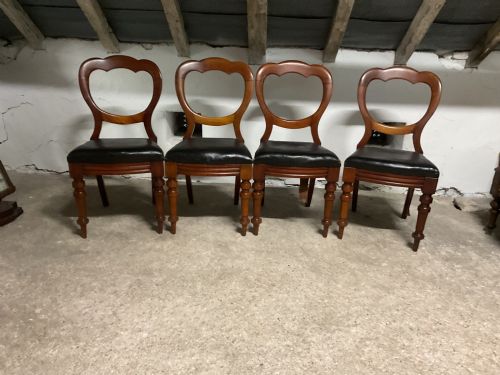
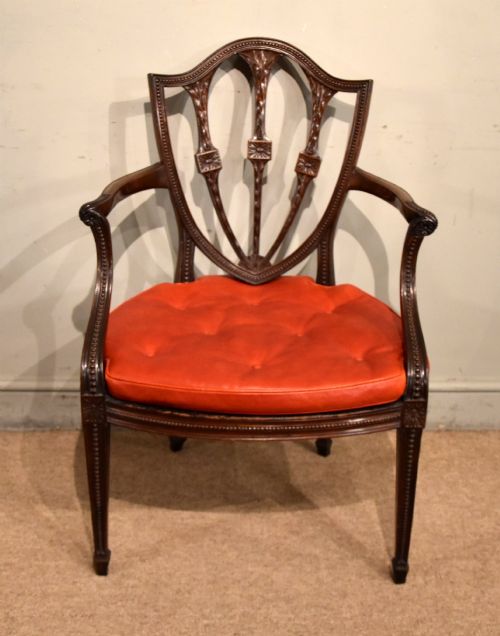
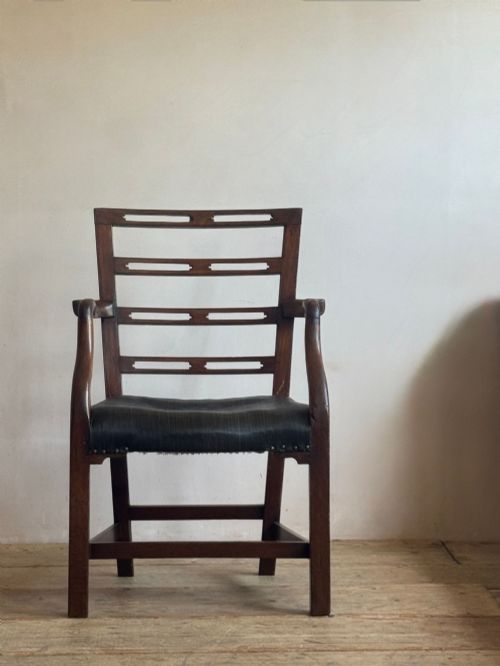
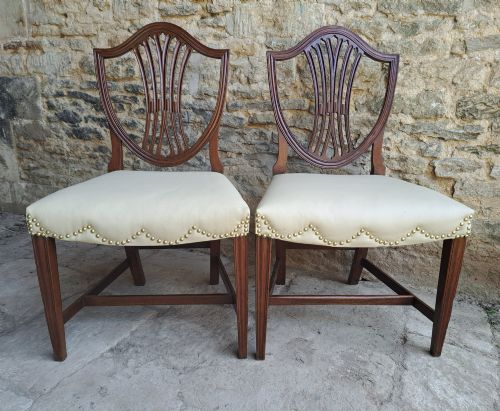
Forms range from balloon backs and shield backs to ladder backs and bar backs, paired with drop-in or upholstered leather pads. Side chairs predominate in larger sets, supplemented by armchairs or carvers for the table ends.
Distinctions in standard
Quality rests in the crispness of the timber carving and the architectural proportion of the frame, where sharper splats and well-defined rails separate master workshop output from simpler provincial carpentry. Substantial timber gauge prevents structural wobble under daily use.
The treatment and retention of original leather upholstery, along with the integrity of frame joints, dictate the standard. Superior examples maintain tight joinery without excessive secondary timber replacement.
Listings feature eighteenth-century Georgian origins alongside nineteenth-century Victorian pieces and Edwardian revivals utilising mahogany, leather, and brass.
The Mahogany Leather Dining Chairs Glossary
- Carver
- An armchair designed with elbow supports, traditionally placed at the head of a dining table. These match the aesthetic of the smaller side chairs in a set.
- Splat
- The vertical wooden strip down the centre of a chair back, often intricately pierced or carved in Chippendale and Georgian designs.
- Shield back
- A chair back shaped like a stylised heraldic shield, popularised by Hepplewhite design books in the eighteenth century.
- Sabre leg
- A concave, outwardly curving rear or side leg resembling a cavalry sword, characteristic of Regency seating.
- Balloon back
- An ovoid or rounded chair back shape that became the dominant upholstered form during the Victorian era.
Mahogany Leather Dining Chairs: Frequently Asked Questions
How do I care for antique leather seats?
Clean leather surfaces gently with a damp cloth and nourish the hide periodically using a suitable conservation wax or balm. Avoid placing seats in direct sunlight to prevent the leather from drying and cracking over time.
Ensure spills are wiped immediately, and check that the underlying webbing or padding remains stable to support the leather surface without undue sagging.
Can I mix carvers with side chairs?
Historic dining arrangements routinely paired a matching pair of carvers at the table ends with side chairs along the flanks. Sets frequently retain this traditional composition.
When combining separate chairs, matching the timber tone and primary design period helps maintain visual cohesion around the dining table.
How do I identify a revival chair from an original period piece?
Late nineteenth and early twentieth-century revival pieces often display machine-assisted joinery alongside hand-finished details, whereas eighteenth-century originals rely entirely on hand tools and bear construction marks appropriate to that era.
Secondary timbers inside the seat frame and the wear patterns on the mahogany surfaces assist in establishing the chronological origin of the woodwork.
Are these chairs suitable for daily family use?
Solid mahogany frames offer structural resilience that withstands regular sitting, provided the underlying joints remain sound and properly glued. Leather upholstery provides a practical, wipeable surface for meals.
Periodic inspection of the leg joints and under-framing ensures the timber remains secure under continuous household demands.