



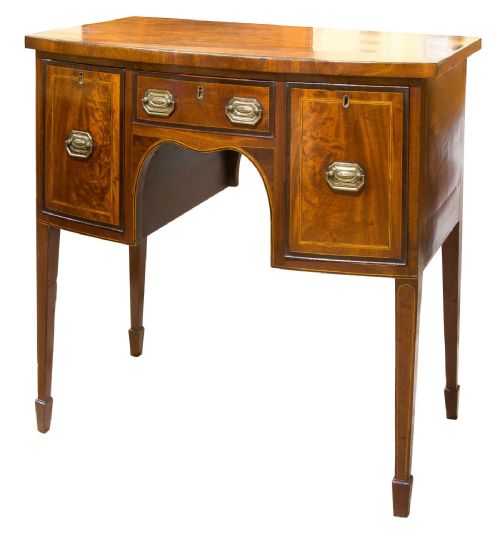

Mahogany Kneehole Cabinet
A mahogany kneehole cabinet is a compact desk or pedestal form valued for its hidden drawers and neat writing surface.
Mahogany Kneehole Cabinet
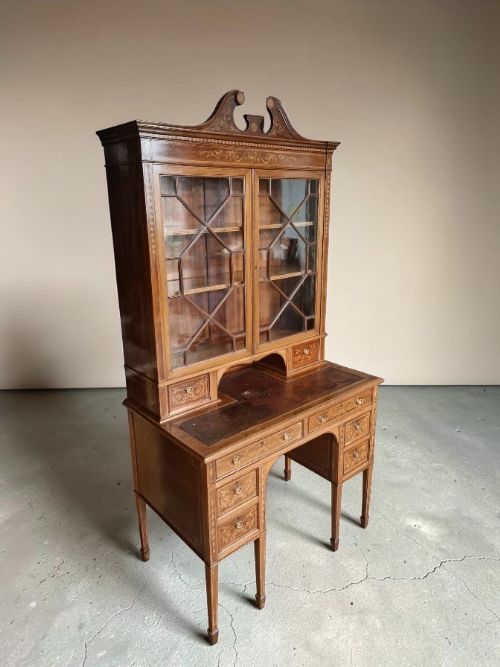
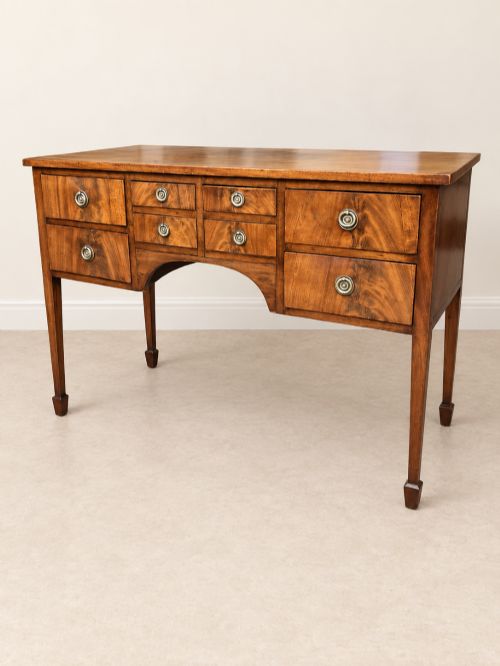
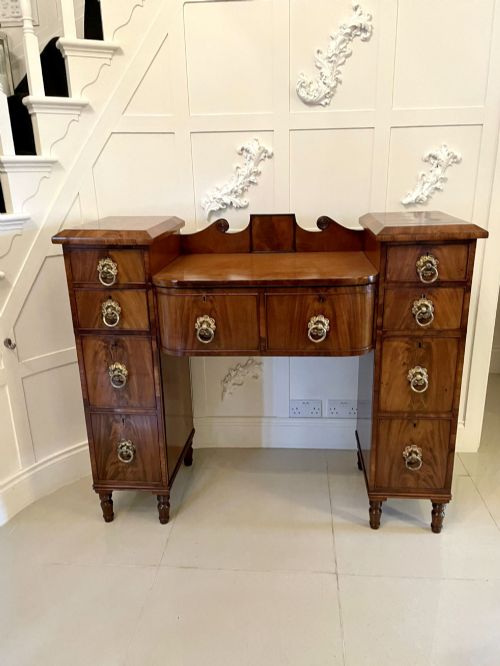
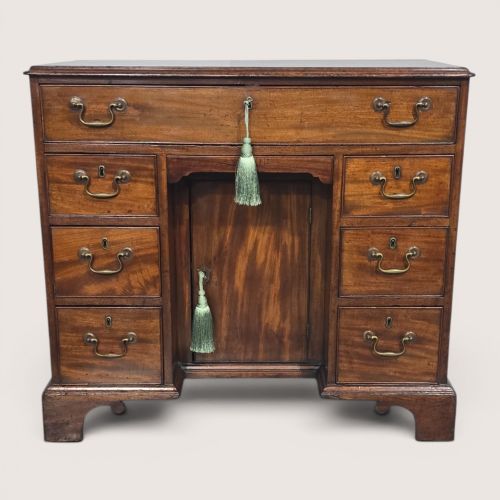
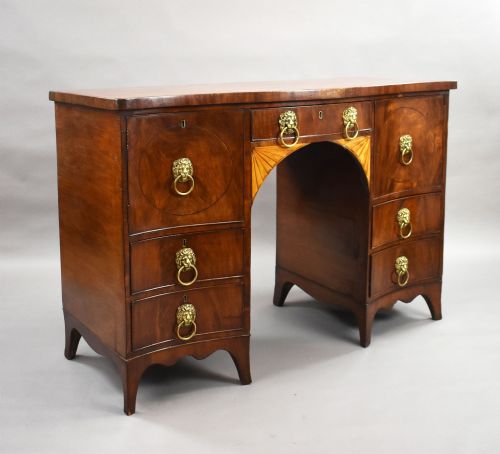
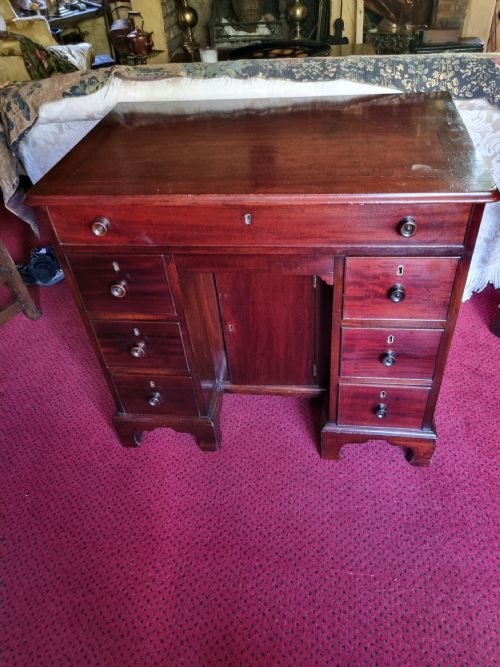
A mahogany kneehole cabinet is a designated term for smaller pedestal desks and writing tables that group a central recessed cupboard beneath the writing surface, flanked by banks of small drawers. The pieces on this page span the eighteenth century, the Regency period and the Victorian era, alongside revival pieces from the twentieth century.
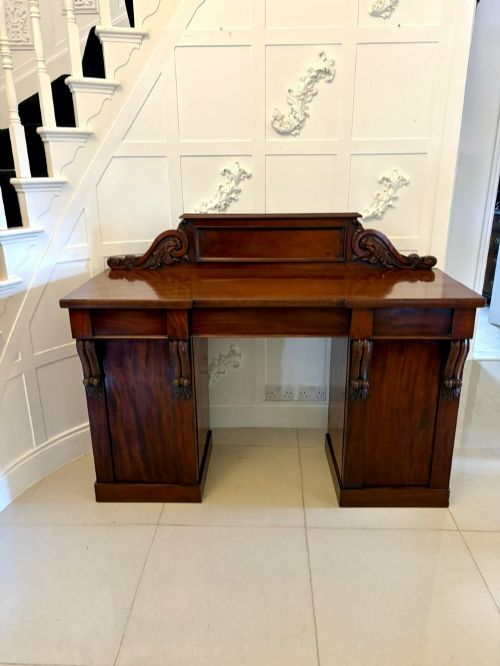
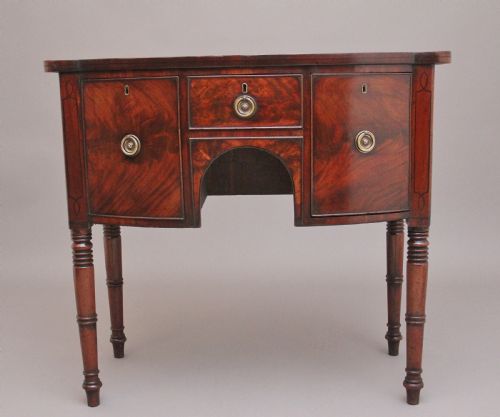
While desks and writing tables form the core of the selection, the evidence also records sideboards, dressing table cabinets and secretary bookcases that share the characteristic kneehole arrangement or timber vocabulary. These items range from diminutive George II proportions to later nineteenth century iterations and early twentieth century writing tables.
Origins stretch from the height of the Georgian cabinetmaker's art through to Edwardian interpretations, maintaining the timber framework that defines the group. Buyers encounter both restrained Georgian forms and decorative revival pieces bearing inlaid details.
How they were made
Construction relies upon solid mahogany and flame mahogany veneer applied to secondary framing timbers, providing the dense reddish brown ground characteristic of the group. Cabinetmakers shaped and joined these panels to create pedestal carcasses and writing surfaces designed for daily service.
Decoration incorporates boxwood inlay, satinwood details and brass hardware such as drop handles and escutcheons to punctuate the dark timber grain. Wood inlay techniques create geometric or linear banding across drawer fronts and cabinet doors.
Certain kneehole desks conceal a secret central drawer hidden behind the kneehole door, offering a private hiding place for letters.
What varies in quality
The degree of figuration in the mahogany veneer separates standard cabinet work from exceptional pieces, particularly where flame mahogany is selected for drawer fronts and top surfaces. Grain alignment across multiple drawers reveals the care taken by the original maker.
The sophistication of the internal secondary timbers and the precision of the boxwood or satinwood inlay define the standing of a desk. Refined proportions, such as diminutive scales found in eighteenth century examples, distinguish the finer workshops from volume production.
The Mahogany Kneehole Cabinet Glossary
- Flame mahogany
- A veneer cut from the fork of the mahogany tree where the branch meets the trunk, producing a rippling, flame like pattern. This figuring was prized for principal display surfaces on eighteenth century and Regency furniture.
- Kneehole
- A recessed space beneath the central section of a desk, cabinet or dressing table intended to accommodate the user's legs while seated. In pedestal furniture, this recess is flanked by vertical banks of drawers.
- Boxwood inlay
- Narrow strips or shaped pieces of pale boxwood inserted into a contrasting dark mahogany ground to form borders or motifs. This decorative technique appears on Georgian and later revival cabinetry.
- Secretary bookcase
- A dual purpose cabinet combining a writing drawer or fall front desk compartment with upper glazed shelving for books. The form merges storage with a functional writing surface.
- Bowfront
- A convex curved cabinet front that swells outward in the centre, softening the linear angles of a sideboard or desk. This profile appears across eighteenth century and later pieces.
Mahogany Kneehole Cabinet: Frequently Asked Questions
What is a kneehole desk?
A kneehole desk is a form of pedestal furniture featuring a recessed central space for the user, flanked by vertical columns of small drawers. A hidden cupboard is often set deep within the kneehole itself.
Such pieces were designed for private correspondence and administrative tasks in domestic settings, offering substantial storage within a compact footprint.
How do I date a mahogany cabinet?
Dating relies upon examining the construction methods, secondary timbers, handle hardware and stylistic vocabulary of the piece. Eighteenth century examples typically display hand cut dovetails and solid timber framing.
Later Victorian and Edwardian pieces often incorporate machine sawn components, revival motifs and differing veneer thicknesses that reflect the period of manufacture.
Where were these cabinets used?
These cabinets served in private libraries, drawing rooms and private chambers where space was at a premium yet functional writing surfaces were required. Their finished backs sometimes allowed them to stand away from the wall.
In modern interiors, their modest proportions make them suitable as dressing tables, hallway pieces or compact writing desks.
What timber was used?
Mahogany forms the primary structural and visual material across these listings, often enhanced by flame mahogany veneer for figured surfaces. Cabinetmakers supplemented this with satinwood and boxwood for decorative inlay.
Internal partitions and drawer linings frequently employ secondary woods like oak or pine depending on the date and regional workshop origin.