


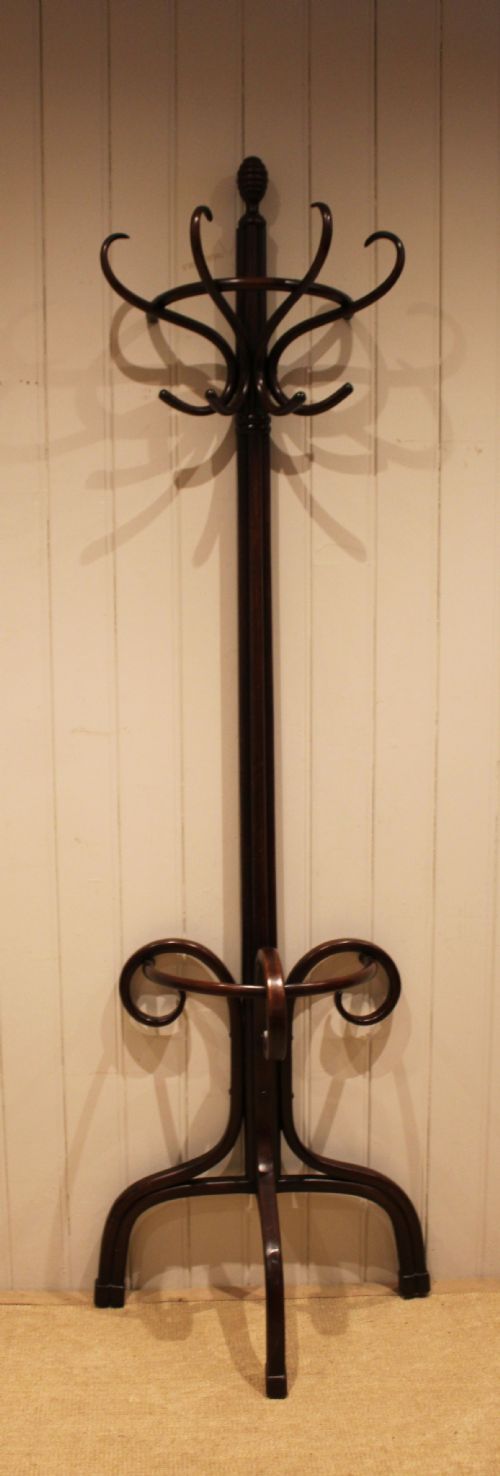


Mahogany Hat Tree
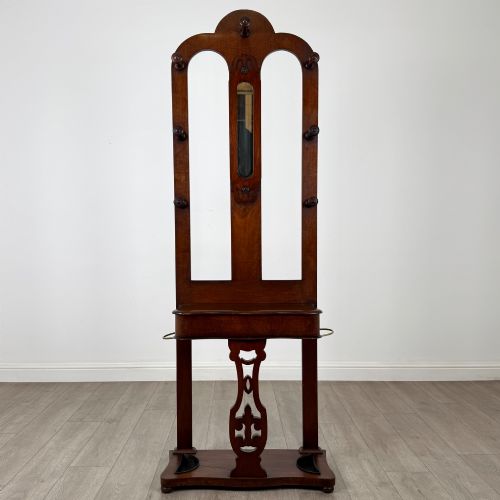
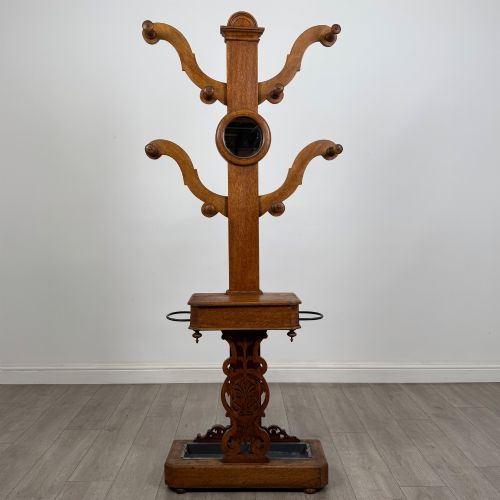
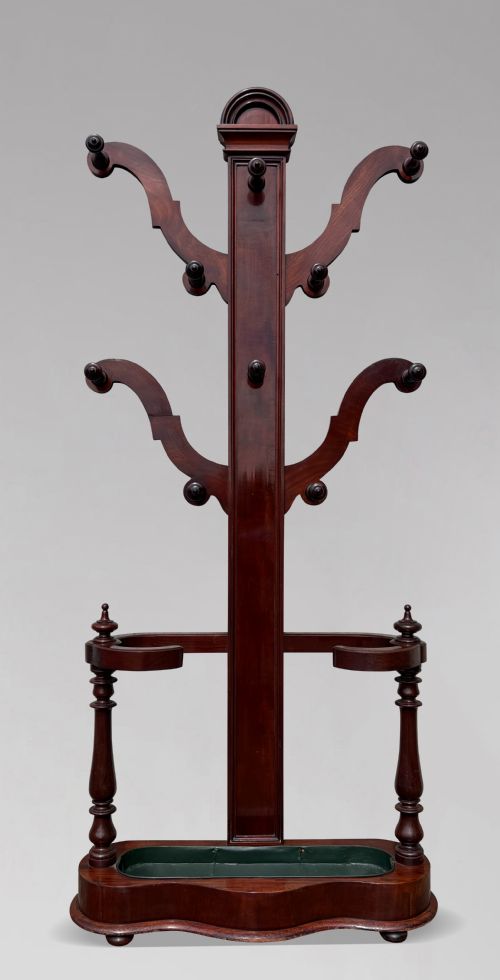
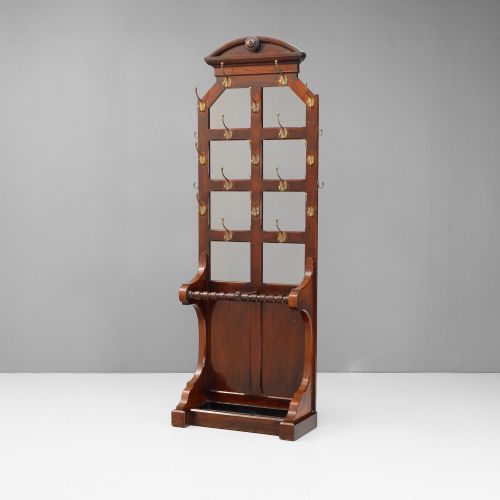
A mahogany hat tree organises the hallway with timber uprights, hooks and mirrors, offering a sturdy place for coats, hats and umbrellas.
Mahogany Hat Tree
A mahogany hat tree serves as a grand entrance hall piece designed to hold outdoor garments, headwear and walking sticks. These functional furnishings appear primarily in Victorian iterations, alongside Edwardian, Arts and Crafts, and Regency examples.
The form frequently combines upright timber structures with incorporated mirrors, marble shelves, glove boxes and umbrella wells. Examples span tall column designs, bentwood shapes, and heavily carved hall stands featuring brass or metal hooks.
Victorian pieces dominate the selection, often incorporating ceramic tiles or cast iron elements alongside the primary timber. Buyers will also encounter specialised variations such as wig stands and folding clothes racks.
How they were made
Cabinet makers utilised solid mahogany and mahogany veneers for the main structural framework, shaping upright columns, back panels and cornices. Timber preparation involved careful turning, carving and joining to support the weight of heavy winter coats.
Secondary materials enhanced both utility and visual contrast, incorporating inset brass hooks, cast iron frames, and polished marble shelves. Glass mirrors and ceramic tiles often appeared mounted into the backboards of nineteenth-century pieces.
Listings feature mahogany alongside glass, brass, marble, cast iron, and ceramic elements across Victorian and Edwardian periods.
What varies in quality
The standard of carving and timber selection dictates the distinction between standard hall furniture and exceptional pieces. Finely figured mahogany grain, intricate hand-carved ornamentation, and substantial proportions separate superior items from simpler workshop output.
The integration of auxiliary materials signals higher grade production, particularly thick bevelled mirror glass, polished marble inserts, and robust brass or bronze hardware. The structural soundness of the central column and the original stability of the base determine long-term durability.
Ellen E. Houghton of Minton
The Mahogany Hat Tree Glossary
- Hall stand
- A large piece of hall furniture combining coat hooks, a mirror, a small shelf or drawer, and umbrella holders. These served as central storage units in grand entranceways.
- Bentwood
- Wood softened by steam and bent into curved shapes, commonly seen in lightweight stands and racks. This technique allowed for flowing, organic structural forms.
- Wig stand
- A smaller pedestal or stand traditionally used for resting and powdering wigs. Georgian examples display particularly refined turning and proportions.
- Marble shelf
- A polished stone surface inset into the centre of a hall stand, often positioned above a small glove drawer or umbrella trough. It provided a durable drop-zone for keys and calling cards.
- Tile insert
- A decorative ceramic tile incorporated into the wooden backboard of a hall stand. Many feature pictorial scenes or floral motifs from potteries like Minton.
Mahogany Hat Tree: Frequently Asked Questions
Where did these stand in a house?
A mahogany hat tree traditionally stood in the entrance hall or vestibule of a home. It provided an immediate station for visitors and residents to deposit outdoor garments upon arrival.
The placement near the front door ensured that hats, coats, and walking sticks were readily accessible when leaving the house.
How do I care for the wood?
Maintenance requires keeping the mahogany away from direct heat sources and dramatic humidity fluctuations. Dusting with a soft cloth preserves the polished timber surface without abrasive buildup.
Periodic application of appropriate wax feeds the grain and maintains the natural lustre of the nineteenth-century finish.
What are the marble shelves for?
The marble shelf provided a cool, durable surface for dropping small personal items like calling cards, gloves, and keys. It also offered a practical resting place that resisted water marks from damp items.
Beneath this shelf, makers frequently incorporated small drawers or partitioned boxes for storage.
How do I date a hall stand?
Dating relies on observing the stylistic markers, such as the heavy carving of the Victorian period or the simpler linear forms of the Arts and Crafts movement. The presence of specific hardware, mirror bevelling styles, and tile manufacturers also helps narrow the decade of production.
Construction techniques, including the type of joints and screw heads used, further indicate whether a piece belongs to the Regency, Victorian, or Edwardian eras.