


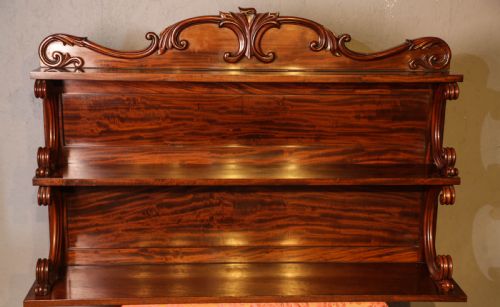


Mahogany Hanging Shelf Unit
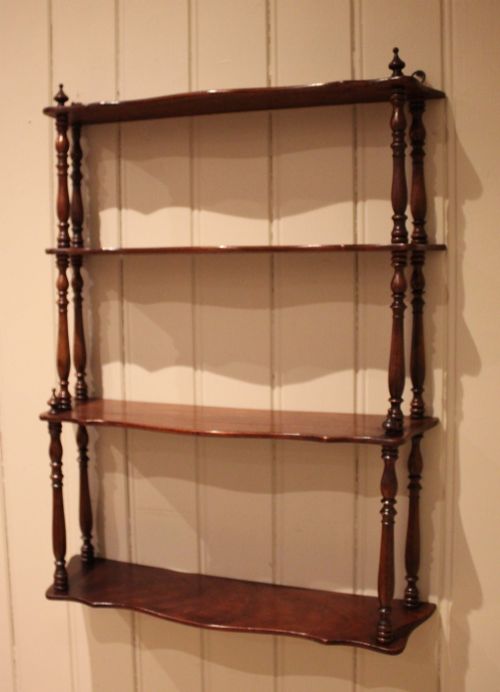
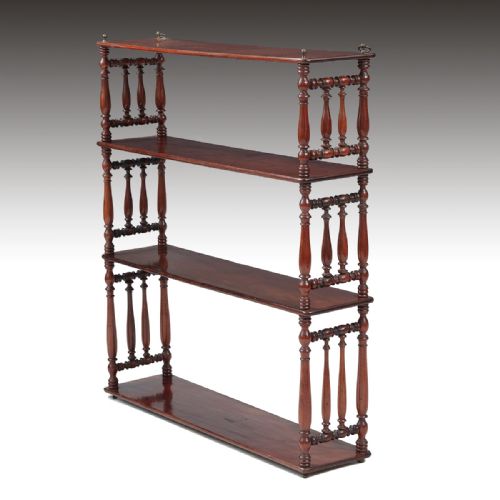
These mahogany hanging shelf unit designs bring practical wall storage from Georgian, Regency and Victorian parlours directly into modern rooms.
Mahogany Hanging Shelf Unit
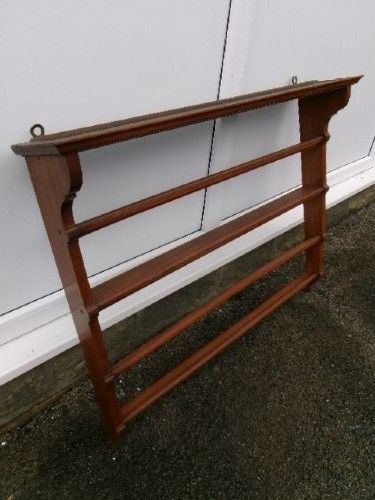
A mahogany hanging shelf unit provides elevated display and storage space, typically featuring tiered open shelves or enclosed wall cabinets designed to be mounted securely. Buyers seeking a mahogany hanging shelf unit encounter forms ranging from simple open bookshelves and waterfall tiers to tambour fronted corner cupboards and glazed wall cabinets.
The pieces span multiple eras, including Georgian, Regency, Victorian, Edwardian, and Arts and Crafts periods, reflecting changing domestic tastes in wall-mounted storage. Wall shelves, corner shelves, and hanging whatnot units appear frequently across the selection.
Originating predominantly from English workshops, these items utilise the timber's natural strength to support books, ceramics, and ornaments without occupying floor space. Surviving examples demonstrate how period cabinetmakers adapted furniture for smaller rooms and corner spaces.
Construction and materials
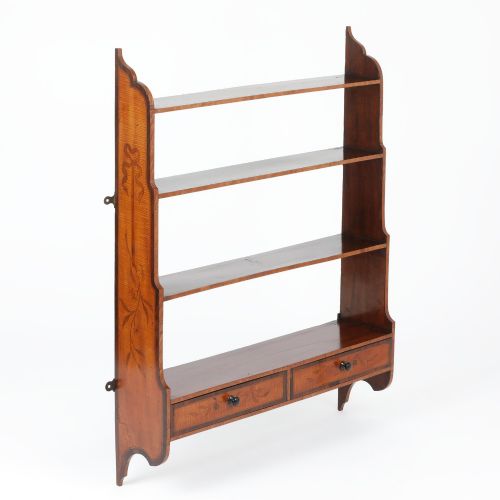
Makers constructed these wall fixtures primarily using solid mahogany and flame mahogany veneer, frequently incorporating secondary timbers such as oak alongside decorative inlay of satinwood. Brass brackets, hanging loops, and hardware provide both structural support and visual contrast against the dark wood.
Joinery techniques involve secure wall-mounting provisions integrated into the backboards or framing, alongside fitted shelving supported by shaped brackets or side panels. Glass panels and tambour doors appear on enclosed cabinet variants, requiring precise sliding or hinged mechanisms.
Mahogany Hanging Shelf Unit Retail Price Guide 2026
Typical asking prices for mahogany hanging shelf unit among the pieces listed under this phrase on Sellingantiques today, from the lower quarter to the upper quarter. They describe what is for sale here now, not the wider market.
Listings feature mahogany, satinwood, and rosewood alongside structural iron and brass hardware.
Assessing quality in construction and detail
Quality separates standard utilitarian shelving from finer decorative examples through the selection of timber figure, such as flame mahogany veneer, and the crispness of inlaid satinwood stringing. Superior pieces display thoughtful proportions, balanced tier spacing, and meticulous attention to visible edge banding.
The integration of functional hardware, including brass fittings and secure hanging attachments, indicates the original grade of manufacture. Cabinetwork precision, such as the smooth operation of tambour doors in corner cupboards, distinguishes workshop standards.
The Mahogany Hanging Shelf Unit Glossary
- Tambour
- A flexible shutter made of narrow vertical strips of wood glued to canvas, allowing doors to slide around curved fronts like those found on certain corner cupboards.
- Waterfall
- A style of tiered shelving where each shelf is slightly deeper than the one above it, creating a cascading silhouette popular for bookshelves.
- Whatnot
- A freestanding or hanging set of open shelves designed for displaying ornaments, books, or curiosities in Victorian and Edwardian interiors.
- Stringing
- A narrow strip of contrasting timber, such as satinwood, inlaid into the surface of mahogany to create delicate geometric borders.
- Bow Front
- A convex, curved front elevation that softens the corners of wall cabinets and corner cupboards.
Mahogany Hanging Shelf Unit: Frequently Asked Questions
How do I hang a heavy mahogany wall shelf safely?
Wall-mounted units require secure fixing directly into wall studs or the use of appropriate cavity anchors rated for the combined weight of the timber and intended objects.
Professional installation ensures the internal hanging brackets bear the load safely without pulling away from the plaster.
What rooms suit a hanging shelf unit best?
These compact fixtures suit studies, living rooms, and hallways where floor space is limited but display or book storage is required.
Corner units make efficient use of dead architectural space in smaller dining rooms or bedrooms.
How do Georgian and Victorian styles differ?
Georgian examples tend to feature restrained classical proportions with clean lines and subtle satinwood stringing.
Victorian and later pieces often incorporate bolder mouldings, richer veneers, or Gothic and Arts and Crafts influences.
How should I clean and maintain mahogany surfaces?
Regular dusting with a dry, soft cloth preserves the polished finish without building up unnecessary wax layers.
Direct sunlight should be avoided to prevent the natural mahogany tones from fading unevenly over time.