

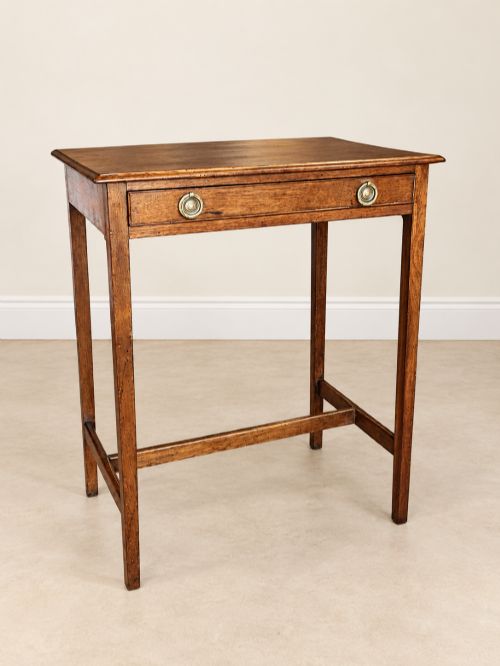
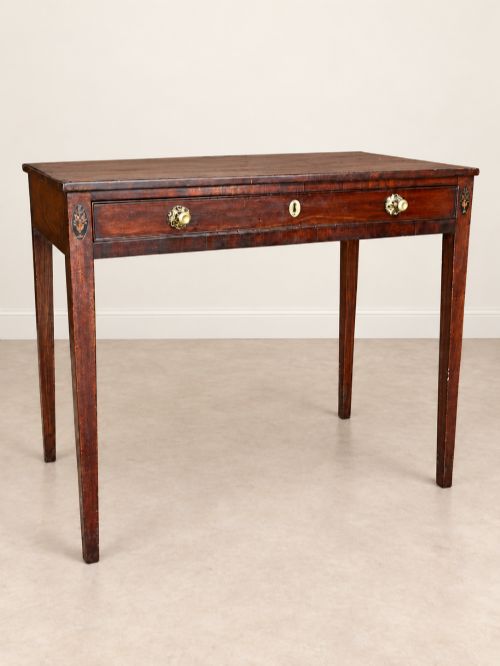
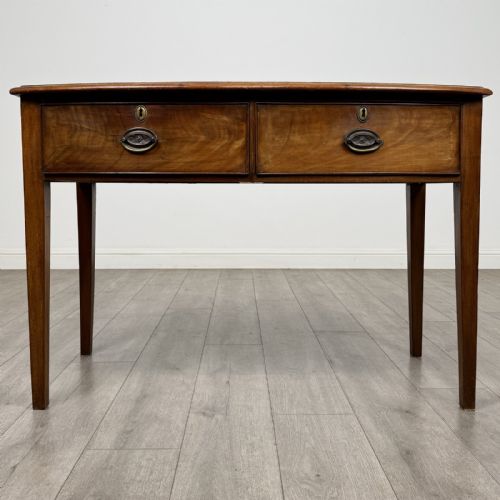
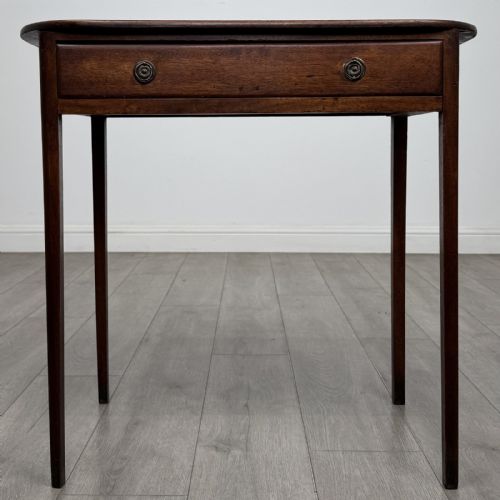
Mahogany Hallway Desk
A mahogany hallway desk offers a practical surface and rich timber grain for any entrance, bridging the gap between utility and period charm.
Mahogany Hallway Desk
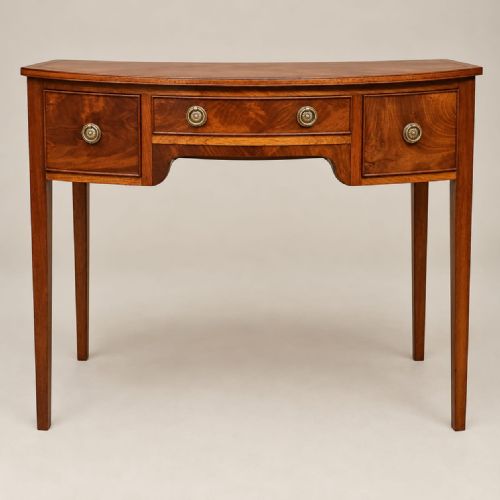
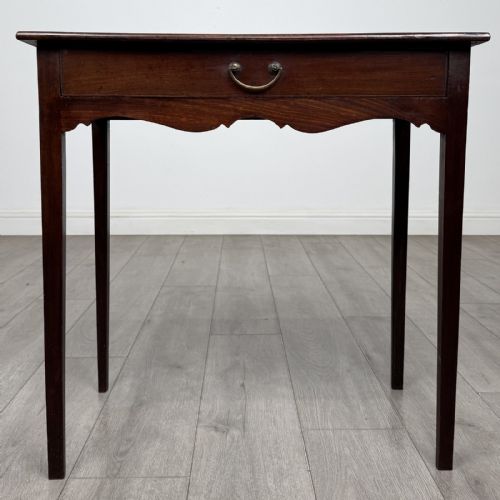
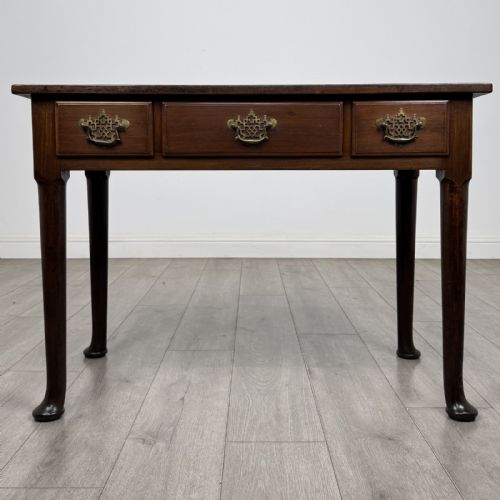
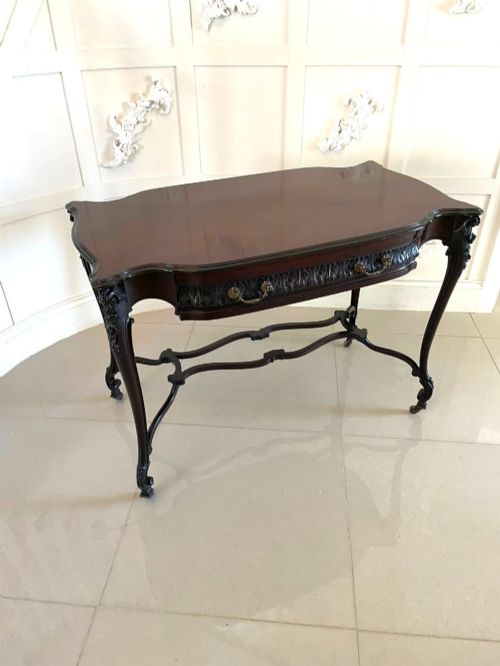
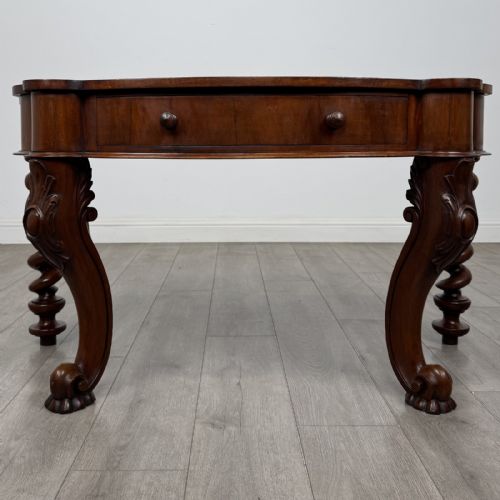
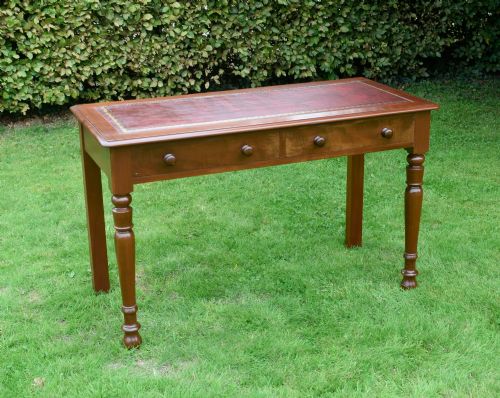
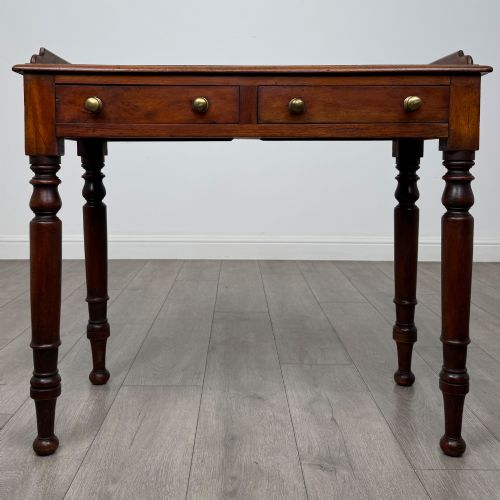
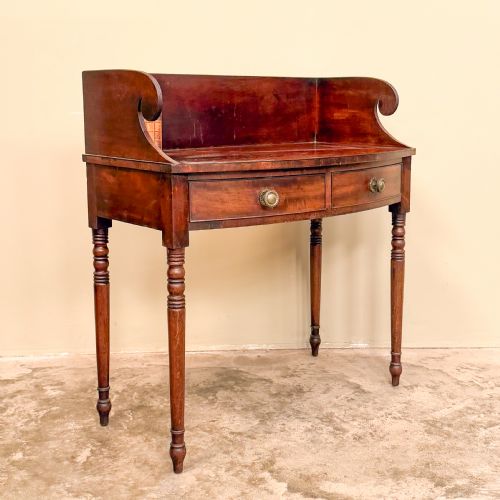
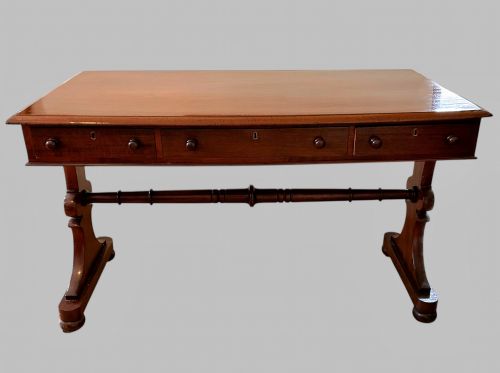
When you search for a mahogany hallway desk, you encounter a selection of compact furniture designed for narrow spaces and passage areas. These pieces span several eras, including the Georgian, Regency, Victorian, and Edwardian periods.
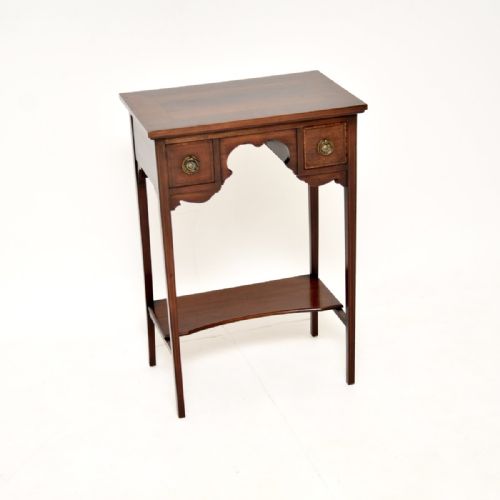
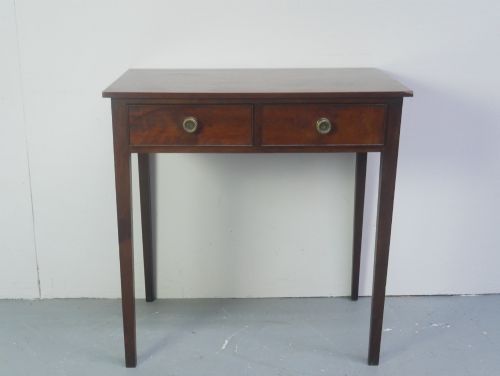
The forms on this page include side tables, writing tables, lowboys, and console tables that serve effectively in an entrance hall. Many date from the 18th and 19th centuries, offering slim proportions suited to modern hallways.
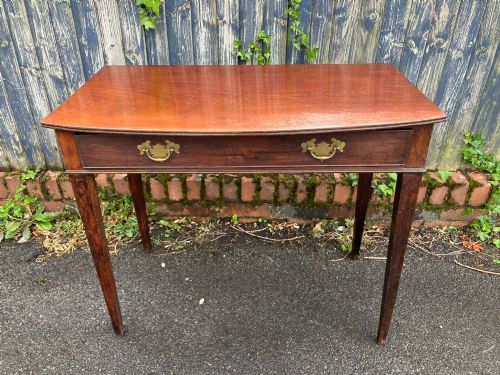
Makers adapted traditional writing desks and side tables into hall furniture by keeping depths shallow. You will find bow-fronted designs alongside straight-edged tables featuring single or multiple drawers.
Materials and construction
Cabinet makers utilised solid mahogany and figured mahogany veneer over secondary timbers to construct these tables. The wood exhibits deep reddish-brown tones that deepen with age.
Details incorporate contrasting elements such as satinwood, ebony, and delicate wood inlay. Brass handles, key escutcheons, and occasional three-quarter gallery surrounds complete the hardware.
Joining techniques reflect the period of manufacture, from hand-cut dovetails in Georgian drawer construction to later 19th-century mechanical production methods.
Mahogany Hallway Desk Retail Price Guide 2026
Typical asking prices for mahogany hallway desk among the pieces listed under this phrase on Sellingantiques today, from the lower quarter to the upper quarter. They describe what is for sale here now, not the wider market.
Several tables feature hidden drawers cunningly built into the frieze to keep clandestine love letters safe from prying eyes.
Judging the standard of execution
Quality rests in the selection of the timber grain and the crispness of any inlaid decoration. Figured veneers and balanced drawer proportions distinguish finer examples from standard utility pieces.
Structural integrity depends on the tightness of the joints and the smooth operation of the drawers. Secondary timbers selected for drawer linings also signal the tier of the workshop.
The Mahogany Hallway Desk Glossary
- Lowboy
- A small dressing table or side table featuring one or more rows of drawers, commonly standing on slender cabriole or straight legs.
- Bow front
- A convex, curved front section of a cabinet or table that softens the rectangular profile of the piece.
- Satinwood
- A durable, yellowish-orange timber native to Ceylon and India, frequently utilised for contrasting inlay work and stringing.
- Gallery
- A raised ornamental border or railing fitted around the edge of a tabletop to prevent items from sliding off.
- Turnover top
- A hinged table top that unfolds to reveal a larger surface, often supported by a swing leg or framework.
Mahogany Hallway Desk: Frequently Asked Questions
How do I use a hall table?
These tables provide a surface in entryways for dropping keys, post, or displaying decorative items. Drawers offer concealed storage for household sundries.
Their shallow depth ensures they do not obstruct narrow corridors or passage routes.
How do I care for mahogany?
Keep the timber away from direct sunlight and heat sources to prevent the wood from drying out and cracking. Regular dusting with a soft, dry cloth preserves the polished finish.
Apply high-grade beeswax occasionally to nourish the grain and maintain the natural lustre.
Are these tables original?
The inventory comprises antique pieces originating from the Georgian, Victorian, and Edwardian eras. Each item carries the construction methods and wear consistent with its age.
Review individual descriptions to confirm the specific period of manufacture for each piece.
What styles are available?
The selection includes formal Georgian designs, elegant Regency forms, and decorative Edwardian or revival pieces. Details range from simple straight legs to inlaid satinwood borders.
Various stylistic revivals also appear among the late 19th-century offerings.