
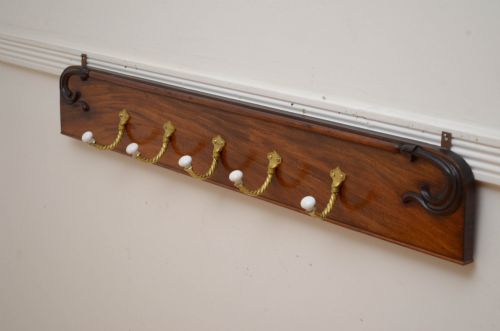
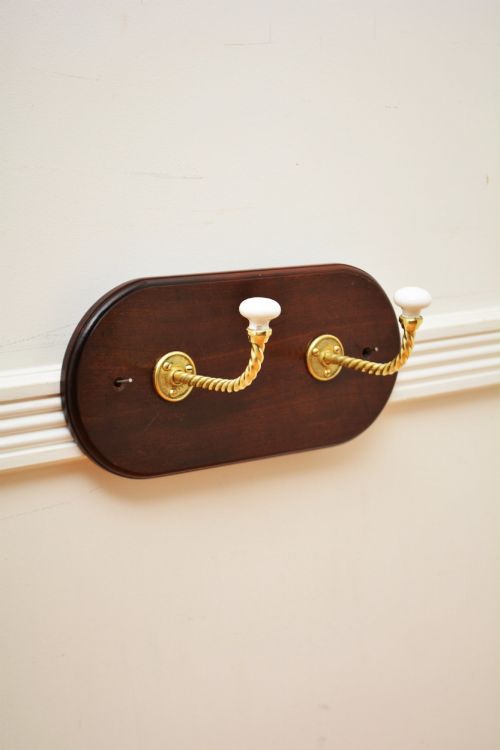


Mahogany Hallway Coat Rack
These mahogany hallway coat rack pieces organise daily entranceways with warm timber and sturdy hooks.
Mahogany Hallway Coat Rack
A mahogany hallway coat rack brings practical entranceway storage through wall-mounted bars, freestanding stands, and integrated hall trees. These fixtures appear across Victorian, Edwardian, and William IV periods, spanning the nineteenth and early twentieth centuries.
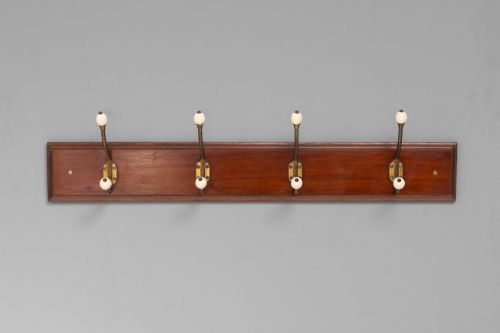
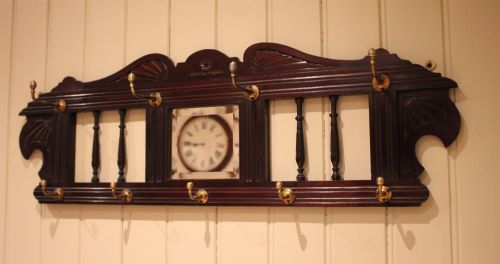
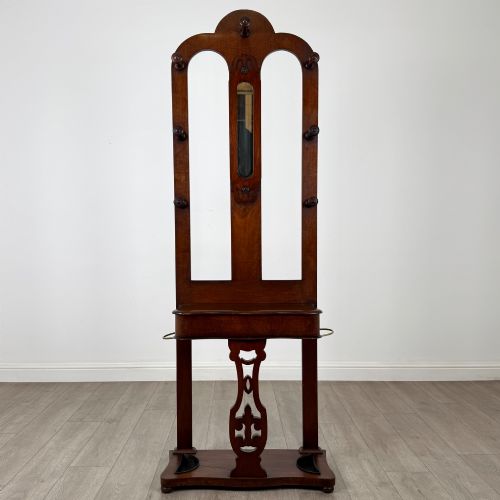
Most examples encountered here are wall-mounted coat racks or substantial Victorian hall stands equipped with mirrors, marble shelves, and umbrella compartments. The timber is predominantly mahogany, often paired with brass, ceramic, or cast iron hardware.
Originating in English homes, cloakrooms, and reception halls, these items range from simple rows of mounted hooks to architectural hall trees. They combine structural timber frames with functional metal fixtures designed for heavy outerwear.
How they were made
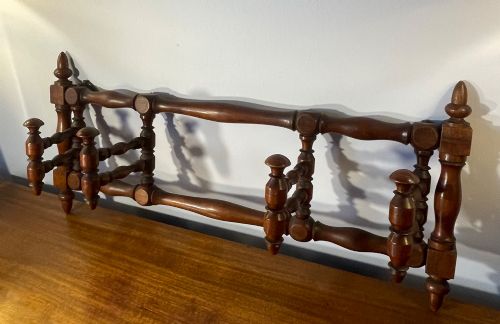
Makers constructed these fixtures using solid and veneered mahogany, frequently turning or carving the timber into twisted rope patterns or classical mouldings. Frames incorporated cast iron, brass, and bentwood elements to support heavy garments and hats.
Functional additions such as marble shelves, bevelled mirror plates, and ceramic or brass hooks were integrated into the wooden framework. Mounting plates and hanging brackets utilised durable cast brass and iron to ensure wall stability.
Some Victorian hall stands doubled as secret umbrella holders, keeping damp weather firmly out of sight.
What varies in quality
Construction scale and proportion also define the range, distinguishing simple hanging racks from large architectural hall stands with multiple compartments. The retention of original brass, ceramic, or cast iron hooks further separates standard utility items from finer examples.
The Mahogany Hallway Coat Rack Glossary
- Hall tree
- A freestanding entranceway furniture piece combining a coat rack, mirror, umbrella stand, and sometimes a seat or marble shelf. These tall structures served as central cloakroom storage in large nineteenth-century homes.
- Bentwood
- Wood softened by steam and bent into curved shapes, commonly utilised for lightweight hat and coat hooks. This technique created smooth, continuous arches without traditional joinery.
- Bevelled plate
- A mirror glass with angled, polished edges that catches the light differently than flat plate glass. It typically appears set into the backboards of Victorian hall stands.
- William IV
- A British architectural and furniture style spanning the 1830s, characterised by robust classical forms and heavy proportions. Pieces from this era often feature bold turning and rich mahogany surfaces.
Mahogany Hallway Coat Rack: Frequently Asked Questions
How do I mount a wall rack?
Wall-mounted racks require secure fixings into wall studs or solid masonry to bear the weight of heavy winter coats and hats. The mounting plates should be screwed firmly through the provided brass or iron eyelets.
Ensure the height accommodates daily reach while distributing garment weight evenly across the entire wooden rail to prevent strain on the wall fixings.
What is a hall stand?
A hall stand is a freestanding entranceway piece that combines coat hooks, a mirror, and often a marble shelf or umbrella wells. It functioned as a complete cloakroom station for visitors and residents alike.
These pieces anchor a hallway by providing both vertical storage and a surface for small items like keys and calling cards upon entry.
How do I care for mahogany?
Mahogany requires regular dusting with a soft, dry cloth and occasional treatment with suitable furniture wax to maintain its polished sheen. Avoid placing wooden pieces in direct sunlight or near heat sources to prevent timber cracking.
Brass and ceramic hooks can be cleaned gently around the timber joints to preserve the original metal finish without staining the surrounding wood.
How do I date a piece?
Dating relies on stylistic clues, hardware materials, and construction methods characteristic of Victorian, Edwardian, or William IV eras. Plain mahogany rails often date to the late nineteenth century, while heavier architectural hall stands typically reflect mid-Victorian design.
Examining the type of screw heads, mirror bevelling, and hook casting provides further evidence of the period in which the item was constructed.