
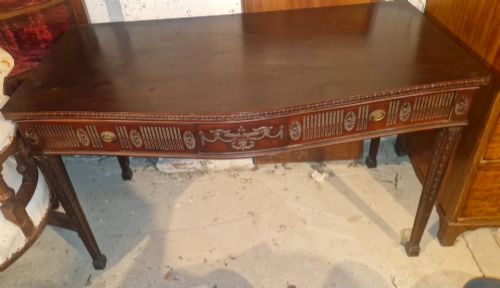
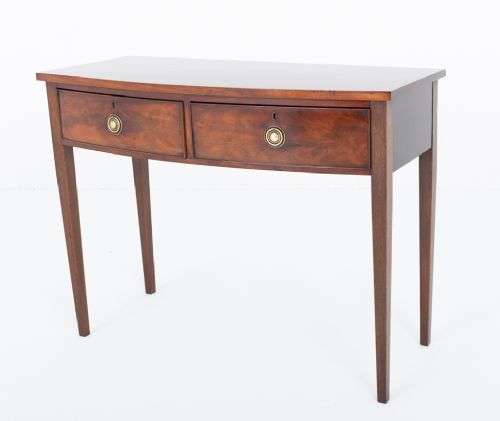
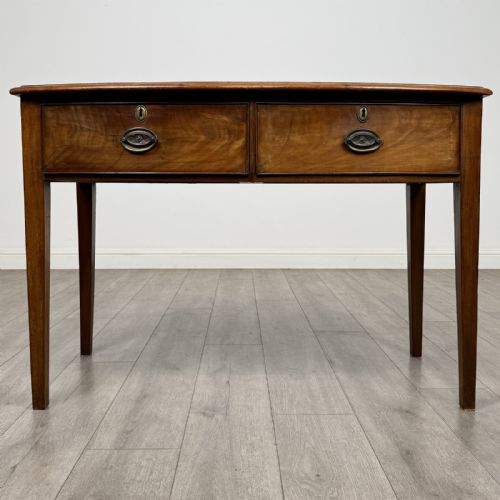
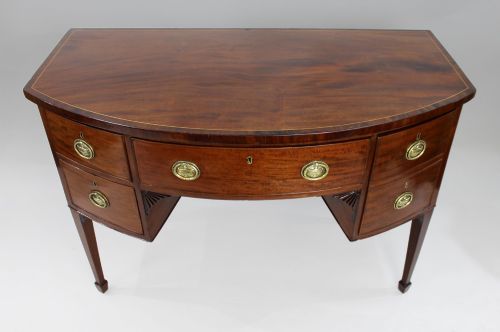
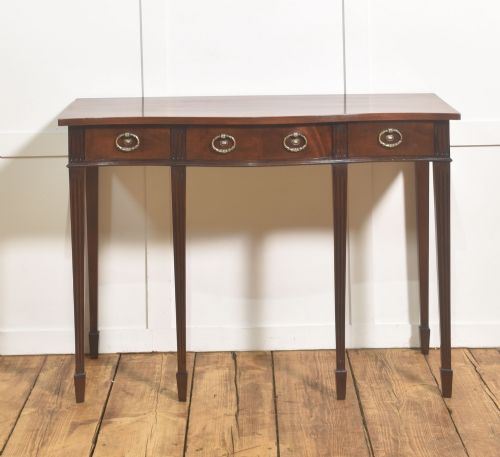
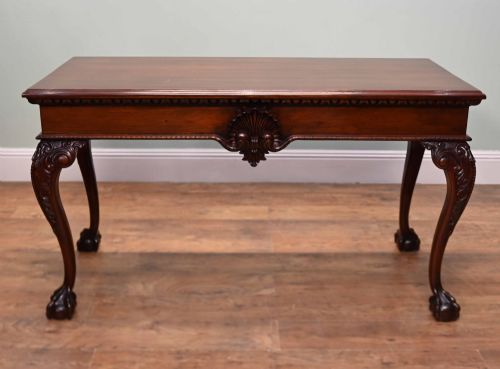
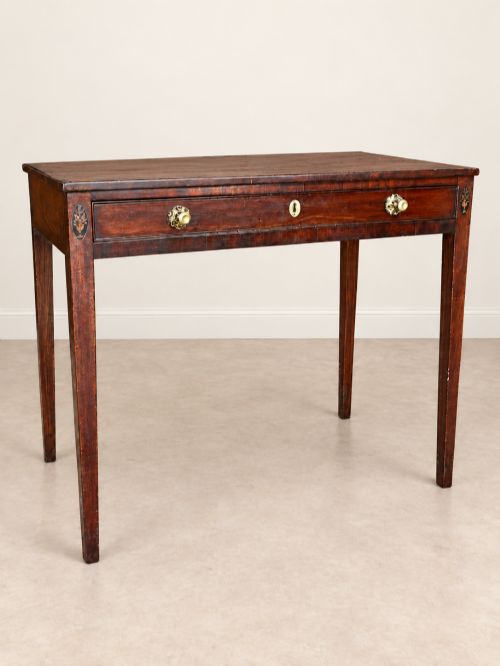
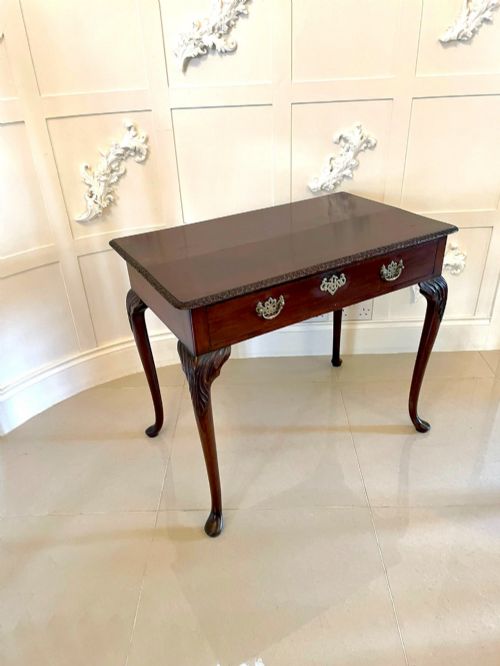
Mahogany Hall Server
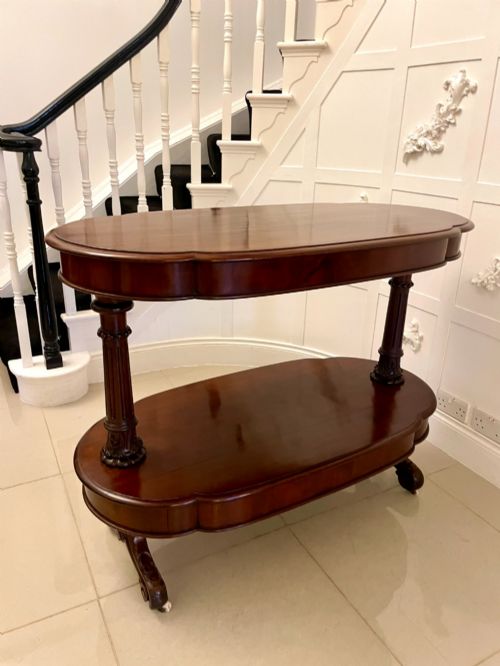
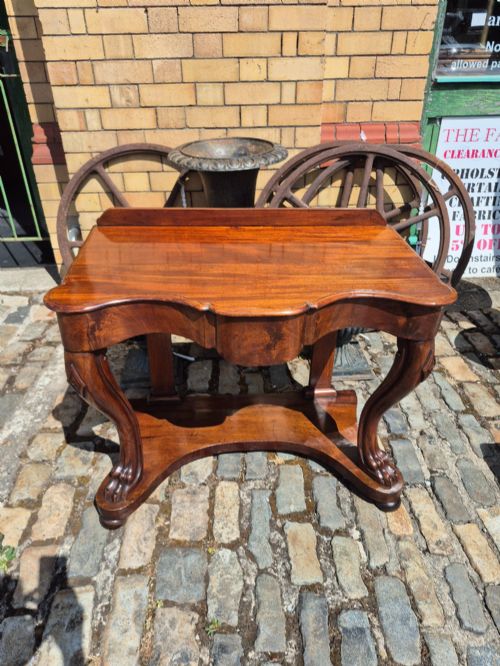
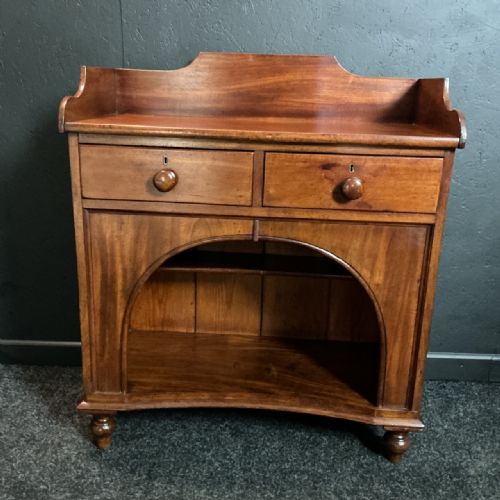
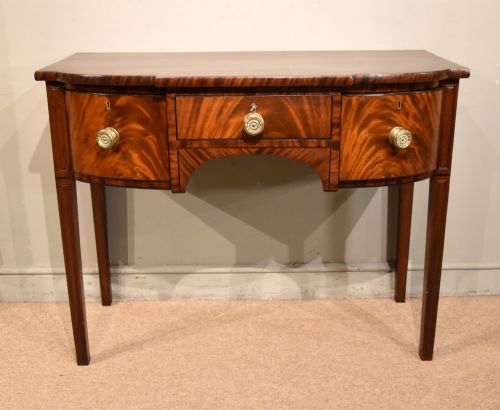
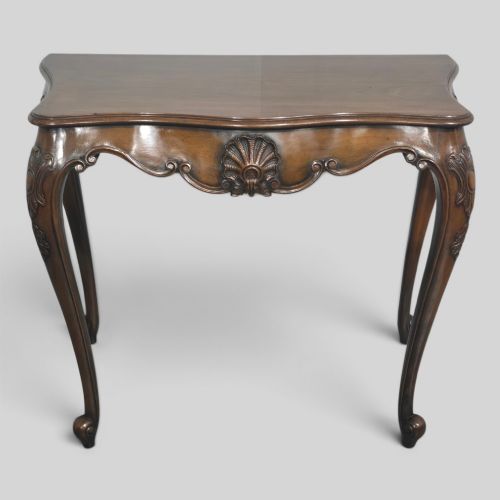
A mahogany hall server is a substantial timber table designed for an entrance passage to hold correspondence or serving vessels.
Mahogany Hall Server
A mahogany hall server sits primarily in entrance halls, serving corridors and reception spaces to hold practical items or display decorative objects. When searching for a mahogany hall server, you encounter forms ranging from simple side tables and lowboys to grand serving tables, sideboards and console tables.
The pieces spanning these listings date from the eighteenth century through the Georgian, Regency and Victorian eras up to the twentieth century. Earlier examples lean towards Georgian and George II styles, while later options include Edwardian and 1930s interpretations.
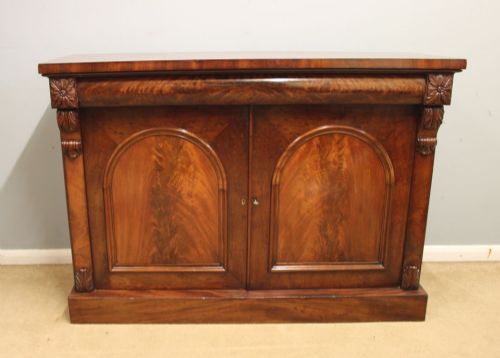
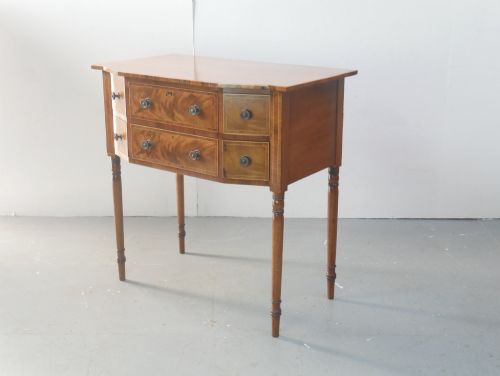
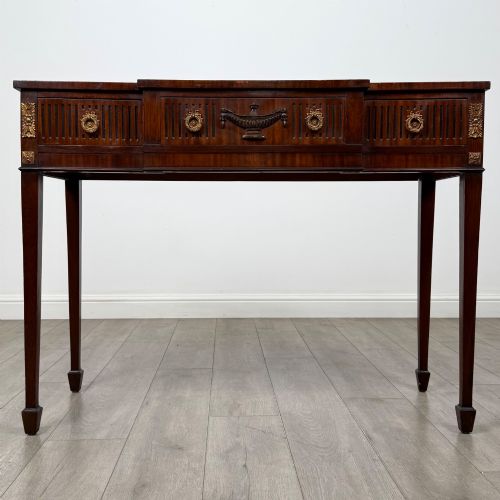
Object types on this page include console tables, side tables, sideboards, serving tables, side cabinets and lowboys. The most frequent encounters are side tables and console tables dating from the Georgian and Victorian periods.
How they were made
Cabinet makers utilised solid timber and veneers, frequently employing flame mahogany veneer to create rich figuration across tabletops and drawer fronts. Carcass construction relied on dense tropical hardwood complemented by secondary timbers for drawer linings.
Decorative detailing incorporates boxwood and ebony inlay, brass mounts and hardware, and intricate carvings such as Gothic pierced brackets. Surface treatments highlight the natural grain of the wood through polishing rather than heavy pigmentation.
Listings span the eighteenth, nineteenth and twentieth centuries, featuring materials such as brass, boxwood inlay and flame mahogany veneer.
What varies in quality
The distinction between ordinary and exceptional work rests on timber selection and figure matching. Grain patterns with strong flame figuring require superior stock and careful book-matching across wide surfaces.
Joinery execution defines the durability of the carcass and drawers. Precise dovetailing and well-fitted internal framing separate standard production from superior cabinet work.
W Williamson & Sons of Guildford·Elkington & Co
The Mahogany Hall Server Glossary
- Lowboy
- A small table with drawers, typically standing on four tall legs and dating from the eighteenth century. These pieces function well as compact servers.
- Console table
- A table designed to fix against a wall or stand freely in a hallway, often supported by ornate brackets or legs. They provide narrow surface space for entryways.
- Flame mahogany veneer
- A thin slice of timber cut from where a branch joins the main trunk, showing a characteristic flickering flame pattern. Cabinet makers applied this to focal areas.
- Serpentine front
- A furniture front curved with a convex centre flanked by concave wings. This shape requires skilled woodworking to achieve fluid lines.
- Dovetail
- A joint formed by interlocking wedge-shaped fingers used in drawer construction. It provides high tensile strength without mechanical fasteners.
Mahogany Hall Server: Frequently Asked Questions
Where should I place a mahogany hall server?
These tables suit entrance halls, corridors and dining rooms where surface space is needed without blocking thoroughfares. Their narrow profiles allow them to sit flush against walls.
Position them beneath mirrors or paintings to create a balanced focal point upon entering a home.
How do I care for mahogany surfaces?
Dust regularly with a soft, dry cloth to prevent particulate accumulation on the polished timber. Avoid placing damp items or uninsulated vessels directly on the wood.
Apply quality beeswax periodically to nourish the grain and maintain the natural lustre of the finish.
How do I distinguish Georgian from Victorian pieces?
Georgian examples often display restrained Neoclassical lines, refined proportions and subtle inlay work. Carving tends to be crisp and architectural.
Victorian pieces frequently feature heavier proportions, denser carving and bolder figured veneers. They reflect the industrial production capabilities of the nineteenth century.
What is the difference between a server and a sideboard?
A server typically refers to a lighter, more open table or console designed specifically for holding food or correspondence. Sideboards often incorporate enclosed cupboards and more substantial storage compartments.
Both forms share similar stylistic traits across the Georgian and Victorian periods.