






Mahogany Games Room
Mahogany games room pieces bring period entertaining into focus, offering solid timber card tables and scoreboards built for dedicated play.
Mahogany Games Room
A mahogany games room encompasses a focused selection of furniture and accessories designed for leisure, principally card tables, scoreboards, and cue stands. The selection is dominated by Victorian and 19th-century pieces, reflecting the era's enthusiasm for domestic pastimes and structured games.
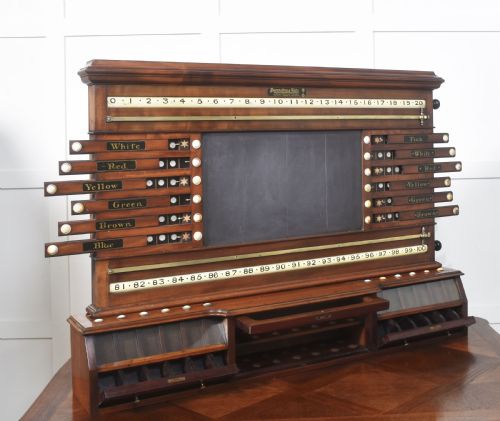
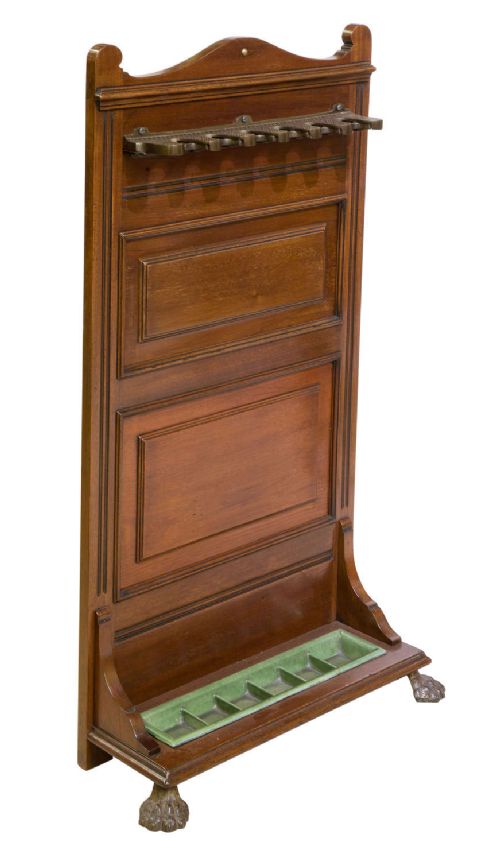
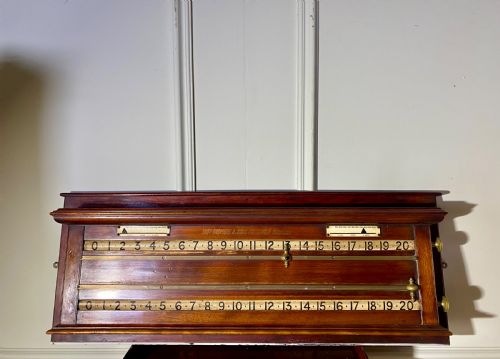
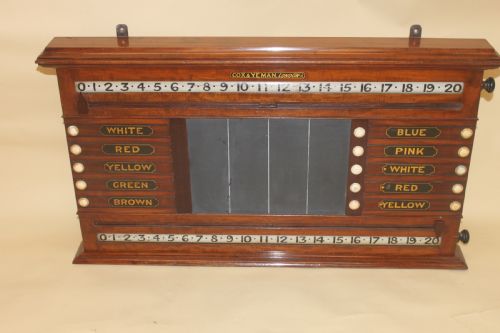
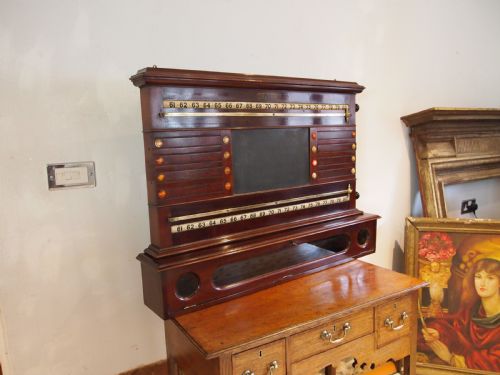
Card tables appear alongside specialised wall-hung scoreboards for billiards, snooker, and pool. Buyers encounter mechanical cue stands and leather-upholstered gaming high chairs alongside golf game tables and specific accessories.
The material consistency across these objects relies heavily on mahogany, often accented with brass, bone, glass, satinwood, boxwood, and rosewood. Pieces range from Regency brass-inlaid card tables to Hepplewhite Revival designs from the Edwardian period.
Construction and materials
Secondary materials such as bone, boxwood, and satinwood appear in inlaid details and scoring markers. Slate and specialised glass elements are integrated into specific gaming accessories and scoreboards of the period.
Leather-upholstered gaming high chairs allowed nineteenth-century spectators to tower over the card table with absolute authority.
Distinctions in craftsmanship
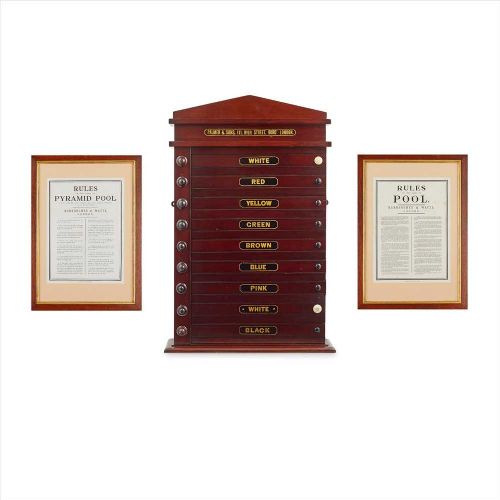
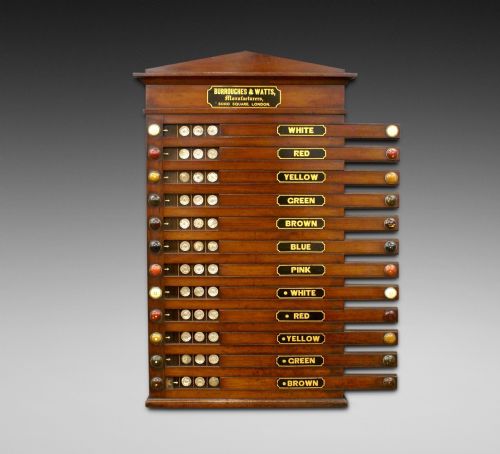
Quality rests in the precision of the timber work and the integrity of moving parts, such as folding card table mechanisms and sliding indicators on scoreboards. Maker attribution elevates certain pieces, particularly those bearing signatures from established firms like Orme & Sons, Thurston & Co, Cox & Yeman, or Burroughes and Watts.
The integration of decorative elements such as brass inlay, boxwood stringing, and leather upholstery defines the finer examples. Simpler utility boards contrast with elaborate multi-game scoreboards that incorporate detailed markers and prints.
Orme & Sons Manchester·Thurston & Co Ltd·Cox & Yeman London·Burroughes and Watts·Palmer & Sons
The Mahogany Games Room Glossary
- Card table
- A folding or swivel-top table designed for card games, often lined with baize or leather. These pieces feature hinged tops that open to reveal a larger playing surface.
- Scoreboard
- A wall-mounted or freestanding wooden board utilising sliding markers, pointers, and dials to track points in billiards, snooker, or pool. Examples frequently display maker plaques from prominent nineteenth-century firms.
- Cue stand
- A specialised piece of furniture or rack designed to hold billiard and snooker cues upright when not in use. Mechanical versions often incorporate internal springs or clips to secure the sticks.
- Hepplewhite Revival
- A late nineteenth or early Edwardian stylistic movement reviving the lighter, elegant furniture designs associated with the eighteenth-century cabinetmaker George Hepplewhite.
Mahogany Games Room: Frequently Asked Questions
How do I identify a Victorian scoreboard?
Victorian scoreboards are typically constructed from mahogany and feature brass sliding pointers, revolving dials, and occasionally manufacturer plates from London or Manchester firms. They were designed to hang on the wall of a billiard room to track various cue sports.
Many retain original bone or boxwood pointers and may include associated prints or scoring instructions from the nineteenth century.
What is a Hepplewhite Revival card table?
A Hepplewhite Revival card table is an Edwardian piece manufactured in the style of eighteenth-century designer George Hepplewhite. It combines mahogany construction with classic proportions intended for card playing.
These tables often feature refined tapered legs and decorative woodwork characteristic of the revival period.
Where were billiard scoreboards placed?
Billiard scoreboards were mounted on the walls of dedicated billiard rooms in substantial nineteenth-century homes and clubs. Their placement allowed players to easily track scores during games of snooker, billiards, and pool.
They were positioned for high visibility and immediate access by players using the table.
What materials are used in these games tables?
The primary timber across these pieces is mahogany, sometimes paired with secondary woods like satinwood, boxwood, and rosewood. Brass hardware, slate, glass, and bone appear as decorative inlays and functional components.
Some seating items also incorporate leather upholstery for gaming comfort.