

Mahogany Furniture Piece
A mahogany furniture piece brings dense timber grain and compact proportion into a room, offering miniature chests, tables, and seating from Georgian and Victorian workshops.
Mahogany Furniture Piece
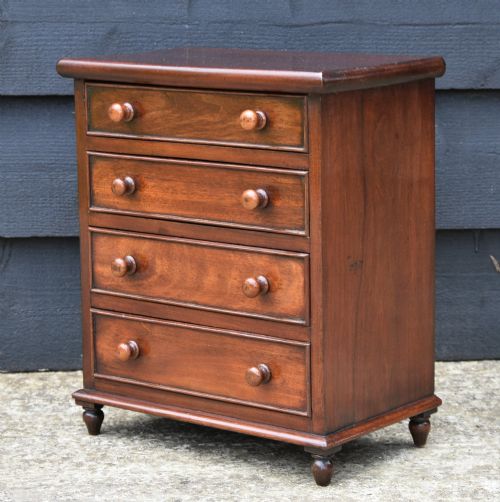
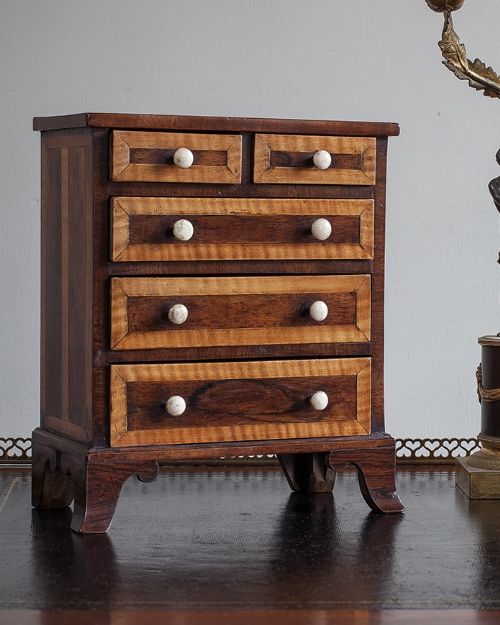
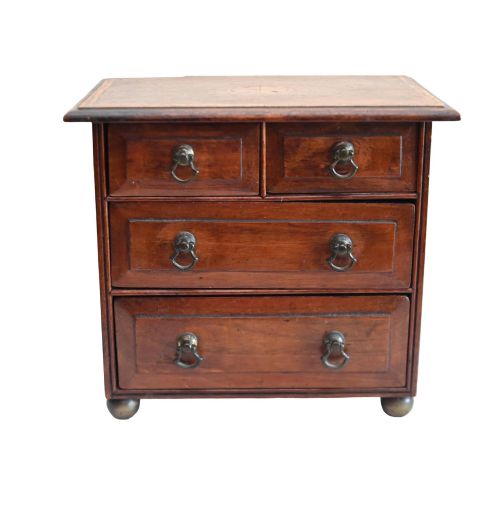
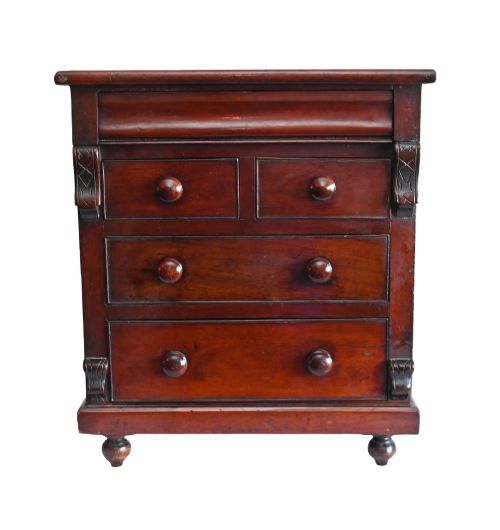
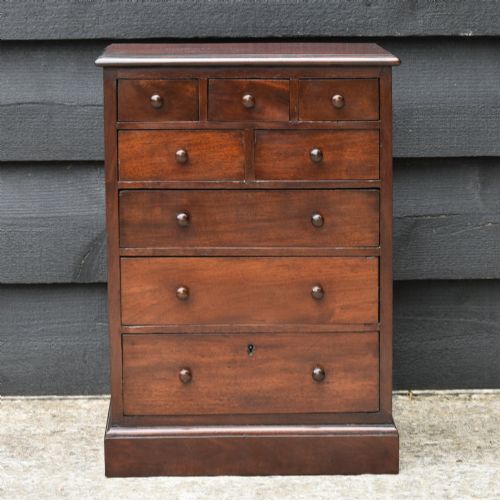
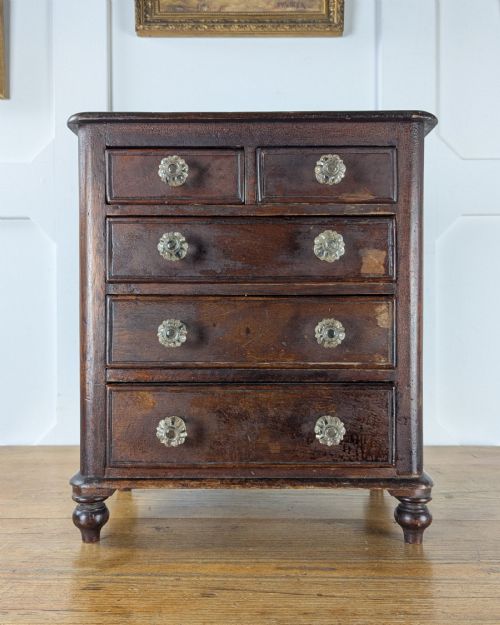
When you search for a mahogany furniture piece, you encounter a collection dominated by miniature chests of drawers and apprentice pieces alongside larger salon and parlour suites from the Georgian, Victorian, and Edwardian eras. These objects span small-scale case pieces like miniature bowfront chests and bureau bookcases, as well as multi-piece seating arrangements designed for formal entertaining.
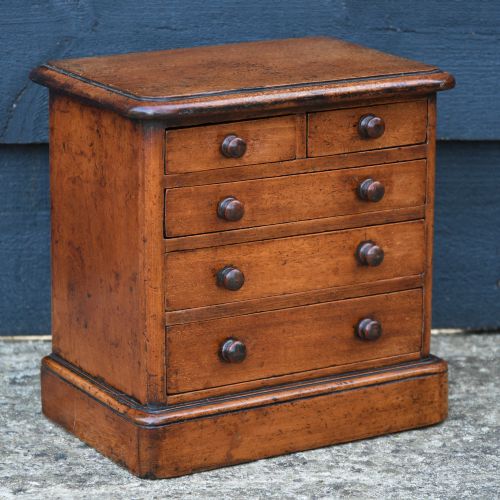
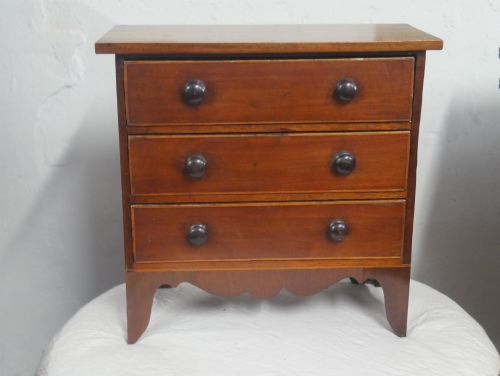
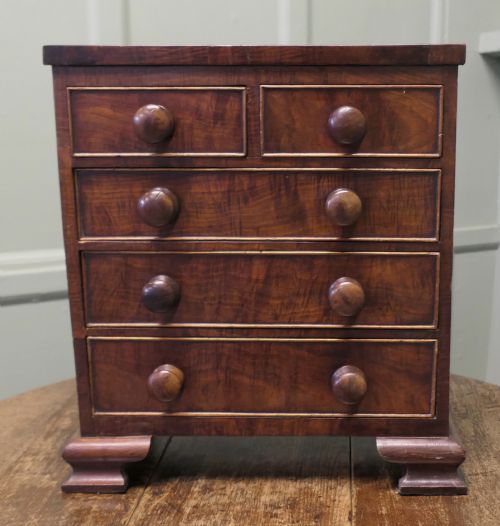
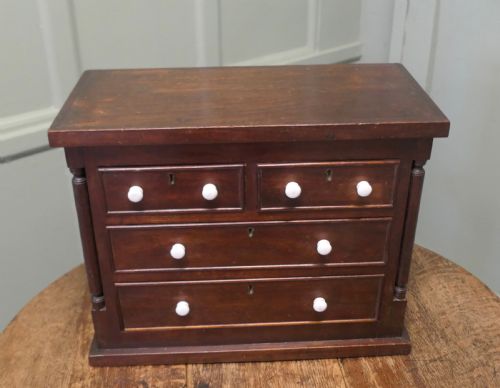
The most common version you meet on this page is the nineteenth-century miniature chest of drawers, often attributed as an apprentice piece or salesman sample. These smaller items replicate the full-sized case furniture of the period, demonstrating precise joinery and proportion down to a fraction of the standard scale.
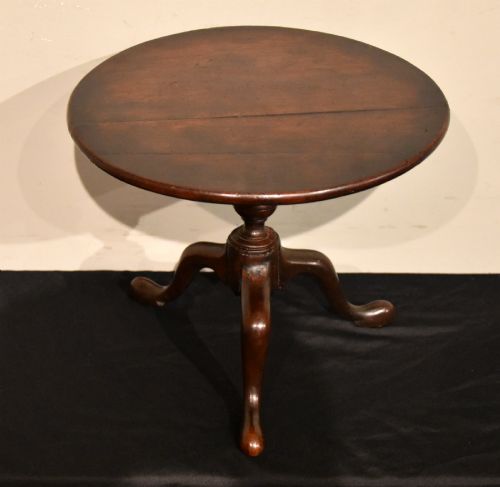
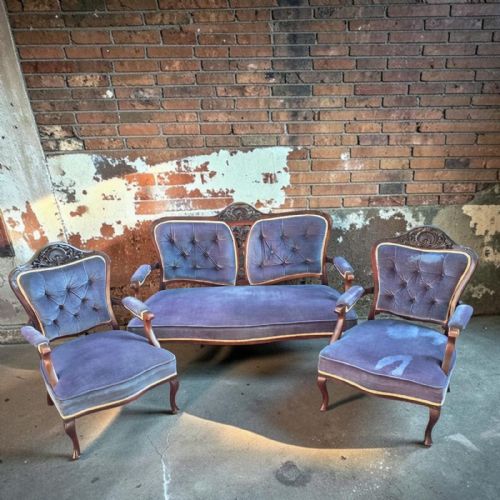
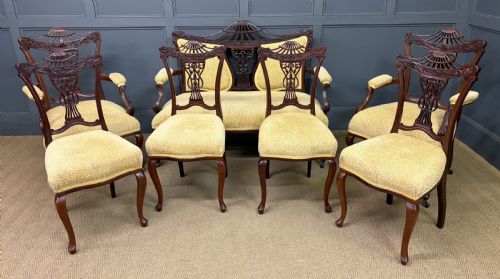
Alongside case pieces, the inventory encompasses occasional tables, tripod tables, wine coolers, and comprehensive upholstered salon suites comprising three to seven matching chairs and settees. These diverse forms reflect both domestic utility and the specialised skill of period cabinet makers working in solid mahogany and related fancy woods.
How they were made
Cabinet makers constructed these objects primarily from solid mahogany, frequently augmented with satinwood stringing, brass fittings, mother-of-pearl inlay, and glass components. Drawer linings often incorporated secondary timbers like pine, while upholstery fabrics completed the larger lounge and parlour suites.
Joinery techniques relied on dovetailed drawer construction, turned feet, and hand-applied French polish to seal and enhance the deep reddish-brown grain of the wood. Miniature case pieces and larger salon suites alike received careful attention to proportion, matching the structural integrity of full-sized domestic furniture.
Listings feature items spanning the 18th, 19th, and early 20th centuries, dominated by Victorian and Georgian periods.
What varies in quality
The upper tier of these pieces displays superior timber selection, evidenced by rich natural patina and careful grain matching across drawer fronts and table tops. Lesser examples reveal plain secondary woods and less disciplined handling of decorative stringing or inlay.
Execution of small-scale detail separates fine craftsmanship from standard production, particularly in the turning of feet, the fit of miniature drawers, and the preservation of original brass hardware. The integration of secondary materials such as bone or satinwood further distinguishes superior workshop output.
The Mahogany Furniture Piece Glossary
- Apprentice piece
- A small-scale item created by a trainee cabinet maker to demonstrate mastery of joinery and proportion before guild admission. These objects mirror full-sized furniture in every structural detail.
- Bowfront
- A convex curved cabinet or chest front that swells outward in the centre. This profile adds visual depth and requires advanced woodworking skill to construct.
- French polish
- A shellac finish applied in multiple thin layers using a rubbing pad. This technique produces a high-gloss surface that emphasises the rich figure of mahogany.
- Tripod table
- A small occasional table supported by a central pillar above three spreading legs. They appear frequently in miniature and full-scale formats from the Georgian period.
- Secretaire bookcase
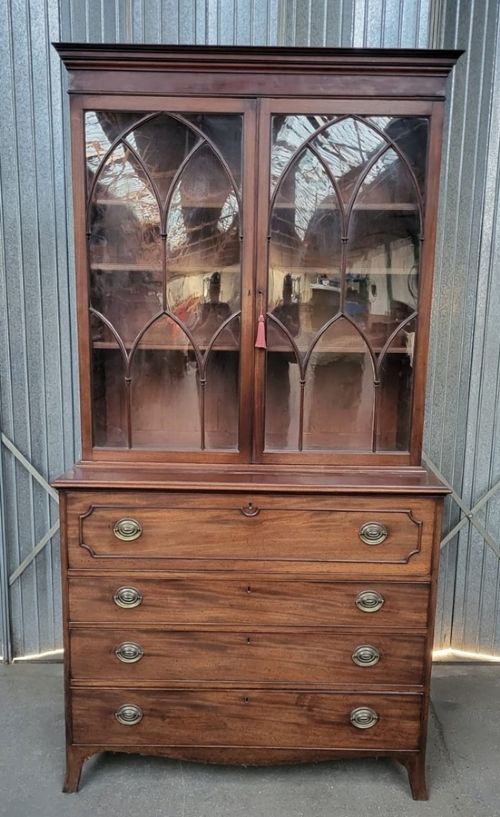
- A tall cabinet combining a shelved upper section with a drop-front writing drawer above lower storage drawers. The internal fittings typically include small compartments and pigeonholes.
Mahogany Furniture Piece: Frequently Asked Questions
What is an apprentice piece?
An apprentice piece is a scaled-down model built by a craftsman in training to prove technical skill to master joiners. These items duplicate the construction methods and proportions of full-sized furniture.
Makers utilised these small objects to test complex designs like bowfronts and dovetailed drawers before tackling larger commissions.
How do I date a mahogany chest?
Dating relies on observing structural characteristics, timber selection, and hardware styles across periods like the Georgian and Victorian eras. Earlier pieces often feature hand-cut dovetails and solid mahogany drawer linings.
Later Victorian and Edwardian examples may introduce machine-sawn elements, secondary woods like pine, and different handle designs reflecting prevailing tastes.
Where were miniature chests placed?
Historical domestic settings used miniature chests as tabletop storage for jewellery, documents, or medical supplies. Their compact size allowed them to sit on larger case pieces or desks.
Today, they function as decorative accent items in smaller rooms where full-scale furniture would overwhelm the floor space.
What distinguishes a salon suite?
A salon suite consists of matching upholstered seating, such as sofas and armchairs, designed for formal entertaining in nineteenth-century drawing rooms. These sets share uniform wood frames, upholstery fabrics, and carved decorative motifs.
Workshop output ranged from three-piece arrangements to larger seven-piece sets featuring exposed mahogany frames and carved details.