

Mahogany French Drawers
When you search for mahogany french drawers, you enter a world of polished timber, marble slabs and disciplined storage built to last centuries.
Mahogany French Drawers
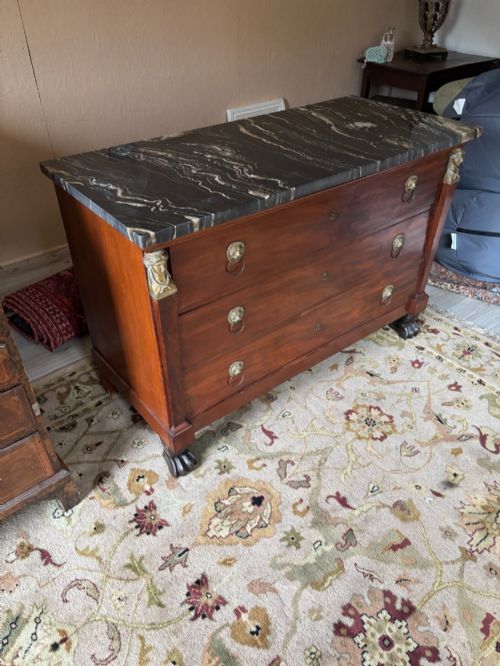
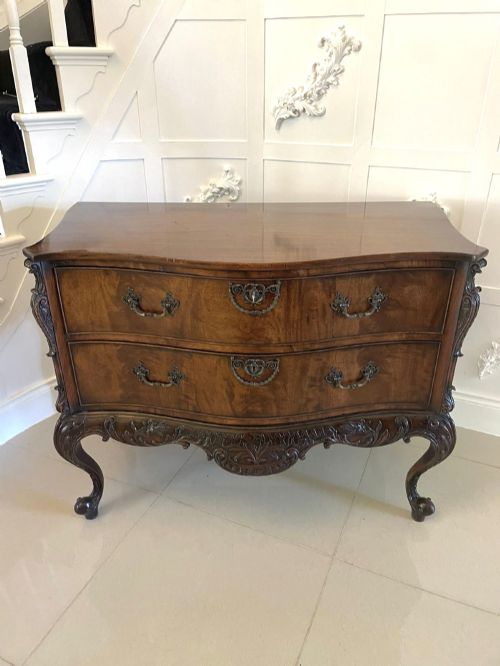
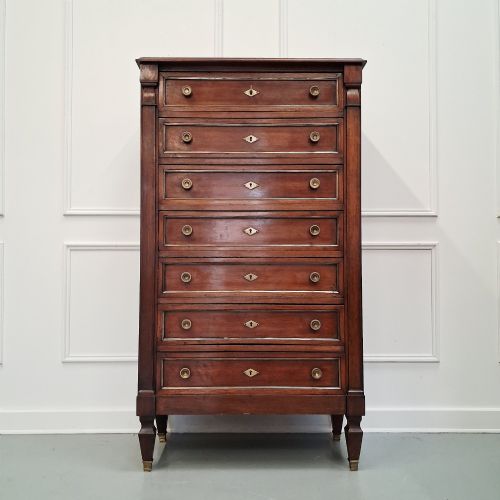
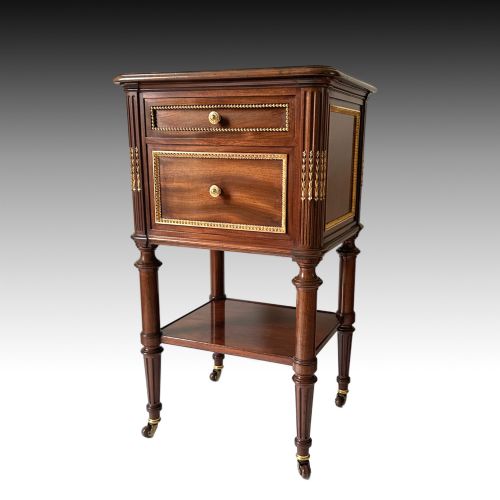
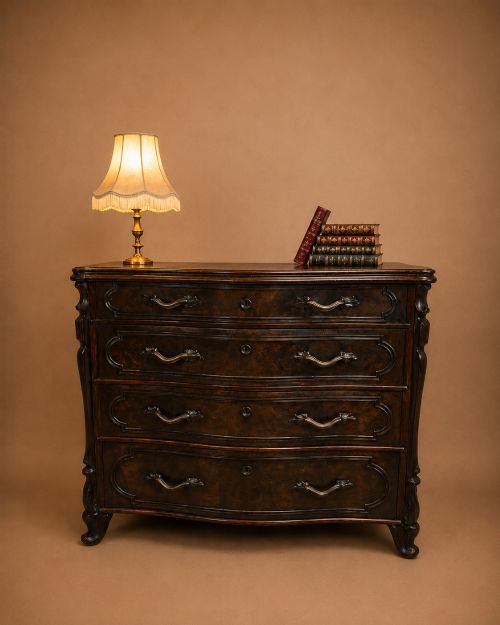
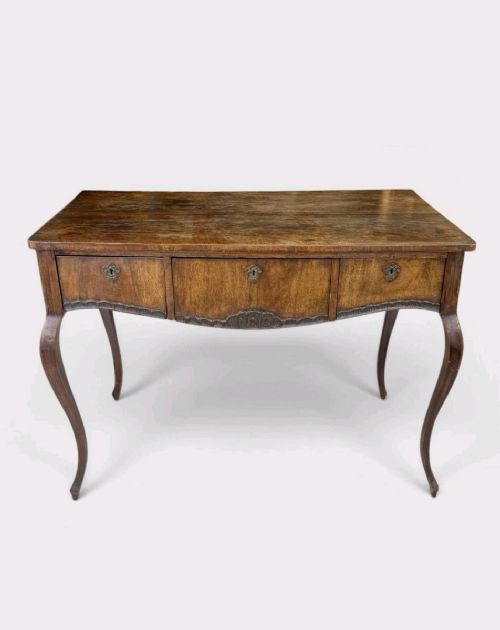
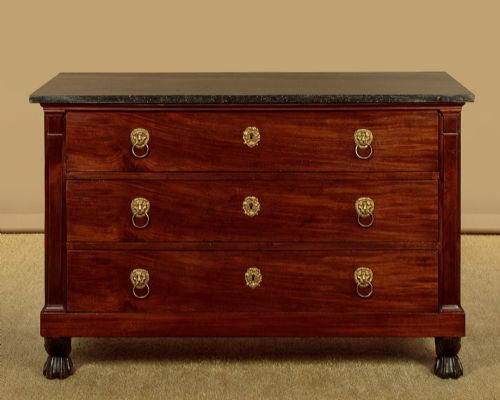
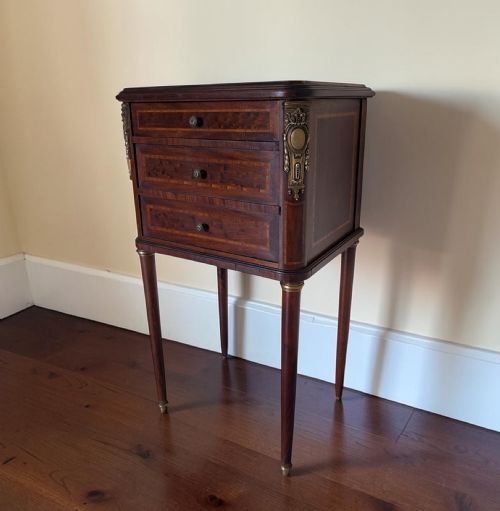
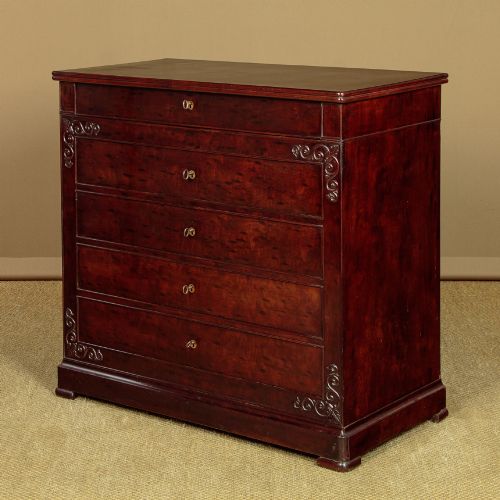
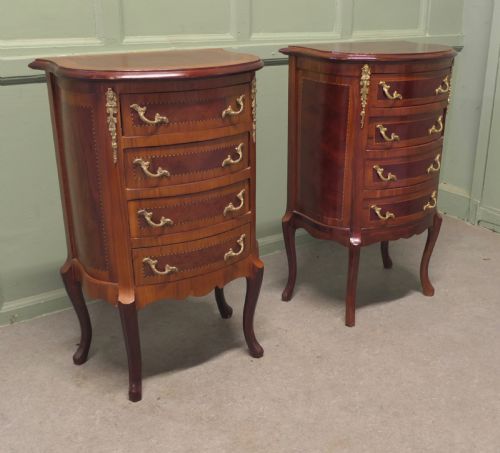
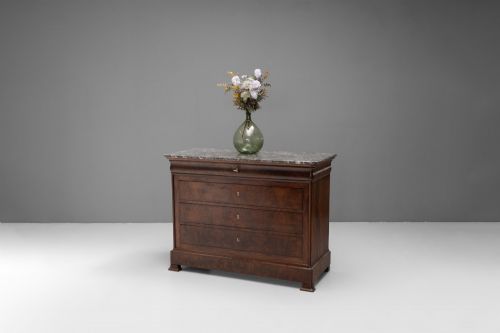
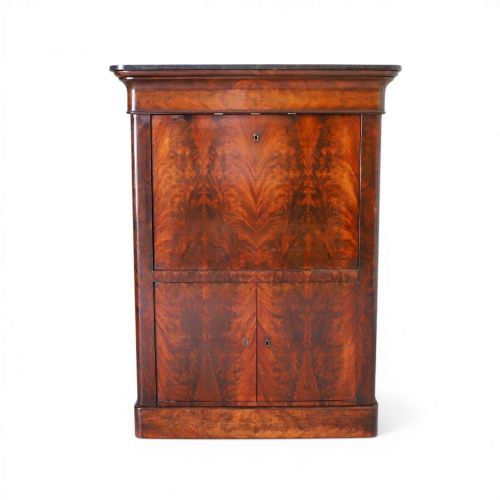
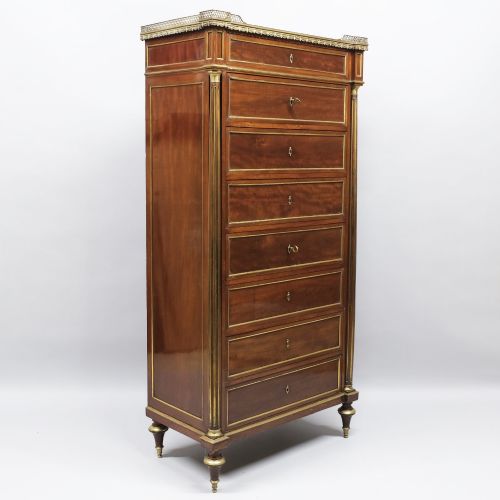
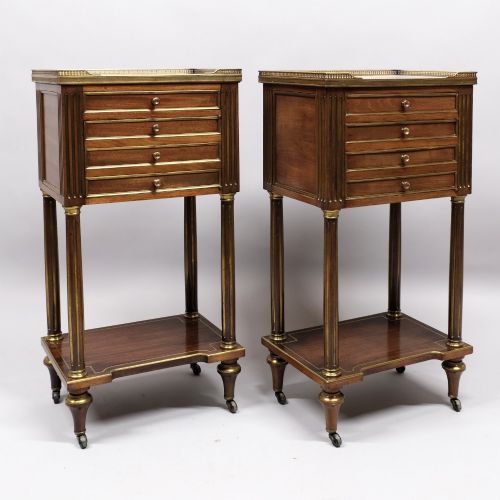
When seeking mahogany french drawers, buyers encounter a diverse selection of case furniture ranging from grand commodes to compact bedside cabinets and tall semainiers. The most common forms on this page are low chests of drawers, often fitted with marble tops, alongside specialised pieces such as writing desks and tall upright cabinets.
The aesthetic vocabulary spans several distinct historical periods, prominently featuring the heavy symmetry of the French Empire alongside the lighter lines of Louis XVI and the simpler domestic forms of the Louis Philippe era. Pieces originate primarily from nineteenth-century workshops, though later revivals from the early twentieth century also appear regularly in the listings.
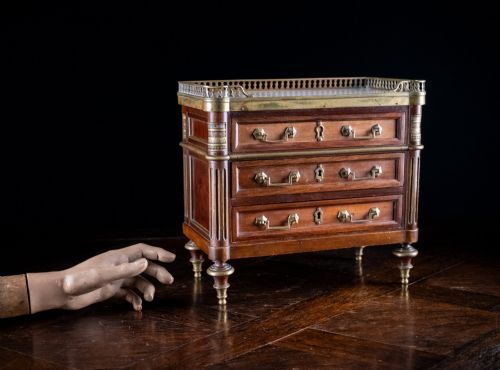
Beyond standard bedroom storage, the inventory includes miniature chests, dressing tables, washstands and secretaire bureaus equipped with drop-front writing surfaces and secret compartments. This variety allows collectors to find items suited to both grand reception rooms and intimate bedroom spaces.
How They Were Made
Cabinetmakers constructed the carcases using solid mahogany or applied rich flame mahogany veneers over secondary timbers to create striking, figured grain patterns across the drawer fronts. These wooden structures were frequently topped with heavy slabs of grey, white or fossil marble, providing a durable and cool horizontal surface.
Metal components played a structural and decorative role, with heavy cast or chased ormolu, bronze and brass mounts framing drawer tiers, keyhole escutcheons and column corners. Interior drawers often concealed clever engineering, such as secretaire drops and hidden compartments operated by secret latches.
Some nineteenth-century French drawers hide secret compartments behind dummy drawer fronts, built for keeping love letters safe from prying eyes.
What Varies in Quality
The distinction between ordinary and exceptional pieces rests upon the crispness of the bronze or ormolu mounts and the selection of the mahogany veneer. Finer items display perfectly matched flame mahogany figures across every drawer tier without interruption or clumsy patching.
Construction methods signal grade immediately, with superior cabinets utilising fully dovetailed drawer boxes, intact dust boards between tiers, and original marble slabs that fit the timber rebates precisely. The integration of signed maker plaques or documented attribution elevates certain examples into the highest tier of collectability.
Mon Krieger
The Mahogany French Drawers Glossary
- Semainier
- A tall, narrow seven-drawer chest traditionally designed to hold a week's worth of linen or garments. This vertical form maximises storage while occupying a minimal floor footprint.
- Commode
- A low, elegant chest of drawers originating in France, usually featuring multiple wide drawers and frequently finished with a stone top. These pieces often served as statement furniture in formal chambers.
- Ormolu
- Gilded bronze ornamentation applied to the corners, feet and drawer borders of fine case pieces. The technique involves treating brass or bronze with a mercury-gold amalgam.
- Secretaire à Abattant
- A tall cabinet featuring a hinged drop-front writing flap that conceals a fitted interior of pigeonholes and small drawers. It combines upright storage with a concealed writing desk.
- Flame Mahogany
- Timber cut from the fork of the mahogany tree to produce a distinctive, flickering grain pattern resembling flames. Cabinetmakers used these veneers symmetrically on primary drawer fronts for visual impact.
Mahogany French Drawers: Frequently Asked Questions
What is a french commode?
A French commode is a low, freestanding chest of drawers designed for formal rooms, typically distinguished by fine timber veneers and a fitted marble top. These pieces provide wide storage capacity while maintaining a decorative presence.
They often feature gilt bronze mounts and serpentine or straight drawer fronts reflecting the prevailing design tastes of their period of manufacture.
How do I use a semainier?
A semainier is a tall, narrow chest traditionally featuring seven stacked drawers, one for each day of the week. They suit modern bedrooms or hallways where floor space is limited but vertical storage is required.
The high configuration allows you to store clothing or accessories neatly while adding architectural height to a room.
Why do these chests have marble tops?
Marble tops were added to French case furniture to provide a durable, heat-resistant and washable surface for daily grooming and washing. They protect the underlying mahogany from spills and staining.
The stone slabs also introduce a contrasting colour and weight, anchoring the visual balance of the timber carcase.
How do I distinguish empire style?
Empire style furniture is characterised by heavy architectural symmetry, dark mahogany surfaces and restrained classical bronze or ormolu mounts. The forms evoke ancient Roman and Greek dignity through columns, pilasters and geometric rigidity.
This aesthetic flourished during the early nineteenth century under Napoleonic influence, creating imposing pieces intended to project authority.