


Mahogany Floor Standing Light
A mahogany floor standing light brings rich timber warmth and height to a room, offering both practical illumination and a striking vertical silhouette.
Mahogany Floor Standing Light
When you search for a mahogany floor standing light, you encounter tall upright fixtures designed to illuminate a room from floor level while displaying the rich grain of the wood. These pieces span the Victorian era, the Edwardian period, and later twentieth-century revivals.
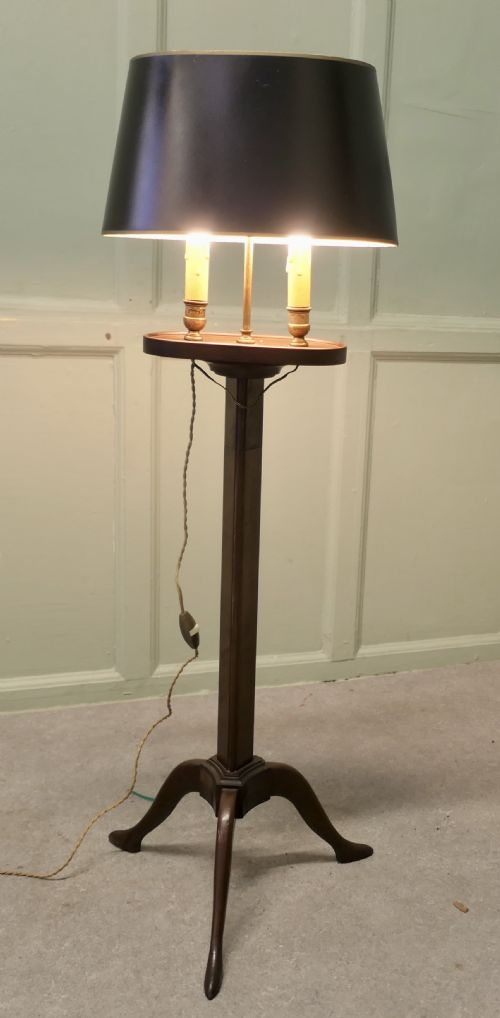
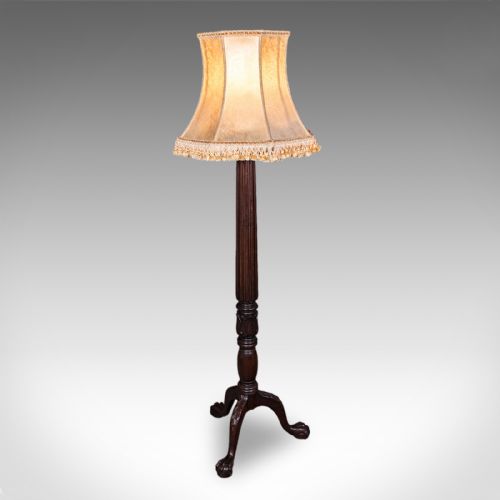
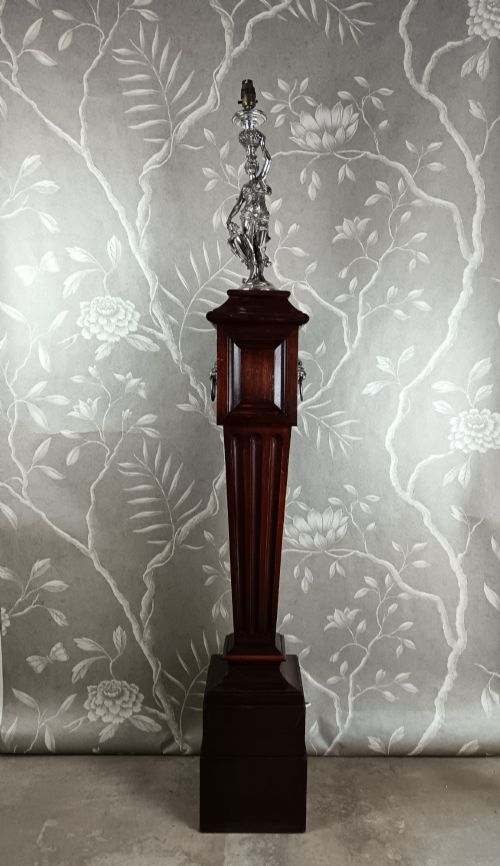
The selections on this page include standard lamps, adjustable twin candle lamps, torchere floor lamps, and lamp tables. Many incorporate brass mounts, fabric shades, glass shades, or silver-plated figural elements alongside the primary timber.
Most examples date from the nineteenth century up to the mid-twentieth century, showcasing historical revivals such as William IV Revival and Regency Revival styles. You will also find simpler early twentieth-century interpretations and cottage style variations.
How they were made
Maker construction relies heavily on solid and veneered mahogany, shaped into turned columns, carved shafts, and pedestal bases. Timber components are frequently paired with cast brass fittings, silver-plated metal, and painted metal elements for structural support and ornamentation.
Lighting configuration varies from single standard bulb holders to adjustable twin candle arrangements and multi-shade setups using glass or fabric. Some designs integrate functional furniture elements, such as tiered platforms or compartments, merging illumination with small tables.
Object forms range from traditional standard lamps and torchere stands to converted lamp tables and dressing room mirrors.
What varies in quality
Quality in these upright lights rests upon the depth of the mahogany grain, the crispness of any carved detailing, and the structural stability of the central column. Substantial turned timber and heavy weighted bases distinguish more robust examples from lighter constructions.
The integration of secondary materials also dictates standard, where cast brass fittings, quality silver plate, and heavy glass shades elevate the piece. The success of any period revival style depends on how faithfully the proportions and turning mirror historical precedents.
WMF
The Mahogany Floor Standing Light Glossary
- Mahogany
- A durable, reddish-brown tropical hardwood prized for its rich grain pattern and stability. It forms the primary structural and visual body of these tall lamps.
- Torchere
- A tall, slender stand or pedestal originally designed to hold a candle or torch. In later lighting, the term describes tall vertical floor lamps with elevated light sources.
- Standard lamp
- A traditional British term for a floor lamp featuring a vertical post mounted on a heavy base. These pieces typically support a fabric or glass shade at eye level or above.
- William IV Revival
- An architectural and decorative style drawing on the heavy, robust classical motifs of the 1830s. Pieces in this style often display bold proportions and confident classical carving.
- Regency Revival
- An aesthetic movement replicating the elegant, classical restraint of the early nineteenth century. Furniture and lighting from this tradition utilise clean classical lines and subtle brass details.
Mahogany Floor Standing Light: Frequently Asked Questions
What periods do these floor lights come from?
The pieces span from the nineteenth century through the Victorian and Edwardian eras into the early decades of the twentieth century. Later examples extend into the mid-twentieth century.
Revival styles are common, including William IV and Regency revivals that emulate earlier historical designs using the materials of their own time.
How are table elements combined with lamps?
Some tall lights incorporate small tables, tiers, or compartments directly into the vertical stand. These dual-purpose items served to hold books or small objects alongside the light source.
Converted lamp tables also appear, merging tabletop surfaces with upright illumination.
How do I identify a revival style?
Revival pieces borrow the decorative vocabulary of earlier centuries, such as the robust classical motifs of the William IV era or the refined lines of the Regency period. Examining the turning style and proportions helps reveal the intended historical inspiration.
Construction details and wood finishes usually indicate the actual manufacturing date, which often falls in the late nineteenth or early twentieth century rather than the original historical epoch.