
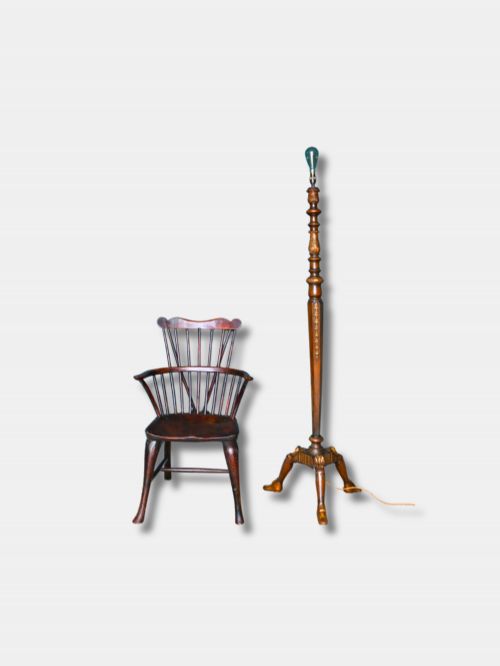
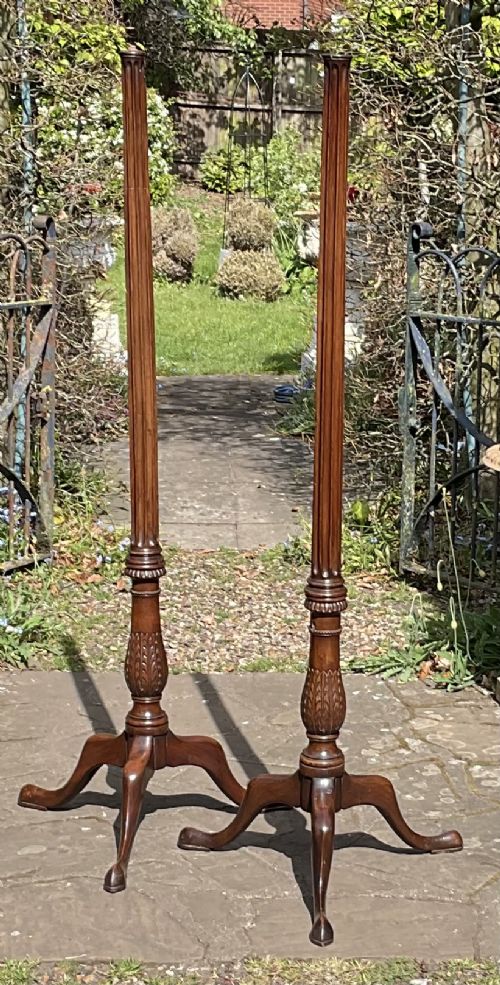


Tripod Base Standard Lamp
A tripod base standard lamp brings architectural presence and adjustable illumination to a room, spanning periods from the Victorian era to the 1930s in brass, mahogany, and gilt.
Tripod Base Standard Lamp
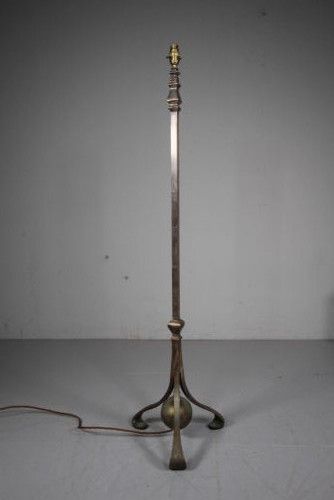
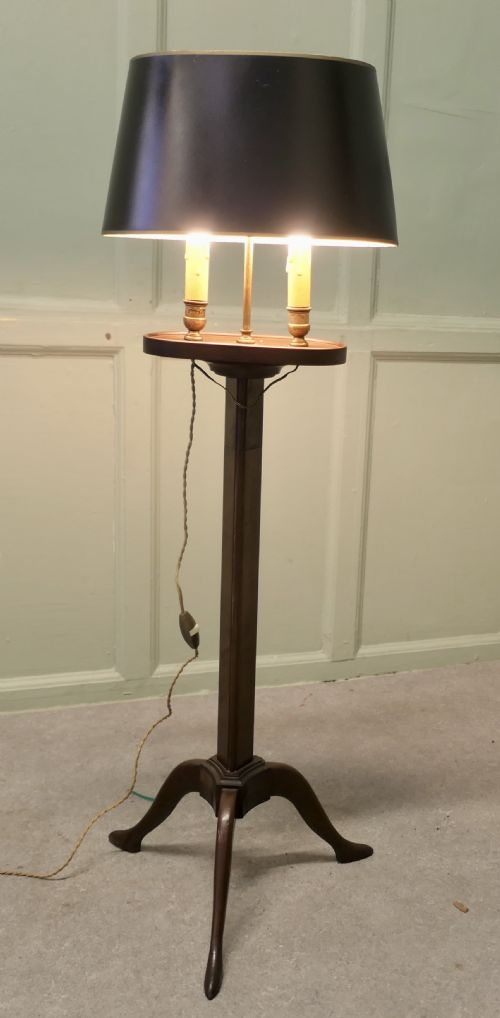
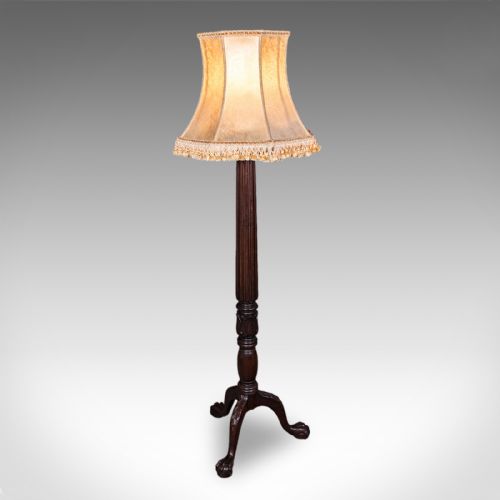
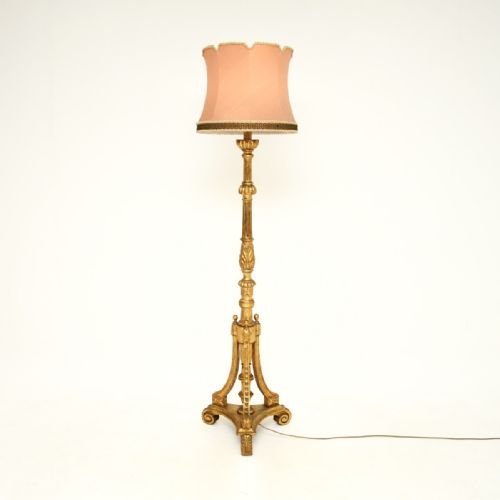
When you search for a tripod base standard lamp, you enter a field of tall floor-standing lights designed to illuminate specific corners or seating areas without relying on table surfaces. The pieces gathered here range from heavy cast brass models to carved mahogany and giltwood examples.
You are most likely to meet standard lamps and floor lamps dating from the Victorian and Edwardian periods, alongside pieces from the 1920s and 1930s. Styles stretch from Art Nouveau curves to Regency and William IV revivals, reflecting how makers drew on earlier centuries.
Many of these floor lamps incorporate functional mechanisms such as adjustable heights or rise-and-fall columns, originating from earlier oil lamp designs that were later converted for electricity. They stand on three-legged bases that provide stability for the vertical shaft.
How they were made
The construction relies heavily on turned and carved hardwoods such as mahogany and walnut, alongside cast brass and wrought iron for the structural columns and bases. Timber standards often feature detailed turning, while metal versions utilise telescopic stems for height adjustment.
Surface treatments include traditional gilding on carved wood, polished brass, and painted metal finishes. Glass stems and fabric elements appear in specific twentieth-century iterations, adding texture and varied light diffusion to the finished floor lamp.
Materials across these listings span heavy cast brass, mahogany, walnut, wrought iron, and giltwood paired with fabric and glass.
What varies in quality
Quality reveals itself in the weight and stability of the tripod base, where heavy cast brass or dense mahogany provides a solid foundation for the tall shaft. Lighter constructions or poorly balanced legs compromise the upright stance of the lamp.
The sophistication of the metalwork mechanisms, such as smooth telescopic adjustment and secure collar fittings, distinguishes finer examples from simpler production. Carving depth and crispness in giltwood and revival timber standards also mark the upper tiers of workmanship.
The Tripod Base Standard Lamp Glossary
- Standard lamp
- A tall floor-standing lamp designed to illuminate a room from a vertical post. These fixtures often feature heavy bases to support their height.
- Telescopic
- An adjustable column design allowing the height of the lamp to be raised or lowered. This mechanism frequently uses a sliding brass inner tube secured by a thumbscrew.
- Giltwood
- Wood that has been coated with a thin layer of gold leaf or gilt paint. It appears on decorative standard lamps from revival periods.
- Bouillotte lamp
- A style of lamp featuring adjustable shades and candle arms, originating from French card games. Examples adapted for electricity often retain twin candle fittings.
- William IV revival
- A nineteenth-century design style emulating the robust proportions and classical motifs of the 1830s. Furniture and lighting from this movement favour substantial timber forms.
Tripod Base Standard Lamp: Frequently Asked Questions
What is a tripod base standard lamp?
A tripod base standard lamp is a tall floor light supported by three legs or feet. These pieces provide ambient or task lighting while occupying a compact footprint on the floor.
They appear in materials ranging from cast brass to carved mahogany, reflecting design tastes from the Victorian era through the 1930s.
How do I adjust the height?
Many period standard lamps incorporate a telescopic mechanism or rise-and-fall column. You loosen a central collar or key to slide the inner brass shaft up or down.
Care should be taken with older mechanisms to support the weight of the fitting while making adjustments.
Where should I place a floor lamp?
These lamps suit corners, beside reading chairs, or flanking larger pieces of furniture where vertical height balances the room. Their tripod bases allow them to tuck neatly into restricted spaces.
Ensure the cord reaches a wall socket safely without creating a trip hazard across walkways.
How do I date a standard lamp?
Dating relies on identifying material combinations, revival styles, and manufacturing techniques characteristic of periods like the Edwardian era or the 1920s. Brass casting methods and timber turning patterns offer key chronological clues.
Original wiring methods, where present, also help place a lamp in its historical context before modern rewiring.