




Mahogany Dumbwaiter
A mahogany dumbwaiter is a tiered serving stand designed for dining rooms, offering rotational or fixed tiers in fine timber.
What a mahogany dumbwaiter is
When searching for a mahogany dumbwaiter, a buyer encounters tiered serving tables designed for the dining room. These pieces appear most frequently in 18th century, Georgian, George III, Regency, and Victorian formats.
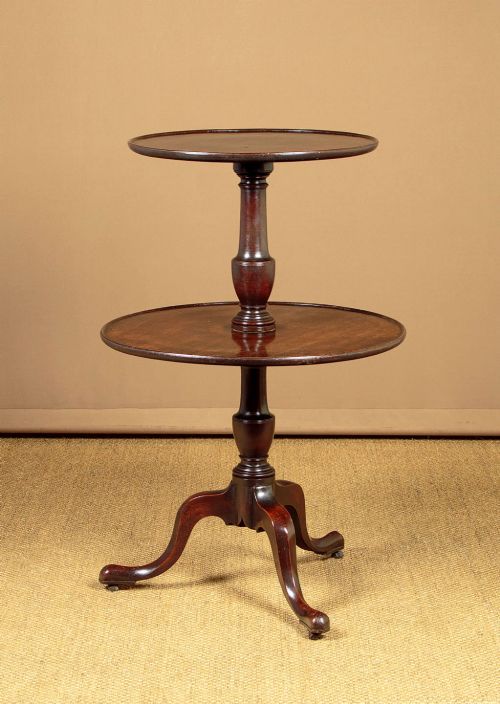
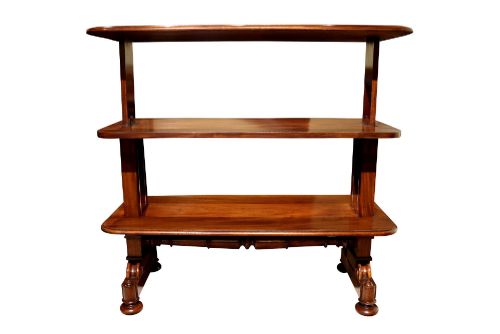
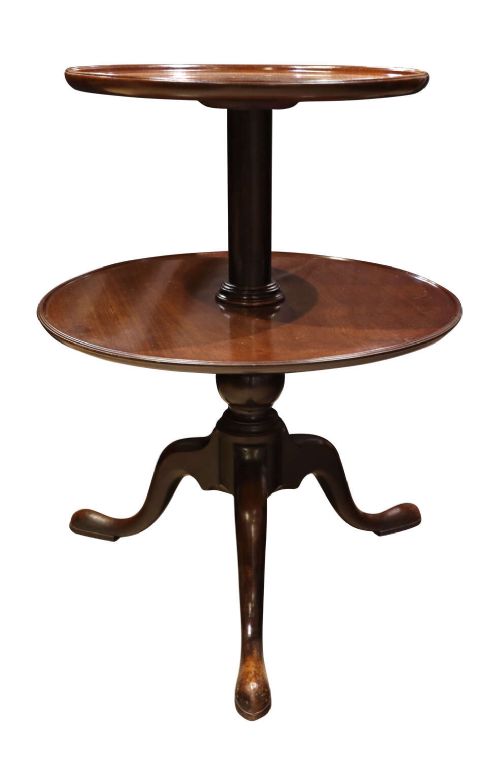
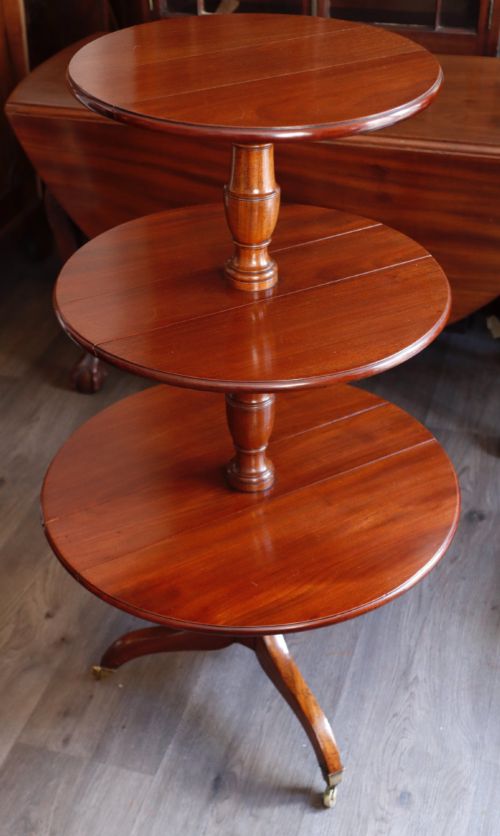
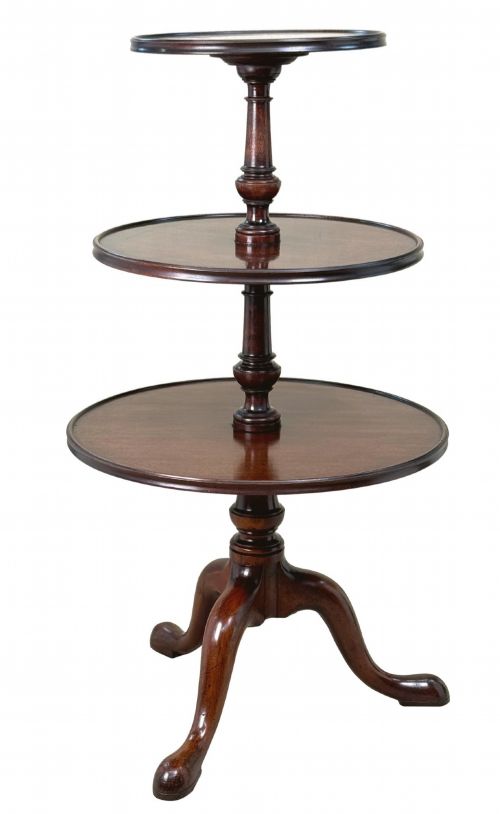
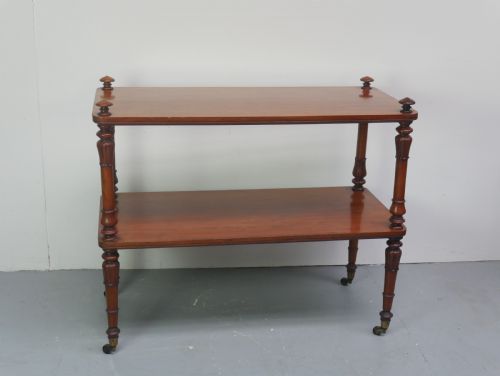
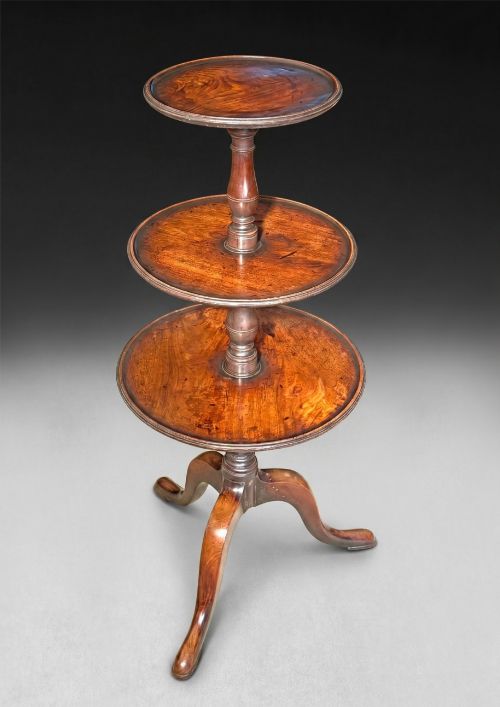
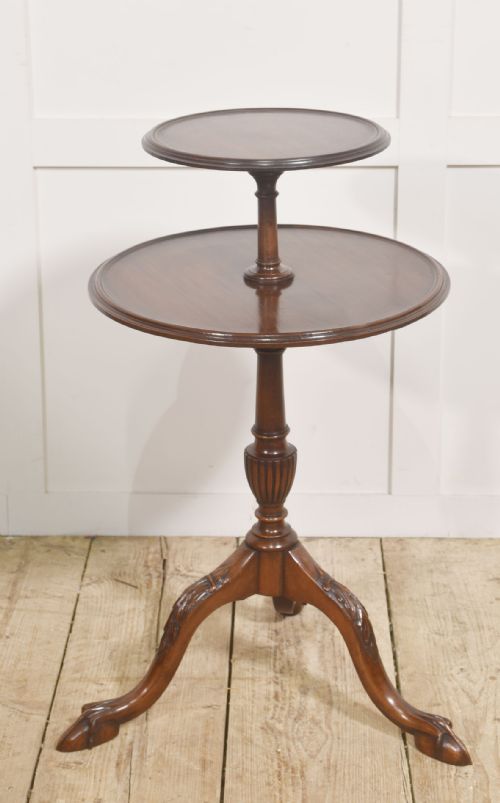
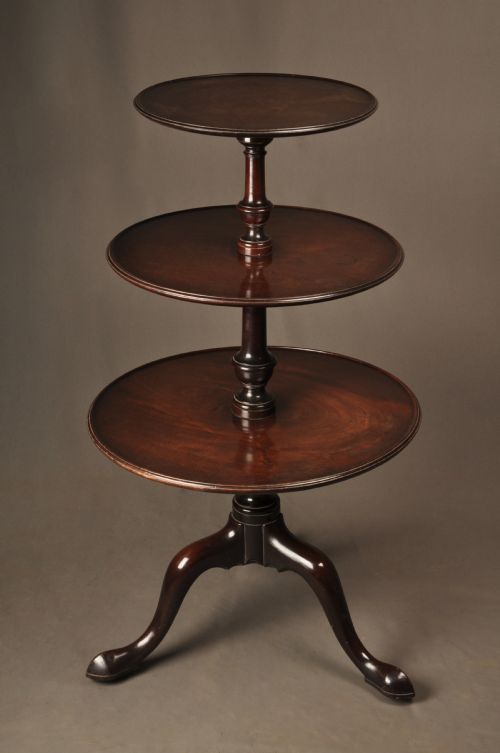
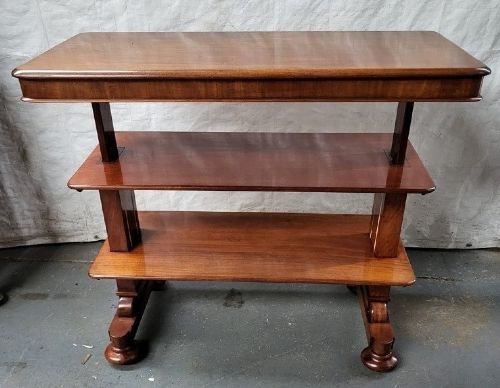
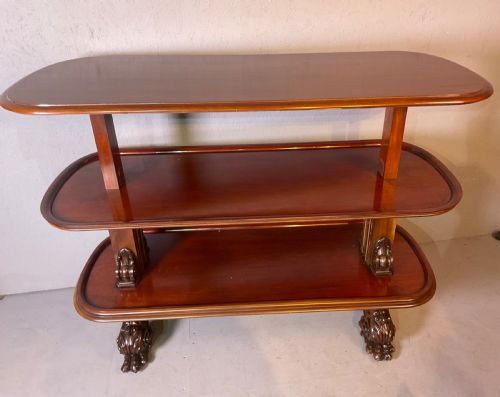
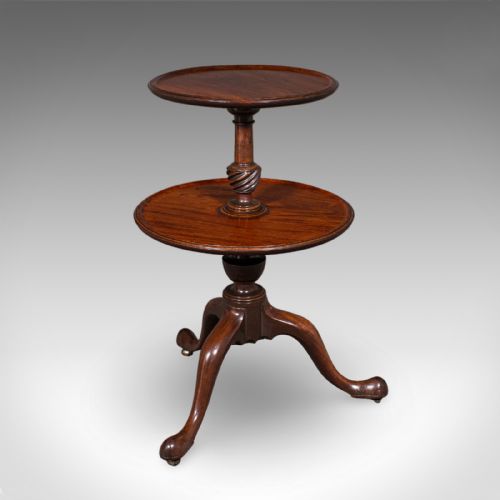
The standard form met on this page is the circular or oval multi-tiered stand, often featuring two or three graduated tiers supported by a central column and tripod base. Occasional variants include folding designs and rectangular buffet servers with gallery backs.
Origins span English, Irish, and Scottish workshops, utilising solid mahogany to create practical serving furniture that stands beside the dining table.
Materials and technique
Construction relies heavily on solid mahogany, chosen for its rich grain, strength, and suitability for turning on a lathe. Central columns and tripod legs demonstrate traditional cabinetmaking techniques from the eighteenth and nineteenth centuries.
Metal components such as brass appear in structural fittings and castors, allowing these heavy timber stands to move smoothly across dining room floors. Joinery methods secure multiple circular tiers in fixed or rotating arrangements.
Retail Price Guide 2026
Typical UK retail prices for mahogany dumbwaiter, calculated from the Sellingantiques database of over a million retail prices indexed since 2003. This retail price guide relies exclusively on Sellingantiques data; no external sources or auction records are used, so the figures do not describe the wider market.
Early diners invented these silent tiers so they could gossip freely without servants overhearing the household secrets.
What varies in quality
Quality separates through the selection of timber, where dense solid mahogany with deep figuring commands greater respect than plain utility wood. The grace of the turned column and the stability of the tripod base dictate the visual balance of the piece.
Refinement shows in the execution of graduated tiers and the integration of brass castors. Pieces displaying crisp mouldings and tight joinery represent the upper tier of period cabinetmaking.
Oetzmann and Co
The Mahogany Dumbwaiter Glossary
- Dumbwaiter
- A multi-tiered serving table used in dining rooms to hold dishes and cutlery without servant assistance. These stands typically feature rotating graduated trays on a central pedestal.
- Tripod base
- A three-legged support structure commonly found beneath the central column of circular dumbwaiters. This design ensures stability on uneven dining room floors.
- Tier
- An individual circular or oval shelf mounted horizontally upon the central pillar. Dumbwaiters on this page commonly feature two or three such levels.
- Gallery back
- A raised wooden border along the rear edge of a sideboard or buffet server. This feature prevents serving dishes from sliding backward during use.
- Pedestal
- The central vertical pillar supporting the tiers of a dumbwaiter. Turned from solid mahogany, it anchors the weight of the shelves above.
Frequently Asked Questions
What was a dumbwaiter used for?
A dumbwaiter served as a dining room assistant during meals, holding extra plates, glasses, and dishes. This allowed diners to help themselves without servants present.
Over time, the form evolved from tiered revolving stands into larger sideboard and buffet servers with multiple levels.
How do I tell an 18th century dumbwaiter from a Victorian one?
Eighteenth century and Georgian pieces typically exhibit lighter proportions, slender turned tripod bases, and graduated circular tiers. They focus heavily on the classic multi-tiered pillar design.
Victorian examples often include rectangular formats, sideboard combinations with gallery backs, and heavier Scottish or English massing.
Where should I place a dumbwaiter at home?
A dumbwaiter fits naturally in a dining room or large living space where its tiers can hold display items or serving ware. Circular models work well in corners or beside dining tables.
Rectangular sideboard variants suit long walls as functional storage and display furniture.
Are all dumbwaiters made of solid mahogany?
The listings show a strong reliance on solid mahogany, valued by period cabinetmakers for its durability and deep colour. Brass fittings often supplement the timber construction.
Secondary woods occasionally appear in internal framing, but the primary visible surfaces utilise solid mahogany.