


Mahogany Dumb Waiter Table
A mahogany dumb waiter table brings tiered timber serving surfaces and revolving tiers into dining rooms and parlours.
Mahogany Dumb Waiter Table
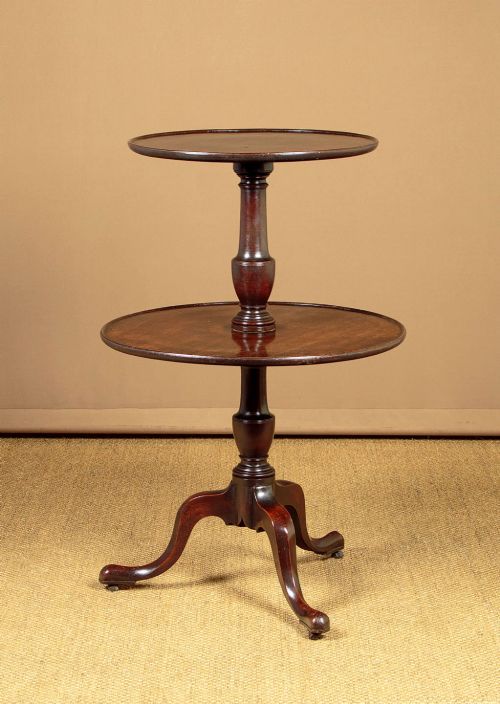
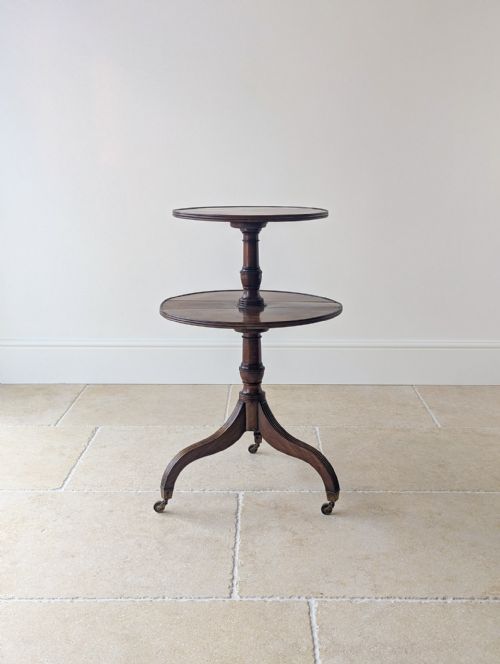
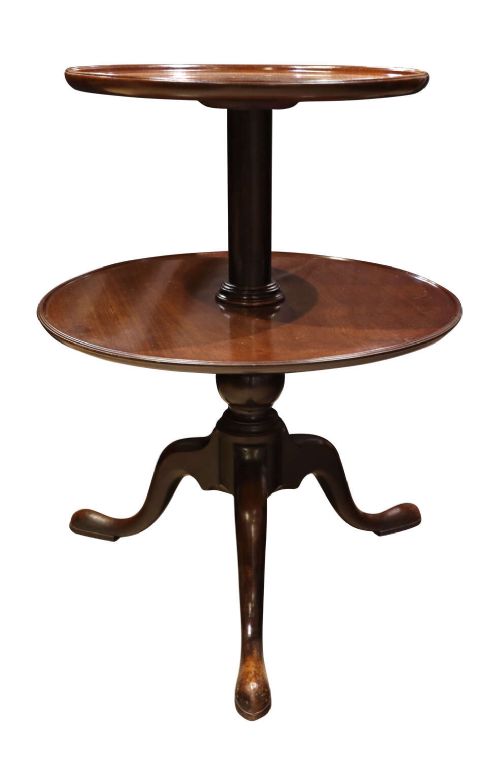
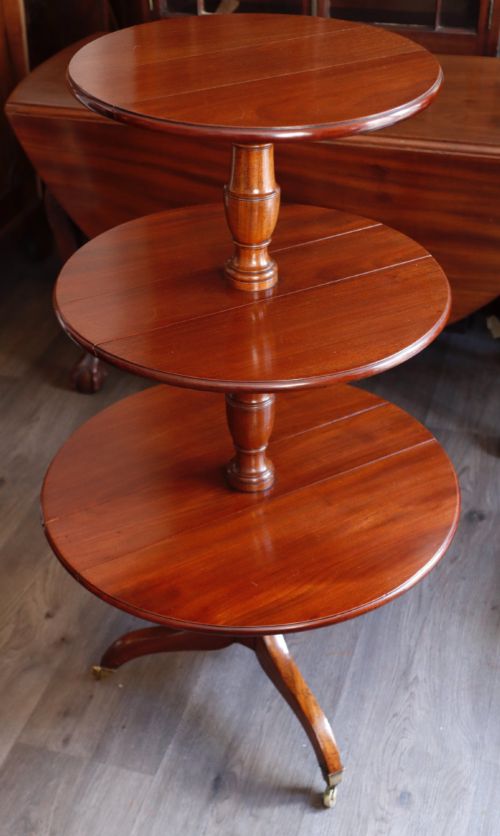
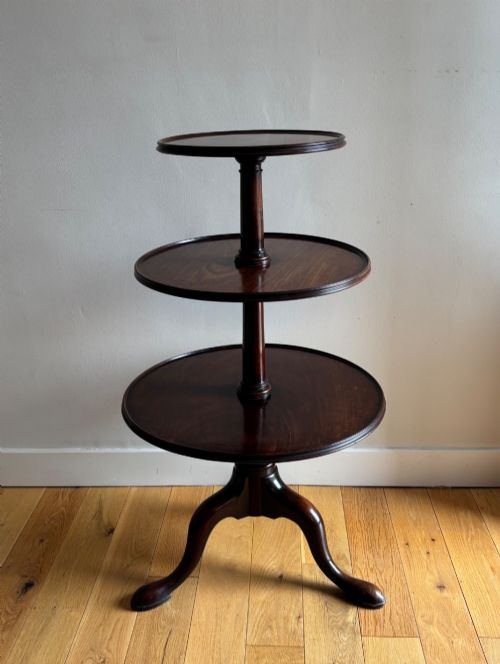
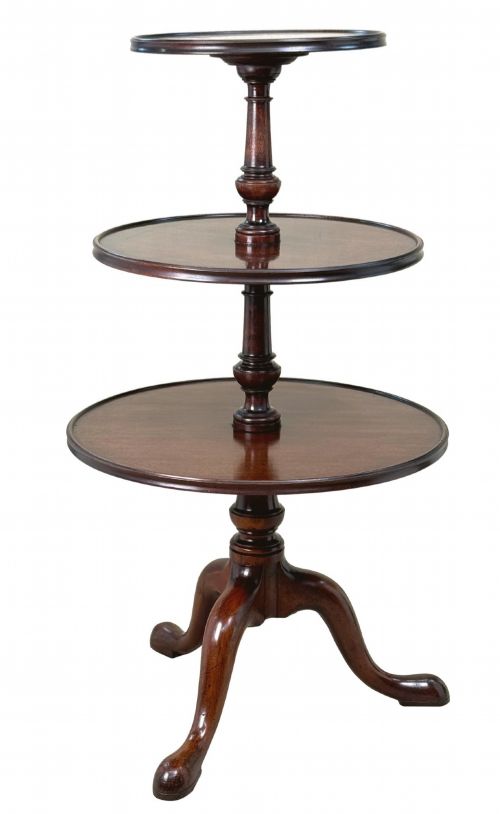
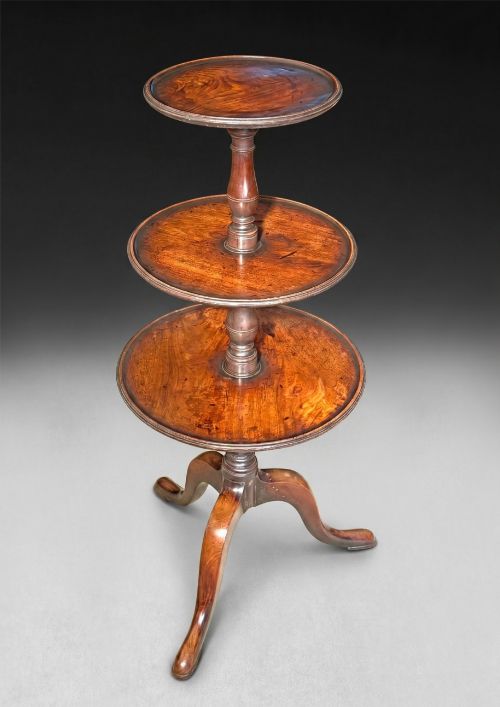
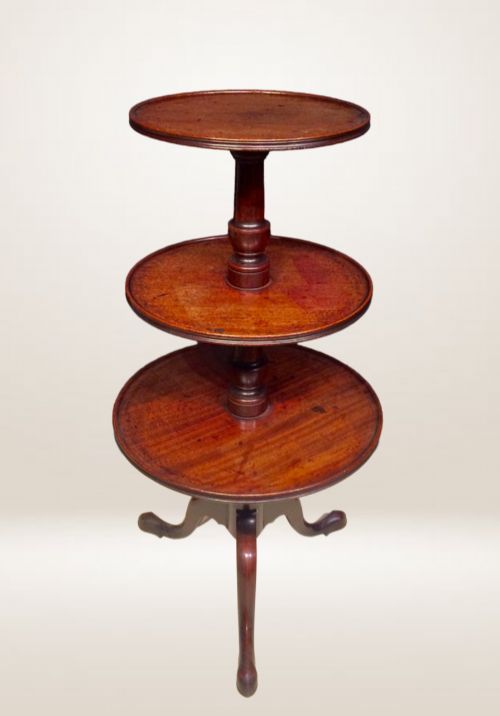
A mahogany dumb waiter table is a tiered serving piece designed to hold dishes and tableware beside a dining table. The form appears primarily as a multi-level circular table supported by a central pillar and tripod base.
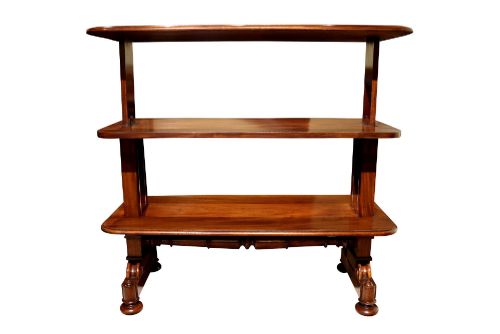
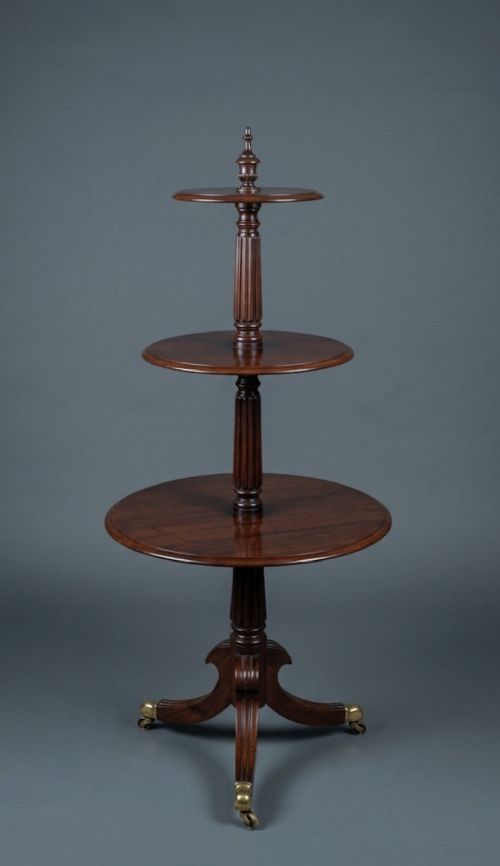
Most examples found here date from the Georgian and Victorian periods, spanning the eighteenth and nineteenth centuries. Pieces feature two or three graduating tiers, sometimes built to rotate or rise and fall for convenience.
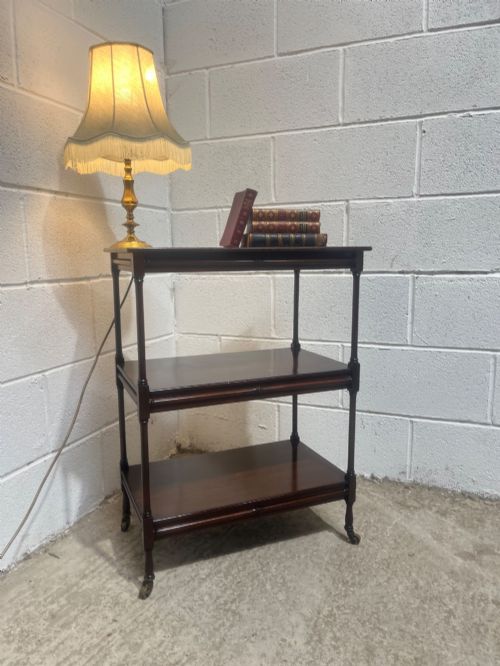
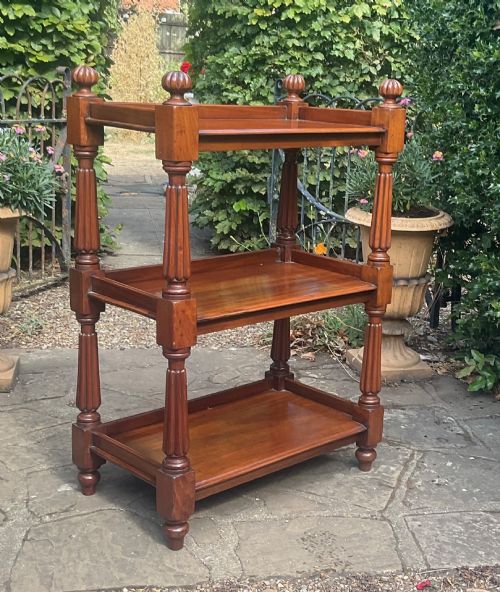
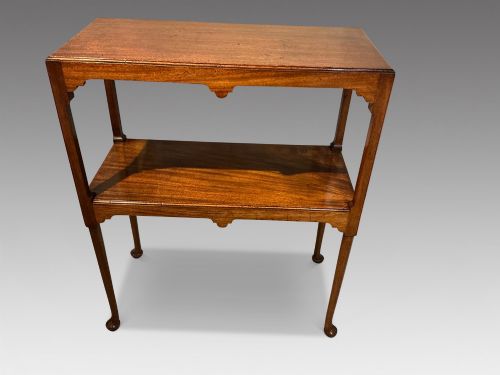
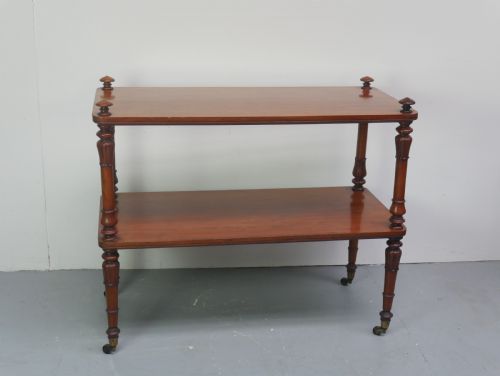
Makers constructed these tables to serve meals without domestic staff present in the room. Variations include drop-leaf designs, etageres, and occasional serving tables with brass castors.
Materials and construction
Cabinet makers utilised solid mahogany and figured veneers over supportive timber frames. Selected pieces incorporate brass hardware such as castors, hinges, and rotating mechanisms.
Turned central columns support graduated circular trays, joined securely to tripod bases with carved or reeded legs. Fiddleback and Cuban varieties of mahogany display rich grain patterns shaped by skilled woodworking.
Materials appearing across the inventory include solid mahogany, Cuban mahogany, fiddleback mahogany, brass, satinwood, rosewood, and marble.
Assessing quality in tiered serving tables
The distinction between tiers rests upon the quality of the timber selection and the precision of the turning on the central column. Superior examples display well-figured grain across every level and stable joints within the tripod base.
Functional mechanics differentiate standard pieces from more complex forms. Smooth rotation on revolving tiers and balanced movement in rise-and-fall mechanisms indicate careful initial manufacture.
The Mahogany Dumb Waiter Table Glossary
- Dumb waiter
- A multi-tiered serving table used to hold food and utensils without requiring servants at the table.
- Tripod base
- A support structure featuring three legs radiating from a central pillar, commonly found on eighteenth-century circular tables.
- Etagere
- A set of open shelves or tiers designed for displaying or holding small objects and serving items.
- Rise and fall
- A mechanical mechanism allowing tiers or shelves to adjust in height according to use.
- Fiddleback mahogany
- Timber featuring a wavy, rippled grain pattern resembling the back of a violin.
Mahogany Dumb Waiter Table: Frequently Asked Questions
What is a dumb waiter used for?
These tiered tables served food, wine, and tableware during meals in dining rooms.
Guests or hosts could reach for extra plates or dishes without summoning servants into the room.
How many tiers do these tables have?
Most surviving examples feature either two or three graduating circular tiers.
The tiers typically decrease in diameter from the bottom to the top.
Do the tiers rotate on these tables?
Many Georgian and Victorian versions include a revolving mechanism on the circular trays.
This allowed diners to spin the surface and select items easily from across the table.
How do I date a mahogany dumb waiter?
Cabinet-making styles, leg shapes, and turning details help assign pieces to specific periods.
Georgian examples often feature tripod bases with pad feet, while Victorian versions incorporate heavy castors and rise-and-fall mechanisms.