
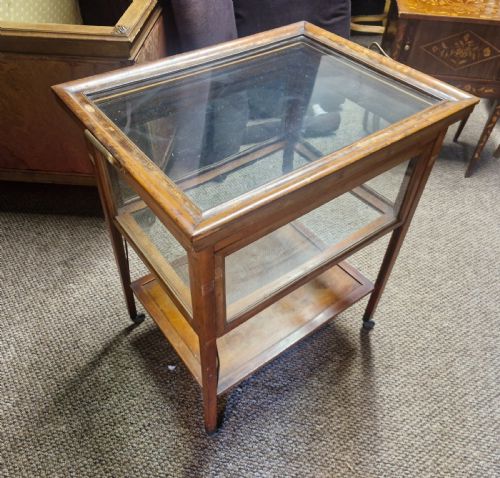


Mahogany Drinks Trolley
These mahogany drinks trolley designs combine rich timber with practical wheels, offering a traditional way to serve bottles and glassware in any room.
What these pieces are
A mahogany drinks trolley provides a movable surface for serving glasses and bottles, taking various forms from simple tea tables to tiered serving carts. When you search for a mahogany drinks trolley, you encounter pieces spanning the Georgian, Victorian, Edwardian, and Art Deco periods, alongside later twentieth-century interpretations.
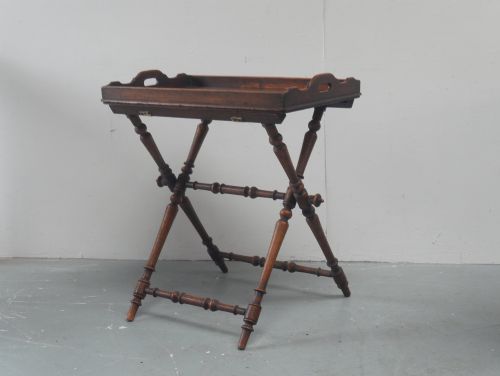
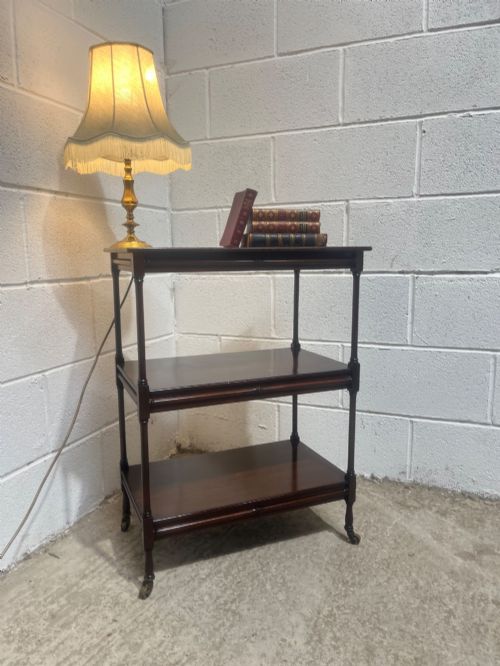
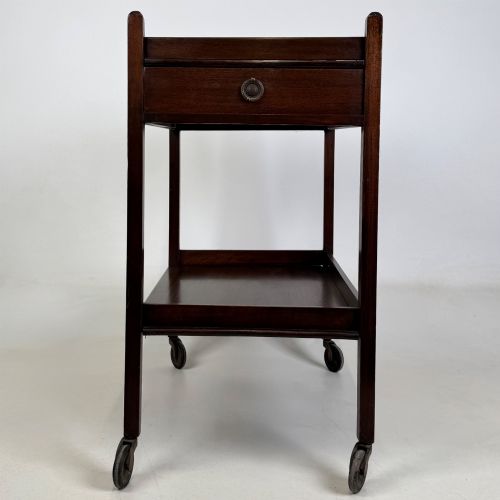
The objects listed on this page appear primarily as tea trolleys, bar carts, and drinks cabinets configured in rich timber. Many examples utilise traditional two-tier or three-tier shelving arrangements, while others incorporate removable trays or dropleaf sides for flexible entertaining.
Originating as utilitarian servers, these items now serve as focal points for domestic hospitality. The prevailing styles range from plain nineteenth-century utility to intricate Edwardian inlay and Georgian revival elegance.
How they were made
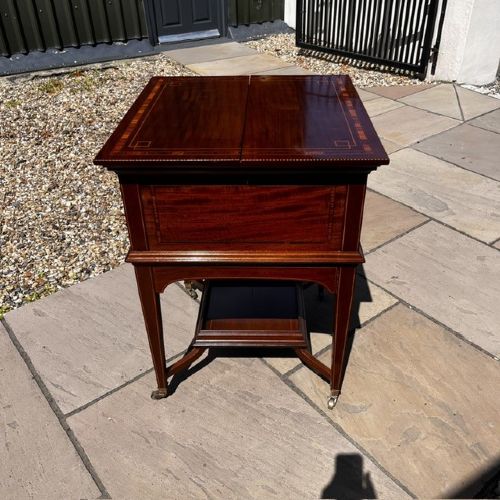
Cabinetmakers constructed these frames predominantly from solid mahogany and mahogany veneers, occasionally incorporating boxwood inlay for decorative contrast. Structural stability relied on tight joinery, while mobility was achieved through metal castors fitted to the base.
Surface details often include silver-plated or brass mounts, handles, and gallery rails designed to keep bottles secure during transit. Glass inserts and mirrored surfaces frequently form the upper serving levels, set directly into the wooden frames.
Retail Price Guide 2026
Typical UK retail prices for mahogany drinks trolley, calculated from the Sellingantiques database of over a million retail prices indexed since 2003. This retail price guide relies exclusively on Sellingantiques data; no external sources or auction records are used, so the figures do not describe the wider market.
Listings on this site feature mahogany combined with brass, cast iron, glass, and boxwood inlay across multiple historical periods.
What varies in quality
The distinction between standard utility items and finer examples rests upon the selection of timber and the sophistication of the joinery. Figured mahogany graining and precise boxwood stringing elevate the visual weight of a piece.
Hardware execution further separates the tiers of production, where heavy cast brass fittings and substantial castors indicate careful original manufacture compared to pressed metal substitutes.
The Mahogany Drinks Trolley Glossary
- Dropleaf trolley
- A serving cart featuring hinged side flaps that lift to extend the top surface when required. This mechanism allows the furniture to occupy less space against a wall.
- Boxwood inlay
- A decorative technique where narrow strips of pale boxwood are inserted into recesses cut into the darker mahogany surface. It creates sharp geometric or floral contrasts.
- Castor
- A small wheel mounted on a swivel attached to the base of the legs. It enables the entire trolley to roll smoothly across carpets and floors.
- Tiered shelving
- An arrangement of multiple horizontal surfaces positioned vertically above one another. This increases the carrying capacity without enlarging the footprint.
- Silver plate
- A thin layer of silver applied over a base metal foundation, frequently utilised for handles, galleries, and serving accessories. It offers the appearance of solid silver at a lower weight.
Frequently Asked Questions
What periods do these trolleys date from?
The available selection spans from the nineteenth century through the Edwardian era and the nineteen-twenties and thirties. Georgian revival pieces also appear frequently.
Each period brings distinct stylistic nuances, ranging from heavy Victorian proportions to lighter Edwardian and Art Deco profiles.
How were these trolleys used originally?
Households utilised them for moving tea services, afternoon refreshments, and bottled spirits between reception rooms. Removable top trays allowed servants to carry glasses directly to guests.
Over time, their primary function shifted toward home cocktail service and mobile display.
Do all trolleys have wheels?
Most examples incorporate castors beneath the legs to maintain mobility, though stationary serving buffets and sideboards share similar timber characteristics. Trolleys specifically designed as bar carts rely on these wheels for transit.
Some variations feature larger wheels at the front with smaller rear castors for easier steering.
What materials besides mahogany appear on them?
Makers frequently integrated brass handles, gallery rails, and castors alongside silver-plated mounts. Glass inserts and mirrors also form the upper serving decks.
Boxwood provides the contrasting material for inlaid stringing on decorative Edwardian and Georgian style examples.