
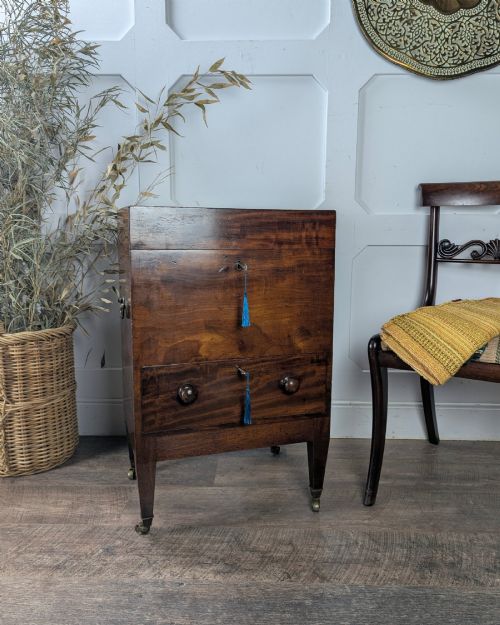


Mahogany Drink Storage Chest
A mahogany drink storage chest brings rich timber and period craftsmanship together to keep bottles secure and ready.
Mahogany Drink Storage Chest
A mahogany drink storage chest serves as a dedicated vessel for holding bottles safely within domestic spaces. When buyers search for a mahogany drink storage chest, they encounter various forms including cellarettes and wine coolers spanning multiple eras.
The selections on this page appear across periods such as the Georgian, Regency, Edwardian, and later nineteenth and twentieth centuries. These storage chests take forms like sarcophagus wine coolers and classical cellarettes designed for formal dining rooms.
Makers from the past engineered these chests to preserve the temperature of contents or simply to lock away valuable vintages. The surviving examples reflect the changing tastes of dining furniture from the seventeen-fifties through to the nineteen-twenties.
How they were made
Cabinet makers utilised solid mahogany alongside decorative veneers to build the primary structure of each chest. Workshops integrated contrasting timbers such as boxwood and satinwood inlay to define panels and borders.
Interior fittings frequently involved lead, zinc, and brass linings designed to hold ice or water safely against the timber. Metal components like brass carrying handles and locking mechanisms provided both utility and security.
Interior construction in these storage chests frequently incorporates functional metal elements such as zinc, lead, and brass.
What varies in quality
Quality rests upon the selection of timber figures and the precision of the joinery used in the frame. Finer pieces demonstrate careful attention to detail in the execution of boxwood and satinwood inlay.
The presence of original interior metal linings and sturdy brass hardware elevates the standing of a piece. Differences in proportion and the sophistication of period styling distinguish standard containers from exceptional examples.
Gillows of Lancaster and London
The Mahogany Drink Storage Chest Glossary
- Cellarette
- A lockable container used for holding bottles of wine or spirits near the dining table. These pieces often feature fitted interiors to separate individual bottles.
- Sarcophagus wine cooler
- A monumental form of drink storage shaped like an ancient stone coffin, popular during the Regency period. They frequently stand on robust feet and incorporate carved details.
- Inlay
- A technique where pieces of contrasting wood like boxwood or satinwood are inserted into recesses within the mahogany surface to create decorative patterns.
- Regency
- A design period spanning the early nineteenth century characterised by classical motifs, heavy proportions, and bold mahogany grains.
Mahogany Drink Storage Chest: Frequently Asked Questions
What is a mahogany drink storage chest used for?
These chests were originally designed to hold wine bottles and spirits securely near the dining table. They kept beverages close at hand during long meals in large houses.
Today, they function as decorative storage furniture in living spaces or dining rooms. Owners utilise them to hold bottles, glassware, or general household items.
How do I identify a Georgian cellarette?
Georgian pieces typically exhibit clean architectural lines, classical proportions, and rich mahogany timbers. They often incorporate brass handles and detailed woodwork characteristic of the eighteenth century.
Many examples from this era rely on straightforward geometric forms rather than heavy carving. The interior often retains traces of early lead or zinc linings used for temperature control.
What materials are found inside these chests?
Interiors frequently feature metal linings made from lead or zinc to hold ice and water without damaging the wood. Some examples include fitted wooden dividers to keep bottles from rolling together.
Brass fixtures such as hinges, handles, and locks are also common internal and external components. These materials helped maintain the cool temperature of the stored drinks.
How do Regency styles differ from Georgian ones?
Regency designs often feature heavier, bolder forms inspired by classical antiquity, such as the sarcophagus shape. They can include more pronounced mahogany grain patterns and distinctive foot designs.
Georgian examples tend to lean towards lighter proportions and restrained decorative flourishes. Both periods valued high-grade mahogany and precise cabinet making.
Are these chests suitable for modern homes?
These chests integrate well into contemporary interiors as statement furniture pieces or functional side tables. Their traditional timber tones complement a wide variety of room décors.
Buyers place them in dining rooms, hallways, or studies to provide enclosed storage. They offer a practical way to store items while introducing historical character to a space.